Sapporo Travel Guide: City Highlights and Hokkaido Planning
A city break in its own right—and a better starting point for a realistic Hokkaido journey.
- Car-free city planning
- Four-night framework
- Hokkaido connections
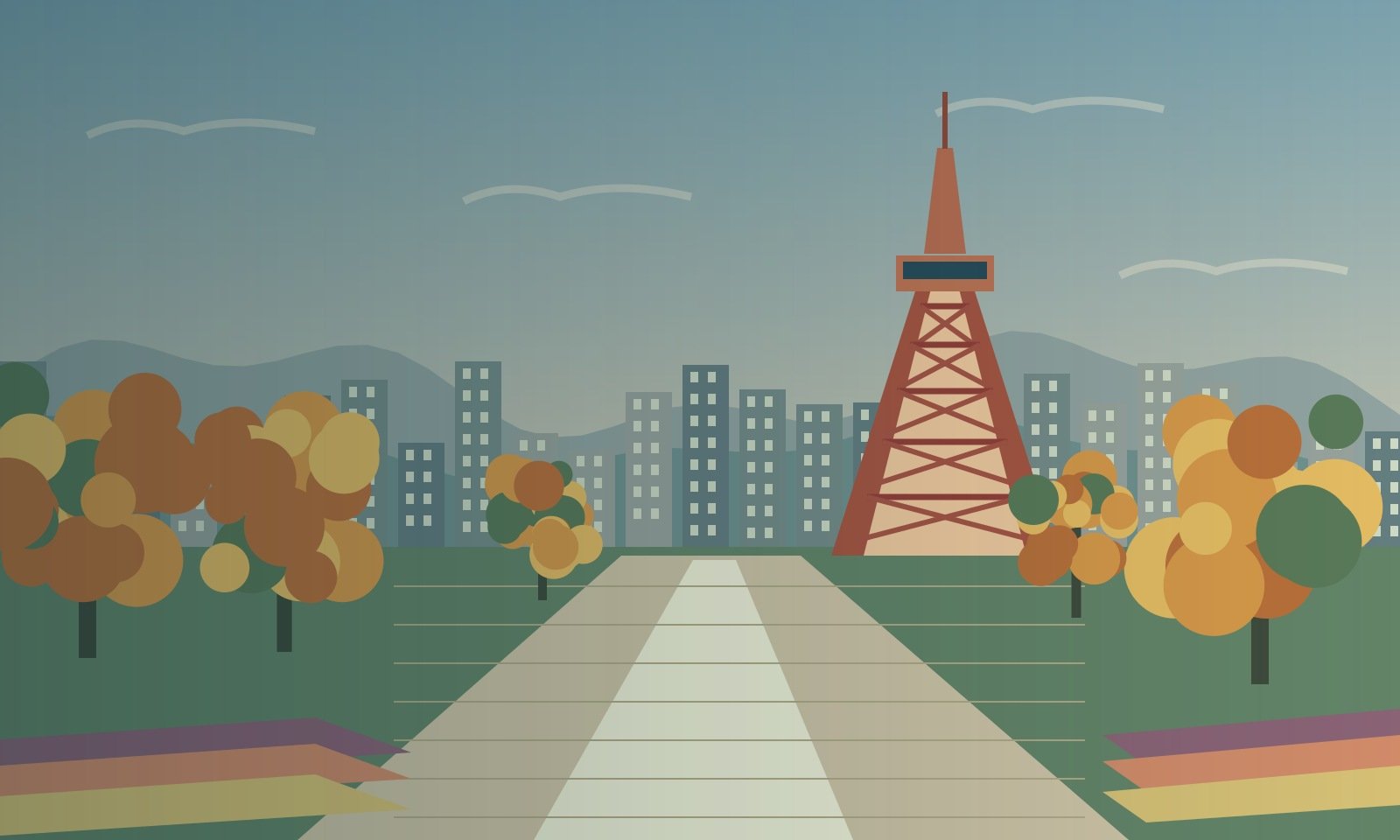
Sapporo-inspired city illustration; not a photograph or a precise view of Odori Park.
Sapporo is easiest to enjoy when you give it two jobs, not ten: a few rewarding city days and a sensible connection to the next part of Hokkaido. Its parks, food and museums do not need to compete with a daily race to distant countryside. This guide separates the city experience from the wider-island decisions. [1]
The suggested neighbourhood choices and four-night framework are research-led editorial recommendations. They are designed to help you choose a manageable trip, not to imply personal hotel stays or a tested booking itinerary.
This article contains affiliate links. Taylor’s Trailblazing Travels may earn a commission if you book or buy through them, at no extra cost to you.
City time
Two full days cover a useful selection rather than every outlying attraction.
Four nights
Arrival, two city days, one excursion and a departure day.
Best base
Choose by repeated journeys, not just the airport arrival.
Season
Snow changes walking time and regional connections, not just clothing.
Choose a base before choosing a hotel
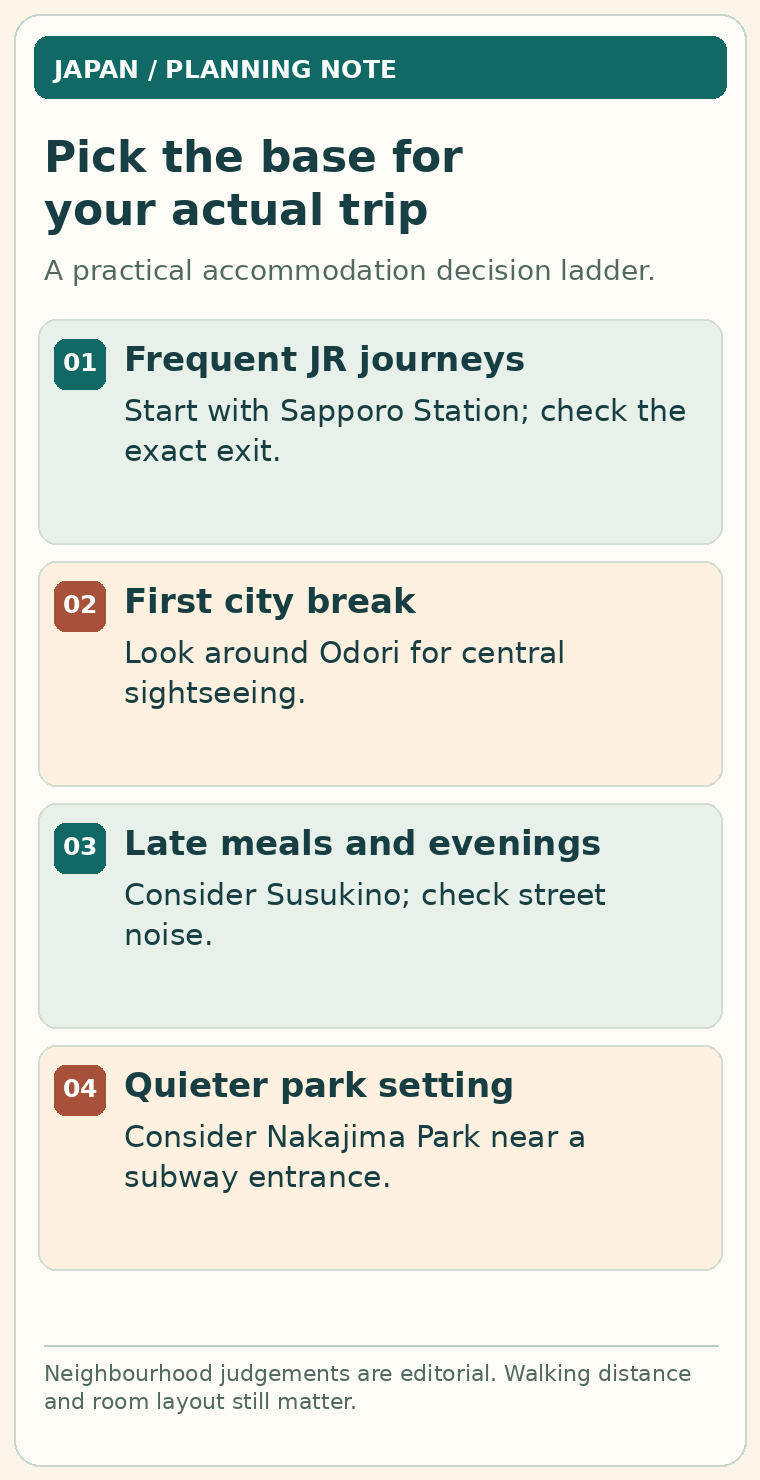
Begin with a map of your repeated journeys. A room near JR departures makes sense for several rail days; a central sightseeing base may make more sense when most of your time is on foot. The city’s official visitor information links to sightseeing maps and transport guidance, which are more useful than treating every “central Sapporo” listing as equivalent. [1]
| Area | Best fit | Trade-off to check |
|---|---|---|
| Sapporo Station | Frequent JR journeys, a short arrival stop or an early airport departure. | The precise exit and the walk from the platform—not only the map pin. |
| Odori | A first city break with a mixture of sightseeing, shopping and meals. | Whether your room faces a busy road or a seasonal event space. |
| Susukino | Evening dining and a later daily rhythm. | Street noise and the route home at the hour you expect to return. |
| Nakajima Park | A park-side atmosphere while retaining subway access. | The extra leg when you repeatedly need JR Sapporo Station. |
On a phone, swipe the diagram sideways to read its labels.
A central day: park, streets and a good lunch
Odori Park makes a useful orientation point rather than a single attraction to “finish”. It runs through central Sapporo, with the television tower at its eastern end and different public spaces along its length. Walk a section that suits your route rather than promising yourself the entire park before breakfast. [2]
Pair it with Nijo Fish Market if seafood is part of your plan. The market is close to the centre and its individual restaurants and stalls vary; the useful decision is whether you want breakfast, a substantial lunch or simply a look around. A market visit does not oblige you to buy an expensive seafood bowl. [7]
Keep the afternoon flexible for a city-centre exhibition, shopping or a long café stop. That flexibility is particularly valuable on your first full day, when the weather and travel fatigue may not match the itinerary you wrote at home.
Clock Tower: a small historical stop, not a grand monument
Sapporo Clock Tower dates from 1878 and was part of the former agricultural college. Its exhibition provides context for the modest wooden building, so decide whether you want a brief exterior stop or time inside. Either can fit a central day more easily than another outlying attraction. [16]
A workable sequence
- Morning: a chosen section of Odori and one central sight.
- Lunch: Nijo or another restaurant that fits your dietary needs and budget.
- Afternoon: one indoor interest, neighbourhood walk or shopping area.
- Evening: dinner near the base, rather than another cross-city transfer.
These are deliberately broad time blocks. Add your chosen venue’s opening time and any reservation only after checking the date. A city day should not collapse because one queue is longer than expected.
For day two, choose one outlying focus
Moerenuma: landscape and design
Moerenuma Park is a substantial landscape designed by Isamu Noguchi, with sculptural forms and the Glass Pyramid among its features. It is not a quick extension of an Odori stroll. Choose it when the landscape itself interests you, and check the public-transport approach and seasonal facility information before leaving. [3]
Hokkaido Museum: useful context for the rest of the island
The Hokkaido Museum interprets the island’s nature, history and culture, including Ainu culture. It can give later regional visits more context than another hurried viewpoint. Consult its current exhibition and access information, especially when a particular gallery is the reason for your visit. [4]
Historical Village: an outdoor visit with a different pace
The Historical Village of Hokkaido is an open-air museum of relocated historic buildings. Its seasonal hours and opening arrangements matter because much of the experience involves moving around outdoors. Pairing it with the museum can work for keen visitors, but both deserve their own time allowance. [5]
The selection rule is simple: choose one outer-city focus and one optional addition, not several distant names from a “best things to do” list. In poor weather, replace the exposed part of the plan rather than racing through it to protect a checklist.
Mt Moiwa: a separate weather-dependent option
The Mt Moiwa operator describes a ropeway to the mid-mountain station followed by a mini cable car towards the summit. Budget for both stages, travel to the base and the descent. Choose it for a view when conditions support one; fog or low cloud can make a flexible city evening the better choice. [17]
Choose meals that fit the day
Sapporo’s official cuisine guide highlights ramen, soup curry, seafood and jingisukan among the city’s food choices. Treat them as options rather than a compulsory tasting schedule. A relaxed meal close to your afternoon plans can be more rewarding than a long detour for a famous queue. [6]
For a short stay, make one meal a priority and keep a nearby alternative. Check whether a soup or sauce contains ingredients you avoid, and show written dietary requirements when necessary. A photograph can identify a dish, but does not establish what is in the stock or sauce.
Seafood menus can vary considerably by portion and ingredient. Read the actual displayed price and clarify whether it refers to the bowl, a single item or a set. Keep enough space in the meal budget for the food you most want; “eating locally” does not mean that every specialist ingredient will be inexpensive.
Nijo is convenient for a central day, but you do not need to visit a market every morning. A café breakfast, supermarket provisions or a straightforward restaurant meal may suit the next day’s schedule better. [7]
A four-night plan without a daily long excursion
On a phone, swipe the diagram sideways to read its labels.
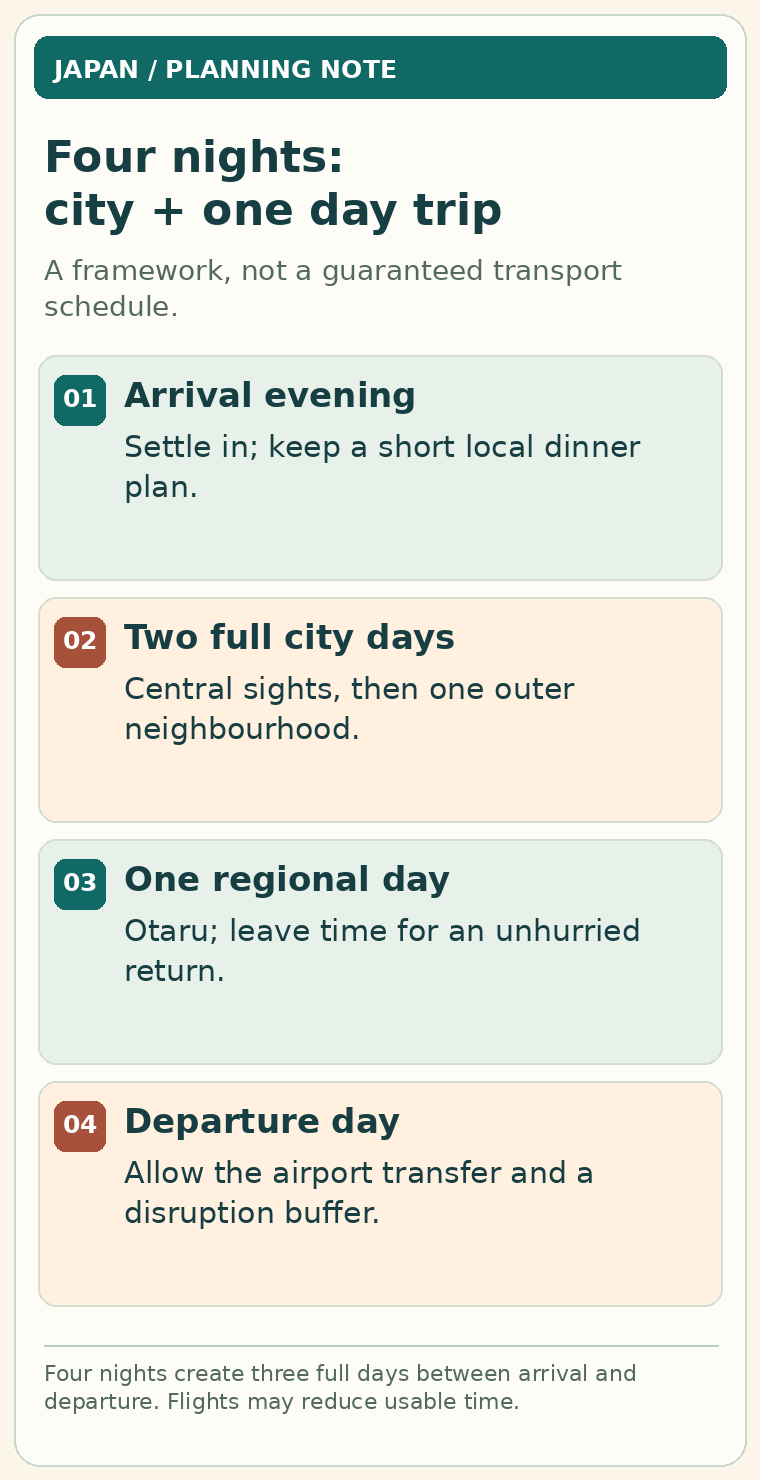
| Part of stay | Main purpose | Leave flexible |
|---|---|---|
| Arrival | Check in and have a local dinner. | Everything beyond basic arrival tasks. |
| Full day 1 | Central Sapporo and a planned meal. | An indoor alternative for poor weather. |
| Full day 2 | One outer-city museum or park focus. | A short evening addition only if energy allows. |
| Full day 3 | One regional excursion. | Return margin rather than another city. |
| Departure | Reach the airport or next base. | Time for luggage and disrupted services. |
With three nights, remove the excursion or one city day. With five nights, add a genuine second interest rather than automatically stacking another distant tour. Travellers who primarily want rural Hokkaido should usually move to a more suitable regional base instead of spending all their extra nights in Sapporo.
This framework is useful because it exposes the trade-off. Every full-day excursion consumes one of only three complete days in a four-night stay. There is no “free” Furano day hidden inside a Sapporo hotel booking.
Use Sapporo sensibly in a wider Hokkaido route
Otaru is a focused day-trip candidate
JR links Sapporo and Otaru, and Otaru’s central tourism route begins at the station and descends towards the canal. For a first excursion, that combination is simpler than a route requiring several rural connections. Keep Otaru’s canal, food and craft district as the main purpose; distant coastal detours change the day substantially. [8][15]
Furano and Biei need a different decision
Furano’s tourism association gives around 2 hours 10 minutes for Sapporo–Furano driving under its stated summer assumptions, without stops or rest. A same-day return therefore uses more than four hours before any local sightseeing, traffic or parking. It is not a city-centre add-on. [12]
An organised day trip can solve the transport problem for a non-driver with only one spare day, but expect limited freedom at stops. For unhurried photography or both Furano and Biei, compare a two- or three-night rural stay. Do not use summer driving assumptions to promise a winter return time.
A pass is a route calculation, not an automatic purchase
JR’s Sapporo–Furano Area Pass covers a designated area including several relevant destinations; its value depends on your actual rail journeys, eligibility and consecutive travel dates. Add the ordinary fares for the itinerary you genuinely intend to take before comparing the pass. [14]
A reseller’s route page may present a multi-day pass rather than a single Sapporo–Otaru ticket. Read the product name carefully. Buying a broad pass for one short return trip is not made sensible by an attractive booking button.
Airport travel, snow and practical buffers
JR Hokkaido publishes airport-train information linking New Chitose Airport, Sapporo and Otaru, including the distinction between ordinary seating and the reserved-seat option. Choose the exact service and seating product you need. Allow for the walk to the station and onward hotel journey as well as time on the train. [8]
Sapporo has marked seasonal contrasts. Winter travel needs a different walking plan from summer: leave room for snow, cold and more time moving between indoor and outdoor places. Use the city’s seasonal guidance rather than assuming every itinerary can run at the same pace throughout the year. [9]
- Keep one indoor alternative each day, not just extra outdoor sights.
- Locate the actual entrance and step-free route to your hotel before arriving with luggage.
- Before a flight, check the operator’s service information and leave a margin appropriate to the weather.
- For a rural winter leg, choose transport around your experience and conditions, not the fastest summer map estimate.
Budget for the room and the accommodation tax
Since 1 April 2026, Sapporo’s visitor notice lists both the city and Hokkaido accommodation taxes. The table below already combines them; do not add another prefectural charge to these totals. Rates are per guest per night, not per room. [10]
| Accommodation-rate band, per guest/night | Combined tax, per guest/night |
|---|---|
| Under ¥20,000 | ¥300 |
| ¥20,000 to under ¥50,000 | ¥400 |
| ¥50,000 or more | ¥1,000 |
The tax basis is the room-only accommodation charge including service charges, excluding meals and consumption tax. Ask the property how a package rate is allocated rather than dividing a headline holiday price yourself. [11]
For the rest of the budget, separate the accommodation quote, airport and regional transport, daily meals, selected paid sights and a weather contingency. A low room rate is not necessarily a cheaper trip if it creates repeated taxi journeys. Do not apply Sapporo’s combined tax bands automatically to Otaru, Furano or Biei.
Questions worth settling before booking
Can Sapporo be explored without a car?
The city plan here is intended for public transport and walking. A rural itinerary can change that decision. Price city and countryside transport separately instead of paying to keep an unnecessary rental car throughout the stay.
Is one day enough?
It is enough for a central introduction and a good meal, not for the central city, several outer parks and a regional excursion. For a transit stop, choose what fits and leave the rest for a return visit.
Should every Hokkaido night be in Sapporo?
Not when the main experiences are far away. One base reduces hotel changes but can create much more repeated travel. Compare that trade-off using your actual routes rather than assuming either a road trip or a fixed base is always better.
What should I reserve first?
Reserve travel dates and a suitable cancellable room when the route is clear. Book any genuinely essential limited-capacity experience next. Keep weather-dependent sightseeing flexible where its own terms allow, and check the current event calendar before assuming an ordinary room price.
Build the city break first
Start with two varied city days and choose a base that suits them. Then decide whether your extra day belongs to Otaru, another excursion or simply more time in Sapporo. For a longer Hokkaido holiday, move the base when the distance justifies it.
That approach gives Sapporo room to be a destination rather than a place where you only sleep between lengthy coach trips.
Sources and further checks
Sources consulted for the editorial review on 17 October 2026. Where an older page conflicts with a newer dated notice, the relevant correction is identified in the text.
- Sapporo tourism: city background and visitor information
- Sapporo tourism: Odori Park
- Sapporo tourism: Moerenuma Park
- Hokkaido Museum: exhibitions and visitor information
- Historical Village of Hokkaido: visitor information
- Visit Sapporo: official cuisine guide
- Sapporo tourism: Nijo Fish Market
- JR Hokkaido: New Chitose Airport–Sapporo–Otaru
- Sapporo tourism: the four seasons
- Sapporo tourism: combined accommodation-tax bands
- Grand Mercure Sapporo: room-only tax basis and collection
- Furano Tourism Association: access and journey-planning cautions
- GetYourGuide: Sapporo experiences and regional tours
- JR Hokkaido: Furano and Biei travel and regional-pass information
- Otaru Tourism Association: city-centre orientation
- Sapporo tourism: Clock Tower and its historical exhibition
- Mt Moiwa operator: ropeway and onward summit connection (Japanese)
Illustrations in this article were created for Taylor’s Trailblazing Travels. Third-party photographs, where used, are credited beside the image or in the source list.