Otaru Travel Guide: Canal Area, Food and Walking Routes
A harbour-town day with time for the canal, craft shops and a proper meal—not a race between photo stops.
- Walkable central route
- Day trip or overnight
- Cruise time explained
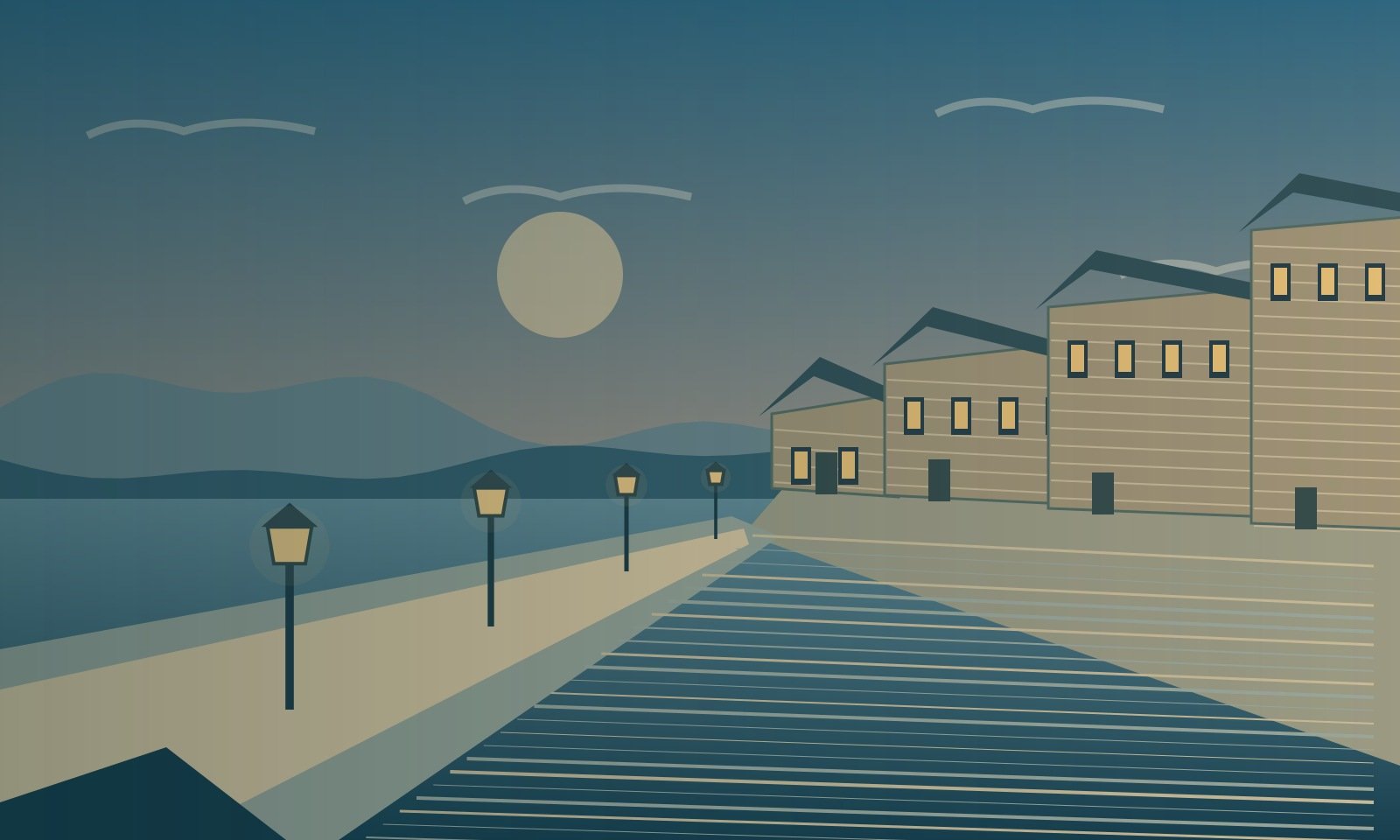
Otaru-inspired waterfront illustration; not a documentary photograph or a precise walking map.
Otaru is often reduced to a canal photograph. A better visit links that waterfront with the old merchant district, a deliberate meal and whichever craft or history stop genuinely interests you. The tourism association’s central route begins at Otaru Station and descends towards the canal through the historic townscape. [1]
This Otaru travel guide keeps the central walking route separate from excursions to the mountains or coast. Its route order, pacing and activity calculations are editorial suggestions; adjust them for the weather, your mobility and the places you actually choose.
This article contains affiliate links. Taylor’s Trailblazing Travels may earn a commission if you book or buy through them, at no extra cost to you.
Main route
Station, canal, Sakaimachi and a deliberate finish.
Food
Choose a market meal or a sit-down restaurant; do not queue for both by default.
One night?
Worth considering for an evening and morning, rather than extra checklist sights.
Extra excursion
Mt Tengu or the coast changes the time and transport budget.
Choose a day trip or a one-night stay
A central day trip makes sense when you are already staying in Sapporo and chiefly want the canal, shops and food. One night changes the rhythm: you can return to the waterfront after the busiest part of the day and begin the next morning without an inbound journey. Otaru’s tourism association specifically highlights its evening streets and canal lighting. [6]
| Your priority | Suggested approach | What to avoid |
|---|---|---|
| Canal, shops and one meal | A focused day from Sapporo. | Adding a distant coast or mountain stop because the centre looks small. |
| Evening canal and unhurried morning | One night near your chosen central route. | Moving hotel for a visit that still ends immediately after breakfast. |
| Central town plus an outer attraction | Allow more of a second day or cut the central route. | Counting transport to Mt Tengu as walking around the canal. |
| Limited walking tolerance | A shorter central section, rests and selected local transport. | Assuming every route is flat because the canal path is. |
Before adding an overnight stay, compare the complete change: packing, check-out, travel, luggage storage and check-in. The extra night is worthwhile when it buys a part of Otaru you want to experience, not when it simply adds another hotel receipt.
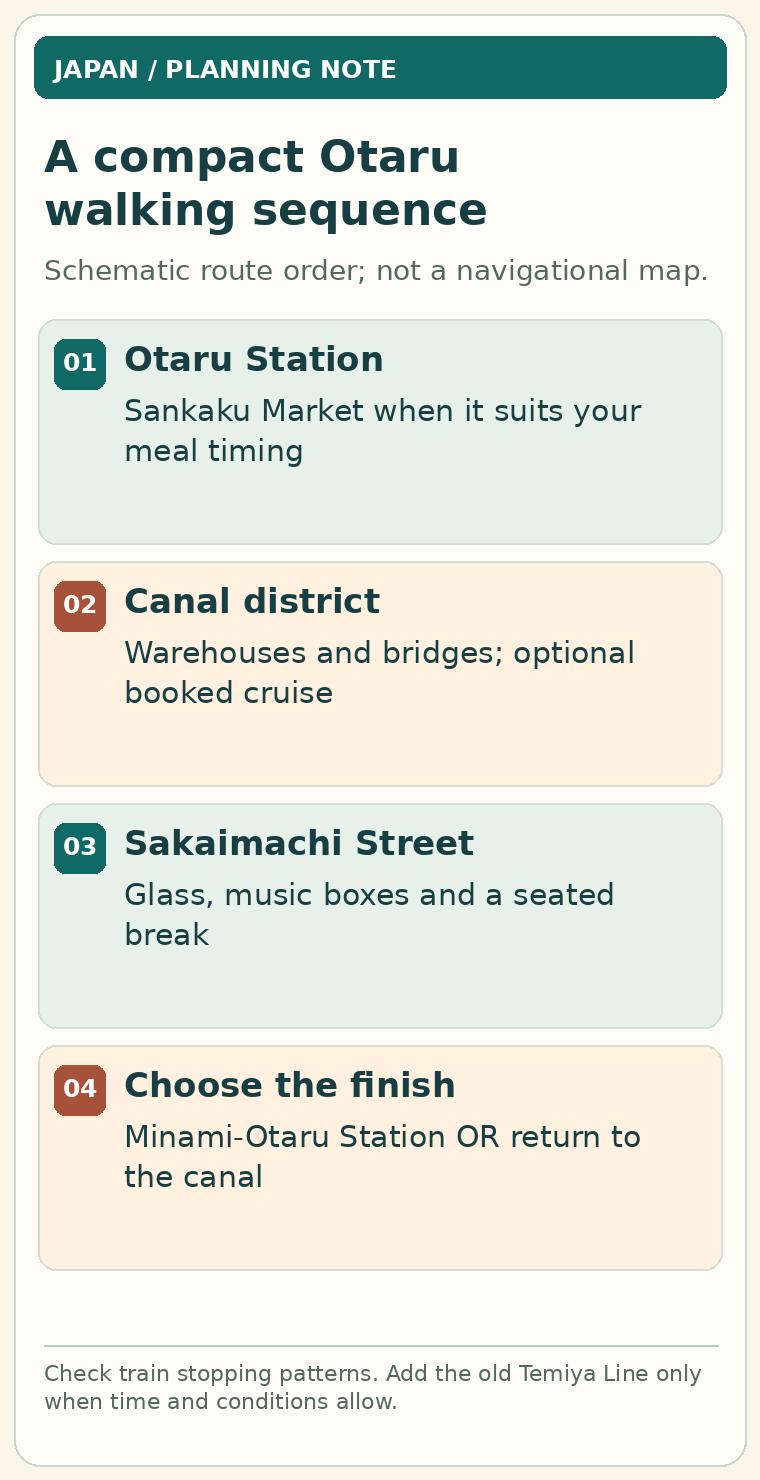
A central walking route with two sensible finishes
On a phone, swipe the diagram sideways to read its labels.
Start: Otaru Station and the market
Sankaku Market is beside JR Otaru Station. It is convenient for a meal at the start or end of a rail visit, but convenience does not mean that you must queue immediately on arrival. Look at the menu and waiting time, then decide whether to eat now or continue towards the waterfront. [3]
Descend towards the canal
The official city-centre description follows the downhill approach from Otaru Station, passing the old Temiya railway alignment and historical buildings before reaching the canal. Take this as an orientation route, with a short historic-street detour only when conditions and time allow. [1]
Continue into Sakaimachi
The city’s shopping guide highlights glassware and music boxes as distinctive Otaru purchases. Choose one or two places that interest you rather than trying to inspect every display. A small, carefully chosen shop visit can easily take longer than expected when you want to compare items or arrange safe packaging. [2]
Finish deliberately
From the southern part of the central shopping area, compare the route to Minami-Otaru Station with returning towards Otaru Station. Alternatively, return to the canal for a later atmosphere. Check the actual train stopping pattern and your onward destination before committing to the finish; these choices should reduce backtracking, not create a rushed departure.
An all-day version can accommodate a substantial meal, shops and a booked activity. A shorter version should keep the canal, one craft stop and one meal, dropping the return loop and any outlying attraction.
Canal walk or canal cruise?
You can enjoy the waterfront on foot without buying a cruise. The boat is an optional change of viewpoint and interpretation rather than an entry ticket to Otaru. The operator describes a 35–40-minute journey, with its ticket centre and boarding area beside Chuo Bridge. It also warns of weather cancellations and asks passengers to arrive before departure. [5]
On a phone, swipe the diagram sideways to read its labels.
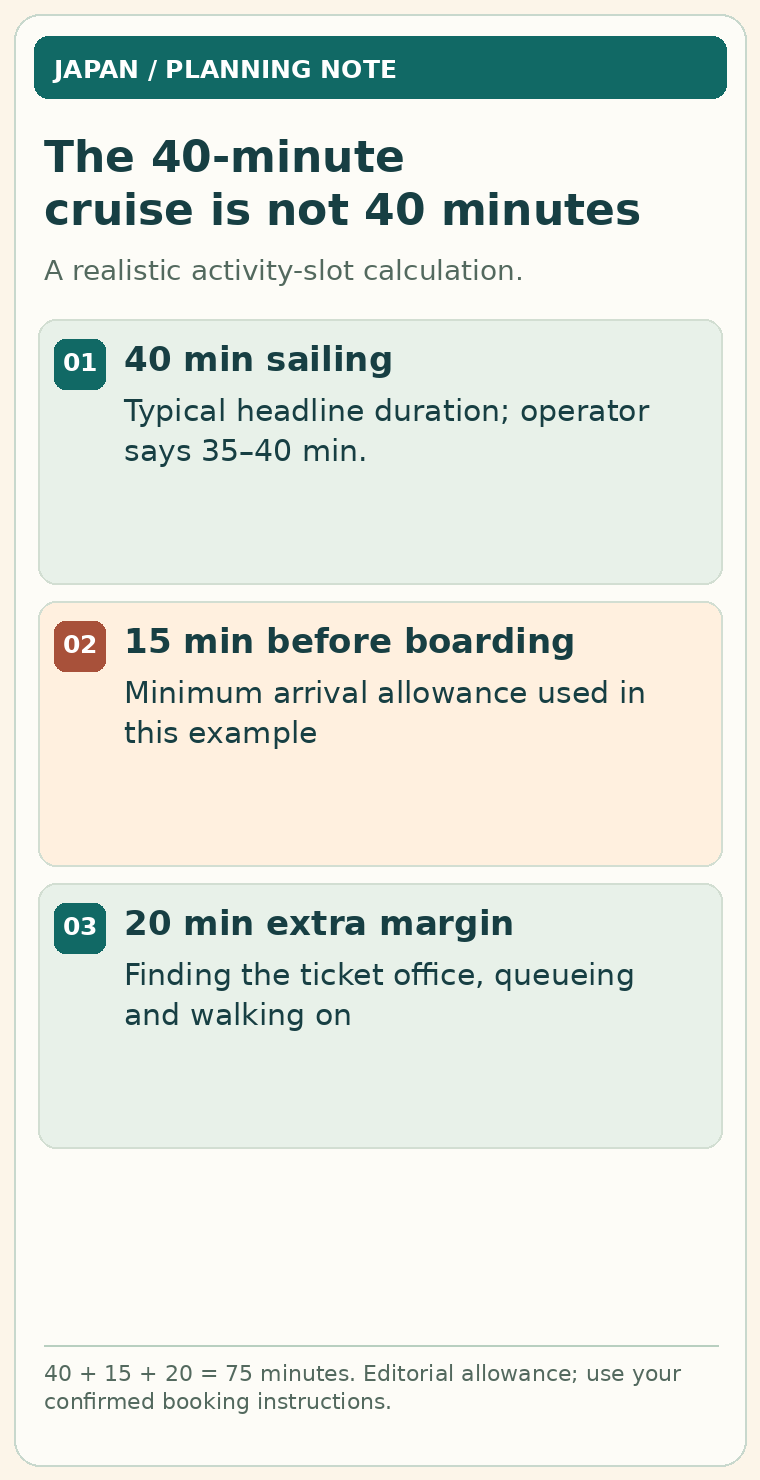
A day cruise and an after-dark cruise serve different priorities. Choose daylight for seeing building detail; choose later light for atmosphere, accepting that this may shape dinner and the return train. Do not use a summer departure list to promise a winter sailing. [5]
Keep a land-based alternative if the boat is cancelled. The sensible replacement is usually more time in the same district, not an improvised distant excursion that makes the evening connection difficult.
Food: one good meal is better than several queues
Otaru’s official food guide highlights sushi and seafood alongside ankake yakisoba, a browned-noodle dish covered with a thick sauce, and both Japanese and Western sweets. That gives you more choice than a compulsory raw-seafood lunch. [4]
Market meal or restaurant?
The station-side market is convenient, especially around your train arrival. A separate restaurant is a better choice when you have a particular dish in mind or prefer a quieter sit-down break. Check actual portion size, ingredients and price rather than treating every seafood photograph as the same meal. [3]
Leave room for the craft district
A sweets or coffee stop can double as a rest during the Sakaimachi part of the walk. Choose a shop because you want what it sells, not because every other itinerary includes its queue. Buying a fragile item early may change how freely you want to walk for the rest of the day.
When dietary requirements matter
Show written requirements and ask about stocks, sauces and shared preparation where necessary. Do not infer that a noodle dish is vegetarian from the absence of obvious meat in its photograph. Keep another meal option rather than relying on one restaurant being able to adapt a specialist menu.
For spending, give your main meal a separate allowance from snacks and souvenirs. A modest transport day can still become expensive when several small purchases are never added together. No current restaurant quote is assumed in this guide.
Add one extra experience, not a second itinerary
Mt Tengu is a separate destination with mountain views and its own access requirements. The tourism association treats it as its own area rather than an extension of the central canal walk. Add travel, the attraction itself and a return margin before deciding that it fits the same day. [7]
The wider coast and Shukutsu are similarly different choices. A tour labelled “Otaru” may spend a large share of its time outside the central town. Read the actual stopping programme instead of assuming the title means several hours wandering the canal district. [9]
A self-guided walk remains a good alternative when you enjoy browsing at your own pace. Paid help should solve a real problem—mobility, interpretation or a particular experience—not merely fill a slot between two shopping stops.
Arrive and leave without turning a short trip into a problem
JR Hokkaido’s airport corridor links New Chitose Airport, Sapporo and Otaru. At Sapporo, check the destination: trains for Teine or Hoshimi do not continue to Otaru. The operator distinguishes non-reserved travel from the additional reserved-seat product, so read which ticket or IC-card balance covers which part. [8]
Keep the journey simple for a Sapporo day trip. Compare the ordinary fare for the actual return journey before considering any multi-day pass. A reseller product described as a four- or five-day JR pass is not a single Otaru train ticket, even when it appears in a route search.
For travel beyond Otaru towards Yoichi, Kutchan or Niseko, JR states that you must transfer and cannot use an IC card beyond Otaru. Buy the appropriate ticket in advance at the departure station instead of assuming the same tap-in arrangement continues throughout Hokkaido. [8]
Travelling with large luggage? Check storage or your hotel’s baggage arrangements before the day. Do not build a plan that depends on finding an empty station locker at a particular moment. A crowded shopping street is not a pleasant place to discover that you must carry everything.
Before an onward flight, plan from the required airport arrival time backwards. Include station access, the train service you intend to use and a disruption allowance appropriate to conditions. A scenic afternoon is not worth an avoidable missed departure.
Adjust the route for the season and the person walking it
In snow, ice or heavy rain, shorten the central circuit rather than keeping the same distance and simply walking faster. Put warm indoor breaks between outdoor sections, leave both hands available where footing is awkward and use footwear suited to the conditions.
For reduced mobility or a pushchair, check gradients and entrances separately from the canal promenade. Ask about the exact boarding arrangement before booking a boat or rickshaw. A broad statement that an attraction is accessible cannot establish the suitability of every approach and activity.
Shop and restaurant hours do not necessarily extend through an evening canal visit. Choose your meal and any essential shopping first, then build the later walk around them. The tourism association’s evening recommendations are a useful starting point, not proof that every business is open late. [6]
In warmer months, leave time to pause rather than treating pleasant walking weather as a reason to add more distance. Photographs, purchases and meals are all part of the visit, not inefficiencies to remove.
Questions that help you keep the day realistic
Can I see the canal in a couple of hours?
Yes, a short visit can focus on the station-to-canal route. It is a different experience from an all-day visit with a meal, shops and a cruise. Be clear about which one your timetable supports.
Do I need both the boat and a walking tour?
Not usually for a short visit. They may overlap in subject matter, although they offer different viewpoints. Choose the format that adds the interpretation or access you need and leave time for independent browsing.
Should I book dinner for an overnight stay?
Book when one particular restaurant matters, especially with dietary requirements or a small party needing a specific sitting. Otherwise, identify a couple of suitable options and check their hours instead of assuming the shopping district will provide a late meal.
Is the city only about seafood?
No. The official food guide also includes ankake yakisoba and several kinds of sweets, while the craft and historic-street interests stand on their own. Visitors who do not eat seafood can still make a rewarding day, provided they check restaurant ingredients. [4]
Let Otaru remain a town to explore
Make the canal and Sakaimachi the central thread, choose a meal deliberately and add only one activity that earns its time. Stay overnight when the evening and following morning matter to you. Keep mountains and coastal excursions as explicit substitutions or separate plans.
That leaves enough space to notice the buildings, compare a piece of glassware and enjoy lunch without spending the entire visit watching the clock.
Sources and further checks
Sources consulted for the editorial review on 17 October 2026. Where an older page conflicts with a newer dated notice, the relevant correction is identified in the text.
- Otaru Tourism Association: city-centre route and orientation
- Otaru Tourism Association: glass, music boxes and shopping
- Hokkaido Tourism Organization: Otaru Sankaku Market
- Otaru Tourism Association: local food
- Otaru Canal Cruise: duration, assembly, access and weather cancellations
- Otaru Tourism Association: the city after dark
- Otaru Tourism Association: Mt Tengu
- JR Hokkaido: airport, Sapporo and Otaru train guidance
- GetYourGuide: Otaru activities and excursions
- GetYourGuide: Otaru sightseeing by rickshaw
Illustrations in this article were created for Taylor’s Trailblazing Travels. Third-party photographs, where used, are credited beside the image or in the source list.