Krabi Travel Guide for First-Time Visitors
Choose the right part of the province, then balance beaches, islands and inland experiences.
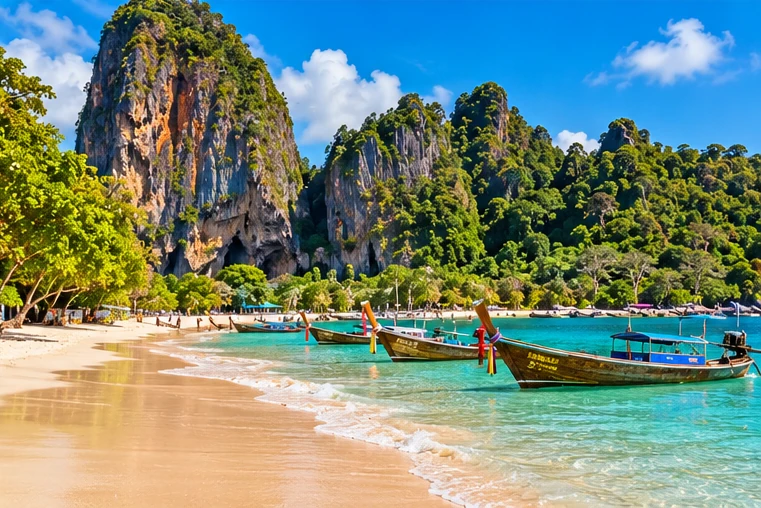
Original illustration inspired by Krabi's limestone coast, not a photograph of a specific landing.
This Krabi travel guide for first-time visitors starts with a distinction that prevents many disappointing bookings: Krabi is a province, not one beach resort. Krabi Town, Ao Nang, Railay, Klong Muang and Tubkaek can all appear in searches for the same holiday, yet they offer different access, evenings and travel requirements. Choose the area first and the room second.
The province’s appeal is the combination of limestone scenery, coast, islands and inland experiences. However, those attractions are spread out. A boat excursion, a forest visit and an evening in town are separate building blocks, not stops that must be squeezed into the same day. The better first visit usually has fewer moves and more time to enjoy the place you have chosen.
The recommendations here are research-led and organised around practical travel decisions. Official tourism information establishes the places and access arrangements; transport and accommodation choices are assessed by how they fit a realistic stay. Suggested budgets are explicitly labelled planning models rather than live quotes. The aim is to help you assemble a trip that remains enjoyable when the weather or your energy changes. [1] [2] [3]
This article contains affiliate links. If you book or buy through one, Taylor’s Trailblazing Travels may earn a commission at no extra cost to you. Recommendations are based on their practical fit, not the commission available.
Compare Ao Nang
Road access, dining and excursion arrangements.
Railay is boat-access
Plan the landing, bags and final departure.
Quieter coastal areas
Price meals and transport as part of the stay.
One sea day plus contrast
Add mangroves, inland nature or town time.
Province versus resort
Krabi travel guide for first-time visitors: understand the map
Five names, five different stays
Krabi Town is the provincial urban base; Ao Nang is the familiar mainland resort area; Railay is a peninsula reached by boat; Klong Muang and Tubkaek are further coastal alternatives. TAT’s provincial material covers beaches, islands and inland attractions, so a general Krabi search can mix together accommodation that is not interchangeable. [1] [2] [3]
Begin with the question of how you want to leave the hotel. Would you like to walk to several restaurants, step into a quieter resort setting or accept a boat transfer in exchange for the Railay landscape? Each preference points towards a different shortlist. A hotel with excellent reviews can still be wrong for your plans if its location creates an unwanted transfer every day.
Avoid an accidental province-wide itinerary
You do not need to include Koh Lanta, Phi Phi, Railay, Ao Nang and inland Krabi in one short stay. Some deserve their own nights rather than being treated as compulsory excursions. On a four- or five-night visit, select one main base and a small number of contrasting experiences.
The table compares locations by practical purpose and transport demands, not by a score or commission. It is intended to narrow the search. Before paying, examine the exact hotel entrance, room access and route to meals, because the broad area name cannot describe every property.
Choose the Krabi base first
On a small screen, swipe within the table to see every column.
| Base | Good reason to stay | Practical trade-off |
|---|---|---|
| Ao Nang | Mainland convenience and varied outings | A developed resort atmosphere |
| Railay | Time among the cliffs and beaches | Boat access and luggage handling |
| Klong Muang | A more resort-led coastal break | Check nearby meals and transfers |
| Tubkaek | A setting-focused retreat | More dependence on the property and arranged transport |
| Krabi Town | Riverfront, food, community or transit | Not a beachfront resort |
Convenience without pretending it is secluded
Ao Nang as a first base
Why it works for many newcomers
Ao Nang combines a mainland road connection with accommodation, restaurants and access to boat excursions. That makes it a useful starting point when you want a varied itinerary without moving hotels. TAT describes it as a developed visitor base with services and offshore trip options, rather than an isolated cove. [2]
Choose a property that makes your normal evening easy. A lower-road hotel near the seafront and an inland hillside property may both be labelled Ao Nang, but the walk home can be very different. Check the actual route and gradients instead of trusting a distance measured straight across the map.
What you trade for that convenience
Expect a recognisable resort atmosphere, including tour desks, traffic and busy dining areas. The local beach can be enjoyable for a walk or a suitable-condition swim, but it should not be assumed to provide the same setting as Railay or an offshore island. Choosing Ao Nang primarily as a practical base is different from expecting a remote beach retreat.
For a first visit with several outings, I would normally accept some development in exchange for simpler logistics. Travellers planning to spend nearly all their time at the resort may prefer a different coast. Match the base to the days you actually want, not to the most flattering photograph.
A peninsula with a boat connection
Railay for an overnight stay
Scenery changes the arrival plan
Railay’s limestone cliffs and beaches are central to its appeal. Although it is attached to the mainland, the usual visitor approach is by boat rather than a through road. TAT distinguishes Railay West, Railay East and Phra Nang, so check where the hotel sits and where your transfer lands. The attractive beach photograph may not show the arrival side. [3]
Pack so that you can handle the final approach. Depending on service, tide and conditions, boarding may involve steps, a floating structure or a wet beach landing. Ask the hotel for its current recommended route and assistance options before assuming a large wheeled case can be rolled from the vehicle to reception.
Stay there for the experience, not as a shortcut
An overnight visit can make sense when you want early and late time around the peninsula rather than a brief excursion. However, mainland outings involve a boat component, and an early airport departure needs advance planning. A cheaper room on Railay East should be evaluated against the beach and walking experience you want, not treated as identical to beachfront Railay West.
For a short Krabi holiday, one substantial Railay day trip may be simpler than changing hotels for a single night. For a longer stay focused on climbing or the scenery, the extra transfer can be worthwhile. The choice depends on how much you will use the setting outside the busiest part of the day.
Choose a resort-led holiday deliberately
Klong Muang and Tubkaek
Quiet is useful when it matches your routine
These coastal areas are worth investigating when your priority is the hotel, beach setting and slower evenings rather than easy access to a large concentration of restaurants. Before booking, calculate how often you would want to travel to Ao Nang or town. A quiet location is an advantage only when you do not resent the transport required to leave it.
Check restaurant options at the property and nearby, meal inclusions and whether the room layout suits the group. Couples may appreciate a smaller, tranquil resort, while a family may care more about a pool, shade and practical room access. Neither preference can be resolved by star rating alone.
Read resort claims carefully
A resort website can establish its own facilities and location, but broad claims about year-round calm water should not override daily conditions. The Tubkaak’s own site, for example, describes a nature-led beachfront setting at Tubkaek; use such information to understand the property, while relying on local warnings and marine guidance for swimming decisions. [13]
Ask whether excursions collect directly from the hotel or require a transfer surcharge and an earlier start. A day tour advertised from Krabi may have different pickup arrangements for each coast. Price those additions before comparing a resort room with accommodation closer to the main departure areas.
Riverfront, food and local context
When Krabi Town is the right choice
A town stay has its own purpose
Krabi Town can be useful for travellers interested in a riverside setting, markets, community visits or a practical stop between journeys. It should not be dismissed simply because it is not a beach resort. Equally, booking it for a daily walk to a swimming beach would misunderstand what the location offers.
TAT’s more recent Krabi material highlights places such as Khao Khanap Nam and Ko Klang alongside the coast. These provide a reason to spend time around town rather than treating it only as an interchange. Check access and any local guide or boat arrangement for the specific experience rather than expecting every site to operate as a walk-in attraction. [14]
A useful short addition, not a compulsory hotel change
A half-day or evening visit may be enough for a beach-based traveller who wants a different meal and a look at the riverfront. A separate night can work when you deliberately plan a community-focused outing or when it simplifies a genuine transport connection. Do not add one merely because the province and town share a name.
Where an excursion visits a working community, ask permission before photographing people and follow the guide’s advice about dress and behaviour. Support purchases that interest you rather than assuming access to private spaces is included in the tour. The visit should fit the community’s arrangements, not interrupt them.
Pick the gateway before the transfer
Getting to Krabi
Flights and mainland arrivals
Krabi Airport uses the code KBV. Check the operating airline, arrival time and luggage allowance for the exact ticket, especially when connecting independently from another flight. A lower airfare may be less useful if it produces an arrival that complicates the final boat journey to Railay.
For Ao Nang or another road-accessible coast, arrange transport to the specific accommodation. As an editorial planning allowance, set aside roughly 40-60 minutes for a direct airport-to-Ao Nang road journey, with extra time for traffic, rain, baggage and waiting. This is not a guaranteed transfer duration or a quoted public-service timetable.
Arriving from Phuket or another island
Compare road and sea options by their actual endpoints. A ferry arrival at a Krabi pier is not necessarily a hotel arrival, while a road transfer may offer a different drop-off. The easiest option depends on your starting hotel, luggage, weather and destination rather than the shortest number printed in a route search.
For a move from Phuket, a road transfer can be a practical alternative to adding more boat travel, especially when your Krabi hotel is on the mainland. A sea route may be attractive when it genuinely fits your itinerary. In either case, keep the arrival day free of tight paid commitments until the transfer details are clear.
Buy the correct journey
Railay day trips and local boat logistics
A short crossing is still a boat trip
TAT’s Railay entry lists passenger boats from the Ao Nang and Noppharat Thara areas and describes a crossing of about twenty minutes. Treat that as broad orientation: waiting, sea conditions, boarding and the actual drop point affect the elapsed time. Ask the current ticket desk or operator which service is running for your destination. [3]
Confirm whether the ticket is one-way or return and how the return is arranged. A receipt for a shared service is not necessarily a private boat waiting for you all afternoon. Establish the reporting point and the latest suitable return with the operator rather than wandering back after sunset expecting an unchanged service.
Pack for the landing
Use footwear suitable for boarding and protect electronics from spray. Keep bags light enough to move confidently and ask for assistance rather than stepping awkwardly between surfaces. Children and travellers needing support should have an arrangement suitable for them, including properly fitting flotation equipment when required.
Do not assume that a scenic route is accessible to every passenger. Discuss steps, wet boarding, mobility aids and the walk from the landing to the hotel or beach before buying. A day on the mainland can be a better choice when the current boat arrangements do not meet your needs.
Two useful sea-day choices
Four Islands or Hong Islands?
Choose a landscape and pace
A Four Islands-style trip commonly focuses on the offshore area around Poda, Chicken Island and the tidal sandbar islands. The name is a sales shorthand rather than a guarantee of four identical landings. Some itineraries include Phra Nang or other stops, so read the actual route and avoid paying twice for an experience already planned separately. [2]
The Hong Islands offer another style of day, associated with the principal island’s beach, lagoon and viewpoint. Tide and access affect the lagoon visit, while the viewpoint involves a climb. Choose it because those features appeal to you, not because an itinerary promises an unbroken series of photographic highlights. [4]
Shared versus private boats
A shared trip can control costs and provide a straightforward itinerary. A private charter offers more control, but the agreed route still depends on operating limits, park access and the weather. Confirm the boat type, included stops, collection, equipment, meals and fees. Private does not mean unrestricted access or permission to ignore a closure.
Avoid placing two similar island tours on consecutive days without a reason. One good sea day and one inland or mangrove outing usually give a first visit more contrast. Keep the preferred boat day movable and ask how the operator deals with route changes before paying.
Budget beyond the tour ticket
National-park fees and conservation rules
Different parks can mean different charges
Hong belongs to Than Bok Khorani National Park, while other familiar island excursions involve Hat Noppharat Thara-Mu Ko Phi Phi National Park. One fee should not be assumed to cover every destination in the province or every day of travel. Ask which protected areas the itinerary enters and how their tickets are handled. [4] [5]
The amounts below are published tourism-authority figures checked on 3 October 2026. They are useful planning references, not a promise that every tour includes them or that the tariff will be unchanged when you travel. Confirm the applicable nationality, age category and current amount with the operator or park before departure.
Published foreign-visitor admission references
On a small screen, swipe within the table to see every column.
| Protected area / attraction | Adult | Child | Check |
|---|---|---|---|
| Hong / Than Bok Khorani | THB 300 | Confirm locally | TAT reference; confirm child category |
| Hat Noppharat Thara-Mu Ko Phi Phi | THB 400 | THB 200 | Ask if included in the tour |
| Emerald Pool | THB 400 | THB 200 | Separate inland attraction |
TAT figures checked 3 October 2026. Current park instructions and nationality/age rules take precedence. [4] [5] [6] Child-price discrepancy: TAT lists THB 100 for Hong, while this operator quotes THB 150. Both references checked 3 October 2026; confirm the current charge and age category. [4] [16]
Access rules are part of the experience
Follow park staff and marked areas, keep off coral and do not remove shells or wildlife. A famous beach may permit visiting while restricting swimming or boat approaches. Do not assume that paying the fee gives access to every viewpoint, lagoon or trail regardless of conditions.
Ask the tour seller to identify excluded charges in writing. Bring the appropriate payment method and keep tickets or receipts for the day. When a park stop is cancelled, the refund or alternative itinerary depends on the terms, so clarify that before choosing between apparently similar tours.
A day away from the sea
Inland Krabi: Emerald Pool and the hot springs
Allow time for the road and the walk
The Emerald Pool is in the Khlong Thom area, away from the main coastal resort strip. TAT describes it within a protected forest setting and distinguishes the pools and access paths. Treat the visit as an inland outing, not a quick extra between a morning island cruise and an evening boat. [6]
Bring suitable footwear for walking and surfaces that can be slippery. Check which water areas permit swimming and which are viewing-only, and follow current local instructions. A photograph of blue water does not establish that visitors may enter it. Seasonal or conservation restrictions may affect parts of the visit.
Combine activities selectively
The nearby hot-spring area is often marketed with the Emerald Pool, but adding a temple climb can turn a gentle nature day into a demanding programme. Read the amount of driving and walking, the order of stops and the time allowed at each. A smaller itinerary may be more enjoyable than a discounted package with too many additions. [6] [15]
Do not rely on tourism marketing about health benefits. For hot-water exposure or other activity-specific concerns, follow site guidance and seek appropriate personal advice where needed. Families should also assess the heat, steps, toilets and rest opportunities rather than judging the day solely from the main attraction’s photograph.
A climb is optional, respect is not
Tiger Cave Temple
Understand the physical demand
Wat Tham Suea is a temple complex as well as a viewpoint outing. TAT describes a staircase of more than 1,200 steps to the hilltop. That is a substantial climb in heat, not a brief stroll to a lookout. Choose a time and pace appropriate to your group, carry water and turn back rather than treating the summit as compulsory. [7]
The lower temple grounds can still be meaningful without climbing. Dress respectfully, follow instructions and avoid disturbing worshippers. Travellers who cannot comfortably manage steep stairs should not be told that the visit only counts if they reach the top.
Do not stack two strenuous outings
A demanding climb after a long forest excursion may look efficient on a tour schedule but feel very different on the day. Ask whether skipping the climb is possible and where you can wait comfortably. A guide should be able to explain the practical arrangement rather than assuming everyone has the same stamina.
After heavy rain, pay attention to current access and surface conditions. A private driver does not make a closed or unsuitable route safe. Keep a town or other low-effort alternative available so the day does not depend entirely on reaching a viewpoint.
Add a different kind of scenery
Mangroves and community experiences
Ao Thalane for a guided paddle
TAT identifies Ao Thalane as a kayaking area with mangroves and limestone scenery. It offers a useful contrast to open-water island hopping, but the route and experience depend on tide, conditions and the provider. Ask how much paddling is required, whether a guide accompanies the group and what happens if conditions change. [8]
Confirm the collection point, equipment and whether the itinerary suits beginners or children. Do not infer that sheltered-looking water removes all practical demands. A shorter guided route may be a better first experience than a longer programme chosen only because the headline price appears similar.
Visit communities through an appropriate arrangement
Around Krabi Town and Ko Klang, tourism information highlights craft and local-life experiences. Choose a visit that is organised with the community and explains what is included, rather than treating a working village as a freely accessible performance. Ask about the duration, transport and opportunities to buy locally made items without pressure. [14]
These outings are valuable precisely because they differ from another beach stop. Give them enough time and do not combine them with so many attractions that the visit becomes a hurried photo opportunity. A respectful, smaller plan can offer more understanding than a long list of stops.
Variety without changing hotels
A five-day Krabi plan
Day one: arrive and settle
Travel to the selected base and keep the rest of the day local. Check the route to dinner, confirm the next day’s arrangements and take an easy walk when conditions suit. A flexible evening is particularly useful after a late flight or an additional boat transfer to Railay.
Do not buy every excursion immediately. Identify the best weather window for the priority sea day first, then fit the less weather-sensitive activities around it. This avoids cancelling a carefully chosen tour merely because a less important outing already occupies the suitable day.
Days two and three: Railay and one island day
Use one day for Railay at a pace that includes time on the peninsula rather than just travelling there and back. On another suitable day, choose the Four Islands or Hong itinerary you prefer. If staying on Railay already, replace the separate visit with a quiet morning or an activity arranged locally.
Keep evenings simple after boat excursions. The advertised return time may not include every hotel drop-off, and a long day in the sun can make a late reservation less appealing. A nearby meal preserves the relaxed character of the holiday.
Days four and five: contrast and departure
Choose either an inland nature day, a mangrove paddle or a town-and-community outing. Trying to fit all three into the last full day removes the contrast you were seeking. On departure day, keep activities compatible with checkout and the transfer, particularly when leaving Railay by boat before a flight.
With five full nights instead of four, add a free day rather than automatically booking another tour. That day can absorb a weather change or simply let you enjoy the base you selected. The plan succeeds when it remains flexible, not when every box has been ticked.
A five-calendar-day first visit
On a small screen, swipe within the table to see every column.
| Day | Main plan | Adjustment |
|---|---|---|
| 1 | Arrive, settle and eat nearby | No tight paid activity after arrival |
| 2 | Railay visit or local time if based there | Confirm the return boat |
| 3 | One island day: Hong or Four Islands | Move to the suitable weather window |
| 4 | Mangroves, inland nature or town | Choose one main purpose |
| 5 | Unhurried checkout and departure | Allow for a boat before the road, if relevant |
Decide how far you want to go
Food, markets and evenings
A convenient dinner is part of a good base
A walkable collection of places to eat can improve the whole stay, particularly with children or after an excursion. Inspect the route from the hotel rather than counting restaurant icons within a large radius. A place technically nearby across an awkward road or up a steep lane may not feel convenient at the end of a hot day.
Use a town visit to add variety when you want a different evening, but make the return arrangement before travelling. Markets can change their hours or operate on particular days, so check the current programme rather than treating the words night market as proof of a nightly event.
Order and compare transparently
For seafood charged by weight, establish the weight, cooking method and final amount before ordering. Ask about sauces, stock and allergens when dietary restrictions matter. A photograph or a broad vegetarian label does not resolve every ingredient question, especially when the kitchen is busy.
You do not need a ranked restaurant list to eat well. Pick places whose menu, handling and atmosphere suit you, vary the meal style and leave room to revisit somewhere you enjoyed. Treating every dinner as a destination across the province can add transport costs without improving the holiday.
A clear allocation model
What to budget
Do not confuse a room with a person’s daily cost
Accommodation is usually a room cost, while many tours and entrance fees are per person. A private airport vehicle may serve the whole group, whereas shared transport charges separately. Start with these units before adding anything, otherwise a couple’s budget can be understated or counted twice.
The following model was prepared on 3 October 2026 as an illustrative allocation for two adults, not a set of bookable quotes. It is designed to show the decisions that drive spending. Your actual accommodation dates, room type, boat choices and meal preferences should replace the assumptions.
Illustrative five-day / four-night model for two
On a small screen, swipe within the table to see every column.
| Category | Allocation | Basis |
|---|---|---|
| Accommodation | THB 10,000 | 4 nights x THB 2,500; an assumed room budget |
| Food and non-alcoholic drinks | THB 5,000 | 5 days x THB 1,000 for two |
| Airport and local transport | THB 3,000 | Whole-group planning allowance |
| Excursions and admissions | THB 7,000 | Two-person allowance, replace with chosen itinerary |
| Contingency | THB 2,500 | Flexibility and unforeseen needs |
| Model total | THB 27,500 | Flights, insurance, shopping and alcohol excluded |
Illustrative budgeting assumptions prepared 3 October 2026, not bookable prices or a claim about average spending.
Price the location’s consequences
A quieter resort may be good value when you want to stay there, but expensive in practice when you travel out for every meal. A very cheap inland room can have the same problem. Add expected transport to the room comparison instead of treating it as a small incidental expense.
Keep park fees and optional upgrades visible. A private boat, a larger transfer vehicle or an extra night after disruption can materially change the total. A contingency should cover genuine uncertainty, not costs that were clearly excluded from the booking but overlooked.
The Andaman reality
Weather, swimming and flexible bookings
Plan around the day, not only the season
Krabi’s Andaman location means that seasonal sea conditions affect the type of holiday you can expect. Nevertheless, even a usually favourable month can bring an unsuitable day for a particular boat trip or swim. Check the marine forecast and local instructions close to departure rather than relying on a calendar promise. [10] [11]
At the editorial review on 3 October 2026, the Thai Meteorological Department’s west-coast bulletin included thundershowers and wave guidance. The useful lesson is to use the current bulletin, not to carry that one day’s forecast into a future booking. Keep a sea-dependent activity movable where possible. [10]
A cancellation can be the correct outcome
When an operator cancels for conditions, use the stated rebooking or refund process. Do not seek an unregulated alternative merely to preserve the itinerary. A resort day or a suitable land outing is preferable to turning a weather warning into a challenge.
Follow beach flags and avoid swimming in boat routes or water that local staff advise against. UK guidance warns about coastal currents and other activity risks. Travellers who need particular assistance should establish the suitability of the exact excursion rather than assuming a standard group programme can be adapted on arrival. [11]
Ask precise questions
Families, mobility and choosing suitable activities
Check the last few metres
A transfer described as private may still finish at a boat landing, a flight of stairs or a steep hotel driveway. Ask about the entire route to reception and then the room. This matters for mobility aids, tired children and heavy luggage, not only for travellers formally requesting accessibility assistance.
For families, compare a hotel pool, shade, room configuration and access to meals before prioritising an elaborate view. A large resort can involve substantial walking, while a small property may have no lift. The booking should reflect how your group will use the space each day.
Choose the excursion everyone can enjoy
An itinerary mixing a fast boat, several wet landings and a viewpoint climb may not suit the whole group. Ask whether passengers can comfortably opt out of individual stops and what facilities are available while waiting. Staying on board is not always an attractive alternative in heat or swell.
A shorter boat outing, a guided mangrove trip or a quiet beach day may produce a better shared experience than the most ambitious package. There is no obligation to make the trip strenuous because the scenery is dramatic. Match the activity to the least comfortable essential requirement within the group.
Protect the next connection
Onward travel and the final night
Do not treat every pier as equivalent
For onward travel, confirm the departure point, the operator and whether hotel pickup is included. Ao Nang, Noppharat Thara, Ao Nam Mao and Krabi’s other boat facilities serve different purposes. A destination name in a search result does not identify where you should physically report.
For Koh Lanta or another island stay, compare the actual season’s road-and-ferry or passenger-boat options. Choose a service that reaches the area you have booked, or price the final transfer separately. Reserve the first night with a realistic arrival expectation rather than scheduling an immediate activity.
Add a buffer before an expensive flight
A Railay-to-airport journey includes a sea component before the road transfer. For an early or particularly consequential departure, ask the hotel what is genuinely workable and consider spending the final night somewhere road-accessible. Do not rely on a generic shortest crossing time to justify a tight flight connection.
The same principle applies when returning to Bangkok for a separate long-haul ticket. Arriving earlier protects against disruption in the first part of the journey. Choose the buffer according to the consequences and your ticket terms, rather than expecting one minimum time to fit every itinerary.
What the province does well
Pros and cons of a Krabi holiday
Strong reasons to choose it
Krabi suits travellers who want coastal limestone scenery, boat-access beaches and a choice of inland experiences within one regional stay. A carefully chosen mainland base can make that variety practical without daily hotel changes. A resort-led coast or Railay stay can produce a different, slower version of the same province.
The limitations are the distances between experiences, boat-dependent access in some areas and weather-sensitive excursions. Visitors can be disappointed when they expect a generic Krabi hotel to place every famous beach outside the door. That is a planning mismatch rather than evidence that the province is only worthwhile in one particular way.
Krabi's practical strengths and limits
On a small screen, swipe within the table to see every column.
| Feature | What it offers | What to plan for |
|---|---|---|
| Distinct bases | Resort, peninsula and town choices | Do not book the province name alone |
| Coastal scenery | Cliffs, islands and different shorelines | Some highlights require boats |
| Inland variety | Forest, temples and community visits | Real road and walking time |
| Flexible mainland stays | Several outings without hotel changes | Weather and pickup-zone constraints |
Keep the comparison personal
Compared with another Thai destination, Krabi may offer exactly the landscape you want but fewer of the urban activities you enjoy elsewhere. Choose it for those priorities, not because a list ranks it above another province. The precise area, room and travel dates can matter more than the broad destination comparison.
For a first trip, I would favour a coherent stay with one base and three contrasting outings over an ambitious circuit covering the whole province. The quieter time between excursions is part of the holiday, not space that needs filling.
Problems you can prevent
Common mistakes
Booking the province instead of the place
Check whether the hotel is in town, on a road-accessible coast or on Railay. Confirm the arrival route before paying for a non-refundable room. A sea-view photograph and the word Krabi do not tell you how many vehicles or boats are required to get there.
Avoid scheduling several similar island trips because their names differ. Read their stop lists and choose the experiences that add genuine variety. Also check which park fees are excluded, whether pickup serves your hotel and what happens when the route changes.
Underestimating effort and timing
Treat temple stairs, forest walks and boat boarding as real physical requirements. A holiday brochure can make a demanding day look effortless. Plan rest, water, suitable footwear and an alternative for anyone who prefers not to participate.
Finally, do not make the final travel day depend on a perfect boat crossing and an immediate vehicle connection. A straightforward departure is a better ending than one more rushed attraction. Protect the next booking before trying to maximise the last few hours.
Clear first-visit answers
Frequently asked questions
Is Krabi Town the same as Ao Nang?
No. Krabi Town is a separate urban base, while Ao Nang is a coastal resort area. Choose the town for the experiences it offers rather than expecting a beachfront holiday. For many first visitors wanting easy excursions and nearby dining, Ao Nang is a useful starting shortlist.
Is Railay an island?
No; it is a peninsula, but the usual visitor approach is by boat because there is no normal through-road access. That affects luggage, assistance and early departures. Ask the accommodation to confirm the current arrival landing and the final route to reception. [3]
Are four nights enough?
Four nights can work for one island excursion, a Railay visit and a further activity if arrival and departure times are helpful. Five or more nights provide better weather flexibility and rest. Shorten the activity list when the travel days consume most of the first and last day.
Which island tour should I choose?
Choose Four Islands for the nearby offshore circuit or Hong when its lagoon, beach and viewpoint are the stronger draw. Compare the exact stops and boat type, because titles alone do not describe the day. One well-chosen trip is sufficient for many first visits.
Can I explore without renting a scooter?
Yes. Choose a suitable base, arrange necessary transfers and use organised or private transport for outings that need it. Rent a vehicle only when you have the appropriate licence, experience and insurance. A seemingly low daily rental is not a reason to take on a vehicle you cannot safely or legally operate. [11]
What should I do if boats are cancelled?
Use the operator’s rebooking or refund process and choose a suitable alternative, such as a hotel day or a land visit unaffected by the weather. Inform any independently booked accommodation or activity that the arrival has changed. Do not assume one supplier automatically updates the others.
Choose the base that makes the days work
Final recommendation
For a varied first visit, begin by comparing Ao Nang hotels with genuinely convenient access, then plan Railay, one island day and one contrasting inland or mangrove outing. Choose Railay itself when time on the peninsula is the central attraction, or a quieter coastal resort when the hotel and beach are the main purpose.
Keep the sea day adaptable, make the arrival and departure routes explicit and resist the urge to cover the entire province. Krabi offers more than enough for a rewarding first stay. The best plan is the one that lets you enjoy the scenery without repeatedly packing a bag or watching the clock.
Research and verification
Sources and fact-checking notes
Park amounts are attributed published references checked on 3 October 2026 and need reconfirmation, particularly child categories. Accommodation areas and trip pacing are editorial comparisons. Model budgets are not live quotes. Do not interpret tourism descriptions as medical advice or guarantees of safe swimming.
- TAT: Krabi destination overviewProvince orientation and a range of coastal and inland attractions. Reviewed 03 October 2026.
- TAT: Ao NangMainland resort and boat-excursion context. Reviewed 03 October 2026.
- TAT: Railay BeachPeninsula access and distinctions between beach areas. Reviewed 03 October 2026.
- TAT: Hong Island and lagoonThan Bok Khorani park, lagoon/viewpoint context and published fee reference. Reviewed 03 October 2026.
- TAT: Hat Noppharat Thara-Mu Ko Phi PhiPublished foreign-adult and child park tariffs. Reviewed 03 October 2026.
- TAT: Emerald PoolProtected-area setting, paths, swimming distinctions and fee reference. Reviewed 03 October 2026.
- TAT: Wat Tham SueaTemple and staircase; more than 1,200 steps. Reviewed 03 October 2026.
- TAT: Thalane BayMangrove and kayaking setting. Reviewed 03 October 2026.
- 12Go: Krabi Airport-Ao NangDate-specific transfer listings; not treated as a universal public fare. Reviewed 03 October 2026.
- Thai Meteorological Department: west coastDate-specific rain, wind and sea guidance. Reviewed 03 October 2026.
- FCDO: Thailand safety and securityCoastal, road and activity precautions. Reviewed 03 October 2026.
- TAT: Noppharat Thara BeachTidal shoreline and coastal orientation. Reviewed 03 October 2026.
- The Tubkaak: property location and facilitiesA resort's own description of its setting, not an independent assessment or a water-safety guarantee. Reviewed 03 October 2026.
- TAT: Krabi beyond the seaTown, Ko Klang and community experiences. Reviewed 03 October 2026.
- TAT: Namtok Ron Khlong ThomOfficial attraction listing; no medical claims are reproduced. Reviewed 03 October 2026.
- Hong Island Krabi: operator fee explanationOperator reference differs from TAT on the child tariff; verify with the park. Reviewed 03 October 2026.
Illustrations in this article were created for Taylor’s Trailblazing Travels. Third-party photographs, where used, are credited beside the image or in the source list.