Best Thailand Islands for Solo Travellers
Find the right balance of company, personal space and a manageable first arrival.
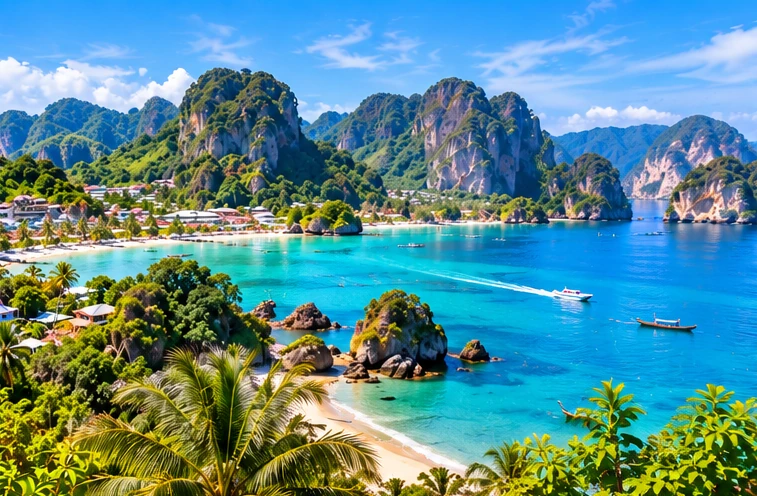
The best Thailand islands for solo travellers are not necessarily the places with the biggest parties. A useful first base lets you arrive without confusion, eat comfortably on your own, join an activity without assembling a group and choose how sociable you feel each evening. That combination matters more than the number of hammocks in a photograph.
My starting shortlist is Koh Tao for an activity-led social stay, Koh Phangan for several different communities, Koh Lanta for a slower routine, and Phuket or Koh Samui when straightforward arrival matters most. Phi Phi and Koh Chang also earn a place, but for quite different holidays. These choices are research-led planning judgements, not personal trip reports or a measured safety ranking.
There is no requirement to sleep in a dormitory, hire a scooter or attend a beach party to travel independently. Equally, choosing the quietest bungalow on the island can make company unnecessarily difficult. Start with the kind of ordinary afternoon you would enjoy, then work backwards to the beach area, accommodation and arrival route.
Koh Tao
A repeated course or guided activity gives the day structure.
Koh Lanta
Choose an approachable base, then add company when you want it.
Phuket or Samui
Investigate airport-based options for a gentler start.
Your neighbourhood
A usable room location matters more than a party reputation.
How I chose the best Thailand islands for solo travellers
Five practical tests rather than a popularity contest
I compared opportunities for shared activities, accommodation variety, manageable arrival, the ability to eat and move around independently, and the freedom to opt out of nightlife. Tourism-authority descriptions establish the destinations and attractions; transport and activity providers help check what an actual trip involves. The order below reflects different solo-travel needs, not an official league table. [1] [2] [3]
A confident diver travelling with equipment has different priorities from someone taking their first independent holiday. Similarly, an experienced solo traveller who wants silence should not be sent to a party hostel simply because it has a sociable reputation. Use the following table to identify two possible bases, rather than trying to visit every island listed.
| Island | Strongest solo-travel reason | Area to investigate | Main compromise |
|---|---|---|---|
| Koh Tao | A repeated activity and shared routine | Sairee or Mae Haad | Ferry arrival and steep roads |
| Koh Phangan | Choice between social scenes | Baan Tai, Sri Thanu or a quieter bay | Events and distance change the experience |
| Koh Lanta | Space for a slower independent week | Long Beach or Klong Nin | Company is less automatic |
| Koh Samui | An airport and a broad holiday mix | Bophut, Lamai or Chaweng | Separate transport can add up |
| Phuket | Many ways to structure a first solo trip | Old Town, Kata or Patong | Different areas are not interchangeable |
| Phi Phi Don | A compact social stop | Village accommodation away from loud frontage | Noise and boat dependence |
| Koh Chang | Nature with a longer-stay rhythm | Kai Bae or a chosen west-coast base | Hills and a longer mainland approach |
On a smaller screen, swipe inside the table to compare all columns.
Choose the neighbourhood before the bed
A well-reviewed property can still be the wrong solo base. Check the walking route to food, whether reception will meet a late arrival, and whether the advertised social area is actually used. A private room beside an active common space may solve both sleep and company better than either an isolated resort or the cheapest dorm.
Koh Phangan: choose your social setting deliberately
More than one kind of solo holiday
Phangan offers a broader choice of atmosphere than the Full Moon label suggests. TAT identifies Haad Rin with the party, but also describes beaches, mountains, waterfalls and fishing communities. The useful question is therefore which part of the island fits you, rather than whether you are a ‘party person’. [2]
Baan Tai can be worth investigating for access to activities and social accommodation. Sri Thanu suits a different search, centred on classes, cafés and longer-stay communities. A quiet northern or eastern bay may suit a deliberate retreat, although it is not automatically convenient for attending events elsewhere. Check provider locations against the accommodation before committing.
A class can give a solo day useful structure: attend something in the morning, have lunch locally and leave the afternoon open. Nevertheless, choose a reputable teacher and a clear activity description. ‘Community’ is not a quality guarantee, and you should not feel obliged to join an expensive programme to make friends.
Read the calendar even when you will not party
Large events can influence demand and transport beyond the immediate venue. Confirm dates with the organiser and your accommodation rather than assuming the astronomical full moon tells the whole story. Public calendars can be revised, and the practical details of a return journey deserve checking separately. [5]
Before booking, ask three concrete questions: where will I eat alone without needing transport, how will I return from an evening activity, and what will the room sound like at night? A vague promise that everything is nearby is less useful than a named road, walking time and reliable collection arrangement.
Koh Lanta: independent travel without constant social pressure
A good base for an unhurried week
Koh Lanta’s appeal is the chance to establish a rhythm rather than rush between events. TAT describes a range of beaches, accommodation and activities on Lanta Yai, including access to offshore diving and snorkelling. For solo travel, that can translate into a comfortable mixture of personal space and occasional shared excursions. [3]
Investigate Long Beach when you want a practical starting point, or Klong Nin when a slower beach routine appeals. Then check the individual property: shaded seating, nearby food and an approachable host can matter more than a pool. A place with regular guests and an open common area often feels more usable alone than a villa designed around private couples’ stays.
An organised day on the water is one way to meet people; a cooking activity or small guided outing can be another. Avoid booking the whole week before seeing what is running. Seasonal operations and minimum participant numbers can change the options, particularly when demand is lower.
The trade-off is less automatic company
Lanta should not be sold as guaranteed instant friendship. If your aim is a lively group every evening, a quiet resort near the southern end may be frustrating. You may have a wonderful beach and nobody to share dinner with, which is enjoyable for some travellers and isolating for others.
I would plan one sociable activity within the first two full days, then let the rest of the week develop. Keep transport money separate from the room budget, and arrange collections when visiting somewhere beyond a comfortable walk. Staying longer in one workable base can be more rewarding than relocating along the coast in search of a perfect atmosphere.
Koh Samui: a gentler logistical start
Why the airport changes the decision
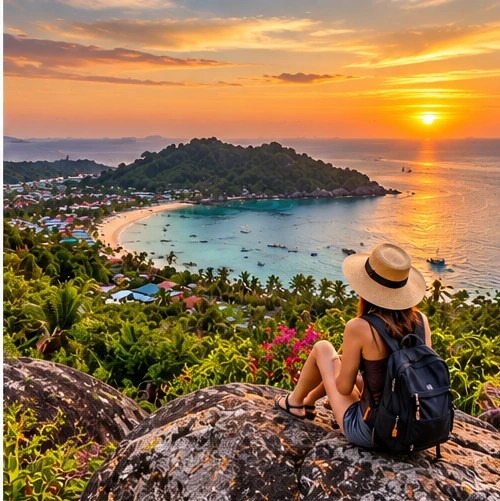
Samui offers beaches, resorts and an island airport, making it a useful candidate when you would rather avoid a compulsory ferry immediately after reaching Thailand. That does not make every itinerary simple: the flight connection, landing time and final hotel transfer still determine how the arrival feels. [6]
Choose Bophut, Lamai or Chaweng by the daily experience you want, not a claim that one is universally best for solo travellers. A central room near restaurants can help you feel settled quickly. Conversely, a beautiful secluded property can be excellent for reading and swimming but leave each evening dependent on transport.
Samui works particularly well as a first stop when you want to recover, practise the ordinary mechanics of solo travel and decide whether to continue to Phangan or Tao. You do not have to prove independence by choosing the most complicated route available.
Make the room work for one person
Enter one adult when comparing prices, and inspect the actual room rather than the lead image. A ‘single’ booking might be the same double room sold to one guest, not a discounted solo product. Meanwhile, a breakfast package may be useful when you prefer a predictable start, but unnecessary when attractive cafés are nearby.
My priority would be an understandable arrival and an easy evening food route. After a couple of settled days, you can decide whether group activities, a different beach or another island genuinely add something.
Phuket: useful when you want several ways to spend a day
Separate Old Town, beach life and nightlife
Phuket combines beaches, urban services and cultural attractions, with Phuket Old Town and several distinct coastal areas. Its breadth is helpful for a first solo holiday because the trip need not depend entirely on sea conditions or finding the right hostel crowd. [7]
Old Town makes sense for a food-and-streets focus, while Kata offers a different beach-based stay. Patong is the deliberate choice when nightlife is a priority, rather than the default address for everybody travelling alone. Check where each planned activity starts: two providers described as being in Phuket can operate from very different parts of the island.
A short guided food walk or a clearly described day excursion can be useful early on. Afterwards, independent meals and repeat visits to a café often become easier. However, do not choose a busy excursion purely because it promises friendship; first check whether you actually enjoy the activity and the group size.
The cost of moving around
A cheap room can lose its advantage when you repeatedly cross the island. Map your likely mornings and evenings before booking, including the return from a late meal. Shared trips sometimes include only particular collection zones, and extra transfers should be confirmed rather than assumed.
For a short solo visit, I would favour one functional base over several hotel changes. Phuket has enough variation to tempt constant movement, but a stable room and familiar neighbourhood can make independent travel feel considerably easier.
Phi Phi Don: sociable, compact and worth a noise check
Why a short stay can work
Phi Phi’s inhabited holiday base is Phi Phi Don; the surrounding islands and marine scenery are usually reached by boat. It can suit travellers who want a concentrated social stop rather than a spread-out island with repeated road transfers. Diving and snorkelling provide additional shared activities. [8]
Investigate village accommodation with care. Being close to restaurants and meeting points is useful, but proximity to late music is a separate consideration. Read recent room-specific comments and ask whether your room faces an entertainment area. A description such as ‘central’ says little about whether you will sleep.
Two or three settled days can offer a useful introduction, although arrival and departure should not be counted as full activity days. Book the main outing early enough that bad weather does not leave you with no alternative date.
Do not let the crowd make your decisions
A busy social scene can produce pressure to join every boat, bar or challenge. Decide your own limits before the evening begins and keep enough independence to leave. People you have just met may be friendly, but they do not automatically share your judgement, budget or travel priorities.
I would choose Phi Phi for a specific social and scenery-led stop, not as a compulsory badge on a backpacking route. When uninterrupted sleep or extended quiet is the main aim, another island may fit better.
Koh Chang: nature with a more settled rhythm
A different direction from Bangkok
Koh Chang lies in Trat province and combines forested terrain, beaches and a range of accommodation. Its mainland approach gives it a different route logic from the southern Gulf and Andaman islands. It is worth considering when you want a substantial stay rather than another flight south. [9]
Kai Bae is one area to investigate for a balanced base, while travellers seeking more overtly social accommodation can examine the exact properties around Lonely Beach. Nevertheless, the name of a beach is not a promise about today’s crowd. Ask what is open during your dates and how guests usually reach activities.
Nature trips need the same care as water activities. Choose a clearly described guided walk suited to your ability, and avoid treating an unfamiliar forest route as an easy solo shortcut. Comfortable footwear and an early start do not replace local route knowledge.
Give the approach enough time
A long road-and-ferry day is much easier when you are not also trying to organise an evening transfer to an isolated room. I would favour a daylight arrival and several nights in one area. That leaves room for weather, a guided outing and a few ordinary beach days without repeatedly packing.
Budget for one traveller, not half a couple
The hidden solo premium
Rooms, private taxis and charters are often priced by unit rather than person. Therefore, dividing a couple’s holiday budget by two can underestimate the cost of travelling alone. Shared transport and scheduled excursions can spread those costs, while a central room may reduce your need for either.
The following figures are illustrative allocations prepared on 3 October 2026, not checked hotel quotations or island-wide tariffs. Replace every allowance with your actual selected booking before deciding whether a route is affordable.
| Example daily allocation | Social budget stay | Private-room stay |
|---|---|---|
| Bed or room | THB 700 | THB 1,600 |
| Meals and drinking water | THB 600 | THB 800 |
| Local transport reserve | THB 250 | THB 400 |
| Activity saving pot | THB 450 | THB 700 |
| Illustrative total | THB 2,000 | THB 3,500 |
On a smaller screen, swipe inside the table to compare all columns.
Keep the expensive extras outside the daily figure
International and domestic flights, inter-island journeys, insurance and a diving course are additional. A day with no paid activity does not make the saving pot wasted; it helps pay for a worthwhile excursion later. Likewise, retain a separate emergency reserve rather than spending everything because a spreadsheet’s average looks comfortable.
For a private boat, ask about a legitimate shared departure before assuming you need to pay the entire charter yourself. However, never join an overloaded or poorly explained trip simply to reduce the price.
Two routes that leave room to settle in
A Gulf route with an activity anchor
Use the operator’s current departure pier, baggage conditions and collection instructions. Lomprayah publishes Gulf route and booking information, but a sailing duration should not be mistaken for the total hotel-to-hotel journey. [10]
An Andaman route without collecting islands
A seven-night example could use two nights in Phuket Old Town followed by four at a chosen beach base, with the final night positioned for the flight if needed. Alternatively, spend the whole week on Lanta after a carefully organised arrival through Krabi. These are different holidays, not options to squeeze into one week.
The important test is whether a move brings a distinct benefit. Swapping one pleasant beach for another after only two nights may cost more social momentum than it adds scenery. Repeated breakfasts, familiar staff and a returning activity group are advantages that a map cannot show.
Accommodation questions that make solo travel easier
Ask about ordinary use, not vague friendliness
Before paying, ask whether reception is staffed at your arrival time, whether lockers or a secure room safe are available, and whether the route to dinner is walkable after dark. For dormitories, inspect bed curtains, sockets, bathroom arrangements and stated quiet hours. For private rooms, check whether you can still use a common area.
Read several recent reviews for specific behaviour rather than accepting a high score alone. ‘Staff organised a group dinner’ is more useful than ‘great vibe’. Equally, repeated reports of missing sleep, difficult access or confusing check-in are practical warnings even when the photographs are attractive.
Make a reversible first decision
On a longer visit, a short initial booking can preserve flexibility, provided you understand peak-date availability and cancellation terms. Do not assume you can extend a popular room after meeting people. Instead, ask the host what is realistic and keep a backup option in the same neighbourhood.
For shorter holidays, the certainty of a well-chosen room may be more valuable than flexibility. Decide where uncertainty would help you and where it would simply create work.
Meeting people without making drinking the programme
Repetition is more useful than intensity
Choose an activity you would enjoy even if nobody became a friend. A diving course, a cooking class or a small guided excursion gives conversation a natural subject. Returning to the same café or joining an accommodation’s optional meal can work too, without requiring a dramatic first-night introduction.
Keep social expectations modest at the beginning. One pleasant conversation and a comfortable dinner can be a good day. You are not obliged to turn every new acquaintance into a travel partner, and changing your plan after a mismatch is not a failure.
Keep independent decisions independent
Agree costs before sharing a taxi or room, and do not let somebody else’s urgency dictate your next booking. When joining a group, retain your own access to money, documents and a way home. A shared activity should add enjoyment, not make your trip dependent on strangers following through.
Safety without pretending any island is risk-free
Use arrangements you can actually follow
My practical approach is to keep the first arrival simple: save the hotel’s location offline, arrange the last transfer and send the booking details to someone you trust. Check in according to a mutually agreed routine rather than broadcasting your exact room or live location publicly.
Keep the water and the night separate
Do not swim alone after drinking or head into an unfamiliar bay because a new group is doing so. Pre-arrange the journey home from a late event and retain the money for it. Following local water warnings is more useful than relying on an island’s reputation or yesterday’s calm photograph.
If something feels wrong, leave the situation and ask a staffed business or your accommodation for help. You do not need to remain polite at the expense of your own boundaries. Keep your insurer’s assistance details accessible without requiring a successful internet connection.
Packing and communication for independent island travel
Protect what makes you self-sufficient
Keep your passport, necessary medication, payment backup and a change of clothes accessible during transfers. The aim is not a specialist expedition bag; it is to remain functional if the main luggage is wet, delayed or difficult to reach on a boat. Carry only what you can manage during a practical handover.
Download maps and tickets before leaving reliable connectivity. An eSIM can be convenient, but check handset compatibility, whether the plan includes ordinary calls and how support works. Data access does not guarantee reception in every bay or offshore, and a phone battery is not an emergency plan by itself.
Leave room for a normal holiday
A book, comfortable evening clothing and something that makes a private room pleasant can be more useful than extra gadgets. You may spend several afternoons doing nothing impressive. That is still a successful independent trip when the days fit you.
Your first forty-eight hours, without a packed schedule
Make arrival day small enough to manage
Imagine arriving on Tao after a travel morning. Rather than rushing straight from the pier to an activity desk, meet the arranged transfer, check into the room and find the nearest sensible place for lunch. Confirm the following day’s meeting point in daylight, then take a short walk that helps you understand the neighbourhood. This is a suggested routine, not a claim about a particular ferry departure.
That modest first afternoon achieves several things: you know where to eat, how to find the room and whom to contact if a plan changes. You can also judge the accommodation before agreeing to a long extension. An enjoyable sunset or a conversation is a bonus rather than the test by which the whole day succeeds or fails.
Keep the first evening easy to end. A meal close to the room gives you a chance to adjust after travelling without needing to negotiate a late return. You might feel energetic and stay out, but you have preserved the option to leave independently.
Give the first full day one clear purpose
Choose one appropriate shared activity or an introductory meeting with a provider. Afterwards, leave a gap for lunch and rest rather than placing another booking immediately behind it. That gap lets you respond to a genuine invitation, spend time alone or change plans when the activity finishes later than expected.
On the second full day, decide what you would like to repeat. Returning to a good class or a comfortable cafe can be more rewarding than hunting for a different experience purely to make the itinerary look varied. A few recognisable faces and familiar routes often provide the confidence that lets a solo traveller enjoy greater spontaneity later.
Different solo travellers need different island bases
A solo trip is not an age category
Do not assume that travelling alone means wanting the youngest crowd or the cheapest dormitory. A private-room traveller who enjoys good food and occasional classes may be happier in a practical Samui or Lanta base than in a hostel marketed around late parties. Equally, an older traveller who loves diving and meeting people may find Tao’s activity structure appealing.
Look for evidence of the daily routine rather than trying to match yourself to a promotional age bracket. Reviews describing helpful hosts, small-group activities and comfortable independent dining are useful at any age. Ask whether the accommodation’s organised events are optional and whether quieter spaces remain available when a group meal becomes lively.
A working afternoon changes the room decision
For somebody adding remote work, a beautiful common area is not evidence of a dependable workspace. Ask about the connection inside the actual room, a proper chair, nearby construction and a backup place to work. A video-call requirement is much more specific than needing enough data to send messages.
Keep work commitments away from ferry days where possible. A transport delay is inconvenient on holiday, but becomes a different problem when a client meeting depends on uninterrupted reception. Download essential material, tell colleagues when you will be travelling and retain an alternative that does not depend on a beach cafe being quiet.
Mobility and comfort deserve precise questions
Request photographs of steps, bathroom access and the route between the road and the room when those details matter. ‘Near the beach’ may describe a steep path rather than a convenient walk, while a central address can still have awkward entrances. The useful answer is a description of surfaces and distances, not an assurance that previous guests managed.
Arrange help with luggage when necessary and check where the driver can actually stop. Travelling alone does not require doing every physical task without assistance. Choosing a room and transfer that support your needs is a practical expression of independence, not a compromise in it.
A short test stay can answer the right questions
When the wider itinerary is flexible, use the first few nights to assess noise, food and how the neighbourhood feels in practice. Keep the test focused: decide whether the basic arrangement works before looking for a theoretically better beach. Otherwise, flexibility can turn into constant searching rather than a more enjoyable holiday.
If the base works, staying put can be the most useful decision. You already know the routes, have met the staff and can use your energy for the trip itself. Moving is worthwhile when it solves an identifiable problem or adds a genuinely different experience, not merely because there is another island available.
Booking one adult without paying for unnecessary extras
When comparing an excursion, check whether the displayed figure assumes two or more participants. A private activity may have a minimum total, while a shared departure may accept one booking without a supplement. Enter your actual party size and read the final price before treating a headline as the cost you will pay.
For accommodation, compare cancellation terms alongside the rate. A slightly cheaper non-refundable room can be poor value when you are deliberately preserving flexibility. Conversely, paying for flexibility you will never use adds little on a fixed short holiday. Make the decision according to the route you have, not an abstract rule that spontaneous travel is always better.
Pros and cons of an island-based solo holiday
What works well
- A settled base creates familiar faces and everyday routes.
- Shared activities offer company without sharing a bedroom.
- You control the balance between social time and solitude.
What to weigh up
- Private rooms and transfers can cost more per person.
- An isolated property can make company difficult.
- Ferry and activity days still need realistic buffers.
A single island base can provide familiarity and repeated contact without removing your freedom. However, it also concentrates your holiday in one place: unsuitable accommodation, a poor-weather spell or a mismatched social scene may feel more significant. Research the base carefully, and build in one realistic alternative rather than an elaborate escape itinerary.
Common mistakes worth avoiding
Confusing sociable with sleepless
A party hostel, a social guesthouse and a quiet private room near restaurants solve different problems. Read the description literally and ask about noise. Paying slightly more for a room where you sleep can protect the rest of the holiday, while a secluded upgrade can make meeting people harder.
Moving on before the island has a chance
Arriving tired, spending one day recovering and leaving the next morning tells you very little about a destination. Allow time for a second conversation, a changed activity plan or a better-weather morning. Equally, do not remain somewhere unsuitable because a ranking said you should love it. Use the shortlist as a starting point, not an instruction.
Frequently asked questions
Which island would you choose for a first solo trip?
For an activity-led social visit, I would investigate Koh Tao first, provided the ferry and intended activity suit you. For the simplest arrival, I would compare Phuket and Samui instead. The better choice depends on what makes you comfortable: a repeated group activity, a direct airport arrival or a familiar type of accommodation.
Can I travel alone without staying in a hostel?
Absolutely. A private room close to food and a useful common area can be an excellent arrangement. You can meet people through scheduled activities without sharing a bedroom. The key is to avoid choosing an isolated property by accident when company matters, and to check that ‘social’ facilities are genuinely available to all guests.
Is Koh Phangan only suitable for party travellers?
No. Its communities and beach areas support different kinds of stays. However, choosing a quieter address does not mean you can ignore event dates or transport distances. Investigate the exact area, confirm the room’s surroundings and build your days around activities that interest you rather than the island’s most famous event. [2]
Is Koh Lanta too quiet for somebody alone?
It can be too quiet for a traveller expecting a ready-made crowd every evening, but that is not everybody’s aim. A well-positioned guesthouse and a few organised activities can make it a rewarding slower base. Ask about current activity departures and the accommodation’s ordinary social spaces before choosing a particularly secluded stay.
Do I need to hire a scooter?
No. Choose your room around a manageable walking area, use organised collections and pay for suitable local transport when needed. A scooter should be an informed decision based on competence, legal requirements, insurance and road conditions, not a compulsory step in becoming an independent traveller. An island’s small dimensions can conceal difficult roads. [11]
How many nights should I allow on one island?
Four to six nights is a useful starting point for a settled visit, and longer may be appropriate for a course or a slow routine. This is planning judgement rather than a rule. Count the full days between arrival and departure, and add more time when the main activity depends on weather or training progress.
Can I meet other travellers without going out at night?
Yes. Shared classes, guided excursions and recurring daytime routines create opportunities without a drinking focus. Choose something you genuinely enjoy and avoid judging the whole trip by the first day’s conversations. Company is a possible benefit of an activity, not a guaranteed product that an operator can promise to deliver.
Should I book all my accommodation before travelling?
For a short trip or peak dates, secure the essential rooms and transport. On a longer visit, a carefully chosen first booking can preserve flexibility. Check cancellation terms and likely availability before relying on extensions. Being spontaneous is useful only when you can absorb the extra cost or inconvenience of changing plans.
Is a solo island holiday necessarily cheaper?
Not necessarily. You control your own spending, but room and private-transfer costs may not reduce simply because only one person travels. Compare the total journey, meals, accommodation and activities for one adult. Shared departures can help, while a central room may save more transport money than a cheaper property far from everything.
What is the most useful first booking?
Book the arrival that makes your first evening straightforward: an appropriate room, a clear transfer and somewhere nearby to eat. After that, one appealing shared activity can give the visit direction. A settled start is usually more useful than committing to a crowded schedule before you know how you feel on the island.
My final recommendation for a solo island stay
Start with Koh Tao when shared water activities are the point, Phangan when you want a choice of communities, and Lanta when a slower independent rhythm sounds appealing. Choose Phuket or Samui when an easier arrival and a wider range of ordinary services would help you relax into the trip.
Then make the decision smaller. Pick the neighbourhood, confirm the room and organise the first transfer. Leave enough time to become familiar with the place, and give yourself permission to alternate company with solitude. The most successful solo island is the one where your ordinary day works, not the one that produces the busiest story afterwards.
Sources and fact-checking notes
Research reviewed on 03 October 2026. Official destination, training, medical and provider sources inform the factual context. The island choices, example routes and budget allocations are editorial planning judgements, not first-hand inspection reports, live quotations or guarantees. Current conditions, access and event details must be confirmed for the booked date.
- Tourism Authority of Thailand: Ko TaoDestination setting and activities; old practical absolutes and undated prices were not adopted. Reviewed 03 October 2026.
- Tourism Authority of Thailand: Ko Pha-nganBeach areas and the distinction between the party setting and the wider island. Reviewed 03 October 2026.
- Tourism Authority of Thailand: Ko LantaIsland character, beach variety and general seasonal marine-access context. Reviewed 03 October 2026.
- PADI: Open Water Diver courseTraining format, prerequisites and medical-screening information. Individual suitability requires the proper provider and clinical checks. Reviewed 03 October 2026.
- Full Moon Party Thailand: event calendarEvent-calendar cross-check, not a park/government authority; reconfirm before non-refundable travel. Reviewed 03 October 2026.
- Tourism Authority of Thailand: Ko SamuiIsland setting and airport-based access; not a live flight quotation. Reviewed 03 October 2026.
- Tourism Authority of Thailand: PhuketDestination and land-activity context. Reviewed 03 October 2026.
- Tourism Authority of Thailand: Ko Phi PhiIsland-group and inhabited-base context. Reviewed 03 October 2026.
- Tourism Authority of Thailand: Ko ChangTrat route, island terrain and accommodation areas. Reviewed 03 October 2026.
- Lomprayah: official route and booking informationConfirm dated departures, exact piers and conditions directly; no fixed sailing is promised here. Reviewed 03 October 2026.
- FCDO: Thailand safety and securityCurrent travel-risk guidance, including transport, drinks and water activities; advice can change. Reviewed 03 October 2026.
- FCDO: current Thailand travel adviceCheck regional advice for the exact itinerary before booking or travelling. Reviewed 03 October 2026.
Illustrations in this article were created for Taylor’s Trailblazing Travels. Third-party photographs, where used, are credited beside the image or in the source list.