Koh Lipe Travel Guide
Make the journey work, choose your beach and give the island more than one rushed day.
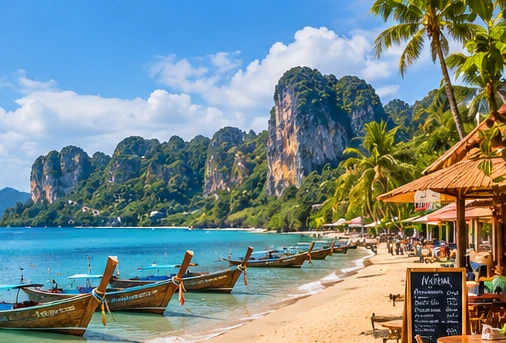
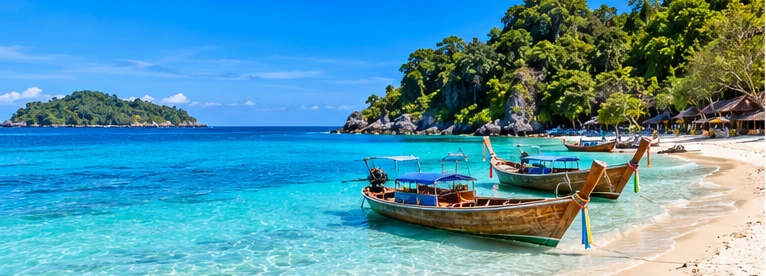
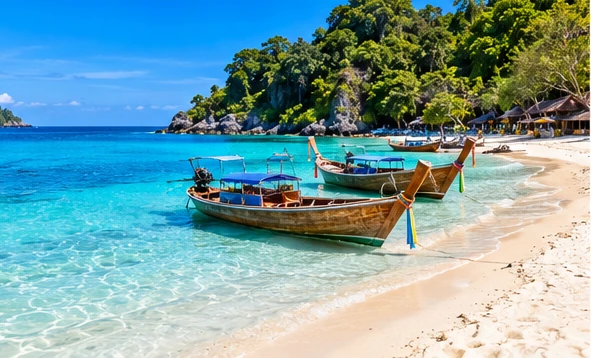
Original illustration inspired by Koh Lipe-inspired clear water, sandy shoreline and small longtail boats; not a photograph or a navigational map.
Koh Lipe looks small on a map, but reaching it can take a substantial part of a travel day. The most useful starting question is not which beach has the palest sand. It is whether your flights, mainland transfer, boat and final hotel arrival form a sensible journey. This Koh Lipe travel guide builds the holiday from that practical foundation.
TAT places Lipe in the Adang-Rawi island group and distinguishes the main visitor beaches: Pattaya, Sunrise and Sunset. Each can support a different kind of stay, but a beach name alone does not describe the walk to your room, the passing boats or the nearby dinner choices. Look closely at the actual property location before treating the island as one completely interchangeable resort strip. [1]
For a first visit, my preference is four or five nights, with a mainland or Langkawi buffer when the onward flight matters. Spend one day on a suitable snorkelling trip and leave enough time to enjoy the island without another departure deadline. A two-night visit is possible, but the transport effort deserves an honest comparison with the amount of unhurried time left ashore.
This is research-led planning advice rather than a report of a recent personal stay. The area comparisons prioritise access, evening convenience, room characteristics and time on the water. Published transport and park charges are dated examples; accommodation searches and the worked budget are not claims of guaranteed availability or a fixed island-wide price.
This article contains affiliate links. When you book or buy through one, Taylor’s Trailblazing Travels may earn a commission at no extra cost to you. The comparisons focus on practical suitability, not the commission available.
Four or five nights
Allow time to settle after the mainland-and-boat journey.
Three main shores
Compare the specific room and the route to meals, not just the beach name.
Check the season
Langkawi is an international, seasonal connection with a one-hour clock difference.
Read the facilities
Fan, air conditioning, hot water and room steps are not interchangeable promises.
Koh Lipe travel guide: understand the three beaches
Pattaya and Sunrise offer different daily routines
Pattaya Beach is on the southern side and is strongly associated with arriving boats and visitor activity. Sunrise is the eastern shore, with a different morning outlook and a range of accommodation. TAT describes both as principal beaches, alongside the island's established Urak Lawoi community. The shoreline is a working and lived-in place, not only a backdrop for visitors. [1]
Choose Pattaya when convenient arrival and access to central visitor services matter, then check the precise stretch rather than assuming every room has the same atmosphere. Choose Sunrise when the eastern beach setting is a priority, but still investigate boat traffic, shade and the route to meals. A beachfront photograph taken at one tide cannot answer those questions on its own.
Sunset and the edges need a closer map check
Sunset Beach is commonly chosen for a quieter-feeling base and its western outlook. However, quiet should not be confused with universally convenient. Check the route between your hotel, dinner choices and the beach you expect to use most. A location that suits a couple happy with a relaxed evening may be less suitable for someone who wants effortless changes of restaurant. [1]
For accommodation on the margins of a beach, inspect room access and terrain as carefully as the bay name. Ask whether steps, uneven paths or a vehicle transfer are involved. The island's compact scale does not make every route step-free. A small difference on the map can be important when carrying bags, travelling with children or returning after dark.
Choose your Lipe base by its daily routine
Editorial fit comparison. Individual properties and shore conditions differ.
Swipe this table sideways to read every column.
| Shore | Useful starting point | Ask before booking |
|---|---|---|
| Pattaya | Arrival-side convenience and visitor activity | Exact landing, boat traffic and room route. [1] |
| Sunrise | An eastern beach base | Shade, meal access and the precise section of shore. [1] |
| Sunset | A quieter-style evening base | The walk or transport to your preferred meals. [1] |
Reaching Lipe through Hat Yai and Pak Bara
Treat the mainland journey as a separate stage
A common approach uses Hat Yai as the air or land gateway, followed by a road transfer to Pak Bara and a boat to Lipe. TAT's park information describes the Hat Yai-Pak Bara connection, while accommodation providers also explain this route for guests. Neither an airport ticket nor a boat reservation automatically includes every stage. [4][7]
Before choosing a flight, establish the boat you can realistically reach after collecting luggage and travelling to the pier. Obtain the operator's required check-in time and the transfer provider's collection point. A combined ticket may simplify coordination, but read what happens after a late flight. Do not assume that two services on one booking screen are financially protected in the same way as an airline connection.
Compare the actual boat product
Bundhaya's published schedule lists Pak Bara-Lipe speedboat examples at 11:30 and 13:30, with an approximately 90-minute journey and a THB 550 fare. These details were checked on 3 October 2026 as operator-page references, not as confirmed inventory for a particular date. Stops, sea conditions and operating arrangements can change the experience and the total travel time. [2]
Check whether the boat visits intermediate islands, what baggage is allowed and where the final landing takes place. Ask whether pier, park or local transfer charges are included. Keep written confirmation of the agreed product rather than relying only on a verbal description of a fast boat. The cheapest ticket is not automatically poor, but its exclusions should be visible before payment.
Langkawi to Koh Lipe: seasonal and international
The published 2026-27 season starts in mid-October
Telaga Terminal's official schedule, checked on 3 October 2026, gives a season from 15 October 2026 to 31 May 2027. That means this route should not be described as already operating year-round at the review date. The operator publishes different standard and peak-season departure patterns, so use the timetable covering the actual day you intend to travel. [3]
The crossing is advertised as approximately 90 minutes. However, the clocks differ: Malaysia is one hour ahead of Thailand. For example, the standard schedule lists a 10:30 departure from Langkawi in Malaysian time and an 11:00 arrival in Thai time. It is not a 30-minute crossing. Keep the time zone attached to each stage when connecting transport or arranging a hotel meeting. [3]
Border formalities belong in the plan
This is an international crossing, not a domestic island shuttle. Check entry eligibility, passport requirements, onward-travel requirements and the operator's immigration procedure for your nationality and circumstances. A ticket does not establish permission to enter either country. Leave time for the formalities rather than treating the advertised sea duration as the entire journey.
Thailand's official Digital Arrival Card guidance applies to foreign visitors arriving by sea as well as by land or air, subject to the official exceptions. Complete the required submission through the Immigration Bureau's own service within its stated arrival window and retain the confirmation. The official service is free, checked on 3 October 2026. It is an arrival form, not a substitute for any visa or permission you need. [9]
Arrival, luggage and reaching reception
Ask the hotel where its representative meets you
The last part of the journey can involve a pier, pontoon, local boat, beach or onward hotel transport, depending on the service and conditions. Confirm the actual arrangement directly with your accommodation. Send the boat operator and arrival time, then ask how to recognise the representative. Keep a screenshot of the instructions in case mobile data is not immediately available.
Explain any specific difficulty with lifting, balance or steps before travelling. A broad question about an easy transfer can produce a broad answer. Instead, ask how you get from the arriving vessel to the room and where help with bags is provided. Families should confirm suitable life jackets and the practical process for children rather than assuming that a short crossing removes the need.
Pack one bag for the moving parts
Keep passport documents, medication, electronics and a dry layer in a compact bag you can manage during boarding. Protect them from spray without making the bag so bulky that it becomes another obstacle. Place the hotel name and a contact number somewhere accessible. A screenshot is useful; knowing which screenshot contains the correct information is even better.
For larger luggage, ask about the carrier's allowance and the property's handling arrangements. A wheeled suitcase is not automatically unsuitable, but sand and boat steps are different from an airport floor. Avoid packing a fragile item where it will be crushed if bags are stacked. Keep valuables with you rather than assuming all luggage remains within sight throughout every transfer.
How many nights make the journey worthwhile?
Four nights create a more balanced first visit
Four nights usually give you three full days between arrival and departure. That is enough for one main excursion, a beach-focused day and a flexible day that can absorb a weather change or simply become a rest day. The suggested length is an editorial balance between the travel effort and the experience, not an official rule about how long visitors should stay.
Five or six nights suit travellers who enjoy returning to the same beach, exploring meals slowly or adding another marine activity. Longer is worthwhile when you like the rhythm, not merely because the island is difficult to reach. Someone who needs a different large attraction every day may prefer to split the holiday with a mainland or urban stop.
A short stay needs a very clear purpose
For two nights, choose one priority and accept that there may be little time for alternatives. A late arrival followed by a full-day boat tour and an early departure is a transport-heavy experience. It can work for an enthusiastic island-hopper, but it should not be sold to a reluctant companion as several restful beach days.
Do not automatically compensate by booking the earliest possible excursion after arrival. First check whether everyone has eaten, slept and recovered from the journey. A beach morning and an afternoon of local orientation may be more valuable than another scheduled departure. The point of reaching Lipe is to enjoy being there, not just to prove that the route fits on a calendar.
Where to stay: fan bungalow or resort room?
Read the exact room description
A beach setting does not tell you whether a room has air conditioning, hot water, enclosed bathrooms or a level route to reception. Those details matter particularly for a longer stay. Compare the actual category, not a collage of photographs from several categories. Ask what is included in the rate and whether breakfast or an extra bed changes the final total.
Castaway's Garden View Breezy description provides a useful example: the listed bungalow uses a fan and cold-water showers and includes stairs and open-plan features. That description applies to the specific category, not automatically to every room at the property. It could suit someone seeking a simpler beach stay while being a poor match for a guest expecting conventional hotel facilities. [6]
Location and terrain are separate questions
Serendipity describes a setting at the southern end of Sunrise Beach, with accommodation overlooking the water. It is an example to investigate for a more secluded-feeling stay, but the room route and steps should be checked directly. A hillside outlook and effortless beach access are not the same promise. Decide which matters more for your group. [7]
For families, ask about bed arrangements, supervision around balconies or stairs and the walking route to dinner. Couples seeking quiet should investigate neighbouring venues and the room's position within the property. For a budget stay, compare the full transfer and meal picture before choosing a lower nightly rate. A room that fits your daily routine is more useful than a prestigious label.
Planning beach days around the working shoreline
Observe before choosing a swimming spot
Start by identifying boat routes, moorings and any marked swimming area. Clear turquoise water can make distances and depth difficult to judge, so do not use colour as a safety assessment. Follow local advice about conditions, currents and appropriate entry points. The Foreign Office's Thailand guidance includes cautions about water and boat safety; apply those considerations to the actual situation rather than the popularity of the beach. [8]
A beach day can be structured around a comfortable shaded base, a meal nearby and short periods in the water when conditions suit. You do not need to carry everything for an entire day if your room is close. Conversely, a longer walk from your accommodation makes water, suitable footwear and a dry bag more useful than another camera accessory.
Give the different shores separate moments
Use Sunrise for an early part of the day when staying nearby, Pattaya for a different outlook and Sunset when the evening walk suits your location. This is a suggested way to vary the experience, not a promise about the weather or the best conditions at every tide. There is no need to march between all three beaches before breakfast.
Keep expectations realistic about solitude. A photographed patch of empty sand is a moment, not a guarantee that a visitor destination remains empty throughout the day. Choose quieter times and corners where practical, but do not let the search for an unoccupied frame displace the enjoyment of the shore itself.
Snorkelling: choose supervision and time in the water
Match the outing to the least confident participant
Compare how long the boat spends travelling, how many sessions are planned and how the guide supports beginners. A long list of sites can be less useful than a shorter route with clear supervision and enough time at each suitable stop. Ask whether anyone who does not snorkel can remain comfortable aboard and whether the boat provides shade.
Check equipment fit and how the group enters and leaves the water. A mask, fins and buoyancy aid need to work for the person wearing them, not just be present somewhere on the boat. For children, discuss the provider's age and ability requirements before paying. Do not interpret a family-friendly label as a detailed description of the conditions your family will encounter.
Treat the reef as habitat rather than equipment
Avoid standing on or touching coral, chasing animals or accepting wildlife feeding as an attraction. Give marine life space and follow the guide's directions. An encounter is not guaranteed because it appears in the tour photographs. Choose operators who explain how they manage the visit instead of relying on dramatic promises about what every guest will see.
Ask what changes when weather makes the planned route unsuitable. A responsible substitution may be preferable to forcing the advertised itinerary. However, the cancellation and refund terms should still be clear. Keep the price, inclusions and weather policy together in your confirmation so you can distinguish an agreed alternative from a misunderstanding at the pier.
Koh Adang: a different landscape next door
Do not treat it as another resort beach
TAT describes Koh Adang as a forested, mountainous island with national-park facilities and the Pha Chado viewpoint. It offers a contrast to Lipe's accommodation-focused visitor setting. However, access to trails, beaches and facilities is subject to park arrangements and conditions. Check what is open and what your proposed boat service actually includes. [5]
A viewpoint visit involves more than being dropped on the sand. Ask about the route, the return meeting point and whether a guide is appropriate for your group. Carry water and use suitable footwear. Published walking estimates are not promises for every visitor, particularly in heat or after rain. Turn around when conditions or your energy make the return uncertain.
Arrange the return before starting the walk
For an independent visit, agree the pickup place and time and establish how you contact the boat provider. Do not assume that another passenger boat will appear exactly when you are ready. Allow enough daylight and avoid using the final possible collection as the target. The visit should feel like a change of scene, not a test of how tightly a return can be timed.
For park-managed sites, follow local instructions and keep the required ticket or receipt accessible. TAT lists Tarutao National Park foreign-entry references of THB 200 per adult and THB 100 per child, checked on 3 October 2026. Confirm current applicability, validity and any additional charges for the places you actually visit rather than treating one figure as an all-inclusive island pass. [4]
A five-night Lipe itinerary with breathing space
Arrival and the first full day
On arrival, complete the hotel transfer, have a simple meal and learn the route between your room and the nearest useful services. Confirm any excursion already booked, but leave the evening uncomplicated. A sunset walk is optional. Finishing the transfer without losing documents or exhausting everyone is a successful first day in its own right.
Use the first full day locally. Try the beach near your accommodation, compare another shore when convenient and decide how the group feels about a longer boat outing. This gives you a practical sense of conditions and energy rather than committing every day from home. It also helps identify whether the room location works for meals and rest breaks.
Alternate activity and slower days
Use the next suitable day for snorkelling, then leave a slower day afterwards. Consider Adang on another day when the park, weather and your interests align. Otherwise, keep the time for swimming where safe, reading, photography or simply enjoying the island. An itinerary can be complete without filling every blank square.
On the final full day, reconfirm the return boat, hotel pickup and mainland or Langkawi arrangements. Pack the travel bag before the evening meal. The departure morning is not a good time to discover that one confirmation uses a different time zone or that the boat ticket does not include the onward road transfer.
A five-night stay with one clear priority each day
Suggested rhythm rather than a timetable; park and boat operation must be checked for your dates.
Swipe this table sideways to read every column.
| Day | Suggested focus | Keep in mind |
|---|---|---|
| Arrival | Settle in and learn the immediate area | No compulsory excursion after the journey. |
| Full day 1 | Your beach and a local orientation walk | See how conditions and energy feel. |
| Full day 2 | One suitable snorkelling outing | Use the better operating day. |
| Full day 3 | A slower beach day | Rest is part of the plan. |
| Full day 4 | Adang if suitable, or another local day | Reconfirm the return before dinner. |
| Departure | Boat and onward land or border stage | Check endpoints and local time zones. |
Choosing between a Thailand-only route and a Malaysia crossing
The simplest geography is not always the simplest administration
Langkawi can be a convenient part of a wider holiday, but it adds an international border to a journey that could otherwise remain within Thailand. Compare the purpose of that stop with the extra documentation, time-zone handling and seasonal timetable. Crossing simply because the islands look close may not be worthwhile if the rest of your trip is entirely in Thailand and your departure flight is elsewhere.
A Thailand-only approach through Hat Yai and Pak Bara can be easier to integrate with domestic travel, although it still needs a realistic road-and-boat connection. A Malaysia-linked route can be attractive when Langkawi is already a destination you want to visit. Decide from the whole holiday rather than the advertised crossing time. The right comparison includes where you sleep before the boat and where you need to be after it.
Do not mistake a bookable segment for a protected itinerary
A flight, road transfer and boat bought through separate providers can have separate change and refund rules. Write down which business is responsible at each stage and what assistance is offered after a delay. Even a combined land-and-sea ticket should be read carefully: coordination is useful, but it is not the same as a guarantee that a missed independent flight will be refunded.
For travellers with several nationalities in the group, check entry requirements individually. Do not assume that one person's passport rules apply to everyone. Keep each traveller's documents and arrival confirmation organised, while retaining a shared copy of transport details. A border crossing is easier when the administrative differences have been resolved before reaching the terminal.
Leave the return destination unambiguous
When booking a return, check whether the ticket returns you to Pak Bara, Hat Yai, Langkawi or another advertised endpoint. Those are different products, with different onward arrangements. A cheaper return to the pier may be perfectly suitable when a separate vehicle is already arranged. It is less useful when you discover at disembarkation that you had assumed an airport transfer was included.
Budgeting beyond the beachfront room
Model the holiday you are actually buying
Separate the room, meals, road transfers, boat tickets, local arrival arrangements, excursions and required fees. Record whether each price is per person, per room or per vehicle. This is especially important when comparing a shared transfer with a private one. Two apparently similar totals can describe very different levels of convenience.
For a worked planning example prepared on 3 October 2026, assume two adults sharing for five nights: THB 4,500 per room per night, THB 1,700 a day for meals and drinks across five days, THB 5,000 total for transport and THB 6,000 for activities and required fees. The illustrative total is THB 42,000. These are chosen budget inputs, not a live quotation or measured average.
Include the cost of flexibility
A mainland buffer night can look like an extra expense until it protects a costly onward flight. Compare the consequence of delay with the saving from a very tight schedule. Similarly, a refundable room or changeable transport ticket may be worthwhile when your route depends on weather. The appropriate choice depends on your circumstances, not on a universal rule to buy the cheapest or most flexible option.
Keep a reserve outside the amount allocated to planned activities. Ask accommodation providers about card surcharges, deposits and payment timing before arriving. For cash needs, use current local advice rather than assuming an ATM or card terminal will always be available exactly when needed. Organise payment options before the last morning, when a problem would be harder to solve calmly.
Two adults, five nights: a worked budget
Illustrative model prepared 3 October 2026, not a quote or average. Excludes flights; price the actual border or mainland route separately.
Swipe this table sideways to read every column.
| Item | Calculation | Allowance (THB) |
|---|---|---|
| Shared room | 4,500 x 5 nights | 22,500 |
| Meals and drinks | 1,700 x 5 days | 8,500 |
| Transport | Chosen total allowance | 5,000 |
| Activities and required fees | Chosen total allowance | 6,000 |
| Worked total | Sum of the four allowances | 42,000 |
Meals, local life and useful essentials
Respect the island beyond the visitor strip
TAT identifies Lipe's Urak Lawoi community as part of the island's history and present life. Treat residential areas, working boats and community spaces with the same courtesy you would expect at home. Ask before photographing individuals or entering a space that is not clearly open to visitors. Do not describe every resident or tradition as an attraction available on demand. [1]
For meals, start with options convenient to your base and expand gradually rather than choosing every restaurant from a distant shortlist. Confirm ingredients when you have dietary requirements. A familiar dish name is not a guarantee of a particular preparation. For serious allergies, use a clear explanation and your own medical advice rather than relying on a general destination guide.
Buy only what helps this journey
A compact dry bag, suitable sun protection, a reusable water bottle and comfortable footwear are sensible starting points. Add the equipment your chosen activity actually needs, rather than packing a separate gadget for every imagined situation. Check baggage limits before buying bulky items specifically for the island transfer.
Arrange data access and save important documents offline. Keep enough charge to contact your accommodation after the boat arrives. An eSIM can be convenient for a compatible unlocked phone, but verify device support and the plan's coverage and allowances before buying. A working offline copy of the arrival instructions remains useful even with a data plan.
Seasonal choices and a safer departure plan
Separate island access from excursion access
The availability of a boat to Lipe does not prove that every nearby park site or marine excursion is open. TAT's park information describes seasonal restrictions in the Adang-Rawi area, while individual carriers publish their own operating seasons. Check both the route and the attraction. Do not turn a familiar high-season date into a blanket promise that everything opens together. [3][4]
Use the southern west-coast forecast and the boat operator's advice shortly before departure. Rainfall, wind and sea state are different considerations: a brief shower is not the same thing as an unsafe crossing. Likewise, sunshine at the hotel does not establish conditions along the full route. Let the operating decision take priority over a rigid sightseeing checklist. [10]
Plan backwards from the flight you cannot miss
For a separately booked international flight, my conservative recommendation is to return to the relevant mainland or Langkawi base the previous day. That removes one major weather-sensitive stage from the flight day, although no travel plan eliminates every risk. Select the buffer location according to the airport you actually use, not merely the first place named on the ferry ticket.
For a domestic connection you may choose a different margin, but include checkout, local transfer, boarding, the sea leg, disembarkation, road travel and airport procedures. Do not calculate from the boat's nominal duration alone. A written sequence with realistic waiting time is more useful than a reassuring comment that other travellers have managed a tighter connection.
Pros, cons and mistakes worth avoiding
What works well
Distinct beach bases, time on the water and the contrast of nearby forested islands when access permits.
The trade-offs
A substantial travel overhead, seasonal routes and very different room facilities behind similar beach photographs.
The reward is time spent on the island
Lipe suits visitors who actively want a beach-and-water holiday and are willing to give the journey enough space. Its main shores offer different bases within a compact destination, while nearby marine landscapes can add variety when access permits. The strongest itinerary is not necessarily the busiest one; it is the one that leaves enough energy to enjoy the setting.
The compromises are transport dependence, seasonal limitations and room standards that vary considerably. Avoid assuming that every bungalow has the same facilities, overlooking the Malaysia-Thailand time difference, compressing the flight connection or booking an excursion without understanding its supervision. Those decisions have a greater effect on the holiday than choosing the most fashionable beach label.
Detailed questions before you book
Is the Langkawi route available all year?
Do not assume so. Telaga's published season reviewed on 3 October 2026 runs from 15 October 2026 to 31 May 2027, with different standard and peak-season schedules. Confirm the actual date and departure before booking non-refundable accommodation around it. A service appearing in a general search result does not establish year-round operation. The Pak Bara approach is a separate route with its own operator schedule and conditions; it should be checked independently rather than treated as an automatic identical substitute. [2][3]
Why does a Langkawi timetable appear to show only half an hour at sea?
The departure and arrival may be shown in different local times. Malaysia is one hour ahead of Thailand, so the clock difference is not the journey duration. Telaga describes an approximately 90-minute crossing and labels its schedule by local time. Keep MYT beside the Langkawi departure and Thai time beside the Lipe arrival when sharing plans with a hotel. Reversing the route also reverses the clock adjustment. Immigration and boarding time are additional to the published sea leg. [3]
Can I arrive in Hat Yai and reach Koh Lipe on the same day?
It can be possible with a suitable flight and confirmed land-and-sea connection, but the flight time alone is not enough to decide. Add baggage collection, the road transfer, pier check-in and the operating boat schedule. Ask what happens after a delay and whether the provider will coordinate the stages. An evening arrival is a different proposition from an early one. A mainland overnight can be the better choice when the available connection would leave little margin or make the first island night uncertain.
Which beach should I choose when I do not want a long walk with luggage?
Ask the specific hotel how it handles your actual boat arrival rather than selecting solely by beach name. Pattaya is strongly associated with arriving services, but the final meeting point and room route still vary. A property elsewhere may arrange an effective transfer, while a seemingly nearby room may involve sand or steps. Describe the luggage and any assistance needs before paying. The relevant comparison is the complete boat-to-reception journey, not simply the straight-line distance from a pier symbol. [1]
Does every beach bungalow have air conditioning and hot water?
No. Read the exact category description and ask about anything essential to your comfort. Castaway's Garden View Breezy description, for example, identifies a fan and cold-water showers, alongside its particular layout. That can be an intentional and enjoyable style of accommodation, but it is not interchangeable with a conventional air-conditioned hotel room. Do not apply one category's facilities to an entire property. Confirm room access, bed arrangements and bathroom features separately, especially when travelling with children or someone who needs a predictable setup. [6]
Is Koh Adang a straightforward addition to a Lipe beach holiday?
It can provide a worthwhile contrast when the park sites, boat arrangements and weather suit the visit. Decide whether you want beach time, a viewpoint walk or another specific activity, then arrange the appropriate return. Do not assume that being close to Lipe makes every trail or facility open. Ask about the route and carry what you need for the chosen visit. A planned pickup and a realistic turn-around time are more useful than relying on a passing boat when you finish. [4][5]
Should I take a private snorkelling boat for a small group?
A private arrangement can offer flexibility, but compare more than the passenger count. Ask about supervision, equipment, shade, maximum capacity, the proposed route and the weather policy. A larger organised trip with clear procedures may be a better fit than a private booking with vague arrangements. Divide the complete group price by the actual travellers only after confirming exclusions. The strongest reason to choose private is a schedule or pace that genuinely suits the group, not an assumption that private automatically means safer or better.
Can I use one park ticket for every excursion during the stay?
Do not assume a ticket's coverage or validity from another traveller's experience. Ask the issuing authority or operator how the current ticket applies to the places and dates you plan to visit, and retain the receipt as instructed. The boat fare, park admission and other local charges can be separate items. A clear written quote should identify which are included. This avoids both paying twice unnecessarily and arriving without the payment needed for an excluded charge. Rules should be checked for the actual itinerary. [4]
What paperwork matters when I arrive from Malaysia?
Treat the crossing as an international entry. Check the requirements for each traveller's nationality, passport and intended stay, as well as the carrier's boarding and immigration instructions. Thailand's official Digital Arrival Card system covers sea arrivals subject to its stated exceptions; use the official service and current submission window. An arrival form is not a visa, and a ferry ticket is not permission to enter. Keep confirmations accessible offline and check the requirements again when plans or arrival dates change. [9]
Is Koh Lipe worth a detour for only one full day?
That depends on how much the journey adds to the holiday. A two-night stay can leave one full day between transfers, which may suit an enthusiastic island-hopper with straightforward connections. It is less convincing when reaching the island consumes two tiring travel days and the group mainly wants rest. Compare four or five nights with a different, more accessible beach destination rather than automatically compressing Lipe. The destination is more likely to feel worthwhile when the schedule leaves enough time to enjoy it after arriving.
My recommended first Koh Lipe stay
Give the journey a buffer and the island several days
Choose four or five nights in a room whose facilities and location genuinely suit you. Arrange the complete arrival, keep one suitable snorkelling day and leave time for a separate beach day or Adang visit. Verify the seasonal route and any international paperwork before paying for non-refundable onward travel. This is a balanced starting plan rather than a compulsory itinerary.
Choose a shorter stay only when the travel overhead is acceptable to everyone involved. Extend it when you enjoy a slower rhythm, not because every day needs another tour. Koh Lipe is most rewarding when the practical details have been settled early enough for the island itself to become the focus.
Sources and fact-checking notes
Editorial review: 3 October 2026. Tourism-authority pages establish destination context; operator and hotel pages describe their own services. Timetables, fees, access rules and room arrangements can change. Confirm time-sensitive details for your travel date. Suggested pacing, location fit and worked budgets are research-led planning judgements, not guaranteed outcomes.
- Tourism Authority of Thailand: Ko LipeBeach areas and local-community context. Reviewed 3 October 2026.
- Bundhaya Speed Boat: published schedulesPak Bara route and fare examples; check date-specific operation. Reviewed 3 October 2026.
- Telaga Terminal: 2026-27 ferry scheduleOfficial seasonal dates, local-time schedules and the Langkawi crossing. Reviewed 3 October 2026.
- Tourism Authority of Thailand: Tarutao National ParkPark context and published admission reference; access and ticket applicability require confirmation. Reviewed 3 October 2026.
- Tourism Authority of Thailand: Ko AdangForested island, viewpoint and park-visit context. Reviewed 3 October 2026.
- Castaway: Garden View Breezy roomFacilities and layout of this particular category, not every room in the property. Reviewed 3 October 2026.
- Serendipity: location and accessProperty position and arrival background. Reviewed 3 October 2026.
- FCDO: Thailand safety and securityTravel, water and activity-safety context. Reviewed 3 October 2026.
- Thailand Immigration Bureau: official TDAC guideOfficial free arrival-card service and sea-arrival guidance; not a visa-eligibility determination. Reviewed 3 October 2026.
- Thai Meteorological Department: southern west coastLive regional forecast for checking conditions near travel. Reviewed 3 October 2026.
Illustrations in this article were created for Taylor’s Trailblazing Travels. Third-party photographs, where used, are credited beside the image or in the source list.