Best Beaches in Koh Samui: 10 Choices for Your Kind of Holiday
Compare lively shores, smaller coves and sunset coasts before choosing where to spend your beach days.
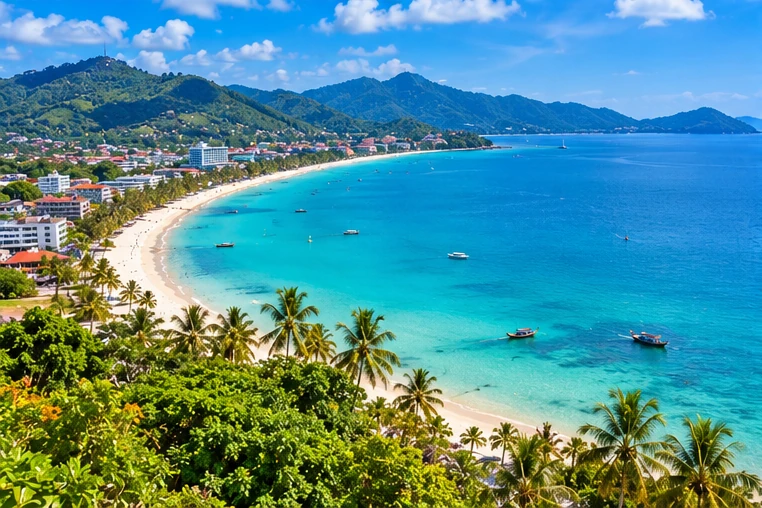
Koh Samui-inspired coastal illustration; not a documentary photograph or a report of present conditions.
Choosing the best beaches in Koh Samui is easier when you decide what you want from the day. Chaweng offers a different holiday from a small granite cove, and a west-coast sunset outing needs a different plan from a swim beside your hotel.
This guide separates a scenic visit from a practical overnight base. Use the comparisons to narrow your choices, then check the actual beach approach, local water advice and transport arrangement before committing. The aim is a holiday that feels comfortable, not a race around ten map pins.
Chaweng, Lamai or Choeng Mon
Compare the room, beach entrance and evening options.
Silver Beach
Give the compact bay time rather than rushing a photograph.
Bophut
Make a walk and dinner the purpose, not guaranteed snorkelling.
Lipa Noi or Taling Ngam
Arrange the return before settling into the afternoon.
Best beaches in Koh Samui: choose by the day you want
The best beaches in Koh Samui are not necessarily the ones with the whitest sand in a photograph. A small cove can be lovely for an hour but awkward as a week’s base, while a less dramatic beach can work brilliantly when restaurants, shade and easy returns to your room matter. Start with your main priority, then check the particular stretch outside your accommodation rather than booking on the beach name alone.
This is a research-led shortlist, not a visitor poll or a claim that every beach has been personally inspected. The ten selections cover different coasts and holiday styles. Official tourism information establishes the geography; accommodation operators help confirm beachfront locations and facilities; safety and conservation organisations inform the practical cautions. The order follows useful choices, not a numerical beauty score. Visit lengths below are editorial suggestions, excluding travel, rather than opening hours. [1]
Ten beaches at a glance
| Beach | I would choose it for | Main compromise | Suggested visit |
|---|---|---|---|
| Chaweng | A lively beach with services close by | Noise and water sports vary by section | Half a day |
| Chaweng Noi | A resort-focused alternative to central Chaweng | Check the actual public approach | 2-4 hours |
| Lamai | Beach time with a practical town base | Some sections deepen and develop surf | Half a day |
| Silver Beach | A compact granite-framed cove | Limited room when busy | 1-3 hours |
| Choeng Mon | A manageable bay and comfortable family base | Sheltered does not mean risk-free | Half a day |
| Bophut | Combining the waterfront with dinner | Dining is a stronger reason than snorkelling | 1-2 hours, then dinner |
| Maenam | A longer, quieter-feeling beach stay | Distances along the beach add up | Half a day |
| Bang Po | A slow coastal lunch and fewer plans | Shallow, uneven seabed in places | 1-3 hours |
| Lipa Noi | A west-coast afternoon and sunset | Specific venues can be lively | Late afternoon |
| Taling Ngam | Coastal scenery and an unhurried evening | More transport planning | Half a day |
These comparisons combine the beach descriptions in sources [1]–[10] with editorial judgement. They do not assess today’s swimming conditions. In particular, a family-friendly accommodation area is not a lifeguard guarantee.
Match the beach to your non-negotiable
For a short first stay, shortlist Chaweng, Lamai or Choeng Mon when you want a beach and nearby services without designing every outing around a driver. Choose Maenam when a quieter daily rhythm matters more than nightlife. Meanwhile, I would treat Silver Beach as a scenic outing before assuming its small bay is the right place for every day of the holiday.
Sunset seekers should look west rather than expecting the sun to drop into the sea from every shore. Lipa Noi and Taling Ngam make more geographical sense for that purpose. Nevertheless, cloud and the time of year affect the display, so give the outing a second purpose: dinner, a walk or simply time away from the busiest resort areas. [9][10]
Chaweng: the practical choice for a lively beach day
Chaweng is one of Samui’s principal beach areas, on the island’s eastern side. Its appeal is the combination of sand, accommodation and an established visitor district, rather than isolation. TAT includes it among the island’s key beach highlights. That makes it a useful starting point when different people in your group want different amounts of beach time. [1]
Where I would spend the time
Before settling down, walk a short section and compare the atmosphere. A stretch beside an active beach venue is a different proposition from one outside a quieter hotel, even though both addresses say Chaweng. Look for an obvious access route, a place to buy water and an agreed meeting point that your driver can recognise later.
For a mixed-interest group, I would organise a flexible morning rather than an all-day commitment. One person can read, another can walk, and everyone can meet for lunch without taking a cross-island trip. However, agree where valuables will stay; an unattended bag on a sunbed is not a secure locker.
Swimming, noise and the overnight decision
Do not translate a long sandy beach into identical water conditions along its length. Check flags, visible boat activity and local advice at the exact point where you intend to enter. Pick another activity when the sea looks unsuitable, however many people are already in it. The national travel advice specifically warns about strong coastal currents and following red flags. [12]
For an overnight stay, ask about nearby music and the route between the room, beach and restaurants. A room described as being in Chaweng may require road walking that you would not enjoy after dark. Conversely, a genuinely walkable location can save repeated transfers. My planning choice would be to pay attention to the entrance and immediate surroundings, not merely the distance marker on a booking map.
Chaweng Noi: a smaller bay with a resort-led feel
Chaweng Noi is a separate bay south of the main Chaweng stretch, not its northern end. Vana Belle’s official location and beach description confirm the Chaweng Noi setting and its proximity to Chaweng. It is a useful option when you like this side of Samui but would rather organise the day around a bay than a larger resort district. [4]
A good fit for staying put
I would put Chaweng Noi on the shortlist for couples or families expecting to spend substantial time at their accommodation. The decision then becomes less about finding the island’s single best beach and more about whether the room, pool, food and beach access work together. A hotel with suitable wet-weather space may matter more than a marginally better sea view.
As a day visitor, identify an authorised approach before setting off. Beachfront hotels, restaurants and beach clubs have their own conditions for using paths, parking, chairs and pools. Ask what is available to non-guests instead of assuming that buying a drink includes every facility. This distinction prevents an arrival from becoming an uncomfortable negotiation.
What to check before booking
Examine the route out to the main road as carefully as the route down to the sand. A property can be close to neighbouring restaurants on a map yet involve steps, slopes or an exposed road walk. Ask the hotel for a recent description or video of the approach if limited mobility, a pushchair or luggage handling is relevant.
For a day trip, allow enough time for lunch and a proper rest; two to four hours is a sensible editorial starting point. Combining it with Silver Beach can work, but three short stops do not automatically beat one satisfying afternoon. Keep central Chaweng as an optional evening destination, not a compulsory second chapter after an already full beach day.
Lamai: a beach-and-town balance, with a swimming caveat
Lamai sits on Samui’s east coast south of Chaweng. The Department of Tourism describes a substantial sandy bay with restaurants, entertainment and accommodation, but also warns that some sections have deeper water and strong waves. That qualification matters more than promotional claims that an entire resort beach is suitable for everyone. [2]
Why it can be a useful base
My reason for shortlisting Lamai would be everyday practicality. If you want to move between your room, the beach and meals without treating every journey as an excursion, compare accommodation around the part of town you intend to use. A convenient base can make it easier to take a midday break or change plans when the weather turns.
Nevertheless, do not assume every Lamai address has the same access to town. Check the route to the sand and the evening food options separately. A room can have an attractive coastal view without being the easiest choice for someone who wants to walk out for inexpensive, informal meals.
Choose the entry point, not just the beach
Watch the water for several minutes before getting in, particularly when waves are breaking close to shore. Ask where current local advice recommends swimming and whether flags are in use. Families should assess the drop-off for themselves while staying within their ability; another family’s comfort level tells you little about your own children.
I would leave a Lamai day deliberately simple: an earlier beach session, lunch and a return to the room or shade. The rocks around Hin Ta and Hin Yai are a separate sightseeing stop rather than a reason to clamber over wet surfaces during a swimming outing. There is no need to fill every gap with an attraction when the purpose of choosing Lamai is to have a workable beach base. [1]
Silver Beach: the cove for a short, scenic visit
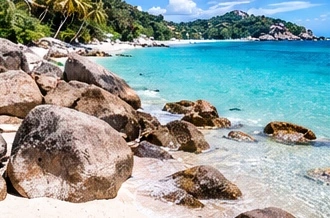
Silver Beach is also called Crystal Bay or Haad Thong Takian. Crystal Bay’s own site places its properties on this small south-east-coast cove, between the larger Chaweng and Lamai areas. Keep those names together when checking a map or asking for transport: they refer to the same bay, not three different beaches to tick off. [3]
How to use a compact beach well
The granite-framed setting makes this my first shortlist choice for visitors who want a distinct cove rather than a long resort strip. I would give it one to three hours initially, then stay longer only if the space, shade and conditions suit. Arriving earlier can give you more choice of where to sit, but it is not a promise of an empty beach.
The compact footprint also changes the experience of crowds. A relatively small number of visitors, sunbeds or boats can matter more here than on a longer stretch. Choose a place that leaves clear routes to the water and does not obstruct other people. Meanwhile, check which facilities belong to a business and whether any minimum spend applies before ordering.
Snorkelling needs more than attractive water
Clear-looking shallows do not establish visibility around the rocks or make every entry suitable. Ask about the current route, avoid breaking waves against granite and do not scramble over slippery rocks to reach a more photogenic corner. If you cannot stay comfortably clear of the bottom, choose a swim elsewhere or remain on the sand.
Treat any snorkelling as a conditions-dependent addition rather than the guaranteed purpose of the journey. Keep fins and feet away from marine life; standing on a reef to adjust a mask is not harmless. Green Fins recommends practising skills away from coral and avoiding contact even when wearing protective footwear. [14]
Choeng Mon: a strong shortlist for a manageable beach holiday
Choeng Mon is on Samui’s north-eastern side. Melia describes its location directly on the beach and five kilometres from the airport. That combination makes this area worth considering for a shorter holiday, especially when reducing arrival-day transfers and having accommodation close to the sand are useful priorities. [5]
Why I would consider it for families
The appeal is a bay-sized holiday setting rather than an obligation to travel around the whole island. Look for a room that lets you retreat easily for naps, shade or a shower, and choose a property with facilities that suit your actual children’s ages. A kids’ club, shallow pool or family room is useful only when its rules match your needs.
For a beach visit, I would leave room in the schedule for changing conditions. Start with a walk and an inspection of the water, rather than promising children an afternoon of swimming before you arrive. A sheltered appearance is not a substitute for supervision, and the presence of resorts does not establish continuous lifeguard cover.
Check the bay, the road and the room category
Do not use the general Choeng Mon name as proof of a specific property’s beachfront position. Some nearby accommodation sits elsewhere on the headland or above the coast. Confirm whether there are steps, whether a road separates the room from the beach and how you would reach dinner without a vehicle.
This is also an area where a room’s facilities can influence the holiday more than a beach ranking. Compare breakfast arrangements, bed configuration and usable shaded space before paying for a decorative upgrade. My editorial preference would be a simple, well-positioned room over a more impressive category that makes every beach visit awkward. For adults seeking nightlife each evening, check the return journey from the busier districts before deciding that the quieter base is the right compromise.
Bophut: choose the waterfront and the evening together
Bophut is especially useful when you want the beach to be one part of a broader afternoon. Anantara confirms its beachfront location and walking access to Fisherman’s Village, while TAT identifies Bophut’s older shophouse character. These are reasons to consider the area for dining and a waterfront stroll, not evidence that every patch of sea is a prime snorkelling spot. [1][6]
A slower transition into dinner
I would plan an afternoon here around shade, a walk and an early meal. That gives the outing a purpose even if you decide not to swim. Pick a meeting point before your group separates, particularly when some people want shops and others would prefer to stay beside the sea.
A restaurant reservation can provide useful structure, but do not confuse a dining booking with permission to use a hotel’s pool or loungers. Check the arrangement directly and include a change of clothing if you are moving from the sand into the village. A light cover-up also makes the transition more comfortable than trying to turn beachwear into an all-evening outfit.
When Bophut makes sense as your base
Choose this area when evening options are central to the trip and you want to avoid organising a separate transfer every night. However, map the actual walk from the property: being in the broader Bophut district is not the same as being beside Fisherman’s Village.
If your defining holiday image is several long swimming sessions every day, compare the particular beachfront with Choeng Mon, Chaweng Noi or Maenam before committing. For a couple who value dinner choices, easy changes of plan and a waterfront atmosphere, Bophut may still be the better personal fit. That is a preference-based judgement, not a universal verdict on which beach is more beautiful.
Maenam: a longer-stay option for a quieter rhythm
Maenam, also written Mae Nam, is on Samui’s north shore. Santiburi confirms its direct Mae Nam beachfront setting, palm shade and access to the local walking-street area. The broader beach makes sense as a shortlist option when the holiday is about repeated, uncomplicated beach days rather than collecting different coves. [7]
Think in small neighbourhoods
I would choose a particular section of Maenam before choosing a room. Identify a few places where you would happily eat, the nearest convenient access to the sand and the route for an evening walk. That is more useful than assuming the entire beach will behave like one compact village.
A longer coastline means that two hotels carrying the same beach name may create different holidays. One may put you near the food you want; another may suit people who expect to eat at the resort most nights. Look at the route between the two rather than the straight-line distance. Hot sand, steps or a road detour can make a casual-looking walk much less appealing.
A sensible swimming and shade check
Ask the accommodation about the water directly in front of it, including depth, current warnings and any seasonal changes to the beach. Santiburi promotes swimming at its own section, but that is not a blanket safety assessment for the full coastline or every day of the year. [7]
For a day visit, I would take a book, plan a proper lunch break and resist adding too many distant stops. For a longer stay, consider a pool as a practical alternative when the sea is unsuitable rather than an unnecessary luxury. The ability to enjoy the property during a rough-water spell helps make a quiet base feel relaxing instead of restrictive.
Bang Po: a coastal lunch rather than a swimming promise
Bang Po, sometimes written Bang Por, stretches along Samui’s northern coast west of Maenam. A detailed first-hand beach description notes its proximity to the ring road and a shallow, sometimes rocky or muddy seabed. The resort setting and coastal scenery can be appealing, but this is not the place I would choose solely on the assumption of effortless deep-water swimming. [8]
Why the slower pace can be the point
For a day visit, build the plan around a meal and time beside the water. Choose somewhere with a comfortable place to sit, check the menu and enjoy the coastline without measuring success by how far you swim. A quieter-feeling beach does not have to offer the same activities as central Chaweng to be worthwhile.
For accommodation, check whether the room is on the beach side of the road. Labels such as beachfront, sea view or beach access can conceal quite different layouts. Request the exact route and ask about road noise if that affects your sleep. The same practical question matters for anyone travelling with children who would otherwise need to cross a busy road repeatedly.
What I would avoid
Do not walk far across an unfamiliar shallow seabed simply because deeper water is visible beyond it. Check the bottom, water movement and return route with a knowledgeable local provider. Similarly, protective shoes should not become permission to tread over living coral.
A good Bang Po outing can be modest: lunch, a short shoreline walk and an unhurried return. It can also fit into a north-coast day with Maenam, provided you are not spending more time moving than enjoying either place. I would not cross the island for a ten-minute photograph here; give the slower setting enough time to justify the journey.
Lipa Noi: plan for the west-coast light
Lipa Noi is on Samui’s western side and is a logical choice for an afternoon that ends around sunset. Nikki Beach confirms its Lipa Noi beachfront location, west-coast setting and sunset-facing outlook. It also operates a beach club, which is a useful reminder that the same beach can have both quieter stretches and music-led venues. [9]
Decide which atmosphere you are buying into
For a low-key visit, choose a specific access point and keep the outing centred on the beach. For a venue day, investigate the current music programme, age policy, reservation conditions and minimum spend before travelling. A beach-club booking is a different product from turning up with a towel.
Nikki Beach’s published stay information describes its beach club as adults-only, 16+, and says daybed packages require a minimum spend. Those venue conditions were checked on 2 October 2026; they are not rules for every business or the entire beach. Children are permitted in the beach-club restaurant and the hotel main pool under the published policy; the club pool is restricted. Confirm the current arrangement before choosing a family visit. [9]
Make the return as deliberate as the arrival
I would arrive well before sunset, with enough daylight to inspect the beach and settle into the afternoon. Arrange the collection point with the driver in advance, and keep the contact details accessible offline. Waiting until the sky darkens to discover how you will return adds unnecessary friction.
Do not judge the whole outing by whether the horizon produces a dramatic photograph. Cloud can soften or obscure the sunset, and conditions may make swimming unattractive. A meal, conversation or a gentle walk still makes a coherent evening. If you are staying on the opposite coast, compare the cost and effort of the return before turning a sunset visit into an every-night ambition.
Taling Ngam: scenery that rewards an unhurried visit
Taling Ngam belongs on the shortlist for a quieter west-coast outing with broad sea views. InterContinental’s official information locates the resort on Taling Ngam Beach and describes views towards the Five Islands and Ang Thong. The appeal is the coastal setting, not a promise that every access point has the same facilities or swimming conditions. [10]
Give the journey a purpose
I would set aside a half-day rather than treat Taling Ngam as an extra stop after a packed island circuit. Choose a confirmed place for lunch or an early dinner, leave room for the view and agree the return transport before you settle in. This works especially well for people who enjoy watching a place rather than constantly looking for activities.
However, a resort’s sea-view terrace is not interchangeable with the public beach. Check whether you are booking a table, buying a day pass or simply asking about beach access. If a particular view is important, ask which seating area your reservation covers. Otherwise, you can arrive at the right property but with quite different expectations from the staff.
Day trip or overnight stay?
An overnight stay makes sense when seclusion is a positive choice and you are comfortable with the accommodation providing much of the evening experience. It is less convincing when you know you will want a wide selection of independently chosen restaurants every night.
I would also ask about slopes and internal transport before booking, especially at a property spread between hillside and shoreline. Sea views can come with steps. For a first-time visitor who simply wants to see this coast, one thoughtfully arranged afternoon is often the clearer decision. You can enjoy the difference without relocating your entire holiday or pretending that distance from the busier areas suits everyone.
Weather and tides: choose dates, then reassess locally
The season is only a starting point
Build flexibility into the booking rather than relying on a label such as dry season. A room with a comfortable covered balcony, usable communal space or a pool may make variable weather easier to enjoy. Likewise, leave your preferred beach excursion movable within the stay rather than attaching it to the first afternoon after arrival.
What to check on the day
Use a current forecast for wind and thunderstorms as well as rain, then ask locally about the specific shore. Weather apps describe wider conditions; they do not inspect the entry point in front of you. The Met Office’s Samui forecast is one useful starting point, but beach warnings and operator decisions remain essential. [11][12]
Tides alter the amount of exposed sand and the depth over shallow seabeds. Therefore, a photograph taken at one water level is not a reliable preview of your afternoon. Ask when the chosen stretch is most usable for your intended activity. Check again if your plan changes from a beach walk to snorkelling: the best conditions for one are not automatically the best for the other.
Swimming, snorkelling and children: practical precautions
Choose the conditions before the activity
Ask where assistance is available before putting your phone and belongings away. A confident swimmer still needs an exit route, and a beach without a visible warning sign is not automatically assessed as safe. If you feel unsure, stay out and use the time for a walk or meal instead.
Jellyfish and other marine hazards
TAT’s visitor guidance identifies Koh Samui among areas where dangerous jellyfish have been reported. Read local notices, avoid touching stranded jellyfish and ask the accommodation or a reputable dive centre about current advice. For a serious sting or other medical emergency, call 1669 and seek immediate help; do not rely on internet identification before acting. [13]
Leave the reef as you found it
Check mask fit before moving over coral, keep your fins clear and never stand on marine life to steady yourself. Do not feed fish to improve a photograph or collect souvenirs from the seabed. These are core Green Fins principles, and they apply just as much to a casual beach snorkel as to a paid boat trip. [14]
Beach-day routes that leave time to enjoy the sand
One day on the east side
Choose Chaweng Noi or Chaweng for the main session, not both by default. Add Silver Beach as a shorter second stop and finish around Lamai if that suits your accommodation. Reverse the order when your starting point makes it more sensible. The aim is two meaningful beach visits, not a series of hurried arrivals.
As a planning allowance, reserve at least an hour across the day for loading bags, finding access, changing and waiting for transport, in addition to actual driving. Those transitions are easy to omit from a map-based itinerary. Leave a lunch break under cover rather than trying to remain on exposed sand throughout the hottest part of the day.
A north-coast day without backtracking
Start with a substantial session at Choeng Mon or Maenam. Then use Bophut for the late-afternoon walk and dinner. Bang Po is a reasonable alternative when lunch and a slower coastal setting matter more than the village evening. Choose the combination nearest your base instead of assuming every north-coast beach belongs in one day.
A separate sunset afternoon
Use Lipa Noi or Taling Ngam as the main outing, with a pre-arranged return. Allow three to five hours overall on the coast if you want a meal and time before sunset, then add the actual transfer estimate supplied for your hotel. These are suggested time budgets, not verified journey durations. Bad weather is a reason to rearrange the afternoon, not to drive faster and preserve the schedule.
Getting around and budgeting without misleading taxi prices
Compare the whole journey
TAT advises agreeing transport fares before departure. Ask whether a quote is per person or per vehicle, whether waiting is included and what happens if you change the final beach. A low outbound price says little about the full day if the return is unarranged. [1]
For independent day trips, compare a return taxi with a driver retained for a defined number of hours. The second option can be worthwhile when several people share the cost and access points are unfamiliar. Conversely, hiring transport all day is wasteful if you only intend to visit the beach beside your accommodation.
A dated example, not an island tariff
Anantara Bophut publishes a Toyota Fortuner airport transfer at THB 950 each way, including its stated service charge and tax, checked on 2 October 2026. For two people sharing, the arithmetic is THB 475 each one way. This is that hotel’s advertised transfer, not a regulated taxi fare, a cross-island tour price or a quote for another beach. Reconfirm availability and the final total. [6]
Use the example to ask better questions rather than copying the figure into every journey. Your own calculation should include the outward fare, return fare, any waiting, parking and whatever facilities you actually choose to buy. If those items are not confirmed, keep a contingency rather than presenting a guess as a saving.
Scooters are optional, not compulsory
A hire scooter should not be the default solution for an inexperienced rider. Confirm licensing, insurance and vehicle suitability; choose a car or an arranged driver when that is the more sensible option. The FCDO highlights motorcycle risks and the need for appropriate documentation and cover. [12]
Compare the options for your dates
Check the location, journey details, inclusions and cancellation terms before booking. This is an affiliate link.
Where to stay: inspect the exact beach access
Start with the trip you are actually taking
For a short stay, choose convenience before trying to cover every coast. Chaweng, Lamai and Choeng Mon are my starting points for visitors who want an established beach base. For a quieter week, compare Maenam; for an accommodation-led escape, investigate Chaweng Noi or the west coast. These are planning recommendations, not claims that every property in an area is equivalent.
Shortlist three rooms at most, then check the entrance, sleeping arrangement, food options and cancellation terms properly. A long list of unexamined favourites usually makes the decision harder. Consider whether breakfast is useful, whether the pool suits your group and how easily you can leave the accommodation when you feel like a change.
Five questions before you pay
Ask whether the room is genuinely on the beach side of the road, how many steps separate it from the sand, where non-swimming time would be spent, whether nearby music is audible and how the return from dinner works. For mobility requirements, request specific measurements and an uninterrupted route description rather than accepting the word accessible.
A beachfront location can justify a higher room price when it replaces repeated transport and makes breaks simple. Nevertheless, it does not automatically include loungers, breakfast or unrestricted access to every pool. Read the room’s own conditions rather than transferring facilities from photographs of another category.
Compare the options for your dates
Check the location, journey details, inclusions and cancellation terms before booking. This is an affiliate link.
What to take for a flexible beach day
Pack for getting out of the water as well as getting in. A light change of clothing, a small towel, drinking water, sun protection and a bag that closes properly are more useful than several items you are reluctant to leave unattended. Keep your transport details and meeting point available without relying on a mobile signal.
For a boat-connected day, protect essentials against splashes and make sure you can manage the bag while boarding. A waterproof pouch is not proof that a phone can survive prolonged immersion; follow the product’s limitations and test closures before the outing. Carry enough cash for agreed small expenses without taking every card and document onto the sand.
Think about shade before bringing bulky beach equipment. A venue with reliable cover can be more useful than trying to keep a lightweight umbrella stable in wind. Likewise, a snorkel set only earns its place if you plan to use it in suitable conditions and can keep clear of boats and coral.
Finally, leave space to carry your rubbish away. Small food wrappers and bottle caps are easily lost when the wind rises. A simple reusable bag keeps wet clothing separate on the return and gives you somewhere for litter when a bin is not nearby. The aim is an easy day with fewer loose possessions, not a beach bag containing every possible contingency.
Pros and cons of a Samui beach holiday
What works particularly well
The choice of different coasts lets you build a stay around convenience, a compact cove, a slower resort base or a sunset outing. You do not need to move hotels every night to experience more than one beach. Moreover, an accommodation area with useful food and shade can keep the holiday enjoyable when swimming is not the best option.
The compromises worth accepting upfront
Getting between apparently nearby beaches still takes planning. A quiet location can create repeated transfer costs, while a convenient one may involve more traffic or music. Resort facilities are not universally available to day visitors, and a beach’s reputation cannot settle questions about today’s water conditions.
For me, the strongest plan is one good base and two or three optional excursions. That leaves room for discovery without making the holiday depend on completing a list. Choose an alternative coast because it adds something different, not because a travel guide has made staying put feel like failure.
Common mistakes that make beach days harder
Booking from a district name alone is the first avoidable problem. Confirm the property pin, beach entrance and real walking route. A sea view from a hillside is not the same experience as a room that opens conveniently onto the sand.
Another mistake is treating low tide as uniformly good or bad. More exposed sand may suit a walk while leaving too little depth over a reef for comfortable snorkelling. Decide the activity first, then ask what the water level means for that particular location.
Do not schedule distant sunset beaches immediately before a ferry, flight or fixed dinner elsewhere. You need time to leave the beach, change, locate the driver and travel back. A sunset outing should not become a race across the island.
Finally, separate the beach from the business beside it. A restaurant table, beach-club daybed, hotel pool and route through a resort can all have different conditions. Clarifying those details in advance is simpler than arguing on arrival, and it helps you compare the genuine cost of two otherwise similar-looking days.
FAQs about the best beaches in Koh Samui
Which beach would you choose for a first visit?
For a straightforward beach holiday, I would compare Chaweng, Lamai and Choeng Mon against your evening preferences and the exact accommodation location. Add Maenam if a quieter rhythm is more appealing. Silver Beach is a strong scenic outing, but its smaller footprint does not automatically make it the most practical base for every traveller.
Is Silver Beach the same as Crystal Bay?
Yes. Silver Beach, Crystal Bay and Haad Thong Takian are names used for the same small cove. Confirm the map location between the Chaweng and Lamai areas, especially when a booking platform uses a different spelling. The Crystal Bay operator’s site identifies its properties on that bay. [3]
Which coast is better for sunset?
The west coast is the more straightforward starting point for sunset-facing visits, particularly Lipa Noi and Taling Ngam. Exact viewpoints and cloud affect what you see. I would arrange a meal or a relaxed afternoon as well, so the trip remains worthwhile without a dramatic sky. [9][10]
Can we enjoy the beaches without hiring a scooter?
Yes. Choose accommodation with genuinely usable beach access, then arrange selected transfers rather than attempting a new beach every day. Ask for a written return arrangement and collection point. This can be a more sensible plan for inexperienced riders than renting a scooter simply because other visitors do so.
Are all beaches suitable for young children?
No beach name is a reliable safety guarantee. Consider current waves, depth, boat traffic, warnings and available supervision at the precise entry point. A family-friendly hotel may be an excellent base while the sea is unsuitable that afternoon. Build in another activity and avoid promising a swim before checking conditions. [12]
How many beaches can we realistically visit in a day?
Two substantial visits are usually a more useful editorial target than five brief stops. A third can work when it is a short walk or meal on your route, rather than a separate cross-island transfer. Add time for changing, meals and pickup delays, not just the driving estimate on a map.
Final recommendation: one base, a few contrasting afternoons
For most first visits, I would choose a practical base on the north or east side, then select a small number of contrasting outings. Silver Beach adds a compact cove, Bophut adds an evening waterfront experience, and Lipa Noi or Taling Ngam adds a west-coast afternoon. You do not need to include all of them.
Let the actual room, beach approach and transport arrangement influence the booking more than a numbered ranking. Then keep your beach days movable within the stay. A plan that works with local conditions, your swimming confidence and the amount of travelling you enjoy is more valuable than a theoretically perfect route that leaves no time to relax.
Sources and fact-checking notes
Research checked on 2 October 2026. Beach facilities, transfer arrangements and local warnings may change. Provider pages establish their own locations and services; their promotional superlatives are not treated as independent rankings. Suggested visit lengths, comparisons and itineraries are editorial planning judgements, not quoted timetables.
- [1] Tourism Authority of Thailand: Ko Samui. Accessed 2 October 2026.
- [2] Department of Tourism: Lamai Beach. Accessed 2 October 2026.
- [3] Crystal Bay: Silver Beach and the bay names. Accessed 2 October 2026.
- [4] Marriott: Vana Belle, Chaweng Noi. Accessed 2 October 2026.
- [5] Melia Koh Samui: location and facilities. Accessed 2 October 2026.
- [6] Anantara Bophut: location and airport transfers. Accessed 2 October 2026.
- [7] Santiburi Koh Samui: Mae Nam beachfront location. Accessed 2 October 2026.
- [8] Thailand Beaches: Bang Por, first-hand beach description. Accessed 2 October 2026.
- [9] Nikki Beach Koh Samui: visitor and stay information. Accessed 2 October 2026.
- [10] InterContinental Koh Samui: Taling Ngam. Accessed 2 October 2026.
- [11] Met Office: Ko Samui forecast. Accessed 2 October 2026.
- [12] FCDO: Thailand safety and security. Accessed 2 October 2026.
- [13] TAT Newsroom: jellyfish safety advice. Accessed 2 October 2026.
- [14] Green Fins Thailand: friendly diving and snorkelling guidelines. Accessed 2 October 2026.
- [15] The Times: Thailand seasonal travel overview. Accessed 2 October 2026.
Illustrations in this article were created for Taylor’s Trailblazing Travels. Third-party photographs, where used, are credited beside the image or in the source list.