Khao Lak Travel Guide
Find your stretch of coast and balance beach days with the right seasonal outings.
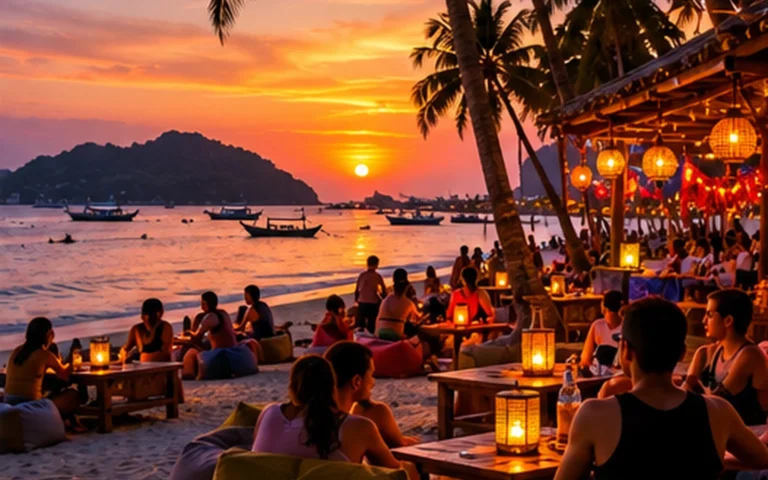
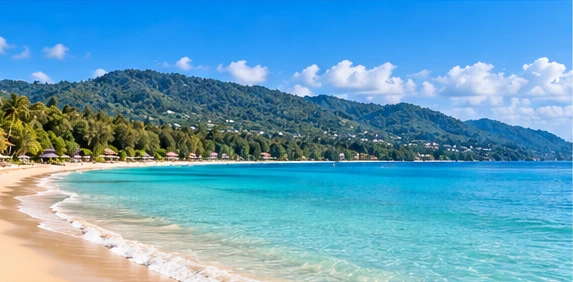
Original illustration inspired by Khao Lak-inspired broad beaches, palms and low forested coastal hills; not a photograph or a navigational map.
Khao Lak is a place where the location of your hotel can shape the whole holiday. Two properties described as being in Khao Lak may offer very different evenings: one lets you stroll to dinner, while another suits guests who want to remain within a resort. This Khao Lak travel guide helps you choose that setting before you get distracted by photographs of pools and empty beaches.
The name covers a long coastal area in Phang Nga, rather than one compact island town. TAT's coastal overview runs through several beach areas, including Nang Thong, Khuk Khak, Pak Weep and Bang Sak. That spread is one of Khao Lak's strengths, but it means a general destination label tells you little about the walk from an individual room to a restaurant. [1]
My suggested first visit is five to seven nights with two substantial outings and several flexible days. Choose a marine excursion only when the park is open and conditions suit it, then balance it with time on land. This creates a beach holiday with variety, rather than an exhausting sequence of pre-dawn collections from a hotel you barely use.
The recommendations here are research-led planning choices. Hotel examples illustrate contrasting needs, not an inspection-based league table. Costs identified as spending allowances are hypothetical budgeting inputs; published charges are dated and linked to their source. Use both to ask better questions, then replace the assumptions with quotes for your own party and dates.
This article contains affiliate links. When you book or buy through one, Taylor’s Trailblazing Travels may earn a commission at no extra cost to you. The comparisons focus on practical suitability, not the commission available.
One base, varied days
A beach holiday with a few purposeful outings rather than daily transfers.
Check the exact walk
Nang Thong and Bang Niang are starting points, not guarantees at every address.
One well-chosen trip
Compare Similan and Surin by the actual programme and seasonal access.
A comfortable hotel
Room space, covered areas and meal choices matter when plans change.
Khao Lak travel guide: choose your stretch of coast
Start with your evening routine
Begin by deciding how often you expect to leave the hotel for dinner. Someone who wants a new restaurant each night should investigate a walkable address around Nang Thong or Bang Niang. Someone who prefers a quiet resort rhythm can consider farther-flung beachfront settings. TAT's own area guidance distinguishes the more convenient central beaches from quieter Pak Weep and Bang Sak. [2]
Do not reduce that choice to central versus remote without checking the route. A hotel can be a short distance from restaurants but still involve an awkward road crossing or a poorly lit walk. Ask for the normal pedestrian route, not the straight-line distance. Then consider the same journey in rain, after dark and with anyone who tires easily.
A beachfront label is only the beginning
Look at the beach immediately outside the property, the path to it and the room's position within the grounds. A huge resort may offer everything you need but still require a daily walk that is longer than expected. Conversely, a smaller property slightly back from the sea may make meals and shopping much easier.
Choose the trade-off that matches your routine. For a family that returns to the room frequently, short internal distances can be valuable. For a couple planning mostly pool time, the main priority may be shade and the right pool atmosphere. Neither decision can be made reliably from an aerial photograph alone.
Choose a Khao Lak base by the evenings you want
Editorial location comparison; specific properties can differ from the broad area description.
Swipe this table sideways to read every column.
| Area | Planning fit | Important trade-off |
|---|---|---|
| Nang Thong | A useful starting point for convenient meals | Verify the actual walk and any road crossing. [1][2] |
| Bang Niang | Meal choices and a developed visitor base | Room position and evening transport still matter. [1][2] |
| Khuk Khak | A resort-focused coastal stay | Do not assume every property is near independent dining. [1] |
| Pak Weep / Bang Sak | A quieter-style resort shortlist | Compare the full transport and meal picture. [1][2] |
Getting from Phuket Airport to the right hotel
Compare exact addresses and vehicle arrangements
For many international visitors, Phuket Airport is the practical gateway to Khao Lak. The trip continues by road, so check whether the quote is for the correct hotel rather than a generic central drop-off. The Sarojin, for example, publishes its own airport distance and offers private transfers; that is useful property-specific information, not a universal journey time for the entire coast. [4]
For planning, leave a broad arrival window rather than building the first afternoon around a precise driving estimate. Immigration, baggage, the meeting point and traffic all precede check-in. Ask the provider where the driver waits, how flight delays are handled and whether the car accommodates your luggage. A shared vehicle also needs clarity about intermediate stops.
Decide whether a cheaper transfer actually saves you money
A low shared-transfer fare can work well when it fits your arrival and hotel. However, compare the total for the party with a private vehicle, not one adult's headline price. Include any final taxi from the shared drop-off. Families should request a suitable child seat in advance and confirm that it is actually reserved.
For late arrivals, keep the process simple and obtain the hotel's late-check-in instructions. Avoid adding a supermarket stop, a sightseeing detour and dinner reservations before you have reached the room. A light first evening makes the following day more usable. Arrange the return once flight details are settled rather than leaving the final transfer to chance.
Resorts, smaller hotels and choosing the room
Two contrasting examples to investigate
The Sands presents itself as a family beach resort, with different zones and water-play facilities. It is a useful starting point for travellers who want activities close to the room. Nevertheless, verify which facilities suit the children's ages and whether the chosen room is in the desired part of the resort. A property-wide facilities list does not explain the experience of every building. [3]
The Sarojin offers a contrasting boutique-style option and explicitly accepts children aged ten and over. That makes the age rule an early screening question for families, rather than something to discover after selecting a beautiful suite. Compare its setting and included services with your priorities, without assuming that a higher room price automatically produces the holiday you want. [4]
Check what the room rate includes
Compare breakfast, cancellation, occupancy, taxes and any compulsory meals before choosing a rate. A family room and two connecting rooms are not interchangeable, and connecting requests may need written confirmation. Ask about stairs, lifts, pool access and the actual route to the beach. For a traveller with limited mobility, the complete route matters more than the room label.
Read recent descriptions of noise, maintenance and neighbouring work, then ask the property about anything that could affect your dates. A specific reply about a planned pool closure is more useful than reassurance that the hotel is normally peaceful. Keep the confirmation with your booking record so you have the agreed details if plans change.
Beaches, swimming and what the season changes
Do not make every day a beach-hopping project
Khao Lak's long coastline makes it tempting to collect beach names. Instead, choose a main beach you can enjoy repeatedly and add another area when it offers a clear difference, such as a meal, a walk or a change of setting. Spending an hour arranging transport for a brief photograph can be less rewarding than an unhurried afternoon close to your room.
TAT highlights sunset views, sandy beaches and several water activities along this coast. Those attractions do not mean swimming is suitable at every place and time. Look at beach flags, currents and local instructions each day. Keep children closely supervised, and treat a pool as a valuable alternative rather than a disappointment when the sea is unsuitable. [1]
Use shade and timing to make beach time comfortable
A useful pattern is an early walk, a shaded middle part of the day and a return later when conditions suit. Bring water and avoid depending on a particular beach vendor being open. Check whether your chosen accommodation supplies towels and where wet items can dry. A simple routine is particularly helpful when staying long enough to settle into the area.
For photography, look beyond the midday turquoise-water ideal. Changing cloud, vegetation and the broad shoreline can be part of the appeal. Do not walk into a dangerous waterline or cross a closed area to reproduce a photograph. The day's conditions should decide where you stand, swim or paddle, not the image you had saved before travelling.
Similan and Surin: separate park calendars from hotel seasons
A hotel stay does not establish island access
Marine parks have seasonal closures that are separate from whether a Khao Lak hotel is open. TAT's 2026 national-park notice says attraction access varies with park and weather conditions. Contemporary reporting places the 2026 Similan and Surin closure into mid-October. At this guide's review on 3 October 2026, do not assume an advertised future excursion is already operating. [8][9]
Ask the operator to identify the actual park opening applicable to your travel date and the policy for weather cancellations. Avoid paying for a supposedly guaranteed marine visit during a closure. Equally, an opening date does not guarantee every departure will run. Build another enjoyable day into the itinerary so the whole holiday does not depend on a single boat trip.
The two parks are choices, not compulsory doubles
The Similan and Surin islands offer different excursion products and travel commitments. TAT describes both as marine national parks with island and underwater attractions. Compare the specific boat, pier, time afloat, snorkelling stops and group size rather than trying to choose from a generic “best island” claim. [6][7]
For a first visit, one well-chosen marine day may be enough. Book both only when snorkelling or diving is genuinely a main purpose of the trip and everyone welcomes two long sea days. A mixed group may prefer one island outing and one inland experience. The best combination is the one people enjoy, not the one with the longest checklist.
How to compare a snorkelling excursion
Look beyond the number of stops
Ask how long the group spends in the water, whether a guide accompanies less confident swimmers and what buoyancy equipment is provided. A programme with many named stops may still feel rushed. Clarify the boat type and the time from hotel collection to the first activity; the longest part of the day might occur before the advertised itinerary begins.
Check food, drinking water, park fees and transfers in the final price. TAT's Similan listing shows a foreign-adult park fee of THB 500 and foreign-child fee of THB 250 when checked on 3 October 2026. Treat these as published references, not confirmation of every child's age category or a future tariff, and establish whether your package already includes them. [6]
Make the day suitable for the least confident participant
Tell the operator about swimming confidence and relevant mobility or health limitations before booking. A glossy photograph of calm water cannot tell you whether boarding, the crossing or a snorkel stop suits a particular person. Seek individual medical advice where needed. An operator's willingness to take a booking is not itself an assessment of personal suitability.
Leave the following morning relaxed. A long, early-start excursion can be rewarding without being followed immediately by another full-day trip. Keep valuables minimal, secure your hat and phone, and take only equipment you know how to use. Protect reefs by following the guide's instructions and not standing on or collecting coral.
Khao Lak-Lam Ru: make the land day manageable
Pick one walk or beach area rather than the whole park
Khao Lak-Lam Ru National Park combines forest and coast; its attractions are spread beyond a single entrance. TAT identifies Hat Lek and Ton Chong Fa among the places associated with it. Ask the park or guide which route is open and suitable for your party, then plan a realistic visit rather than treating the park name as one compact attraction. [5]
Choose footwear and clothing for the route, carry water and allow more time in heat than a distance alone suggests. Ask about the return, not just the walk in. A short forest outing followed by lunch can make a satisfying half-day. There is no benefit in extending it until the group is exhausted simply to describe the day as a hike.
Separate a waterfall visit from permission to swim
A waterfall can be worth seeing without entering the pool. Conditions may change quickly after rainfall, and wet surfaces can be slippery. Follow posted instructions and staff advice. Leave the area when conditions deteriorate rather than waiting for a photograph with stronger water flow. A rainy-day forecast is not a reason to assume waterfalls are the safest replacement for a cancelled boat trip.
For budgeting, TAT's English park page lists THB 100 for foreign adults and THB 50 for foreign children, checked on 3 October 2026. Confirm current admission and the relevant entrance before visiting. Avoid assuming one ticket covers every separate location or remains valid indefinitely; ask what it includes and keep the receipt. [5]
Takua Pa and the local-history alternative
A change of setting can improve the whole week
Takua Pa Old Town offers a useful contrast to resort and beach days. TAT describes surviving Sino-European architecture, a history connected with trade and tin mining, and a Sunday-evening walking street on Sri Takua Pa Road. Check the current event arrangements before making a long journey specifically for the market. [10]
A practical visit can combine a slow walk, a drink and time to notice shopfronts and street details. Avoid treating residential doorways as photo sets. Ask before photographing people or entering private spaces, and buy something where you spend time. The point is to enjoy a working town, not to expect every building to be a tourist attraction.
Arrange transport for the time you actually intend to leave
A market visit needs a return plan after the evening activity, not a morning bus timetable. Agree the collection point and whether waiting is included in a private-car quote. Take the hotel's address offline. For a mixed-age group, establish a meeting place so people can browse at different speeds without repeatedly losing each other.
When visiting on another day, let the old town stand on its own rather than arriving disappointed that a weekly market is absent. Pair it with another nearby stop only when the geography and opening hours make sense. A long detour to fill a gap can turn a pleasant cultural afternoon into too much time in the car.
Tsunami remembrance: visit with care
Do not confuse the different sites
Ban Nam Khem's memorial is a distinct place of remembrance, not simply another name for every tsunami-related museum or display around Khao Lak. TAT describes a memorial wall and names of people who died. Check the exact site you intend to visit and its opening arrangements rather than telling a driver only that you want the tsunami place. [11]
Allow time to read quietly and approach photography with restraint. This is not an appropriate setting for playful poses or intrusive pictures of people paying their respects. A short, attentive visit can be more meaningful than rushing through several related sites. Families may wish to decide beforehand how much detail is suitable for the children.
Let remembrance inform practical awareness
On arrival at your own accommodation, locate evacuation information and the route staff recommend in an emergency. Ask questions while everything is calm. This is sensible coastal preparation, not a prediction of an event during your stay. Treat official instructions seriously and do not assume that following a crowd is an adequate emergency plan.
A remembrance visit also provides a reason to look beyond the resort boundary. Choose locally run meals, guides or shops where they fit your plans, without treating purchases as a substitute for respect. The area's communities are living places with present-day routines as well as a history visitors may have come to understand.
Khao Sok: a day trip or a separate stay?
Ask which part of the experience you are buying
Excursions sold under the Khao Sok name can involve different combinations of forest, river activities and the lake. Before booking, request the actual stops, driving time and boat time. Do not assume that a short activity near a village and a lake-based overnight are versions of the same product. The itinerary matters more than the broad destination label.
For a Khao Lak holiday, a day trip is most appealing when the travel leaves enough time for the experience you value. Someone chiefly interested in a peaceful night near the forest should investigate a separate stay instead. Check luggage arrangements and onward transport before splitting accommodation. A second base should create useful time, not simply another checkout.
Avoid transferring all the holiday into vehicles
When travelling with children or anyone prone to fatigue, compare the inland excursion with a closer land day. A shorter outing can deliver more enjoyable time outdoors even when the distant headline attraction is more famous. Ask for realistic breaks and bathroom stops. Do not schedule a demanding forest activity simply because a package promises to fit everything into one day.
For an overnight, check the exact accommodation type, bathroom arrangements, access, electricity and mobility requirements. These are practical questions, not criticisms of a simple stay. Pay for the experience you genuinely want and arrive with suitable expectations. Keep some room in the wider itinerary for the extra travel involved in changing base.
A seven-night plan that leaves room to breathe
Begin with your hotel and one nearby outing
Use arrival day to settle in, then make the next morning about the beach, pool and local meal options. This gives you time to understand the setting before committing every day. Choose a short land outing for the second full day, perhaps a manageable park visit or exploration of another nearby area, depending on conditions and your interests.
Place the main marine excursion early enough in the stay that there is room to rearrange it. Do not put the only possible island day immediately before departure. Follow it with a slower day rather than another dawn collection. This pattern gives the holiday a rhythm and lets the hotel facilities you selected earn their place in the budget.
Finish with a choice rather than a compulsory attraction
Later in the week, choose between Takua Pa, another beach area or a longer inland trip. The decision can depend on what you have enjoyed so far. Keep the final full day relatively easy, particularly before a long flight. A repeat visit to a favourite lunch spot is a perfectly good use of time.
For five nights, remove one outing instead of compressing the seven-night plan. For ten nights, add rest and perhaps a separate inland stay, not automatically more excursions. This is an illustrative structure, not a fixed weekday timetable: markets, park access, weather and personal energy should determine the final order.
A seven-night rhythm, not a rigid timetable
Suggested pacing, not an operator schedule. Park access and weather take priority.
Swipe this table sideways to read every column.
| Day | Suggested focus | Keep flexible |
|---|---|---|
| Arrival | Hotel, food and a short nearby walk | Do not promise a major outing after the flight. |
| Full day 1 | Local beach and hotel facilities | Learn the immediate area before booking more. |
| Full day 2 | One marine outing, when permitted | Move it to the better operating day. |
| Full day 3 | A slower coast day | Allow recovery after the boat. |
| Full day 4 | Takua Pa or a suitable land experience | Check the actual opening and travel arrangements. |
| Full days 5-6 | A chosen extra and time at the hotel | Leave at least one day without a paid deadline. |
| Departure | Pre-arranged airport transfer | Reconfirm the hotel pickup address. |
Surfing and a greener-season visit
Surf conditions and easy swimming are different questions
TAT's Khao Lak material identifies surfing among the coast's activities, and its Stockholm office has highlighted the area around Memories Beach. This can make the wetter part of the year attractive to a visitor interested in a supervised lesson, even when an offshore-island itinerary is unsuitable. However, waves that interest surfers are not evidence of an easy swimming day for everyone else. [1][2]
Choose a lesson according to the instructor, group size, equipment and the conditions appropriate for your ability. Ask how the provider decides whether to run the session and what happens if it is postponed. A beginner should not rent a board simply because another person appears comfortable in the water. Likewise, a family beach plan should follow flags and local instructions independently of whether lessons are operating nearby.
Make the hotel part of the wet-weather plan
A greener-season stay works best when the accommodation itself offers enough comfort for an undecided afternoon. Compare covered seating, pool access when safe, room space and meal options. A small room chosen only for its low price may feel less satisfactory if several outdoor plans change. That does not require an expensive resort; it requires matching the room and surroundings to how you might actually spend the day.
Build a shortlist of land-based alternatives, but keep their current access separate from the marine-park calendar. A museum visit, a meal in Takua Pa or a suitable local experience can provide variety without trying to force a cancelled sea trip onto the next day. Leave enough flexibility that a change of weather creates a different pleasant day rather than a succession of replacement bookings.
Split stays should solve a specific problem
Changing from the southern part of the coast to a quieter northern resort can make sense during a longer holiday when you want two distinct settings. During a short stay, the move may simply consume the afternoon you hoped to spend resting. Compare the benefit with packing, checkout, transfer and room availability. One carefully selected base is usually a stronger starting point than two bookings made because their photographs look different.
Budget the complete stay, not just the room
Use a transparent spending model
The example below is a planning exercise prepared on 3 October 2026, not a live quotation or a claim about average prices. For two adults sharing over seven nights, assume THB 4,000 per room per night, THB 1,600 a day for meals and drinks for seven days, THB 4,000 total for airport transfers and THB 10,000 for outings. The resulting allowance is THB 53,200.
Change the inputs rather than treating the total as a promise. Breakfast included in the room can reduce one part of the food budget, while a distant resort may increase paid transport. A family needs different room and activity assumptions. Someone who spends most days at the pool may prefer to move money from excursions into a better-suited room.
Keep flexibility visible in the comparison
Compare a refundable room with its non-refundable equivalent only after considering the financial consequence of a change. Read package rules for missed outings, weather cancellations and minimum numbers. A saving is less useful when one cancelled connection causes several unrelated bookings to be lost. Keep receipts and written confirmations in one accessible place.
Set aside a separate reserve for genuine disruptions rather than using the entire available amount on pre-booked extras. Record whether each quoted charge includes tax and service. For longer stays, check laundry and other repeated costs too. These small items rarely determine the destination choice, but they can explain why a holiday exceeds an otherwise careful room-and-flight budget.
Two adults, seven nights: a worked allowance
Hypothetical planning model prepared 3 October 2026. Not a quote or average; excludes flights and varies with your choices.
Swipe this table sideways to read every column.
| Item | Calculation | Allowance (THB) |
|---|---|---|
| Shared room | 4,000 x 7 nights | 28,000 |
| Meals and drinks | 1,600 x 7 days | 11,200 |
| Airport transfers | Chosen total allowance | 4,000 |
| Outings | Chosen total allowance | 10,000 |
| Worked total | Sum of the four allowances | 53,200 |
Getting around, meals and everyday practicalities
Design a holiday that does not require a scooter
Start with walkable meal options, hotel transport and occasional arranged journeys. A scooter should not be the assumed solution to a poorly located booking. The Foreign Office highlights road-safety concerns and the need for appropriate licensing and insurance. Anyone considering a vehicle should resolve those requirements before renting, not after an accident or roadside check. [13]
For a planned outing, agree the route, duration and return price with the driver. Check whether stops or waiting incur extra charges. A screenshot of a hotel pin and its written address can prevent confusion between similarly named properties. Keep enough phone charge to contact your accommodation, but do not rely entirely on a live data connection.
Food planning can remain relaxed
Find one dependable breakfast or lunch option near your base, then explore at an unhurried pace. For dietary needs, ask about ingredients and preparation rather than assuming a familiar dish is made identically everywhere. Serious allergies need specific discussion with the venue and an individual plan. Carry a translated explanation when that helps communication.
Bring the essentials for an outdoor day: water, suitable sun protection, a dry layer and any personal medication. For marine excursions, a compact dry bag can be useful; for a resort-focused stay, a huge equipment list usually is not. Arrange mobile data early and save booking details offline. Purchase what solves a real problem rather than every accessory marketed for tropical travel.
Pros, cons and common booking mistakes
What works well
Room for a longer beach stay, different coastal bases and a useful mix of marine outings and local-history days.
The trade-offs
Some areas need arranged transport, and the famous offshore parks do not operate on the same calendar as the hotels.
The strengths are space and choice of pace
Khao Lak suits visitors who want a beach base with enough variety for a longer stay, especially when a well-chosen hotel is part of the holiday rather than only a place to sleep. Its range of coastal settings lets you prioritise convenience, quiet or family facilities. Those are editorial fit judgements, not a promise that every traveller will prefer it to Phuket or Krabi.
The compromises are the distances between some areas and the seasonal nature of major marine excursions. The common mistakes are choosing solely from a pool photograph, assuming everything is walkable, booking two long sea days for reluctant participants and treating an attraction's usual season as a confirmed opening date. Ask about those points before paying and the rest becomes much easier.
Detailed questions before you book
Is Khao Lak one compact town that I can explore entirely on foot?
The visitor area extends along several stretches of coast, so a hotel being described as in Khao Lak does not establish that every restaurant or attraction is nearby. Start with the exact address and your evening routine. Check the walk to meals and whether a main road, poorly lit section or long beach route is involved. A convenient base can reduce transport needs considerably, but it will not put every part of the coast within an effortless stroll. Choose the location before comparing room upgrades. [1]
Which area makes sense for a first visit without a rental vehicle?
Begin by investigating Nang Thong and Bang Niang properties with suitable nearby meals and arranged transport, then assess each address individually. A location name alone is not a guarantee of walkability. Visitors who prefer a resort-led holiday may be happier farther along the coast if the property supplies the facilities and transfers they need. Ask about evening transport before booking. The best choice without a vehicle is the one whose daily routine works without repeatedly solving the same journey problem. [1][2]
Can I book Similan or Surin excursions whenever my hotel is open?
No. Hotel operation and national-park access are separate matters. Marine parks have seasonal restrictions and can change access for weather or conservation reasons. Check the current park position and the actual operating date of the excursion, especially near the beginning or end of a season. An online listing accepting enquiries is not the same as a confirmed departure. Keep a land-based alternative that you would genuinely enjoy, rather than assuming one marine park will automatically replace the other. [6][7][8][9]
Should I visit both the Similan and Surin islands in one week?
Only when two substantial marine days genuinely match your interests and energy. Compare travel time, supervision, time in the water and the specific route, rather than treating both names as compulsory. A keen snorkeller may welcome the variety; a mixed-interest group may prefer one sea day and one local-history or forest outing. Leave recovery time after a long boat day and retain some flexibility for conditions. One well-chosen excursion can create a more enjoyable week than two trips booked merely to complete a list.
Is Khao Lak suitable for children who mainly want a pool holiday?
It can be, provided the actual hotel and room arrangements suit the family. Compare pool rules, supervision needs, shade, meal access and the distance between the room and facilities. The Sands is one published example of a family-oriented resort, but that does not establish that every category or facility suits every age. A beach setting should be assessed separately for safe swimming. Avoid filling the week with long excursions simply because they are nearby on a destination list. [3]
Why might a couple choose an adults-oriented or age-restricted property?
A property with an age policy can offer a different atmosphere, but read the exact rule rather than relying on a vague description. The Sarojin publishes a minimum guest age of ten, so it should not be presented as a universal choice for families with younger children. Compare the setting, dining, room layout and transport as well as the age policy. A quieter atmosphere may be valuable, but it does not automatically make a property the right fit for every couple. [4]
Can I combine a Khao Sok visit with a relaxing Khao Lak stay?
Yes, when you are clear about which experience you are booking and how much time is spent travelling. Ask whether the outing visits the village area, forest, lake or a particular activity, because the name Khao Sok can cover very different itineraries. A day trip may suit one focused experience. A separate overnight is worth considering when being there early, spending longer on the lake or avoiding a rushed return matters. Do not judge the whole product from one photograph of floating accommodation.
What is a sensible alternative when a boat excursion is cancelled?
Choose an alternative that fits current access and the group's interests: a local-history visit, a suitable forest outing, a cooking experience or simply a comfortable day at the hotel. Do not assume that heavy rain leaves every land attraction unaffected. Ask about conditions before travelling and avoid turning the day into a long drive between unsuitable substitutes. Keeping one or two options in mind is useful; reserving every spare hour in advance removes the flexibility that would make the change easier to enjoy.
Does a tsunami memorial visit replace checking the hotel evacuation route?
No. Remembrance and practical awareness serve different purposes. Visit memorial spaces respectfully, while separately asking your accommodation about the current evacuation route and instructions. Read local signage and know where to go if authorities issue a warning. The Ban Nam Khem memorial is a specific site, not a generic name for every museum or remembrance location along the coast. Confirm which place your driver or excursion intends to visit so the visit matches your interests and expectations. [11]
How can I keep a longer stay from becoming expensive through small extras?
Compare the costs you will repeat: breakfasts, short journeys, laundry, drinks and meals away from a remote property. Ask which services are included in the room rate and which attract additional charges. A slightly more convenient location can reduce repeated transport, while an inclusive breakfast can simplify mornings without necessarily being the cheapest option. Keep the budget in room, food, transport and activity categories, and update the assumptions after the first day rather than treating the initial allowance as a fixed promise.
My recommended first Khao Lak stay
Make the coast the centre of the holiday
Choose five to seven nights in a hotel whose immediate setting suits your evenings. Reserve one marine outing when access permits, one land-based experience and plenty of undecided time. Keep a pool or another comfortable wet-weather option in the accommodation decision. This makes the trip enjoyable even when the sea does not match the brochure every day.
Stay elsewhere when your main priority is busy nightlife or constant movement between attractions. Khao Lak does not need to compete on those terms. Its most convincing role is a holiday with breathing space: a comfortable base, a few well-chosen experiences and enough time to enjoy the coastal setting without turning every morning into a departure deadline.
Sources and fact-checking notes
Editorial review: 3 October 2026. Tourism-authority pages establish destination context; operator and hotel pages describe their own services. Timetables, fees, access rules and room arrangements can change. Confirm time-sensitive details for your travel date. Suggested pacing, location fit and worked budgets are research-led planning judgements, not guaranteed outcomes.
- Tourism Authority of Thailand: Khao Lak coastNamed stretches of coast and general destination activities. Reviewed 3 October 2026.
- Tourism Authority of Thailand Stockholm: Khao Lak ideasBackground on area choices and surfing; not used as a current price list. Reviewed 3 October 2026.
- The Sands Khao Lak: official websitePublished resort and family-facility information; check the booked room and current operation. Reviewed 3 October 2026.
- The Sarojin: official websiteProperty information and its published minimum guest age. Reviewed 3 October 2026.
- Tourism Authority of Thailand: Khao Lak-Lam RuPark setting, visitor areas and published admission references; confirm current site access. Reviewed 3 October 2026.
- Tourism Authority of Thailand: Mu Ko SimilanPark geography and published fee reference; evergreen season wording is not a current reopening notice. Reviewed 3 October 2026.
- Tourism Authority of Thailand: Mu Ko SurinMarine-park background and visitor context. Reviewed 3 October 2026.
- TAT News: 2026 seasonal national-park closuresOfficial overview explaining seasonal access and changing park arrangements. Reviewed 3 October 2026.
- The Nation: 2026 marine-park closure reportingDated reporting of the Similan and Surin closure period; not a guarantee of a particular reopening day. Reviewed 3 October 2026.
- Tourism Authority of Thailand: Takua Pa Old TownTown history, streetscape and the named walking-street setting. Reviewed 3 October 2026.
- Tourism Authority of Thailand: Ban Nam Khem memorialIdentity and context of this specific remembrance site. Reviewed 3 October 2026.
- Thai Meteorological Department: southern west coastCurrent regional weather information for land and sea planning. Reviewed 3 October 2026.
- FCDO: Thailand safety and securityRoad, water and travel-safety context. Reviewed 3 October 2026.
Illustrations in this article were created for Taylor’s Trailblazing Travels. Third-party photographs, where used, are credited beside the image or in the source list.