Kanchanaburi 2-Day Itinerary
One town base, a thoughtful first afternoon and one properly planned day out.
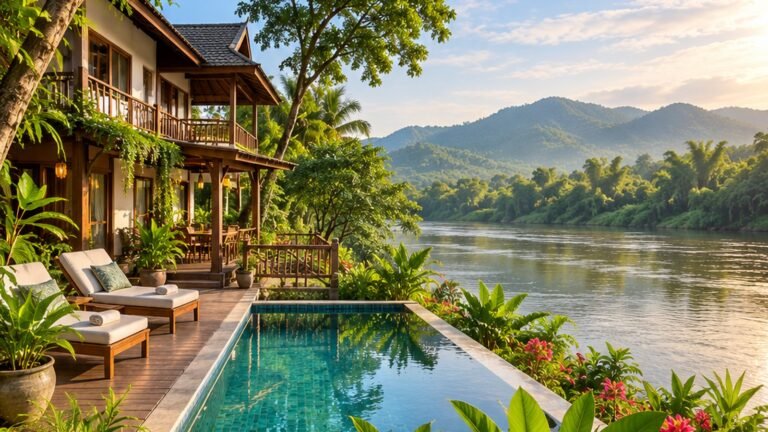
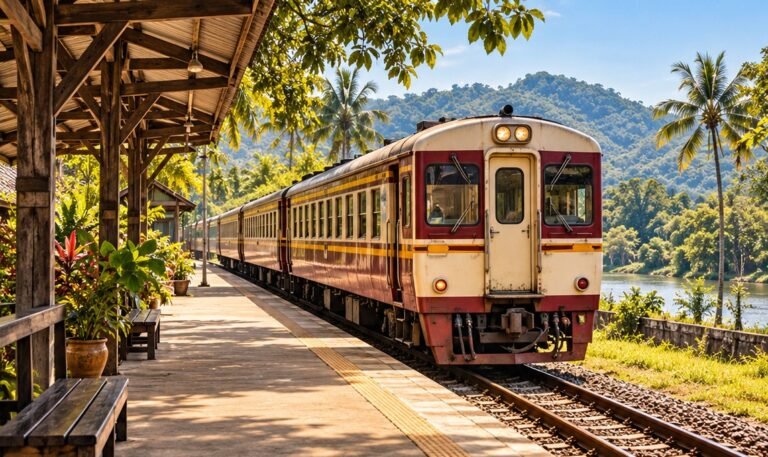
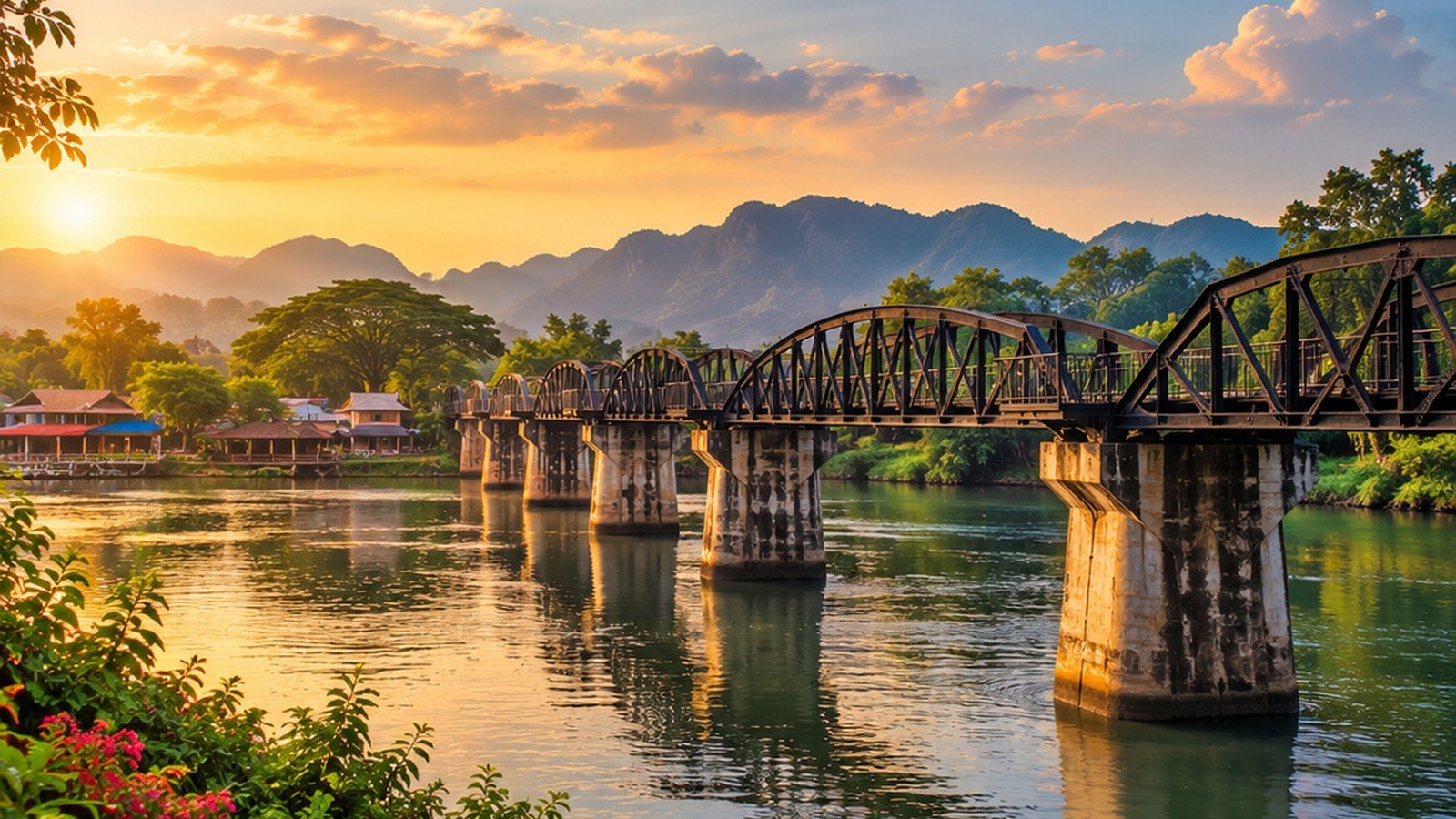
Illustrated impression of Kanchanaburi's river and railway setting; not a documentary photograph.
Make the trip work for you
This Kanchanaburi 2-day itinerary is designed for travellers who want more than a bridge photograph but do not want to spend the whole visit moving between distant attractions. It gives the first afternoon to town history and the river, then reserves the second morning for Erawan or a clearly defined railway alternative. The route begins and ends with the journeys you can actually make, rather than filling a map with places that happen to share a province.
The most important choice is whether your two days include travel from Bangkok. Here they do: the main version assumes a late-morning arrival, one night in town and an evening departure the next day. There are adjustments for a later arrival, a gentler pace and public transport. Costs are either dated visitor charges or explicitly labelled budgeting examples, and the current Hellfire Pass closure is kept separate from the longer-term planning advice.
This guide contains affiliate links. If you book through one, Taylor’s Trailblazing Travels may earn a commission at no extra cost to you. Choose the option that suits your trip; paid bookings are not required to use this guide.
Town history, then Erawan
Two contrasting days without a long checklist.
Central town or bridge area
Simpler bags, meals and morning pickups.
Swap the second day
Do not add a long rail journey to an already full waterfall day.
Hellfire Pass is closed
Check the official reopening notice before adding it.
Planning note Reviewed 4 October 2026: Hellfire Pass is temporarily closed. Check the latest official notice and current transport and park conditions before travelling. [1]
Kanchanaburi 2-day itinerary at a glance
The plan that leaves room to enjoy it
Use your first day for Kanchanaburi town and your second for one substantial outing. The default below combines the Thailand-Burma Railway Centre, the main war cemetery, the River Kwai bridge and an old-town evening with Erawan the following morning. It does not squeeze a long railway journey and Hellfire Pass into the waterfall day. That would change the character of the trip from an overnight break into a sequence of transfers.
The order is deliberate. Understanding the railway’s human history before visiting the bridge gives the structure context, while leaving the longer outdoor activity until the following day allows an earlier start. However, this is a research-led plan rather than a record of a personal visit. Visit lengths and road-time allowances are editorial estimates, not an operator’s timetable. [2] [3]
| When | Main plan | What to protect |
|---|---|---|
| Day 1, morning | Travel from Bangkok; leave bags at your accommodation | Do not book an activity immediately after arrival |
| Day 1, early afternoon | Railway Centre and Kanchanaburi War Cemetery | A proper lunch and unhurried museum time |
| Day 1, late afternoon | River Kwai bridge and riverfront | Train movements take priority over photographs |
| Day 1, evening | Dinner; optional Pak Prak heritage stroll | A straightforward return to your hotel |
| Day 2, morning | Erawan National Park, subject to conditions | Start early and choose a sensible walking limit |
| Day 2, afternoon | Return, collect bags and travel onwards | Enough time to change out of wet clothes |
What two days actually means
This version assumes one night in town, an arrival by late morning on day one and an evening departure on day two. With an afternoon arrival, remove the old-town detour or give the first afternoon solely to the museum and cemetery. Two nights are noticeably easier because they separate sightseeing from your return to Bangkok. Neither interpretation gives you two unrestricted days if both long transfers happen inside the same period.
Check the conditions before fixing the route
A closure that changes the history alternative
At the editorial review on 4 October 2026, the Australian Department of Veterans’ Affairs listed Hellfire Pass Interpretive Centre and its walking trail as closed until further notice because of heavy rain and unsafe conditions. The centre’s own notice dates the closure from 27 September. Consequently, it is not an operating stop in this itinerary. A tour advertisement that still includes it does not override the closure. [1] [4]
Check again shortly before travel. Reopening would make it a possible alternative to Erawan, but it would not magically make every distant attraction fit into the same day. Ask a guide what replaces a closed site, whether the replacement changes the driving time, and what happens if the alternative is unsuitable for your group.
Rain means more than carrying an umbrella
The FCDO’s current advice also flags severe flooding affecting parts of Thailand, including Bangkok and surrounding provinces. This does not establish that every Kanchanaburi attraction is closed; it does mean that your journey out of Bangkok needs a fresh check. The Thai Meteorological Department’s 4 October outlook includes heavy-rain and flash-flood cautions for the coming week. [5] [6]
For travel on other dates, use the updated forecast rather than preserving today’s warning as a permanent description of the destination. Your practical go/no-go questions are whether the road is open, whether the attraction admits visitors, and whether the activity you actually want is permitted. A park can remain open while swimming or an upper trail is restricted.
Choose a base that supports an overnight visit
Town is the practical default
For this route, favour the Maenam Kwai Road corridor or the bridge neighbourhood over a remote floating resort. You need somewhere that can hold luggage, arrange a morning departure and receive you again before your onward transfer. Good Times Resort’s published location and U Inchantree’s bridge-side address illustrate the difference between the central riverside corridor and the immediate bridge area; they are reference points, not claims that either is best for every traveller. [7] [8]
Read the map at street level. A room marketed as being on the River Kwai may lie well beyond the town, and a straight-line distance across water can conceal a substantial drive. Ask for the road distance from your arrival station or bus terminal, not simply whether the hotel is in Kanchanaburi.
Keep the first night uncomplicated
Before booking, confirm luggage storage both before check-in and after check-out, reception arrangements for a late arrival, and the earliest realistic breakfast. An early waterfall start is awkward if breakfast begins after your pickup. Request a packed option only where the accommodation agrees to provide it; do not assume a breakfast-inclusive rate includes that service.
For a one-night stop, a slightly less photogenic room with easy transport can be the more useful purchase. By contrast, a remote stay makes sense when the accommodation itself is the main experience and you are willing to shorten the sightseeing list. Avoid changing hotels inside this particular one-night plan.
Day 1 morning: Bangkok to your Kanchanaburi base
Pick a journey, not just a vehicle
Compare the total trip from your Bangkok accommodation to the Kanchanaburi hotel. A van with a convenient meeting point may beat a nominally quicker service from a distant terminal. A private car removes changes but still shares the road and its delays. Allow roughly three to four hours door to door as an initial planning block, then replace that estimate with the actual booking details. Commercial listings show bus, van, rail and private-transfer choices, but not an identical timetable for every date. [9]
Travelling by ordinary train can be part of the appeal rather than merely a transfer. However, search the Thonburi-to-Kanchanaburi route specifically. Do not assume a service departs from the same Bangkok terminal as a train to Ayutthaya or Chiang Mai. Confirm the departure station, operating day and destination on the ticket or with SRT. [10]
Make arrival friction small
Send the hotel your expected arrival point before setting off. The bus terminal, Kanchanaburi railway station and bridge-area station are different places. Keep the property’s map pin available offline and decide whether you will arrange collection or find local transport on arrival.
On reaching the hotel, leave the overnight bag, refill water and establish how you will get back that evening. You do not need immediate room access for the plan to work, but you do need permission to leave luggage. A short reset now is more valuable than racing straight to the first entrance gate with everything you own.
Day 1 early afternoon: museum before monument
Give the Railway Centre proper time
Allow approximately 75-120 minutes for the Thailand-Burma Railway Centre, depending on how closely you read the displays. The operator currently lists daily opening from 09:00 to 16:00, with admission of THB 160 for adults and THB 80 for children aged 7-12, checked 4 October 2026. Those are museum admission details, not prices for a wider guided excursion. [2]
The point is not to memorise a long sequence of dates before taking a bridge photograph. Look for how the railway was constructed, who was compelled to work on it, and what happened to the people involved. Leave space for the experiences of Asian labourers as well as Allied prisoners of war. This helps avoid treating wartime engineering as an isolated sightseeing achievement. [4]
Follow with the cemetery, not another attraction queue
The main Kanchanaburi War Cemetery is beside the museum area. Allow another 20-40 minutes, with more time where you have a family connection or a particular grave to find. The Commonwealth War Graves Commission is the appropriate source for grave and visitor information. [3]
This is a place of remembrance. Walk on the paths, keep voices low and make photographs without turning grave markers into props. For children, a brief, age-appropriate explanation before entering is more helpful than trying to answer difficult questions in a hurry between tour groups. Afterwards, take a quiet break rather than immediately adding another emotionally demanding museum.
Day 1 lunch: make the afternoon sustainable
Eat between the main blocks
Aim for a seated meal before the bridge visit. Choose somewhere close to where you already are rather than crossing town solely for an online recommendation. On a short trip, an accessible lunch with shade and a toilet can contribute more to the day than a supposedly essential restaurant reached through traffic.
Order according to your appetite and dietary needs rather than trying to sample everything in one sitting. For allergies, carry a written explanation and discuss ingredients directly; a menu category such as vegetarian does not answer questions about fish sauce, shared utensils or nut contamination. When the kitchen cannot confirm what you need, choose another meal rather than relying on guesswork.
Keep a small, flexible spending pot
For budgeting only, you might set aside THB 200-400 per person for an ordinary lunch, drinks and a later snack. This is an editorial allowance dated 4 October 2026, not a surveyed restaurant price or a promise that every menu fits it. A river-view restaurant, seafood order or alcoholic drinks can change the total substantially.
A useful habit is to check the menu before sitting down and leave the remaining sightseeing decisions until after eating. If the morning transfer ran late or someone is tired, the bridge can still be the sole afternoon outing. The itinerary should respond to the day you are having, not punish you for missing a timetable drawn up at home.
Day 1 late afternoon: the River Kwai bridge
Arrive with the context already in place
Treat the bridge visit as a short, focused stop with time on the riverbank, not a requirement to walk every possible metre of track. The bridge is associated with the wartime railway, while the wider route extends well beyond town. A photograph here is not the same experience as riding the scenic section around Tham Krasae. [11]
The railway remains operational. Stay out of the track when trains approach and follow staff directions and barriers. A photo taken from a designated public viewpoint is preferable to standing where you have to judge an approaching train’s clearance. Children should remain beside an adult, and nobody should rely on another visitor’s behaviour as evidence that a position is safe.
Leave room for a riverside pause
Allow around 45-75 minutes for the bridge area, including a drink or a short riverside stroll. This is a suggested visit length, not an admission slot. Bright afternoon light, cloud cover and river conditions all change the appearance, so there is little benefit in making the whole day depend on a precisely timed sunset photograph.
From a nearby hotel, walking may be practical; from farther down the corridor, a short ride can preserve energy for the evening. Arrange the return before wandering away from a known pickup point. In particular, save the location of the entrance you used rather than assuming every road labelled River Kwai leads back to the same place.
Day 1 evening: dinner and an optional old-town walk
Choose between heritage and an early night
Pak Prak, also written Pak Phraek, offers a different view of Kanchanaburi from the bridge. Tourism Authority of Thailand material describes a heritage street with early twentieth-century buildings and a mixture of architectural influences. A gentle walk here can be worthwhile even without a special event. [12]
However, do not promise yourself a night market on an arbitrary weekday. Market activity depends on the day, local arrangements and weather. Ask your accommodation what is actually operating that evening. When a market is not running, the alternatives are a short heritage stroll before dinner or staying near your hotel, not waiting on a quiet road for something to start.
Prepare for the next morning before bed
Confirm the waterfall transport, where you will meet, whether admission is included and how you will return. Charge your phone and put swimwear, a towel, dry clothes and walking shoes in one small bag. Leave anything unnecessary in the luggage that the hotel has agreed to store.
For a private outing, specify that you want time at Erawan rather than an automatic circuit of every attraction on the road. A low headline quote can become poor value if most of the day is spent changing stops. Conversely, a shared tour can be sensible when its published pace matches your priorities and the pickup zone includes your hotel.
Day 2 morning: Erawan without rushing the climb
Start with the park’s current instructions
Erawan is the main outdoor choice in this itinerary. Its attraction is a sequence of waterfall tiers and forest pools rather than one viewpoint reached directly from a car park. An independent licensed operator’s June 2026 listing gives foreign adult admission as THB 300 and general opening as 08:00-16:30, checked 4 October 2026. Confirm the day’s access and any concession with the park; third-party child-price listings are not consistent. [13] [14]
Allow roughly 75-105 minutes each way from a town base as a planning estimate, plus a substantial visit. The exact hotel, traffic, stops and road conditions matter. Even with private transport, a useful arrival target is around opening time rather than midday, particularly when you want both walking and time by the water.
Pick your turnaround point before fatigue does
You are not obliged to reach the highest tier. Begin at a steady pace, look at the footing and decide what your group can comfortably manage in both directions. A route that feels manageable uphill can be more awkward on the descent, especially once shoes and steps are wet.
For many visitors, a shorter lower-tier visit with a proper rest is more rewarding than racing to the top. Reaching every level is not a test you need to pass. Keep sufficient time for the return walk, changing and meeting your driver; that is part of the outing, not spare time that can always be borrowed.
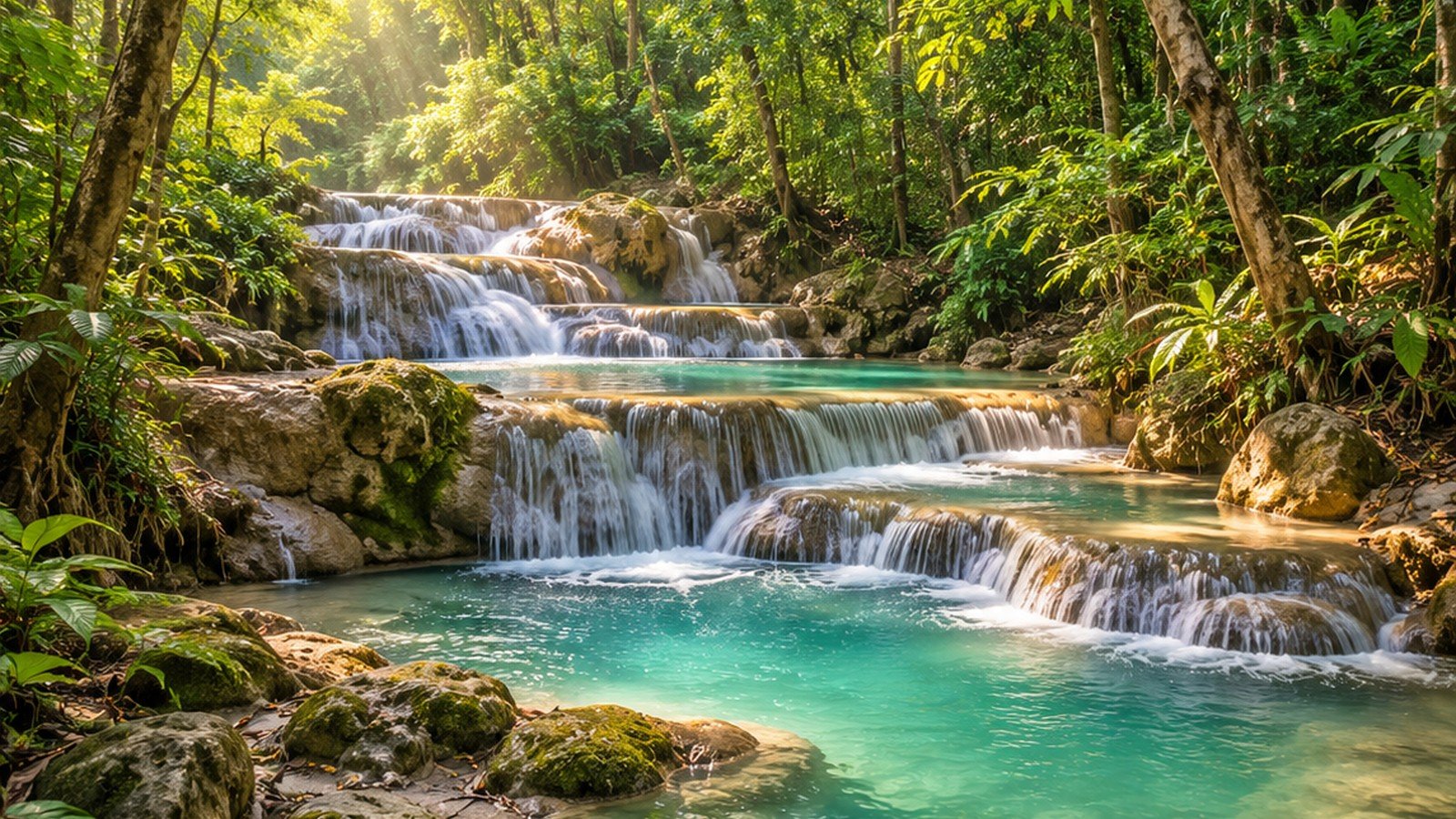
Swimming, clothing and the return journey
Separate a walking plan from a swimming plan
Check which pools are open and whether a life jacket is required or available before entering the water. Restrictions can change with the current, rainfall and staffing. An attractive pool is not proof of safe swimming, and another person’s confidence does not establish your own ability or the water’s depth.
Carry shoes with usable grip and a bag that keeps dry clothing separate from wet items. Protect your phone against splashes, but do not assume a pouch makes it suitable for swimming. Leave valuables behind when practical. If someone does not wish to swim, agree a comfortable waiting point rather than leaving them to follow the rest of the group indefinitely.
Avoid the damp-bag transfer
Build in time to change before returning to town. Wet clothing in an air-conditioned vehicle can make the final part of the day uncomfortable, and packing dripping items against documents or electronics creates an avoidable problem. A simple separate washable bag is adequate for the trip back; unpack and dry it promptly later.
Aim to reach your hotel with at least 60-90 minutes available before the booked onward pickup. That is an editorial buffer, not an operator requirement. It allows for bags, a toilet stop, a snack and small delays. Longer is better when the return journey involves a separate terminal rather than collection from the hotel.
The railway alternative: replace Erawan, do not bolt it on
Who should switch the second day
Choose a railway-focused day when the train journey is your main interest, the weather makes waterfall walking unattractive, or your group would prefer more time sitting than climbing. Build it around the section near Tham Krasae and an agreed return arrangement. That is a different route from merely visiting the town bridge. [11]
Confirm the train number, boarding station, destination and actual operating time with SRT or the guide. Avoid constructing the day around a timetable copied from an old blog. In particular, ask whether you are boarding in town for a longer journey or driving to a station near the scenic section for a shorter ride. Those choices produce very different days. [10]
Control the time you spend waiting
A one-way rail segment with a vehicle meeting you afterwards can reduce backtracking, but the meeting must be explicit. The driver needs to know your arrival station rather than simply that you will be somewhere near the railway. Save a telephone number and a fallback meeting point before boarding.
With public transport only, be more conservative. A train missed at an outlying stop can remove much of the remaining day. Do not schedule a tight evening airport connection after this alternative. At the review date Hellfire Pass remains excluded; it should only re-enter the plan after an official reopening and a revised, realistic timing calculation.
A gentler alternative closer to town
Choose culture over a long transfer
When someone is tired, uninterested in waterfalls or uncomfortable with a long outdoor day, keep the second morning more local. Options include an unhurried old-town visit, a further museum stop selected for a specific interest, or a drive towards Wat Tham Suea. The temple is outside the centre, so it still needs transport rather than being treated as a casual walk from the bridge. [15]
Wat Tham Suea is an active religious site. Dress respectfully and check how you would reach the parts you intend to visit. Photographs of panoramic views do not establish step-free access. Even where a lift or other assistance is mentioned online, confirm that it is operating and suitable rather than promising it to somebody who cannot use stairs.
Do less, but choose intentionally
A quiet morning is not a wasted morning. It may allow a proper breakfast, time in the hotel garden and a relaxed departure after an emotionally full first day. This version is particularly sensible when your onward journey is long or you have been travelling intensively beforehand.
A privately arranged short outing can solve a specific access problem, but explain what assistance you require. There is a difference between a driver who can stop near an entrance and a vehicle, site and itinerary that work for reduced mobility. Ask about steps, walking surfaces, toilet access and resting places separately.
Making day two work without a private driver
Verify both ends of the public-transport plan
Before choosing public transport to Erawan, ask for the current departure location in town, the first useful outward service and the last return that gives you enough time for your onward journey. Do not build the plan from a general statement that buses run to the park. A service existing is different from a service fitting your particular day. The park visitor guide confirms public access options, but the day’s operating details still need checking. [13]
Write the return deadline on the same note as the outward departure. At the park, confirm the pickup point before beginning the walk. Then set a turnaround that allows for the descent, changing, food and a little spare time. A last bus is not a suitable target if arriving a few minutes late would leave you without a realistic backup.
Price a fallback before it becomes urgent
Ask the hotel what a return vehicle would cost and how it could be arranged if the public option fails. You do not have to book it immediately, but knowing the contact and likely process is more useful than trying to discover everything from a patchy signal at the end of the day.
Public transport is most attractive when you can accept its rhythm. If your itinerary only works with a very early arrival, an exact midday departure and an immediate Bangkok connection, the cheaper ticket may be creating too much fragility. Shortening the park visit or staying another night can be a better solution than trying to travel faster at every stage.
Arriving late: the version that still works
After lunch is not the same as late morning
If you reach Kanchanaburi in the early afternoon, begin by checking the museum’s closing time against the time you can actually enter. A nominal two-hour gap before closing may shrink quickly once luggage, transport and lunch are included. Do not buy admission expecting staff to extend the day because your transfer was delayed.
When the museum would become a rushed visit, use the first afternoon for the bridge and dinner, then choose between the museum and Erawan the next day. That means the overnight trip becomes more selective, but it remains enjoyable. Preserving every stop by skipping food and rest usually weakens the experience rather than rescuing it.
Keep an evening-arrival version even simpler
With an evening arrival and only one night, settle in and make the following day a town-focused visit. A full waterfall excursion can still work with suitable arrangements, but it leaves little time to understand Kanchanaburi itself. Decide which experience is the purpose of the stop instead of claiming to have two full sightseeing days.
For somebody arriving after a long journey, the most useful booking may be a hotel with a confirmed dinner option and clear reception arrangements. Establish the next morning’s departure before going to bed, but leave optional sightseeing flexible. The following day should begin with a practical plan, not an attempt to repay every hour lost in transit.
A small overnight bag makes the revised plan easier
Pack the items needed for the first evening at the top: a change of clothes, charger, essential medication and toiletries. Keep the second-day kit separate from documents and electronics. Where you are leaving a larger suitcase in Bangkok, obtain permission from the hotel and keep the collection receipt or other agreed record.
Do not assume a property will store bags just because you stayed there earlier. Confirm the dates and arrangements before departing. A light overnight bag is helpful only when the rest of your belongings are somewhere agreed and accessible for the next stage of the trip.
What this overnight trip might cost
Use a budget model, not a fake fixed price
The following is a worked planning example for two adults sharing one room. It is not a live quotation, a claim about the cheapest available deal or a promise that your dates will match. The assumed amounts were set on 4 October 2026; replace each with your actual booking. Only the separate museum and park admission figures above are sourced visitor charges.
| Item for two adults | Example allowance | What the assumption covers |
|---|---|---|
| Return intercity transport | THB 1,000 | A hypothetical public/shared-transport budget, not private taxis |
| One room for one night | THB 1,600 | An assumed room budget, not a named hotel’s rate |
| Food and drinks | THB 1,200 | Ordinary meals; no premium dining or alcohol budget |
| Museum and Erawan adult admission | THB 920 | Two museum tickets and two foreign adult park tickets at the checked rates |
| Local travel and day-two transport | THB 1,600 | An assumed allowance to replace with a real quote |
| Contingency | THB 500 | Small unforeseen costs; not insurance |
| Total illustrative budget | THB 6,820 | THB 3,410 each when shared equally |
Look for the cost that changes the most
Transport on day two is the main variable to resolve before judging the total. A quoted tour may include admission and lunch, in which case remove those amounts from the separate budget rather than counting them twice. A private car usually charges by vehicle or agreed itinerary, whereas a shared excursion commonly charges per participant.
Compare what happens if plans change. A flexible room and an outing with a workable cancellation policy can be more valuable during unsettled weather than a small saving on a rigid bundle. Read the actual terms attached to the selected dates; a general website banner is not the complete cancellation contract.
Booking order and return-to-Bangkok planning
Book the constraints first
Start with the two intercity journeys and your accommodation, then fit the day-two activity between them. This avoids buying a waterfall tour that returns after your bus has left or choosing a hotel outside the tour’s collection area. Send the hotel name and address when requesting transport rather than relying on a broad town label.
For the return, check whether the vehicle finishes at a bus terminal, rail station, travel office or your Bangkok hotel. A service reaching the edge of Bangkok in the evening has not delivered you to a dinner reservation on the other side of the city. Allow another urban transfer and a margin for road congestion.
Do not attach a flight to the narrowest margin
An overnight in Bangkok before an important flight is the calmer arrangement. Where you must connect on the same day, base the plan on the airline’s required airport arrival time and work backwards through every stage. A road-time estimate is not a connection guarantee. Flooding, breakdowns and ordinary delays can affect more than one stage at once. [5]
Keep tickets and the hotel’s number accessible without mobile data. An eSIM can be useful for messages and maps, but it should support the plan rather than be the only place where the plan exists. Before paying for one, check that your phone is unlocked, compatible and that the selected package covers Thailand.
Pros, cons and the mistakes to avoid
What this plan does well
The town-and-waterfall combination provides two genuinely different experiences while keeping the overnight base stable. It gives the wartime history more respect than a quick bridge stop and uses the second morning for the most weather-sensitive activity. It also offers clear substitutions rather than insisting on an identical experience for every visitor.
The compromise is distance. Erawan takes a meaningful part of a short trip to reach, and an overnight with two transfers is still busy. Travellers who want a long scenic rail journey, Hellfire Pass after reopening, several temples and time at a floating resort should add nights rather than compress this version.
The errors most likely to spoil it
Do not confuse a bridge photograph with a journey along the railway, assume all River Kwai hotels are in town, or choose an attraction simply because it appears on a tour list. Each of those assumptions can put you in the wrong place at the wrong time. Equally, do not spend the first evening chasing a market whose operating day you have not checked.
The less obvious mistake is failing to set a second-day finish. Decide when you need to be back at the hotel before deciding how far to walk at Erawan. Work backwards from the onward journey and let that determine the turnaround. A slightly shorter walk is preferable to a stressful, wet-clothes dash across town with no food and an uncertain pickup.
Frequently asked questions
Is one night in Kanchanaburi enough?
One night can work for the town highlights and one major outing, provided you arrive by late morning and leave the following evening. It is less suitable for somebody who wants a remote resort, a full railway day and a waterfall visit together. Two nights give the trip a more generous rhythm and make weather changes easier to absorb. Choose the extra night for the time it gives you, not because every itinerary must have the same length.
Should I do Erawan or the scenic train on day two?
Choose Erawan for a forest-and-waterfall day with flexible walking, subject to access and weather. Alternatively, choose the train for the journey itself and a route shaped around rail timings. Neither automatically wins: the useful comparison is between your group’s interests, mobility, tolerance for heat and onward deadline. Combining both is possible with some organised itineraries, but it generally reduces the time available for each. Check the actual schedule before paying. [16]
Can I visit without hiring a car?
Yes, but distinguish reaching Kanchanaburi from reaching an outlying attraction. Town visits can use walking and short local rides, while the second day needs a checked public service, a shared excursion or a booked driver. Do not arrive at a distant stop assuming an immediate return is available. The easiest car-free version uses a town hotel and an outing whose pickup and return are confirmed in advance.
Is a floating hotel a good choice for this itinerary?
Not usually for the default one-night route. Sai Yok floating properties can require a substantial road journey followed by a boat, making them a separate accommodation experience rather than a convenient substitute for a town hotel. A floating stay works better with additional time or with an itinerary designed around it. Confirm pier, transfer times, luggage handling and meal arrangements before choosing one. [17]
Can children enjoy the trip?
The route can be adapted, but avoid assuming every child wants long museum reading, slippery waterfall paths or a late return. Shorten the cemetery visit respectfully, choose a lower walking limit and protect meals and rest. Swimming depends on the day’s rules and the child’s abilities. If car seats are needed, obtain confirmation of the correct seat and vehicle rather than treating the word family-friendly as a sufficient answer.
What should change when it rains?
A brief shower may only change the timing; heavy rain or an official restriction changes the activity. Ask the park and transport provider about current conditions and use a town-based alternative where suitable. Never enter a closed path or flooded road to preserve the original plan. At the review date, Hellfire Pass is already closed, so it is not a rain-day fallback. [1]
Is this a good trip immediately after a long-haul flight?
It is usually more comfortable after a recovery night in Bangkok. Arriving tired can make the transfer, unfamiliar station and emotionally demanding museum visit feel much longer. A direct private transfer may remove some changes, but it does not create extra sleep. For an arrival-day journey, shorten the first day and choose accommodation with clear late-arrival arrangements; the complete itinerary can begin the following morning instead.
Final recommendation: protect the second morning
For a first visit, keep one town base, spend the first afternoon understanding the railway and seeing the bridge, then give the second morning to Erawan only when conditions permit. Reserve the scenic railway as an alternative with its own timing, not as something that must be added regardless of the day.
The most useful upgrade is usually more time: arrive the previous evening or stay a second night. After that, spend on transport that removes a genuine difficulty, such as an inconvenient collection point or an uncertain return. A good two-day visit is measured by the experiences you can enjoy properly, not the number of location pins left behind on a map.
Sources and fact-checking notes
Source checks were completed on 4 October 2026. Official operators and public bodies are prioritised; independent specialists and commercial listings are identified below. Suggested visit lengths, budget exercises and route choices are planning judgements, not live availability or a record of personal visits. Recheck time-sensitive details for your date.
- Australian Department of Veterans' Affairs: Hellfire Pass visitor notice
Official closure notice, updated 29 September 2026: centre and walking trail closed until further notice. Checked 4 October 2026.
- Thailand-Burma Railway Centre: visitor information
Museum operator lists 09:00-16:00, adult admission THB 160 and children aged 7-12 THB 80. Checked 4 October 2026. Old transport prices elsewhere on this page are not used.
- Commonwealth War Graves Commission: Kanchanaburi War Cemetery
Primary source for the cemetery, commemorative context and visitor access. Checked 4 October 2026.
- Hellfire Pass Interpretive Centre: current notices
Official memorial site. The current notice dates the temporary closure from 27 September 2026. Checked 4 October 2026.
- FCDO: Thailand travel advice
Official advice including the severe-flooding notice. Checked 4 October 2026; a national notice is not evidence that every local attraction is closed.
- Thai Meteorological Department: seven-day outlook
Official forecast published 4 October 2026. Weather, water levels and local restrictions must be rechecked for the travel date.
- Good Times Resort: official location and facilities
River location, town distances, pool and transport enquiries. Checked 4 October 2026. Advertised walk times are not treated as measured accessible routes.
- U Inchantree Kanchanaburi: contact and location
Operator locates the property near the River Kwai bridge. Checked 4 October 2026; verify the booked room rather than assuming every room has a river view.
- 12Go: Bangkok-Kanchanaburi transport listings
Commercial route inventory checked 4 October 2026. Only dated listings can confirm a particular departure, pickup point, baggage policy or fare.
- State Railway of Thailand: official timetable search
Use exact origin, destination and travel date; includes service notices. Checked 4 October 2026. Live search availability was intermittent.
- Tourism Authority of Thailand: Kanchanaburi
Geography, rivers and wider provincial attractions. Checked 4 October 2026. Promotional minimum journey times are not used as door-to-door guarantees.
- Tourism Authority of Thailand: Pak Prak heritage road
Heritage context and the old-town street. Published 2020; checked 4 October 2026. Market schedules require local confirmation.
- Thai National Parks: Erawan visitor guide
Independent licensed tour operator, not the Department of National Parks. June 2026 listing gives foreign adult admission THB 300, child THB 150 and general hours 08:00-16:30. Checked 4 October 2026; confirm concessions and access with the park.
- Department of National Parks: Erawan park and accommodation
Official park contact and accommodation information. Checked 4 October 2026. Do not infer swimming or upper-trail access from the existence of the booking page.
- Tourism Authority of Thailand, Japan: Wat Tham Suea
Official destination listing gives 08:00-17:00, free temple admission and a location roughly 16 km from Kanchanaburi station. Checked 4 October 2026; do not assume the lift is operating.
- GetYourGuide: Kanchanaburi waterfall and train itinerary
Example commercial tour structure; availability, pickup zone and inclusions must be confirmed for the selected date. Checked 4 October 2026.
- The FloatHouse River Kwai: official arrival questions
Phutakien Pier access, scheduled boat transfers and arrival arrangements. Checked 4 October 2026; request written confirmation for the chosen rate.
Illustrations in this article were created for Taylor’s Trailblazing Travels. Third-party photographs, where used, are credited beside the image or in the source list.