Isaan Travel Guide for First-Time Visitors
River towns, archaeology, food and regional cities – explored through a manageable route, not a race across the map.
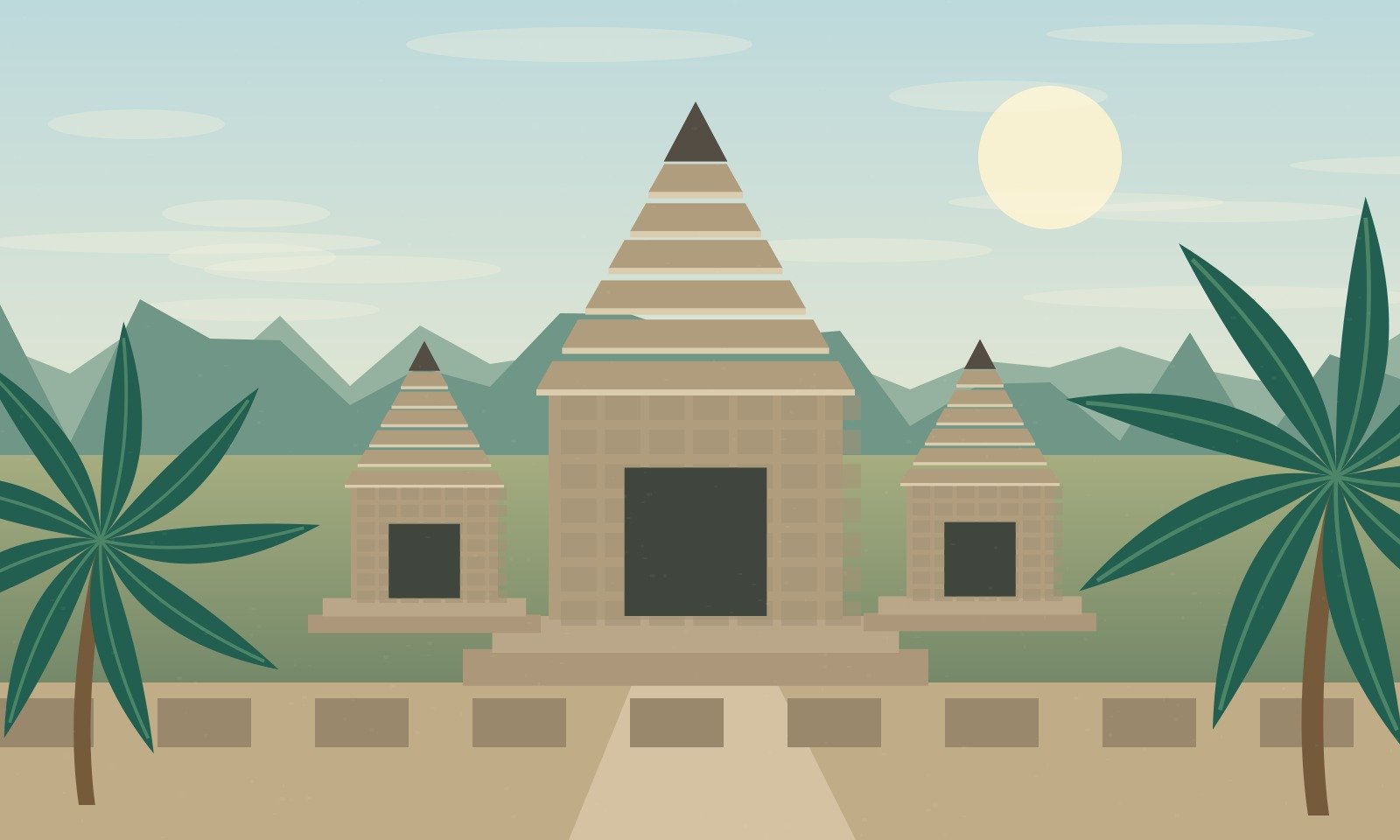
An Isaan heritage illustration inspired by Phimai, not a reconstruction of a particular monument.
This Isaan travel guide starts with a useful limit: do not try to see the whole of northeastern Thailand on a first visit. Choose a connected group of places, give each one time, and let the region's food, river towns, archaeological sites and everyday city life provide the variety. Udon Thani, Nong Khai and Khon Kaen make a manageable introduction; Nakhon Ratchasima and Phimai can extend it into a longer route.
Isaan, also written Isan, is not a single destination with one old town and a convenient ring of attractions. Its provincial cities, agricultural landscapes and Mekong communities require different transport decisions. A train can connect useful centres while leaving the final journey to a museum, temple or lake entirely unsolved.
Nor should the region be presented as untouched Thailand waiting to be discovered. These are working places with modern businesses, universities, families and local priorities. A good first trip leaves space to notice that ordinary life rather than treating every village as a performance for visitors.
The recommendations below are research-led planning judgements, not claims of personal visits. Sources were reviewed on 6 October 2026, including current UK travel advice because parts of Isaan approach the Cambodia border. The suggested routes remain within Thailand and are intended as a practical starting framework, not a claim that every transport connection or attraction is available on every date.
Three connected bases
Nong Khai, Udon Thani and Khon Kaen over seven nights.
Korat and Phimai
Add three nights when archaeological interest justifies the extra base.
The flowering lake
Check the bloom and departure pier instead of relying on a photograph.
Arrange the last leg
An intercity ticket does not solve the rural excursion or its return.
Isaan travel guide: choose a region within the region
Start with an interest and a manageable corridor
A first trip works best when it has a simple organising idea. Food and river life suggest one combination; archaeology and historic sites suggest another. Trying to connect every famous photograph across northeastern Thailand can replace the experience you wanted with long transfer days.
For most first-time independent visitors, I would begin with the Nong Khai, Udon Thani and Khon Kaen corridor. It gives you a river town, a useful city base and a larger regional centre without requiring a new hotel every night. Official destination pages identify distinct cultural and landscape attractions around each, rather than presenting them as interchangeable stops. [1][2][3]
Decide what to leave for another trip
Ubon Ratchathani, Nakhon Phanom and the Loei area can each justify their own attention. Adding all of them to a short introductory route is not necessary to make the journey worthwhile. In fact, removing one distant destination often creates the evenings and unscheduled mornings that make the remaining places more memorable.
Use a minimum-stay test before adding a base. If you cannot give it a full day without luggage or onward travel, ask whether it belongs on this particular trip. A route can be ambitious in what you learn without being ambitious in kilometres covered.
The first-visit bases compared
Match each base to a purpose
Nong Khai offers a Mekong setting; Udon Thani supports city time and separately arranged excursions; Khon Kaen adds regional urban life and craft-related possibilities. Nakhon Ratchasima, often called Korat, is a useful heritage-oriented extension when Phimai is a priority. These are editorial roles for the route, not official rankings of the cities.
The suggested stays below assume that you value time at the destination rather than merely passing through. Someone travelling mainly for food could spend longer in fewer cities, while an archaeology enthusiast might shift nights towards Udon Thani and the Korat area.
| Base | Suggested role | Starting stay | Arrange separately |
|---|---|---|---|
| Nong Khai | Mekong town and an unhurried opening | 2 nights | Arrival transfer and selected cultural visits |
| Udon Thani | City base for different provincial excursions | 3 nights | Ban Chiang, Phu Phrabat or seasonal lake transport |
| Khon Kaen | Regional city life and textile interests | 2 nights | A confirmed craft-community visit if wanted |
| Korat / Nakhon Ratchasima | Heritage extension around Phimai | 3 extra nights | Phimai transport and any museum visit |
Editorial route-building suggestions reviewed 6 October 2026; not minimum-stay rules.
Do not confuse the province with the city
An attraction carrying a province's name can still be well outside its main city. Therefore, a hotel in Udon Thani does not put every provincial highlight within a short walk, and a Khon Kaen address does not automatically make a weaving-community visit easy without transport.
Check the actual attraction pin, opening arrangements and return journey before allocating the day. A useful base supports the excursion; it does not remove the need to plan it. This distinction matters particularly when you are relying on buses, taxis or a driver hired for only part of the day.
Udon Thani: a practical base with several different days nearby
Give the city some time of its own
Udon Thani's visitor appeal includes archaeological sites, local textiles and the seasonal lake landscape around Kumphawapi. TAT's provincial overview makes clear that these are spread across the province rather than gathered in one compact sightseeing district. I would therefore use the city as a base and select one substantial excursion per day. [2]
Keep your arrival afternoon simple. Check into a conveniently located hotel, familiarise yourself with nearby food and confirm the following day's transport. That is more useful than attempting a distant attraction immediately after a flight or overnight journey when timing and energy are uncertain.
Decide which excursion matters most
An archaeology-focused visitor should prioritise Ban Chiang and its museum interpretation. Someone travelling in the suitable flowering season might prefer an early lake outing. Phu Phrabat offers a different cultural landscape again, but it should not be added automatically to an already crowded day.
Three nights give you room for two purposeful days without constant repacking. Nevertheless, your exact mix should depend on current access, the season and personal interest. There is no need to force a lake visit outside an appealing flowering period simply because it appears in every list of Udon Thani attractions.
Ban Chiang and Phu Phrabat: choose depth over a checklist
Ban Chiang is more than a pottery photograph
UNESCO lists Ban Chiang for its archaeological significance, including evidence of settled farming communities and technological development. Its importance is not adequately explained by an attractive red-patterned pot alone. Allow time for the museum and interpretation rather than treating the site as a quick souvenir stop. [4]
Avoid repeating sweeping claims about the world's first civilisation or earliest metalworking without context. Archaeological understanding changes as evidence and dating methods develop. For a visitor, a careful explanation of what was found, how people lived and why the site matters is more useful than a superlative detached from the exhibits.
Phu Phrabat provides a different kind of heritage visit
UNESCO describes Phu Phrabat in relation to the Dvaravati-period Sima stone tradition, rock shelters and a landscape adapted for religious use. That is a different experience from a museum-led Ban Chiang visit. Consider it when the outdoor setting and interpretation appeal, not merely because both places appear on a World Heritage list. [5]
Check the walking route, heat exposure and current visitor arrangements before going. Then decide whether a local guide would help you understand the setting. These sites deserve separate attention when your schedule allows; combining too much can leave you remembering the vehicle journey more clearly than the heritage itself.

The Red Lotus Sea: a seasonal morning, not a year-round promise
Know which lake you are visiting
The well-known flowering lake near Udon Thani is Nong Han in Kumphawapi, often marketed as the Red Lotus Sea. TAT describes pink water lilies and identifies December to February as the main flowering period, with early morning the useful viewing window. That is seasonal guidance, not a guarantee of dense blooms on your particular date. [6]
Confirm recent conditions with a local provider before arranging an early departure. Ask for the correct pier and lake, not simply a booking labelled lotus tour. Similar names and translated descriptions can cause confusion, especially when a map search returns a different location elsewhere in the region.
Plan the whole morning
Agree pickup, boat arrangements and the return in advance. An early start is easier when breakfast, warm clothing for the journey and any required cash are already organised. Also confirm the boat's passenger capacity and available safety equipment rather than assuming every local outing is identical.
I would return to Udon Thani for a slower afternoon instead of immediately adding another distant attraction. A quiet city meal or a museum can balance the early morning. Outside a suitable flowering period, choose a different day confidently; the value of the trip does not depend on reproducing one seasonal image.

Nong Khai: leave room for the riverfront
More than a transit point to Laos
Nong Khai sits beside the Mekong and is widely associated with travel towards Laos. However, you do not need to cross an international border to enjoy a stay. TAT's destination information includes temples, local culture and the river setting, making the town a worthwhile place to pause rather than merely change transport. [1]
Tha Sadet provides a useful focus for a town visit. TAT identifies its market setting beside the river and the promenade area nearby. Build a gentle day around the town rather than assuming every evening market or riverfront business keeps the same hours. [7]
Two nights change the pace
Arrive, settle into the neighbourhood and spend an evening beside the river. The next day can include a selected cultural visit and a longer meal without a suitcase waiting at reception. That rhythm is particularly welcome after an overnight train or a flight-and-road connection.
A riverside room can be appealing, but inspect the actual address and walking route to food. A property carrying a Mekong description may be away from the town area you intended to explore. Also remember that a Laos excursion would add separate entry, transport and return requirements. This introductory route keeps the visit entirely on the Thai side.

Khon Kaen: regional city life and craft interests
Do not expect another river town
Khon Kaen adds a different kind of stop: a substantial regional city rather than another Mekong promenade. TAT describes its commercial and educational role and highlights the province's silk traditions. That combination makes it useful for travellers who want to see more than picturesque rural scenery. [3]
Give the city a proper evening. Choose a hotel that supports the food and neighbourhood exploration you want, then avoid making every available hour an excursion beyond the centre. Ordinary shopping, cafés and local meals can be part of understanding the region rather than time left over after sightseeing.
Arrange craft visits thoughtfully
Chonnabot is associated with Mudmee silk weaving, but a general interest in textiles is not the same as a confirmed workshop visit. Ask whether visitors are welcome, when work is taking place and whether interpretation or a demonstration has been arranged. [3]
Do not arrive expecting people to interrupt their working day solely for photographs. Buy thoughtfully when you find something you value, ask about the maker and respect any restrictions on photographing designs or processes. A smaller, well-arranged visit can be more meaningful than a long drive to a shop where nobody is available to explain the craft.
Nakhon Ratchasima and Phimai: the heritage extension
Use Korat as a deliberate final base
Nakhon Ratchasima is often called Korat, so check both the formal name and the specific arrival point when booking transport. A three-night extension can give you time for a city arrival day, a Phimai excursion and an unhurried final day before returning towards Bangkok.
This addition makes most sense when Khmer-period heritage is a genuine interest. Otherwise, you may prefer to use those nights for a slower northern-Isaan route rather than adding another city simply because it sits on a possible journey home.
Give Phimai enough interpretation time
Phimai Historical Park preserves an important Khmer-period Buddhist complex. Official visitor descriptions identify its gateways, sanctuary structures and wider historic setting. Read the interpretation and look closely at the architecture rather than treating the visit as a brief substitute for another country's famous temple site. [8]
Admission and opening information on older tourism pages is not fully consistent, so verify the current arrangements with the park before travelling. I have not turned those conflicting figures into a supposedly reliable entry price. For planning, the more important task is arranging a comfortable return journey and avoiding the most exposed part of the day where possible.
A driver or suitable local transport can make the excursion straightforward, but confirm waiting time and the pickup point. If you are particularly interested in the museum or another nearby stop, check its opening separately instead of assuming the entire area's attractions follow one timetable.
Ubon Ratchathani, Nakhon Phanom and other extensions
Add a new direction only with enough nights
Ubon Ratchathani offers a separate southeastern-Isaan focus, including significant temples. For example, TAT describes Wat Si Ubon Rattanaram as a royal temple in the city. However, an Ubon base should not be casually added to the end of a short Udon Thani route without considering the transfer time and current regional advice. [9]
Choose it when its cultural sights are central to your interests and you can give the area a coherent stay. A city temple visit is also not the same geographical plan as travelling to a remote border attraction elsewhere in the province.
Nakhon Phanom is another river journey, not a spare afternoon
Nakhon Phanom's Mekong setting and the mountains visible across the river offer a different eastern route. TAT highlights its cultural mix and riverside character. I would give that experience its own nights rather than use it as a distant day trip from another base. [10]
The same principle applies to the Loei area and other provincial destinations. Add them because you have time and a reason to go, not because a regional guide makes omission feel like failure. For a first visit, choosing three connected bases and leaving the rest for a return is often the more rewarding decision.
A seven-night first Isaan route
Nights one and two: Nong Khai
Begin with Nong Khai when your arrival arrangements make that practical. A direct rail journey from Bangkok or a flight to Udon Thani followed by an arranged road transfer are different options to investigate for your dates. Do not assume that a flight landing time automatically leaves enough margin for an unrelated onward service. [11]
Use the first evening to settle beside the river. Give the next day to the town and a selected cultural visit rather than crossing into Laos simply because the border is nearby. That keeps the opening of the trip uncomplicated.
Nights three to five: Udon Thani
Move to Udon Thani and choose two days according to interest and season. Ban Chiang, Phu Phrabat and the flowering lake are alternatives to combine selectively, not a requirement to visit all three. The third night gives you flexibility when a museum closure, weather change or early start affects the plan.
Nights six and seven: Khon Kaen
Continue to Khon Kaen for a city-based finish and a separately arranged craft or cultural outing if desired. Depart on day eight, using a transport option checked for your date and onward destination.
| Calendar days | Overnight base | Shape of the visit |
|---|---|---|
| Days 1-2 | Nong Khai: 2 nights | Arrival, riverfront time and one selected cultural visit |
| Days 3-5 | Udon Thani: 3 nights | Transfer, two selected excursion days and relaxed evenings |
| Days 6-7 | Khon Kaen: 2 nights | City time with an optional pre-arranged craft visit |
| Day 8 | Departure | A dated onward connection, with the final arrival point checked |
Seven nights means eight calendar days here. Reverse or adapt the sequence when actual transport makes that more practical.
This is seven nights and eight calendar days, not a seven-day itinerary disguised by omitting the departure. That distinction matters when you are fitting the journey between fixed flights or other hotel bookings.
Extend to ten nights without turning it into a race
Add three nights around Korat
After Khon Kaen, travel to Nakhon Ratchasima using a service that actually reaches the arrival point you need. Do not assume every train on a broadly similar corridor calls at the same stations. If a direct road service is more practical for your dates, choose it rather than forcing the itinerary to remain entirely on rail. [11]
Spend the first afternoon settling in, the next day visiting Phimai and the final day at a slower pace. That leaves room for weather, a museum visit or simply a city meal without luggage. Return towards Bangkok on day eleven, not on the evening after a tightly packed Phimai excursion.
Change the route when your interests justify it
An archaeology enthusiast could move a night from Khon Kaen to Udon Thani. Someone more interested in regional urban life might do the opposite. However, I would not use the extra three nights to add both Korat and a far-eastern Mekong town.
Think in complete experiences: arrival, a full day and a relaxed departure. Once every destination is reduced to a brief stop between transfers, the itinerary has lost the benefit of travelling beyond the usual tourist circuit. Ten nights offer enough scope for depth, but not an obligation to represent the entire northeast.
Getting to and around Isaan
Start with the long-distance legs
The State Railway of Thailand's D-Ticket system is the official place to inspect bookable rail services, stations and available accommodation. A booking marketplace can be useful for comparing modes, but it should not obscure the operator, departure point or the difference between a seat and a sleeping berth. [11]
For a short visit, a domestic flight to a suitable gateway may preserve useful time. However, compare the complete journey: airport access, check-in, arrival transfer and the position of your first hotel. The shortest airborne time is not automatically the simplest overall route.
Rural excursions need a second transport plan
An intercity bus or train can deliver you to a useful base while leaving the attraction beyond it unresolved. Before travelling to a lake, archaeological site or weaving community, agree both the outward and return journey.
A private driver is especially useful when several people share the cost or when the attraction has no straightforward return connection. Clarify whether the driver waits, how many stops are included and whether interpretation is part of the service. A car and an English-speaking guide are different bookings.
Keep arrival points exact
Cities can have more than one relevant station, bus facility or pickup location. Save the address from your actual ticket and send it to the receiving driver. For a Udon Thani arrival followed by Nong Khai, check that the connection starts where you will really be, rather than assuming every service collects from the airport.
Plan the first morning as carefully as the main route
Arriving after an overnight train
An overnight journey can preserve daytime for sightseeing, but it does not guarantee a full night's rest or immediate access to a hotel room. Ask about luggage storage, breakfast options and the earliest confirmed check-in. Then keep the arrival morning light enough to cope with tiredness or a changed arrival time.
For a Nong Khai start, a riverfront meal and a short orientation walk may be more sensible than arranging a distant excursion immediately after the train. The following full day can hold the main cultural visit once you have rested and understand the local transport options.
A sleeping berth also deserves a closer look than a generic overnight-train label. Check the booked accommodation and the instructions on the actual ticket. Travelling with somebody who sleeps poorly in transit may make a daytime journey and an extra hotel night the better overall purchase.
Arriving by air through Udon Thani
If your first hotel is in Nong Khai, organise the road connection from the airport rather than assuming that a town-centre departure point is equivalent. Share the flight details with the provider and agree how a delay is handled. Conversely, if you intend to stay in Udon first, do not add a trip to Nong Khai merely to preserve the order of a sample itinerary.
You can reverse or adapt the suggested route when the available arrival makes that more practical. The important thing is to retain full days at your chosen bases and avoid repeated travel purely to match a printed sequence.
Avoid paying twice for the same lost morning
An early-arrival transfer, an unconfirmed early check-in and a prepaid excursion can create three separate commitments before you have had time to settle. Choose which one is genuinely essential. Paying for a guaranteed room the previous night may make sense for a traveller who needs immediate rest, while someone else may prefer to store luggage and keep the morning free.
These are individual planning choices, not assumptions about what every hotel permits. Confirm the arrangement directly and tell reception when you will actually arrive. A clear first morning can make the whole route feel easier without adding another destination or changing the main transport plan.
When to visit and what the season changes
Plan around comfort and specific attractions
For many travellers, the cooler part of the year is a sensible starting point for an outdoor-focused Isaan trip. Nevertheless, conditions vary across the region and from year to year, so consult current Thai Meteorological Department information rather than treating a month label as a forecast. [12]
Seasonal sights deserve particular care. The flowering lake near Kumphawapi has a limited main blooming period, while river scenery and outdoor walking conditions change with rainfall. Book the attraction for what is likely to be there on your dates, not solely for its most circulated photograph. [6]
Treat festivals as dated events
A festival can make a town visit especially interesting, but it can also change accommodation availability, traffic and access. Check the organiser's current programme before building transport and hotel bookings around an assumed annual date. Lunar-calendar events do not necessarily recur on the same Gregorian day.
For a first route, I would retain some flexibility in outdoor excursion days. A museum visit and a riverfront walk can sometimes be swapped more easily than an entire intercity journey. Therefore, reserve the essential transport and lodging first, then avoid fixing every optional activity before you understand the weather and local arrangements.
Choose hotels for the evenings as well as the excursions
A convenient city base reduces small daily problems
Look for a location that supports the meals and neighbourhood time you expect to enjoy. Being close to an attraction you visit once may be less useful than having straightforward food options every evening. The same principle applies to a river-view property outside the town centre: the view can be excellent while daily transport becomes tiresome.
Inspect the actual entrance, reception hours and room arrangements before committing. For an overnight-train arrival, ask about luggage storage and the earliest guaranteed room access rather than assuming a morning arrival means morning check-in.
Match the property to your travel style
A modern business hotel can be a practical choice without making the regional experience less meaningful. Likewise, a small guesthouse can be appealing without necessarily offering a lift, late reception or the facilities you need. Avoid judging authenticity by how inconvenient the accommodation is.
For a longer stay, check laundry, workspace and the reliability of the connection where you intend to work. For a short visit, prioritise a comfortable room and an easy daily routine. Flexible cancellation terms can be worthwhile when a seasonal attraction or a transport change may alter the order of your trip.
Food, ordering and respectful everyday encounters
Let meals become part of the route
Sticky rice, grilled dishes, herb-rich salads and pounded salads are associated with northeastern food traditions, but there is no single meal that represents every community or household. Approach the menu with curiosity rather than expecting every dish to resemble an Isaan restaurant you know elsewhere. [13]
Order a manageable selection first, then add more once you understand the portions and heat level. Asking for less chilli is sensible when you need it; enduring a meal you cannot enjoy is not a cultural achievement. Likewise, familiar breakfasts or occasional simple meals do not invalidate a food-focused trip.
Explain dietary requirements precisely
A vegetable dish can still contain fish sauce, fermented fish or other animal ingredients. Where a restriction or allergy matters, use a clear written translation and confirm understanding rather than relying on a broad description such as vegetarian or not spicy.
For food-safety guidance relevant to your circumstances, consult a qualified travel-health source before departure. Do not assume that lime juice, fermentation or a familiar dish name tells you how an ingredient has been prepared. Asking whether something is cooked is a practical question, not a criticism of the cuisine.
Remember that ordinary places are not attractions on demand
Ask before photographing people closely, particularly children or workers. In temples, follow posted guidance, dress appropriately and give worshippers room. A local market remains a place where people shop and work; blocking a stall for a photograph is not a good way to participate in it.
How to budget without relying on a misleading daily average
Separate city days from excursion days
An unhurried day based in town and a privately driven rural excursion have different cost structures. Combining them into one supposedly typical Isaan daily budget hides the choices that matter. Instead, price the accommodation, intercity transport and each substantial excursion separately.
The most useful saving is often reducing unnecessary transfers. An extra night in one base can replace another hotel change and make a shared driver day easier to organise. However, spending less is not the only goal: a well-arranged guided heritage visit may be worth more to you than another inexpensive day without interpretation.
| Budget line | Price before committing | Commonly forgotten item |
|---|---|---|
| Accommodation | Exact room, occupancy, taxes and cancellation terms | Early room access after overnight travel |
| Intercity travel | Operator, service, station and seat or berth | Local transfers at both ends |
| Rural excursion | Vehicle, waiting, guide and return journey | Separate admission and interpretation |
| Seasonal outing | Current display, boat and agreed pickup | The cost of an early start with no confirmed arrangements |
| Food and incidentals | Your actual daily preferences | A contingency for a changed connection or extra night |
A cost-planning framework, not a regional price average or live quotation.
Keep examples distinct from quotations
The table is a planning checklist rather than a price list. Actual hotel rates, admission and vehicle quotations depend on dates, party size and the service being purchased. Where older public pages disagree, verify with the attraction instead of using the lowest number to make the route appear cheap.
Carry more than one practical payment option and confirm how a local provider expects to be paid. For a driver, distinguish the vehicle price from per-person entry and meals. Finally, keep a contingency for a changed connection or an extra night without treating it as permission to book an itinerary that is already too tight.
Current border advice and sensible route checks
The Cambodia border requires a separate decision
At the 6 October 2026 review, FCDO advised against all but essential travel within 20 kilometres of Thailand's land border with Cambodia. Its regional guidance also said land border crossings remained suspended and identified closures at some border temples. Recheck the live advice before travel rather than assuming this dated summary remains unchanged. [14]
This does not mean the whole of Isaan has the same advisory status. Equally, a familiar province name is not enough to judge a remote attraction's position. Check the actual route and site against current advice, local restrictions and your insurer's terms before travelling.
Keep the first route geographically clear
The introductory Nong Khai, Udon Thani, Khon Kaen and Korat framework is not an invitation to add Cambodia-border temples. Nong Khai's location beside Laos is a different geographical context. Any international crossing would require its own entry and return checks and is not included in the itinerary here.
Road conditions, fatigue and the suitability of the transport matter on ordinary travel days too. Choose a vehicle and schedule that allow rest, avoid planning a difficult rural arrival late at night and keep accommodation details available offline. For personal medical or insurance questions, obtain advice from an appropriate professional rather than assuming a regional travel guide can assess your circumstances.
Language, maps and staying connected
A few prepared details are more useful than fluent-sounding phrases
Save hotel and attraction names in Thai where possible, together with a map pin and contact number. This helps with places whose English spellings vary. A driver can then identify the intended museum, station or pier without relying on your pronunciation or an ambiguous translated name.
Use simple questions, confirm the answer and be patient when a conversation needs translation. If a timing or price matters, write it down and check that both sides understand the same arrangement. Smiling and agreeing is not always evidence that a complicated itinerary has been understood.
Keep an offline version of the plan
Download essential confirmations and map information before a rural excursion. A mobile-data plan can assist with navigation, but it should not be the only place the return arrangement exists.
Airalo publishes Thailand eSIM options for compatible devices. Compare the plan's validity, coverage description and features before buying, and retain another way to contact your accommodation if reception is poor. An eSIM purchase is not a guarantee of coverage in every village, archaeological site or forest area. [15]
Packing, accessibility and a sustainable pace
Pack for heat, temples and transport days
Take light clothing suitable for the conditions, a modest cover-up for religious sites and comfortable footwear for uneven surfaces. A compact bag is easier to manage across a train, hotel transfer and local vehicle than several loose pieces of luggage.
Keep essential medication, valuables and the next booking details with you. Before an outdoor excursion, ask about shade, toilets, steps and the length of the actual walking route. A site described as a historical park can involve very different access from a city museum.
Build rest into the itinerary rather than apologising for it
An early lake trip or an overnight journey can justify a quiet afternoon. Trying to maintain the same sightseeing pace every day may reduce how much you notice and enjoy. A long lunch or a second evening in the same neighbourhood is a useful part of travelling, not a failure of planning.
For a traveller with specific mobility needs, request current information relevant to the individual rather than accepting the word accessible. Ask about vehicle entry, gradients, steps and the toilet arrangement. When the answers are uncertain, choose a different visit with clearer access rather than depending on improvised assistance after arrival.
What makes Isaan rewarding, and what needs more planning
The advantages of a selective first route
You can combine river life, archaeology, regional cities and food without repeating the same experience at every stop. Choosing a manageable corridor also creates opportunities to spend real time in ordinary neighbourhoods rather than moving continuously between attractions.
A slower route lets your interests shape the trip. Someone fascinated by a museum can stay longer; someone who enjoys markets can return at another time of day. That flexibility is easier when every evening is not committed to reaching a different hotel.
The practical compromises
Rural sights can need separately arranged transport, English-language interpretation may vary and seasonal attractions cannot be assumed to look like their promotional images. A low room rate also does not guarantee a low-cost excursion day once a private vehicle is involved.
Those are reasons to prepare, not reasons to dismiss the region. The most satisfying first visit accepts that some places need extra coordination and chooses fewer of them well. An itinerary built around your interests and a dependable return journey is more useful than a long list of destinations linked by hopeful assumptions.
Common first-trip mistakes
Trying to represent the entire northeast
A week is not enough to sample every major corner of Isaan meaningfully. Choose a corridor and leave distant extensions for another journey. Adding a place purely because it is famous can create a long transfer that weakens the rest of the route.
Another mistake is treating each provincial capital as a compact gateway to every attraction in the province. Check actual distances and return transport before promising yourself several rural sites in one day. A museum, lake and archaeological landscape may all need separate planning.
Ignoring season, interpretation and current advice
Do not travel to the flowering lake solely on the strength of a photograph taken in another month. Do not reduce Ban Chiang or Phimai to quick exterior stops when interpretation is central to their value. Most importantly, do not add a border attraction using an old itinerary without checking the current advisory position.
Finally, avoid equating fewer international tourists with permission to photograph everybody or expect spontaneous access to workshops. Ask, pay fairly for agreed services and accept when a place is not open to visitors at that moment. Respectful curiosity will usually improve the trip more than insisting that every planned encounter must happen.
Frequently asked questions
Is Isaan suitable for a first visit to Thailand?
Yes, especially for travellers comfortable arranging some transport and approaching a less standardised sightseeing route patiently. A short, connected itinerary is easier than attempting the whole region. Nong Khai, Udon Thani and Khon Kaen provide a useful starting framework, while travellers wanting only effortless beach-resort logistics may prefer to add Isaan after gaining confidence elsewhere in Thailand.
How long should I spend in Isaan?
Seven nights can provide a rewarding introduction to three connected bases. Ten nights allow a deliberate heritage extension around Korat and Phimai. Those are planning recommendations, not minimum requirements. With fewer nights, choose one or two bases rather than keeping every destination and shortening each stay until you spend most of the trip transferring.
Is Isaan the same as northern Thailand?
No. Isaan refers to northeastern Thailand, while destinations such as Chiang Mai and Chiang Rai belong to a different regional itinerary. Do not assume that a tour labelled northern Thailand includes the cities discussed here. Check the actual route and transport connections rather than treating broad directional words as interchangeable travel-planning categories. [1][2][3]
Do I need to hire a car?
Not for the whole trip. Intercity transport can connect useful bases, with a driver or local arrangement added for selected rural visits. The key is to solve the final kilometres and the return before travelling out. Hiring a car for every day may be unnecessary when much of your time is spent in town, but some excursions benefit greatly from a reliable dedicated vehicle.
Is the Red Lotus Sea worth visiting outside winter?
Check the actual conditions rather than assuming the famous flowering display is year-round. TAT identifies December to February as the principal blooming period, with early morning the useful viewing window. Outside a suitable period, another Udon Thani excursion may provide better value. Even within the main season, weather and the year's flowering pattern can change the result. [6]
Can I visit Laos during a Nong Khai stay?
That would be a separate international excursion requiring current entry, transport and return checks. This guide's route remains in Thailand and does not require a border crossing. Do not assume that a nearby river or bridge makes immigration a minor detail, or that rules applying to your original entry into Thailand automatically cover a later return.
Is the whole of Isaan covered by the Cambodia-border warning?
No blanket statement of that kind follows from the advisory cited here. At review, FCDO's relevant warning concerned areas within 20 kilometres of the land border with Cambodia. Check the current map, actual attraction and route before travelling. A distant city stay and a remote border-temple visit are different plans, even when people describe both broadly as Isaan. [14]
Will I manage without speaking Thai?
Preparation helps considerably: save names in Thai, carry map pins, use simple questions and confirm important arrangements in writing. English availability varies by place and service, so do not assume that every rural driver or museum provides the same support. A local guide can be valuable when interpretation is central to the visit rather than merely a convenience.
Is Isaan always cheaper than Bangkok or the islands?
There is no reliable universal comparison without specifying the trip. Accommodation and meals are only part of the cost; private rural transport and additional transfers can materially change a budget. Price the route you intend to take, not an attractive daily average. Spending longer in fewer bases often improves both value and the quality of the experience.
What would you leave out of a first route?
I would leave out distant destinations that do not match the main purpose, seasonal sights without encouraging current conditions and any attraction affected by advice or access restrictions. For a first seven-night trip, three connected bases are enough. A future return is a better place for another region-wide wish list than the spare afternoon between two long transfers.
Start smaller and give the places time
Begin with Nong Khai, Udon Thani and Khon Kaen, selecting excursions according to your interests and the season. Add Korat and Phimai when you have enough nights to appreciate the heritage rather than rush through it. Keep the far-eastern and southeastern extensions for a route that can give them proper attention.
Book the essential long-distance legs, choose convenient accommodation and arrange rural returns before leaving town. Then protect some open time for meals, neighbourhood walks and the encounters that do not appear as bookable attractions.
The reward is not a claim to have discovered a more real Thailand. It is a clearer, more varied understanding of one substantial part of the country. A thoughtful first Isaan trip can contain fewer destinations than expected while offering considerably more to remember.
Sources and fact-checking
The suggested route is a selective introduction, not a claim that the whole northeast can be covered in a week. UNESCO is used for heritage interpretation. Transport examples require dated searches. The Cambodia-border position is time-sensitive and must be rechecked before travel.
Sources reviewed on 6 October 2026. Editorial recommendations and illustrative planning examples are identified separately from published prices and operator information.
- Tourism Authority of Thailand: Nong KhaiMekong location, town and regional context; international entry rules are not inferred from this page.
- Tourism Authority of Thailand: Udon ThaniProvincial attraction context. Sweeping prehistoric superlatives are not repeated.
- Tourism Authority of Thailand: Khon KaenRegional-city and Chonnabot Mudmee silk context.
- UNESCO: Ban Chiang Archaeological SiteArchaeological significance and the development of the site's interpretation and dating.
- UNESCO: Phu PhrabatSima stone tradition, rock shelters and the religious cultural landscape.
- Tourism Authority of Thailand: Nong Han flowering lakeLake identification, main flowering period and early-morning viewing guidance.
- Tourism Authority of Thailand: Tha Sadet MarketNong Khai riverfront and market context.
- Tourism Authority of Thailand: Phimai Historical ParkHeritage context. Conflicting older price fields are not used as current admission quotations.
- Tourism Authority of Thailand: Wat Si Ubon RattanaramA specific city-temple example for an Ubon extension.
- Tourism Authority of Thailand: Nakhon PhanomEastern Mekong location and cultural context.
- State Railway of Thailand: official D-TicketPrimary rail booking reference; inspect actual stations and date-specific services.
- Thai Meteorological DepartmentOfficial forecasts and warnings; check again for the actual excursion date and destination.
- MICHELIN Guide: som tam and regional foodFood-editor reporting and a chef interview used for variations and ingredients, not a safety guarantee.
- FCDO: Thailand regional risksCambodia-border advisory and crossing restrictions, reviewed 6 October 2026. Recheck the live advice before travel.
- Airalo: Thailand eSIM plansProvider information for device, validity and plan checks; coverage is not guaranteed at every rural or offshore location.
Illustrations in this article were created for Taylor’s Trailblazing Travels. Third-party photographs, where used, are credited beside the image or in the source list.