Bangkok 2-Day Itinerary
One historic-city day, one flexible day, and enough room for meals and a proper pause.
A Bangkok 2-day itinerary works best when it has two distinct halves: the historic city and river on one day, then a more flexible mix of art, modern neighbourhoods and outdoor time on the other. It works badly when every interesting place becomes a compulsory stop. Two days are enough for a satisfying introduction, but not enough to sample every district and squeeze in an out-of-town excursion as well.
This plan assumes two full sightseeing days, with your accommodation already in Bangkok and no flight departure cutting the second afternoon short. The main route puts the Grand Palace and Wat Pho together, preserves an afternoon break, and saves Chinatown for dinner. Day two concentrates on a different side of the city, with choices rather than a second rigid checklist. Airport arrivals and departures need to be added separately.
The timing blocks below are editorial planning allowances, not promises about queues, traffic or how quickly you walk. Official attraction details were checked for this review, and the sources appear beside the relevant facts. Recommendations favour geographic grouping, manageable transitions and room to recover from heat or rain. No personal visit or hotel stay is being claimed.
Keep the historic cluster compact
Pair the palace and Wat Pho, or choose only one for a slower morning.
Chinatown without a marathon
Use a seated meal or a suitable food walk, with a clear return.
Choose one interest
Art, shopping, a class or the river: alternatives, not a compulsory bundle.
An actual afternoon break
Keep the gap that absorbs queues, heat and a slower lunch.
Bangkok 2-day itinerary at a glance
Give each day one clear purpose
Day one is your historic-city day. Start early enough for the first major attraction, eat before you become exhausted, and treat the afternoon as recoverable time rather than a space that must be filled. Chinatown then becomes an enjoyable evening outing instead of the last compulsory item after an overlong temple circuit.
Day two is deliberately looser. Use the morning for a park or a slow breakfast, then choose an indoor cultural stop around the Siam and National Stadium area. Leave the later afternoon for one interest: shopping, a riverside outing, a cooking class or more rest. These alternatives are not meant to be stacked together. Bangkok becomes much easier to enjoy when each decision removes another journey.
What this plan deliberately leaves out
Ayutthaya, distant floating markets and long excursions are not part of the core route. They may be worthwhile on a longer visit, but adding them here would replace a substantial share of your time in Bangkok. Similarly, a skyline deck is optional rather than an essential purchase; it should suit the weather, budget and remaining energy.
The schedule is designed for independent adults who can manage ordinary city walking. Families, travellers with limited mobility and anyone arriving after an overnight flight should reduce the first day's workload. The table is a framework, not a test. Finishing fewer stops comfortably is a better result than completing everything while too tired to notice where you are.
| When | Main plan | What can change |
|---|---|---|
| Day 1, 08:30-10:30 | Grand Palace morning | Skip it and slow down at Wat Pho when that suits your interests. |
| 10:45-12:00 | Wat Pho | Two substantial sites may be enough for the day. |
| 12:00-14:00 | Lunch; optional Wat Arun only if suitable | The river addition replaces some rest time; do not force it. |
| Afternoon | Hotel or long seated break | Allow the transfer separately. |
| Early evening | Chinatown meal | A guided walk is an alternative, not a second dinner. |
| Day 2, morning | Short park walk or slow breakfast | Choose sleep when the first day was tiring. |
| 10:00 onwards | BACC when open, then Siam lunch | BACC ordinarily closes Monday. |
| Later afternoon | One interest: river, class, shopping or hotel | Choose one, then protect the departure plan. |
Suggested time blocks prepared 3 October 2026; not guaranteed queue or journey times. Check current disruption and opening calendars.
Choose a base that supports both days
Prioritise a useful station or a verified pier
For this itinerary, investigate accommodation with a straightforward route to the MRT, BTS or an appropriate public pier. A hotel around Wat Mangkon may suit the first day's evening, while a well-connected Silom, Siam or riverside base may simplify other parts. The strongest location is the one that makes your hotel break possible without excessive backtracking. [2][3]
Measure the walk from the hotel's actual entrance. Do not interpret a station icon somewhere in the neighbourhood as confirmation that the route is comfortable with luggage. Check crossings, the relevant station exit and any hotel shuttle timetable. A room deep inside a side street can undermine the benefit of a familiar district name.
Plan your first morning the night before
Save the hotel's address, the route to the day's first stop and a screenshot of the attraction's official information. Set out suitable clothing and a small day bag. That avoids turning breakfast into a session of route research and ticket comparison when you should already be leaving.
A hotel breakfast can be convenient, but only when its opening time suits your plan. Otherwise, arrange a simple earlier option and have a proper seated meal later. Do not skip food merely to reach an attraction at opening. The itinerary includes enough flexibility to begin slightly later and drop an optional stop rather than starting a long morning hungry.
Day one, 08:30: begin at the Grand Palace
Protect the morning's main visit
Aim to reach the entrance area shortly before the planned opening visit, with enough time to orient yourself and check the correct queue. The official Grand Palace site lists opening from 08:30 to 16:30, ticket sales ending at 15:30, and foreign admission of THB 500, checked 3 October 2026. Closures and special arrangements can override ordinary hours, so check the dated schedule before travelling. [4]
Allow roughly two hours for the principal visit as an editorial estimate, increasing it when you want more detailed interpretation. You are not obliged to move at a group's pace. Choose a few features to understand properly rather than trying to photograph every surface and leave with no sense of the place.
Sort clothing before arriving
The palace has its own dress requirements; use the official list rather than assuming a scarf automatically resolves unsuitable clothing. Prepare a modest, comfortable outfit in advance. Bring footwear you can manage easily where removal is required, and avoid carrying a bag full of items that are not needed during the visit. [4] [5]
Do not follow an unsolicited alternative itinerary merely because someone outside says the attraction is closed. Check with the official entrance or the published schedule. Equally, when staff announce a genuine closure, accept it and use the alternative plan later in this guide. The distinction is between verifying information and insisting that a pre-written itinerary must prevail over conditions on the day.
Day one, late morning: Wat Pho without rushing
Move once, then slow down
After the palace visit, make the short area-to-area transfer to Wat Pho rather than crossing Bangkok for a different attraction. Allow extra time for the walk, street crossings and a drink. The objective is a compact historic cluster, not the smallest possible gap between ticket scans. Arriving slightly later with enough energy is preferable to hurrying through the heat.
Wat Pho's official visitor page lists admission at THB 300 and general operating hours of 08:00-19:30, checked 3 October 2026. That is a broad visitor window, not a reason to postpone the principal buildings until the last moment. Use an earlier visit and follow current on-site access instructions. [6]
Decide whether two major sites suit you
The main version pairs the palace and Wat Pho before a proper lunch. However, travellers who prefer a slower morning should choose only one. Wat Pho can be the more manageable anchor when a long palace visit would consume the day's energy; the palace can take the whole morning for someone especially interested in its architecture and ceremonial setting.
Keep the difference between a temple visit and a massage booking clear. Adding a treatment changes the schedule and may involve waiting. Only do it when it replaces another activity, not when it quietly pushes lunch and the afternoon break later. A realistic itinerary recognises that worthwhile experiences still occupy real time.
Day one, lunchtime: buy back some energy
Make lunch a planned stop
Choose a seated lunch in the same broad area, with shade or air-conditioning when that matters to you. You do not need a famous restaurant for this meal. The useful features are a manageable wait, food you are comfortable ordering, somewhere to sit and a clear next step afterwards. A photographable snack is not a substitute for lunch if you have been walking since breakfast.
Carry small notes and enough flexibility to use another venue when the first choice is crowded. Agree the plan with your travel companion before hunger becomes the main decision-maker. Someone wanting a long restaurant meal and someone wanting to keep walking need to resolve that difference before the afternoon begins.
Do not turn the break into another checklist
Use the pause to decide whether the rest of day one should stay as written. Consider energy, weather and the distance back to the hotel. When the morning has run long, dropping the optional river crossing is the sensible adjustment. There is no prize for keeping a schedule that no longer fits the day.
For dietary restrictions, communicate the specific requirement rather than relying on a general label such as vegetarian or mild. Ingredients and preparation vary between dishes and kitchens. A preselected restaurant or a guided food experience may reduce uncertainty, but neither should be presented as a universal guarantee. Confirm what matters directly and keep an alternative meal available.
Optional Wat Arun: an addition only when it fits
Replace something rather than adding everything
Wat Arun is a logical river-side alternative, but it is not compulsory after two substantial morning sites. Travellers who skipped the palace could visit Wat Pho, have lunch and then cross the river. Those who completed both morning visits may prefer the hotel break. The route should follow energy and interests, not the idea that three famous temples form an inseparable set.
The Tourism Authority's main Wat Arun listing gives an adult foreign entrance fee of THB 200 and hours of 08:00-18:00, checked 3 October 2026. Another older official listing still shows a lower fee, so this guide budgets against the main listing rather than promising the legacy amount. Confirm the actual charge and access at the entrance. [7][8]
Treat the crossing as transport with conditions
Ask which boat serves the pier you need, where to board and how you will return. Public river boats, cross-river ferries, hotel shuttles and private sightseeing boats are different services. A ticket for one does not automatically cover the others. Check operations on the day, particularly when weather or events affect the river. [9]
At the temple, stay within the areas open to visitors. Steep steps and crowded edges are not essential to enjoying the architecture. Anyone uncomfortable with uneven surfaces can choose a shorter ground-level visit or view the river setting from another location. Do not let a famous photograph determine a route that is unsuitable for your balance, footwear or travelling party.
Day one, afternoon: make the hotel break real
Return while the break still has value
Set aside roughly two hours for cooling down, showering and resting, with the transfer considered separately. This is an editorial pacing choice, not a mandatory activity. It matters because an evening in Chinatown is more appealing when you have not already spent the entire day outside. A short city stay does not need to be a continuous march.
A hotel far from the first day's route changes this calculation. In that case, choose a longer seated lunch or an indoor pause near the old city, then reduce the evening commitment. Do not make two long journeys merely to sit in your room for twenty minutes. This is why accommodation location should be decided alongside the itinerary rather than afterwards.
Use the pause to prepare the evening
Charge the phone, check the dinner area's weather and save a practical pickup point. Leave unnecessary purchases in the room. Agree a flexible end time rather than a compulsory number of food stops. When one traveller is tired, a shorter evening with one satisfying meal can still be a good introduction.
Rain does not always mean cancelling the evening, but it can change how you move. Use a seated restaurant as the anchor and keep the walking portion optional. Avoid booking a non-refundable late activity on the first day solely because the timetable appears to have an empty space. That space is what makes the day resilient when the morning does not run exactly to plan.
Day one, early evening: Chinatown at your pace
Start with a meal, then explore
Use Yaowarat as the evening's focus, with Wat Mangkon as the relevant MRT reference point. The Tourism Authority describes both established restaurants and street-side food in the area. That gives you several ways to experience Chinatown: a seated meal followed by a stroll, a few small tastings, or a guided walk that introduces unfamiliar dishes. [10]
The practical objective is not to queue for every place featured on social media. Pick one main meal or a modest tasting plan and leave room to change it. Confirm the hours of any venue that matters especially to you; individual stalls and restaurants do not operate to a single neighbourhood timetable.
A guide is useful when it solves a problem
Consider a food tour when ordering, ingredient questions or the neighbourhood's context would improve the evening. Look beyond the headline number of tastings. Check the meeting point, length, walking conditions, dietary arrangements and where the tour finishes. A four-hour experience is a different commitment from a ninety-minute independent visit.
Alternatively, take an early dinner and head back before the evening becomes tiring. Chinatown remains a worthwhile part of the itinerary without a late-night finish. Plan your return using the transport that is actually operating at that time, and do not depend on a boat service simply because it was convenient earlier in the day.
Day two, early morning: park or slow breakfast
Choose based on the night you actually had
A park outing is an option for an early riser, not an instruction to cut sleep short. Benjakitti offers an outdoor contrast to the historic city, with walkways, planting and views of modern Bangkok. The Bangkok Metropolitan Administration lists access via nearby rail stations and current park information; use the entrance that suits your accommodation rather than attempting to cover the entire park. [11]
For this itinerary, a short walk is enough. Choose a simple out-and-back route, pause when you find somewhere pleasant, then leave for breakfast. You do not need to complete a circuit, use every walkway or turn the morning into an exercise target. Weather and air quality should influence whether an outdoor start feels sensible.
The slower version is equally valid
After a late dinner or a tiring first day, have breakfast near the hotel and begin with the indoor stop instead. This preserves the main purpose of day two: seeing a different side of Bangkok without replicating day one's intensity. A relaxed beginning is particularly useful for families and anyone adjusting to a time change.
Keep luggage logistics separate when you are checking out. Ask the hotel about storage and leave enough time to retrieve bags before the next journey. Do not carry suitcases through the park or an art venue just to avoid a short return trip. If your flight is that evening, work backwards from the airport deadline and shorten day two accordingly.
Day two, late morning: BACC and the Siam area
Give the cultural stop a defined scope
The Bangkok Art and Culture Centre makes a useful indoor anchor near National Stadium. Its official visitor information lists ordinary opening Tuesday-Sunday, 10:00-20:00, with Monday and certain holiday closures. General exhibition admission is free, while special events can charge; these details were checked 3 October 2026. Look at the current programme before deciding how much time to allocate. [12]
Select one or two exhibition areas rather than treating the whole building as compulsory. Art viewing rewards attention more than speed. The value of this stop is its contrast with the temple day, not an obligation to declare every display a highlight. Leave when concentration fades and use the rest of the district for lunch or a short browse.
Keep Monday and personal preference in mind
When the centre is closed, do not arrive expecting the published ordinary schedule to be flexible. Swap the cultural stop for another verified indoor venue, a cooking class or more time in the Siam area. The broader route still works because its purpose is a modern-city half-day, not one building at any cost.
Some travellers enjoy shopping; others only need a cool place for lunch and practical errands. Both can use the area sensibly. Set a time limit before entering the first mall, especially when you have an afternoon booking. A convenient lunch district should not quietly consume the rest of a two-day visit through indecision alone.
Day two, afternoon: select one interest
The river version
For a second-day river outing, leave enough time to reach the correct pier and enjoy the journey without aiming for the last departure. A hop-on hop-off product can be useful when its stops match your plan, but it is unnecessary for every short crossing. Compare your intended journeys with the ticket conditions before buying. The itinerary does not assume a day pass automatically saves money. [13]
A relaxed river meal can replace a scheduled cruise. Conversely, a cruise may suit travellers who want a clearly bounded evening experience. Check where it starts and ends, whether seating is reserved, what the meal includes and the arrangements for rain. Do not book a dinner cruise and a separate food tour for the same evening simply because both appear in a list of options.
The hands-on or shopping version
A cooking class can replace the river outing, especially when weather favours an indoor activity. Confirm the actual class duration, meeting point, dietary handling and whether a market visit is included. Activities described as half-day experiences can consume more of the schedule once transfers and arrival time are added.
Alternatively, spend the afternoon browsing, revisiting a place you liked, or using the hotel facilities. Two days in Bangkok do not require two maximally ambitious days. The strongest final afternoon is the one that fits your remaining energy and interests while preserving a comfortable departure the next morning.
Getting between the clusters
Use rail for the shape of the day
BTS and MRT are separate systems that serve different parts of the route. Use their official maps to identify the correct interchange and direction rather than treating every station as part of a single line. In particular, an elevated BTS station and an underground MRT station can have different names even when they form a useful interchange. [3][2]
Allow time for station entrances, ticketing and walking inside the complex. A route planner's train time is not your hotel-to-attraction time. When unfamiliar with the system, choose the simplest workable route rather than a theoretically faster combination with several transfers and a long final walk.
Use cars selectively and boats deliberately
A taxi or booked car can be worthwhile for an awkward hotel return, a group with luggage or a journey during heavy rain. However, road traffic can change the arrival time. Do not place a tightly timed attraction immediately after a cross-city car journey without a buffer.
For boats, identify the operator and destination before paying. A private longtail excursion is not the same as the public service needed for a short transfer. Ask whether the quoted amount covers the entire party or each person and whether any additional stop fees apply. Buy an experience because you want that experience, not because a confusing pier conversation made it seem like the only way to travel.
Budget the two days by components
Separate admission from discretionary spending
For the core adult foreign-visitor temple pair, the published Grand Palace and Wat Pho figures total THB 800 per person, checked 3 October 2026. Adding Wat Arun increases that admission total to THB 1,000 using the main Tourism Authority listing. This arithmetic excludes transport, food, guides and accommodation, and it should not be presented as the complete cost of the day. [4][6][7]
BACC's ordinary exhibitions can provide a no-admission-charge cultural stop, although special events are separate. Everything else depends on your choices: a street-side lunch and a hotel restaurant meal are different purchases, as are a public boat journey and a private tour. Compare the components rather than assuming one universal daily budget describes every traveller. [12]
Use planning allowances transparently
The budget table gives illustrative spending pots prepared on 3 October 2026, not verified restaurant or taxi quotations. Adjust them to your party and preferences. Keep airport transfers and room costs separate, because they can dominate a short visit and are not meaningfully represented by an attraction-day total.
Maintain a reserve for an unplanned car, a replacement meal or another drink stop. A small saving is not worthwhile when it makes the route uncomfortable or leaves you unable to change plans. Equally, avoid purchasing several bundled passes before knowing which attractions you will actually enter. Unused inclusions are not savings, even when the advertised package discount looks substantial.
| Item | Per adult | Basis |
|---|---|---|
| Palace + Wat Pho | THB 800 | Published admission figures checked 3 October 2026. |
| Optional Wat Arun | THB 200 extra | Main TAT listing; verify the gate charge. |
| Ordinary BACC exhibitions | No admission charge | Special events can differ; checked 3 October 2026. |
| Food and drinks, two days | THB 800-1,600 allowance | Editorial spending pot, not a restaurant quote. |
| Local travel, two days | THB 300-700 allowance | Illustrative mix, excluding airport transfers. |
| Optional classes, guides and cruises | Obtain a live quote | Do not add every suggested option. |
All figures and allowances dated 3 October 2026. Accommodation, airport transfers and optional paid experiences are separate.
Rain, closures and the shorter-day version
Change the sequence, not just the umbrella
When the forecast suggests a very wet morning, check whether swapping the two days is possible. An indoor cultural stop may fit better then, leaving the historic cluster for the clearer period. However, verify the day of the week and current venue schedule before exchanging the days. A Monday closure can make an apparently sensible swap unworkable.
During severe weather or local disruption, follow venue and transport instructions. Do not wade through floodwater to preserve a sightseeing plan, and do not assume a boat will run because it normally does. Current conditions override the itinerary. Keep a land-based alternative and accept that some experiences may need to be missed. [14]
When only one and a half days are available
Keep one historic anchor, a meal and the Chinatown evening, then use the remaining half-day for a single indoor or neighbourhood choice. Do not compress both full-day schedules into the shorter visit. The attraction you remove is buying you time for transport, baggage and a less stressful onward journey.
If day one begins after a long-haul arrival, make it the flexible day rather than the palace morning. Book an early room or luggage arrangement only after checking the hotel's policy. A flight landing time is not a hotel arrival time, and an available bag store is not confirmation that your room will be ready for a shower or nap.
Make the two days work with your actual tickets
Compare calendar days with useful time
Write down the hours between arriving at the hotel and needing to leave it. A Friday-night arrival and Monday-morning flight can provide two full days. A Saturday lunchtime arrival and Sunday-evening flight cannot, even though both dates appear in the itinerary. Use the shorter version when the actual sightseeing window demands it rather than borrowing time from airport procedures.
Also check whether your first full day follows a long-haul night flight. You may technically have the morning available while lacking the energy for a major temple visit. In that situation, swap the flexible and historic days when opening schedules allow. This is a better adaptation than purchasing an early guided visit and hoping that tiredness will disappear because the booking is non-refundable.
Give every timed booking a travel envelope
For a cooking class beginning at 15:00, the occupied block starts before 15:00. It includes leaving your previous stop, reaching the venue, finding the entrance and arriving by the operator's reporting time. The same principle applies after the activity: its finish time is not the moment you are back at the hotel. Write those surrounding journeys beside the reservation before adding another commitment.
A tour that includes the morning's attractions should replace those independent blocks. Do not pay for an organised temple circuit and then retain the original visits as additional stops. Likewise, a food tour that includes a substantial meal can replace dinner, but read the actual inclusions rather than assuming every tasting walk provides enough food for your appetite. Clear substitution keeps the itinerary from quietly doubling in length.
Build a useful departure-day holding pattern
When checkout falls before an evening flight, leave bags with the hotel only after confirming its storage arrangements. Plan a final meal or short indoor stop that has an uncomplicated route back for collection. Do not finish on the opposite side of the city simply because that venue remained on your saved list. Retrieving luggage is a real appointment and should be visible in the timetable.
Keep the items needed for the flight in a small accessible bag: documents, medicines, electronics and a suitable layer. Avoid repacking everything in a hotel lobby immediately before the car arrives. A calm departure begins with these small decisions, not with finding the fastest possible ride after the day has already run late.
Keep one enjoyable backup rather than ten
Choose a single fallback for a closure or an unexpectedly wet period. It might be a longer lunch, another indoor venue with verified hours or a hotel afternoon. A large list of alternatives can create more indecision than flexibility. The useful backup is one you know how to reach and are genuinely happy to use.
Discuss that option with your travelling companion before the trip. When both people understand that the route has deliberate alternatives, a change feels like part of the plan rather than a disappointment. The same approach works for a venue that simply does not hold your interest: leave, use the saved time well and resist adding another distant stop just to maintain the original number of activities.
Adaptations for children and slower walkers
Reduce transitions before reducing enjoyment
For a family or a slower-paced group, keep one principal attraction each morning and one optional later outing. A temple, a boat ride and a simple meal can provide plenty of variety without adding several more ticketed venues. The most useful adjustment is often removing a transfer rather than rushing each visit to keep the full list.
Ask about pushchair access, toilets and the practical walking route when those details matter. A venue described as accessible may still have areas that require a different route or assistance. Make the day suit the person who needs the most time, not the fastest walker. Everyone benefits when the group avoids repeated negotiations at the hottest point of the afternoon.
Put predictable food and rest into the plan
Choose lunch before the morning begins and identify somewhere to retreat when rain or fatigue arrives. Carry the essentials you know your party needs, but avoid making one adult responsible for a bag so large that it makes movement difficult. A lighter route and a lighter day bag usually work together.
For children, a hotel pool or familiar meal is not wasted travel time. It can make the following morning possible. Likewise, an older traveller may prefer a longer seated lunch to another attraction. Agree these priorities early, and treat optional stops as genuinely optional rather than disappointing omissions that need to be defended afterwards.
Pros and cons of this two-day plan
Where this works well
Coherent route
Historic sights are grouped rather than scattered across the city.
Useful flexibility
Optional blocks can be removed without breaking the two-day structure.
Trade-offs to allow for
Limited coverage
Distant excursions and many city districts are intentionally omitted.
Hotel dependence
A distant room can make the afternoon return impractical.
What the structure does well
The principal advantage is contrast. You see part of historic Bangkok, enjoy a food-led evening and reserve the second day for a different setting. The route also contains places where it can be shortened without collapsing. Skipping Wat Arun, the early park walk or a paid evening experience does not prevent the remaining plan from making sense.
The compromise is breadth. You will leave many worthwhile places for another visit, and the plan does not provide an in-depth understanding of every district. It also assumes a useful accommodation base; a distant hotel can make the midday break impractical. Adapt the route to that reality rather than treating a published timetable as independent of where you sleep.
Common mistakes to avoid
Filling every gap with another booking
The most common error is interpreting free time as unused time. A two-hour afternoon gap may be what absorbs a slow lunch, an attraction queue and the transfer back to your room. When you replace it with a non-refundable activity, the entire day becomes less flexible. Book the experiences you care about most and leave the rest adjustable.
Another mistake is mixing up an attraction ticket, a guided visit and a transport-only product. Read inclusions carefully. A low headline tour price can exclude entrance fees, while another product may include services you do not need. Compare the complete experience and total cost rather than the first number displayed.
Using the wrong starting assumptions
Two nights are not always two full days. A late arrival followed by an early departure can leave only one usable day between them. Count sightseeing hours before applying this itinerary, and add airport travel separately. Also confirm whether the room is available when the plan expects a break; checkout and early check-in rules can change the shape of the day.
Finally, keep the last evening proportionate. A late activity that requires a cross-city return may be a poor match for an early flight. Bangkok does not need to be exhausted before you leave. Ending with enough sleep and a calm transfer can be more valuable than adding one final paid stop.
Frequently asked questions
Is two days enough for Bangkok?
Two full days can provide a rewarding first introduction when you choose a compact historic cluster and a contrasting second day. They are not enough to cover the whole city or add several distant excursions comfortably. The key is to decide what the visit is for. A focused plan with meals and rest will usually feel more complete than a longer attraction list that is mostly experienced through queues and transfers.
Should I visit all three famous temples on day one?
Only when the pace genuinely suits you. The main plan pairs the Grand Palace and Wat Pho, with Wat Arun treated as an optional addition or substitute. Travellers who enjoy detailed visits, need a slower pace or are travelling in difficult weather should reduce that number. Seeing one temple properly is not inferior to moving quickly through three, and the afternoon break protects the evening part of the itinerary.
Can I include Ayutthaya in these two days?
You can replace one Bangkok day with an Ayutthaya excursion, but that creates a different trip rather than an expanded version of this one. It leaves much less time for the city itself. For a first Bangkok visit, I would normally keep both days in Bangkok and add Ayutthaya when another day becomes available. The decision should reflect your interests, not the fear of leaving a famous place unvisited.
What happens when day two is a Monday?
BACC is ordinarily closed on Monday, so choose another verified indoor venue or use the time for shopping, a cooking class or a slower neighbourhood visit. Do not assume that all museums share the same schedule. Check the actual venue for your travel date, including public-holiday changes, and make the alternative before leaving the hotel. The modern-city half-day remains useful even when one particular attraction is unavailable. [12]
Is a river day pass necessary?
No. It depends on the journeys you plan to make and the services covered by the ticket. A single cross-river trip, a public express-boat ride and a tourist hop-on hop-off pass are different products. Count your intended rides, compare the current conditions and buy the appropriate ticket. Do not let a pass encourage unnecessary boat journeys simply to make the purchase feel worthwhile. [9][13]
Can I do this itinerary from an airport hotel?
It is possible, but the extra travel makes midday hotel breaks much less attractive. Restructure each day as one continuous outing with a long seated pause, and reduce the number of stops. An airport hotel can be sensible for a short connection or very early flight, yet it is not the same base as a central hotel for two complete city days. Compare the whole stay before choosing solely on the room price.
Should I book tours for both days?
Only when they solve specific needs, such as interpretation, a hands-on activity or an easier introduction to food. Independent travel is a workable default for this structure. Avoid combining a full-day tour with the independent sightseeing blocks it already covers. Check meeting points and end locations too, because a tour's published duration may exclude the time you need to reach it and return afterwards.
What should I reserve first?
Start with suitable accommodation and any experience that is personally important and genuinely date-sensitive. Then confirm the attraction schedules and build the flexible parts around those commitments. There is usually no need to reserve every meal or transport leg of a city itinerary far ahead. Keep cancellation terms visible, particularly when your arrival day depends on a long flight or onward travel plans may still change.
Final recommendation: one historic day, one flexible day
Use day one for a compact old-city visit, a proper lunch, a meaningful break and a Chinatown evening. Use day two for a contrasting experience around parks, art, modern Bangkok or the river. Select one optional paid activity because it appeals to you, not because an itinerary appears incomplete without it.
The plan becomes stronger when you remove a stop that does not fit your hotel, weather or energy. Two days cannot show you everything, but they can show you enough to form a real impression of Bangkok. Protect that impression by allowing time to sit, eat, look around and get from place to place without turning the whole visit into a race.
Sources and fact-checking notes
Research reviewed 3 October 2026. Venue charges and ordinary schedules are dated examples; current closures, weather and operator instructions take precedence. Suggested durations and spending allowances are editorial planning judgements, not guaranteed journey times or live quotes.
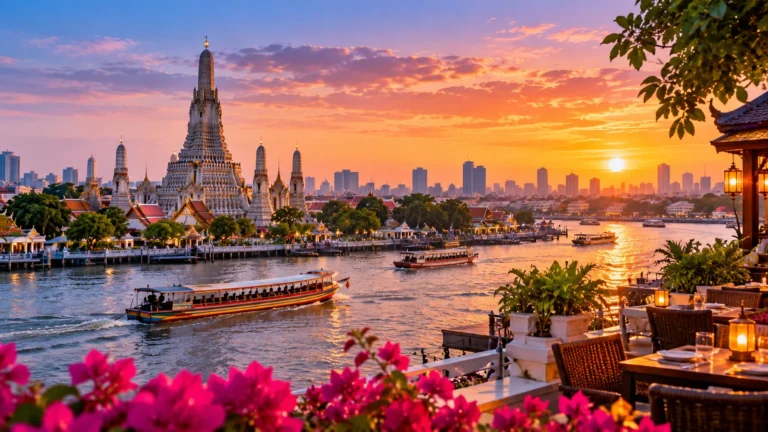
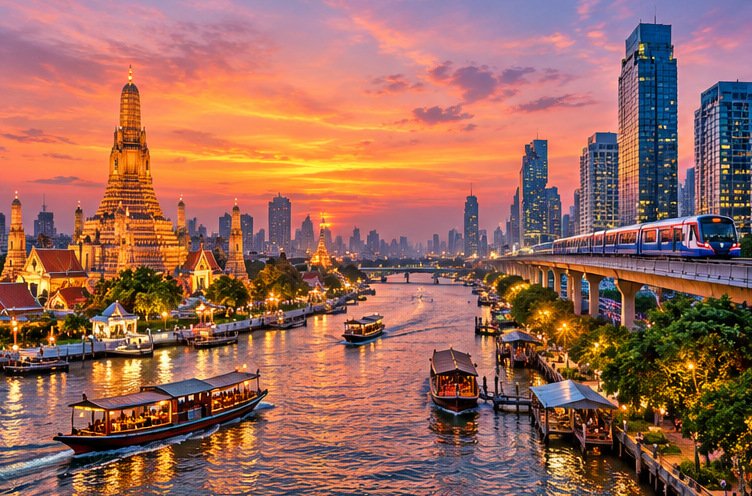
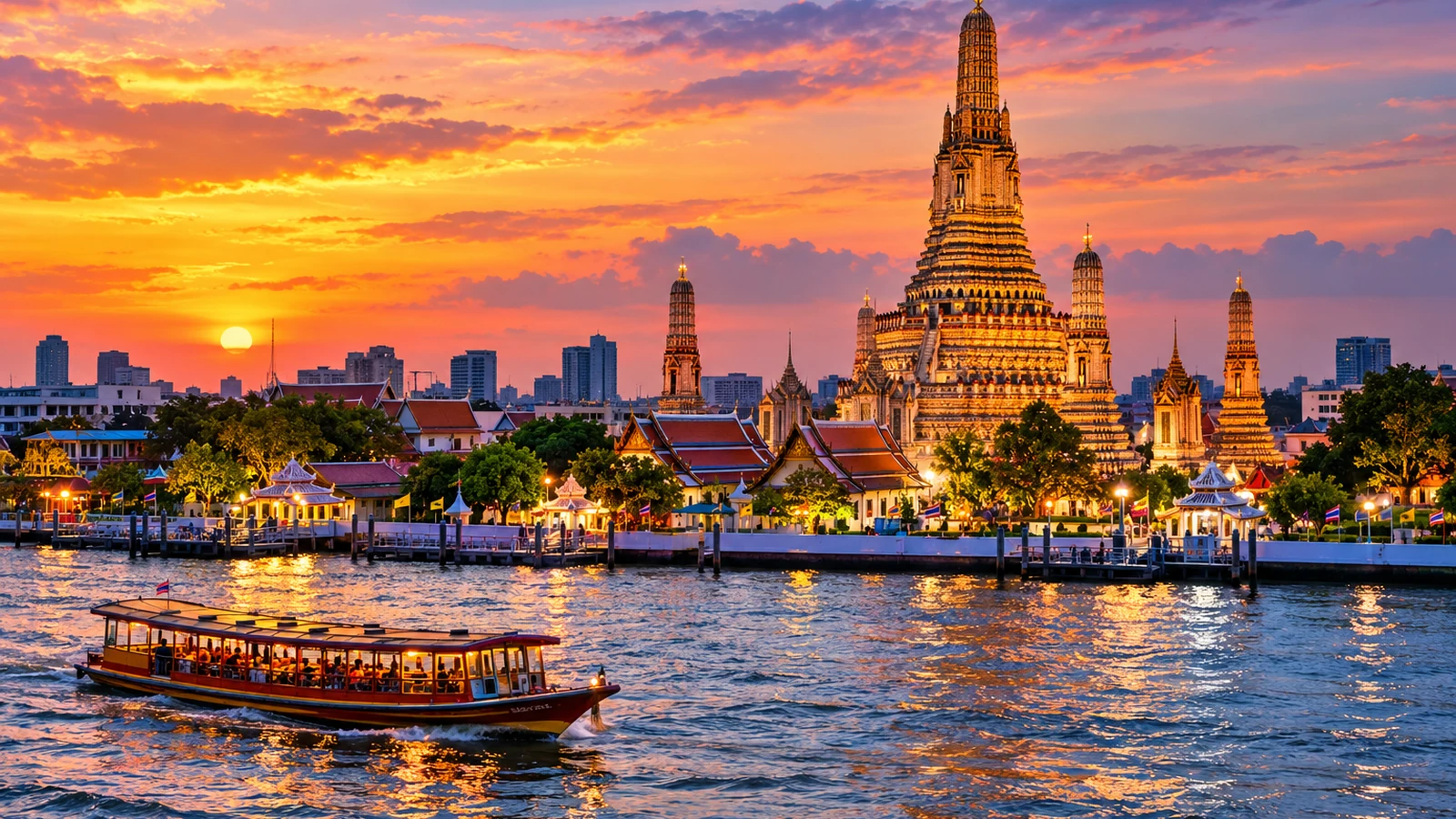
Illustrations are original, generated, Bangkok-inspired scenes. They are not documentary photographs, verified views from a named hotel or exact route maps.
- FCDO: Thailand travel warnings Flooding warning reviewed 3 October 2026. Check fresh advice before using normal-condition plans.
- BEM: MRT system map Station locations and network connections; not a door-to-door journey guarantee.
- BTS: official route map BTS interchange and station planning.
- The Grand Palace: visitor schedule Ordinary hours and THB 500 charge; current calendar overrides usual access.
- The Grand Palace: practical information Official dress requirements and admission information.
- Wat Pho: official visit plan THB 300 admission, published visitor hours and under-120-cm child exemption. The contact page separately starts at 08:30; plan an 08:30 or later arrival.
- Tourism Authority of Thailand: Wat Arun main listing Main listing shows THB 200 and 08:00-18:00; confirm the gate charge.
- Tourism Authority of Thailand: legacy Wat Arun listing This separate listing still shows THB 100. It is not used for the admission budget.
- Chao Phraya Tourist Boat: operator information Check current piers, ticket coverage and operating notices directly.
- Tourism Authority of Thailand: China Town Yaowarat, food venues and MRT Wat Mangkon access.
- Bangkok Metropolitan Administration: Benjakitti Park Park setting, access and current facilities.
- Bangkok Art and Culture Centre: plan your visit Tuesday-Sunday hours, ordinary free exhibitions and family/access facilities.
- Chao Phraya Tourist Boat: route and ticket check Different river services and tickets should not be treated as interchangeable.
- FCDO: Thailand safety and security General travel precautions; follow current local instructions.
Illustrations in this article were created for Taylor’s Trailblazing Travels. Third-party photographs, where used, are credited beside the image or in the source list.