One Day in Bangkok: A Realistic Itinerary
A compact first visit built around one temple, the river and an enjoyable meal.
One day in Bangkok should give you a sense of the city, not a collection of hurried taxi rides. The most useful route is a compact one: a morning temple, a short river experience, a proper lunch and an early evening in Chinatown. A second major temple or a small indoor stop can fit, but they should remain choices rather than obligations.
This itinerary assumes you wake up in Bangkok and have the full day available. It is not a promise that the same route fits between two flights. Airport formalities, luggage and the return journey change that calculation substantially. Here, the priority is to make one city day feel satisfying, with a clear main route and straightforward ways to shorten it.
The default begins with Wat Pho, continues to Wat Arun when conditions suit, and ends around Yaowarat. The Grand Palace is offered as a replacement for the morning, not a third compulsory temple. Recommendations are research-led and based on geographic grouping, reasonable walking commitments and opportunities to pause. All time blocks are planning suggestions; official hours and charges are dated where used.
Wat Pho at your pace
Give one important place enough attention before adding extras.
A short river experience
Confirm the right boat, boarding conditions and return route.
Leave room to recover
Museum Siam when suitable, a cafe pause or a hotel break.
An early Chinatown meal
Keep the walking loop manageable and the journey home clear.
One day in Bangkok: the realistic route
Three anchors are enough
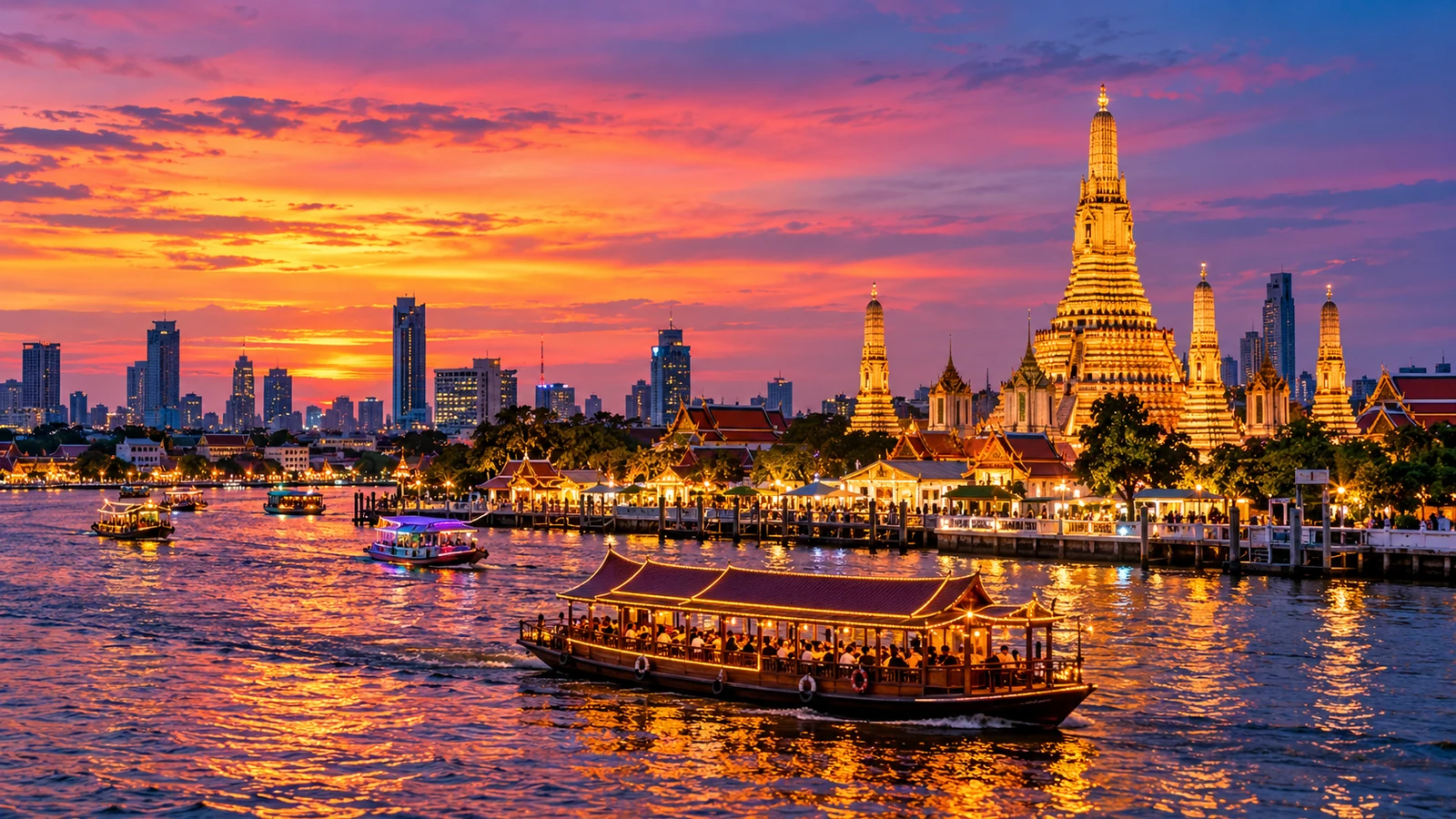
Make Wat Pho, the river and Chinatown the day's anchors. That gives the visit an architectural focus, a different perspective from the water and a food-led finish without crossing the entire city repeatedly. Wat Arun is a natural addition when the boat connection and your energy make sense, but it should not become the reason you skip lunch or rush the first visit. [2][3][4]
The middle of the day is intentionally less prescribed. You may want a seated meal, an indoor museum, a quiet cafe or a longer break. Choose according to the weather and your interests. A day that has room to change is more likely to remain enjoyable than one built around the fastest possible visit to every attraction.
Know what you are leaving for another trip
This route does not attempt Chatuchak, a distant floating market, a skyline deck and a shopping district on top of the historic area. Those places may be worthwhile, but each would need to replace part of the plan. The itinerary is a choice about the kind of day you want, not a claim that the omitted attractions are unimportant.
If modern Bangkok matters more than temples, use the alternative route later in the guide. If the Grand Palace is your main priority, make it the morning's central visit. Starting with your interests produces a better day than following a generic list and hoping that enough stops will eventually add up to a meaningful experience.
| Planning block | Default choice | Simpler version |
|---|---|---|
| 08:30-10:00 | Wat Pho | Stay longer and omit the next temple. |
| 10:15-11:30 | Optional river crossing and Wat Arun | A river view from land when boarding or weather is unsuitable. |
| Noon | Seated lunch near the morning area | Keep the meal even when the first visit runs late. |
| Early afternoon | Museum Siam when open, or a longer pause | Return to the hotel if it is close enough to be useful. |
| 15:30 onwards | Reach Chinatown before dinner | One meal and a short look around rather than a long tasting list. |
| Early evening | Finish with a clear route home | Skip an extra late-night attraction. |
Editorial timing blocks dated 3 October 2026. The route assumes a full day already in Bangkok, normal access and current venue confirmation.
A five-hour version for a late start
When only five usable city hours remain, keep one temple, a seated meal and either a brief river view or a short Chinatown visit. Choose the final area according to where you must go afterwards. Do not attempt to preserve both ends of the full-day route when the return becomes awkward. This smaller version still offers architecture, food and a sense of place without asking every transfer to run perfectly.
The evening before: make four small decisions
Set the start, lunch area and finish
First, decide how to reach Wat Pho from your accommodation, using the hotel's actual entrance rather than its neighbourhood label. Sanam Chai is the relevant MRT reference for this part of the old city, but the final walk still needs to be considered. A riverside hotel may offer another approach; confirm the service rather than assuming any boat outside the property goes where you need. [5][2]
Second, choose a broad lunch area close to the morning's sights. Third, decide whether the evening will be a seated Chinatown meal or a guided food walk. Finally, agree a comfortable finishing time. These choices remove repeated negotiations during the day while leaving enough freedom to change individual venues.
Prepare a small, useful day bag
Bring the items that prevent a minor inconvenience from disrupting the route: suitable temple clothing, drinking water, a charged phone, a compact rain layer and any personal essentials. Keep valuables manageable rather than spreading them across several open bags. A bag you can comfortably carry through a station and place beside you at lunch is more useful than one packed for every imaginable event.
Save the return address and your important confirmations offline. Connectivity is helpful, but the itinerary should not become impossible when a phone signal drops or the battery runs low. Travelling with someone else? Make sure both of you can find the hotel and contact each other independently rather than placing every detail on one device.
08:30-10:00: make Wat Pho the morning anchor
Visit before you start adding extras
Allow approximately ninety minutes as a flexible starting point. That gives you time to see the principal spaces without treating the visit as a quick photograph stop. Increase the allowance when you enjoy detailed looking; shorten the wider itinerary rather than rushing because a later optional activity appears on the table.
Wat Pho's own visitor page lists general hours of 08:00-19:30 and admission of THB 300, checked 3 October 2026. Follow current access instructions at individual buildings and do not assume that every part has identical late-day arrangements. An early visit keeps the day independent of those uncertainties. [2]
Give attention a chance
Choose something specific to notice: the scale of the reclining Buddha, the arrangement of the courtyards or decorative details you might otherwise walk past. You do not need an encyclopaedic history lesson to make the visit worthwhile. A little focus can turn a famous place from a box on a list into a memory of an actual space.
This is a working religious site, not only a sightseeing venue. Dress and behave respectfully, follow photography instructions and leave worshippers room. If you arrange a guide, confirm whether the ticket is included and where the visit begins. The advantage of guidance is interpretation; it should not be confused with a guarantee of avoiding every queue or entering every area.
10:15-11:30: cross to Wat Arun when it suits
Confirm the right service at the pier
After Wat Pho, make your way to the appropriate crossing and check the destination before buying a ticket. River services differ: a short ferry, a public express boat, a tourist boat and a private excursion are not interchangeable. Ask a clear question about the specific journey rather than accepting the first offer described as a river tour. [6]
Treat the pier as part of the visit, with its own waiting and boarding time. The crossing may be brief, but reaching it, finding the queue and moving safely aboard take longer than the time on the water. Do not use a short sailing duration as a reason to create a tight appointment immediately afterwards.
Keep the temple visit proportionate
The Tourism Authority's principal listing gives Wat Arun hours of 08:00-18:00 and a foreign adult fee of THB 200, checked 3 October 2026. A legacy official listing still displays a lower charge, so the budget here uses the principal listing and advises reconfirming at the gate. [3][7]
You can appreciate the setting and decorative work without climbing every available step. Stay inside current visitor boundaries, and avoid steep or slippery sections when they do not suit you. Families and anyone uneasy on moving boats can instead keep the morning on one bank. The route remains a Bangkok day when the river is viewed from shore rather than crossed as planned.
Noon: lunch is part of the itinerary
Choose a seat before choosing a famous dish
By lunchtime, the useful question is where you can eat comfortably near the route, not which restaurant has the longest online reputation. Pick somewhere with a manageable queue, food that suits your needs and a place to sit. You are buying recovery as well as lunch. A pleasant meal can be one of the day's strongest memories, even when it does not appear in a list of essential attractions.
Keep the next destination simple. A lunch that requires a long detour followed by a return to the old city breaks the main advantage of this itinerary. Choose another venue nearby when the first option is unavailable. The route is deliberately based on areas and decision points, not on one restaurant whose closure could derail the day.
Check the afternoon against your energy
Use lunch to make an honest assessment. Have you enjoyed the morning, or mostly hurried? Is the weather comfortable? Does your travelling companion need a longer pause? The answers should determine whether you add the indoor stop, take an extended break or go back to the hotel before Chinatown.
Do not interpret every reduction as losing value. The money and time already spent on a temple visit are not made more worthwhile by adding another activity while exhausted. A one-day itinerary succeeds when its individual parts are enjoyable and connected, not when it contains the highest possible number of ticketed entrances.
Early afternoon: Museum Siam or a longer pause
Use an indoor option that belongs to the route
Museum Siam is a possible indoor stop near the historic cluster, rather than an excuse for a cross-city journey. Tourism Authority information lists its ordinary schedule as Tuesday-Sunday, 10:00-18:00. Check the museum's own current programme and ticket conditions before your visit, especially because official ticket pages can show temporary admission announcements that differ from general directory information. [8][9]
The point is to introduce another way of understanding Thailand, not to demand that you read every display. Allow enough time to engage with the part that interests you and leave before attention disappears. Travellers who have already spent a long morning looking at buildings may prefer the change of format; others may simply need a quiet seated break.
Keep Monday simple
When the museum is closed, choose a nearby lunch-and-cafe pause or return to the hotel. Do not substitute a distant museum automatically just to keep an indoor attraction in the plan. A replacement that adds substantial transport can consume the time it was supposed to use productively.
Similarly, avoid buying a ticket purely to escape the weather when you have little interest in the content. An ordinary indoor meal or cafe visit may solve the same practical need more comfortably. The itinerary offers an option, not a hidden instruction to spend money. Choose the experience that fits your curiosity, time and energy on that particular day.
15:30 onwards: ease into Chinatown
Arrive before the meal becomes urgent
Head towards Yaowarat with time to find your bearings before deciding what to eat. Wat Mangkon is the main MRT reference identified by the Tourism Authority for Chinatown. The area contains both restaurants and street-side food, so you can choose an evening that suits your comfort with crowds and ordering. [4][5]
An earlier arrival is useful for a short first look, but do not assume that every evening stall will already be operating. Businesses have individual schedules. If a particular place is central to your plan, check it directly; otherwise, keep the evening flexible and let the available choices guide the meal.
Walk a manageable loop
Choose a small area rather than following a long list of scattered food pins. Agree a meeting point in case you become separated, and keep enough space for people working or moving through the streets. A food neighbourhood is not a staged attraction, and the most enjoyable way to visit is to remain aware of everyday activity around you.
For an independent evening, one main dish, another small tasting and a drink or dessert can be plenty. For a guided evening, compare the actual duration and walking distance. More tastings do not necessarily mean a better fit for a day that already began early. Leave enough time to return comfortably rather than extending the night simply because the neighbourhood remains lively.
A practical return, not one last attraction
End where the journey home is clear
Before leaving Chinatown, check the next step back to your accommodation. A return on the MRT may be straightforward for one hotel, while another needs a train change or car. Do not assume the same river service that helped in the morning is the best evening route. Published operating patterns and last departures should be checked for the particular service. [5][6]
If taking a car, choose a safe, identifiable pickup point rather than standing in the busiest part of a narrow food street. Give the exact hotel address. Travellers sharing a car should confirm that everyone and their bags fit comfortably rather than treating the advertised passenger capacity as a guarantee of luggage space.
Leave the day intact
The temptation is to add a rooftop, night market or late show because you only have one day. That can make sense when it is the experience you most want, but it should replace part of the evening rather than extend an already tiring route indefinitely. The best final hour may simply be a calm ride back and time to prepare for the next journey.
An early departure the following morning makes this especially relevant. Pack essentials before going out, settle any hotel arrangements and keep the dinner plan proportionate. A memorable day in Bangkok should not be followed by a frantic airport morning created by one unnecessary late-night commitment.
Grand Palace version: change the morning properly
Make it the main visit, not a bolt-on
The Grand Palace can replace Wat Pho as the first anchor when it is your personal priority. Its official information lists opening from 08:30 and foreign admission at THB 500, checked 3 October 2026; ordinary ticket sales end at 15:30. Reconfirm access for your travel date because special arrangements can affect the visit. [10]
Allow a substantial morning block and expect the rest of the route to become shorter. You might then choose lunch and a river view before Chinatown, rather than adding both Wat Pho and Wat Arun. This is a more honest version of the day than claiming the palace can be inserted into an already full morning without consequences.
Review clothing and ticket inclusions
Use the palace's own clothing guidance. A plan that depends on improvising acceptable clothes at the entrance is less reliable than arriving prepared. Similarly, compare a standard ticket with a guided product carefully. The guide may add interpretation or organisation, but the product description should make entrance fees, meeting details and any exclusions clear. [10] [11]
Check official information rather than relying on unsolicited street advice about closures or alternative tours. When the palace is genuinely unavailable, return to the Wat Pho-led route or another appropriate option. The itinerary should adapt to a verified closure, not spend the entire morning arguing with conditions that are outside your control.
A modern-Bangkok alternative without the temple circuit
Choose contrast within a smaller area
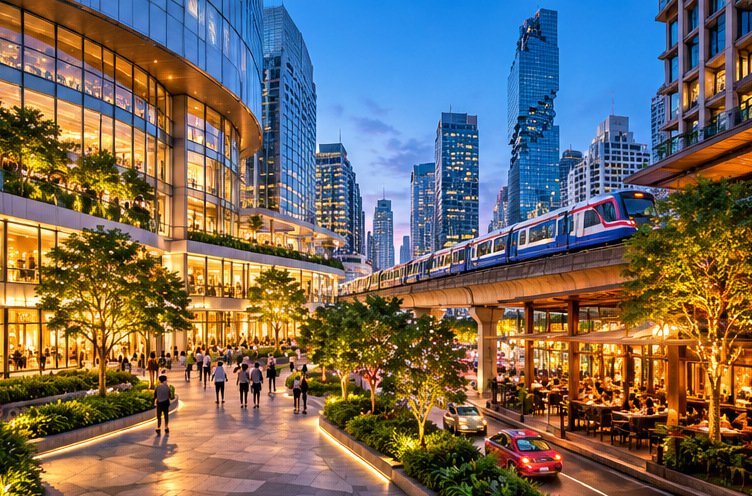
A traveller who has recently visited several Thai temples may prefer a different day. Begin with a short park walk or breakfast, use BACC as a late-morning cultural anchor when open, then have lunch and explore a limited part of the Siam area. Finish with a meal that appeals rather than travelling to Chinatown solely because it appears in the default route.
BACC's ordinary hours are Tuesday-Sunday, 10:00-20:00, with general exhibitions free and some special events charged, checked 3 October 2026. Benjakitti is another possible outdoor component, but the park and the art centre are separate places; allow for the transfer rather than presenting them as adjacent stops. [12][13]
Keep optional spending tied to your interests
Shopping, a cooking class or a skyline experience can replace an afternoon block. Select one and check its location, duration and conditions. A weather-dependent viewpoint may be less attractive on a poor-visibility day, while a hands-on class may suit travellers who prefer doing something to moving between landmarks.
This alternative is not a lesser version of Bangkok. It is simply a different use of limited time. The important discipline is the same as in the old-city route: choose a coherent day and stop adding destinations from other itineraries. A day becomes unrealistic when several individually reasonable routes are combined without removing anything.
Can you start this day at an airport?
Count usable hours, not the gap between flights
A morning landing is not a morning arrival at Wat Pho. You still need to leave the aircraft, complete any required immigration, deal with luggage and travel into the city. The return journey then needs its own allowance before the airline's check-in, security and boarding deadlines. Those blocks can consume a large part of a nominal day in Bangkok.
Use a dedicated layover calculation rather than forcing this itinerary into an uncertain flight connection. BKK and Don Mueang are separate airports, and switching between them creates a different set of ground-transport requirements. Confirm the code on both tickets before planning any sightseeing. [14][15]
A late start needs a smaller route
When you arrive in the city around lunchtime, choose one main attraction and a meal, then assess whether the evening still fits. Do not begin at the first line of the full-day table and attempt to catch up. The purpose of a shorter version is to remove pressure, not to compress each stop until the itinerary only works on paper.
If you must return to an airport that evening, make the final city stop easy to leave and avoid a long fixed-duration activity. Set a departure alarm before sightseeing begins. The amount of time already invested in reaching the city should not persuade you to stay longer than your return plan safely allows.
Walking, rail and boats: choose the least awkward combination
The last part of a journey matters
A station name is not an attraction entrance. Add time for stairs or lifts, ticketing, orientation and the final walk. Likewise, a pier on the right stretch of river may not be served by the boat you are considering. Use the official rail maps and the operator's current information, then choose the route that makes sense for your particular starting point. [5][16][6]
With only one day, a slightly more expensive direct journey can be worthwhile when it avoids several changes or a difficult walk. However, a taxi is not a guarantee of speed. Road conditions can vary, so leave flexibility when a car journey precedes a timed booking.
Do not confuse convenience with a compulsory purchase
A hop-on hop-off boat can be enjoyable, but the main route does not require a day pass merely because it includes the river. Compare the actual rides you intend to take with the product's stops and conditions. A short crossing, a sightseeing loop and a hotel shuttle have different purposes. [17]
Similarly, a private guide is optional. Some travellers value interpretation and fewer decisions; others prefer the freedom to leave a place early or linger. Buy the service that solves your problem. Avoid paying for an extensive city tour while also trying to complete this independent route around it, because the two plans would compete for the same hours.
What one day is likely to cost
Begin with known admission components
For an adult foreign visitor taking the default Wat Pho and Wat Arun route, the listed admission figures add to THB 500, checked 3 October 2026. The Grand Palace replacement has its own THB 500 admission, rather than being an extra cost built into the default. Museum and activity tickets should be checked separately against the option you actually choose. [2][3][10]
That leaves food, drinks, local transport and optional guidance. Accommodation and airport transfers are outside the city-day budget. A traveller already staying near the route will spend differently from someone arriving from an airport hotel, so a single total without these distinctions would be misleading.
Make an allowance rather than inventing a quote
As an illustrative budget prepared 3 October 2026, set aside THB 400-800 for food and non-alcoholic drinks and THB 150-350 for a modest mix of local transport. Added to THB 500 in admissions, that produces THB 1,050-1,650 before accommodation, airport journeys, private tours or premium dining. These are editorial spending allowances, not live restaurant menus or taxi quotations.
Carry a reserve beyond the basic estimate. A car instead of a walk, a longer seated break or an alternative restaurant may be the right decision when weather or energy changes. Keeping that flexibility is usually more valuable than designing the day around the lowest possible total and then feeling unable to adapt.
| Component | Example amount | What it means |
|---|---|---|
| Wat Pho + Wat Arun | THB 500 | Published adult foreign admission figures; checked 3 October 2026. |
| Food and non-alcoholic drinks | THB 400-800 | Editorial allowance, not a verified menu. |
| Local transport | THB 150-350 | Illustrative mix; airport travel excluded. |
| Default total | THB 1,050-1,650 | Admissions plus the two allowances, before optional extras. |
| Grand Palace alternative | THB 500 admission | Replace the main morning; do not automatically add all three temples. |
Prepared 3 October 2026. Accommodation, airport transfers, Museum Siam where charged, premium dining and private tours are not included.
Rain, heat and a workable escape route
Decide in advance what gets dropped
The optional second temple is the first element to remove when conditions are uncomfortable. Next, simplify the afternoon to a seated break rather than searching for another attraction. Keep the main meal and the easy return. This creates a clear order of priorities before you are making decisions while tired or wet.
For significant weather disruption, follow local instructions and avoid floodwater. Boat operation, pedestrian access and road travel can all be affected. Do not interpret a normal timetable as confirmation that a service is running during an unusual event. Current venue and transport advice should take precedence over a saved itinerary. [18]
Put comfort into the route itself
Use shaded or indoor pauses, carry appropriate water and choose clothing that works for both the weather and temple requirements. The guide is not a substitute for personal medical advice; travellers with health concerns should plan with a clinician and use current travel-health guidance. The practical travel principle is simply to avoid scheduling a continuous day outside without places to stop.
A lower-energy companion should not need to justify every break. Agree that either person can shorten a section, then keep one simple fallback meal and route home. This makes the day more enjoyable for everyone and prevents an itinerary from turning ordinary tiredness into a disagreement about whether the trip is being done properly.
A one-day plan with children or limited mobility
Make one highlight the success condition
For a family, choose one major morning visit, a short river experience only when suitable, and a relaxed meal. Add Chinatown briefly or replace it with an easier dinner near the hotel. You are still showing children part of Bangkok; the day does not need to reproduce an adult route with smaller portions of rest.
For a traveller with limited mobility, confirm the complete entrance and transport route, not only whether a venue has an accessibility symbol. Boats and old buildings may require specific arrangements. A car between selected stops can be more useful than a nominally short walking route that is awkward in practice.
Let the room support the day
A centrally located hotel can make an afternoon return worthwhile. When the accommodation is farther away, use a longer seated lunch and a shorter total outing instead. The two approaches solve the same need in different ways. Do not spend an hour travelling back to a room that you must leave almost immediately.
Choose luggage and equipment with the transitions in mind. A pushchair that works well inside a mall may be awkward at a pier; a heavy day bag may become the main burden in a walking route. Confirm the conditions of the specific places you intend to use and remove an unnecessary transfer before buying more equipment to compensate for it.
Pros and cons of the compact route
Where this works well
Small geographic footprint
The main route avoids repeated cross-city transfers.
Easy to shorten
The second temple and indoor stop remain optional.
Trade-offs to allow for
Not the whole city
Shopping districts and distant excursions require a different version.
Full-day assumption
A late airport arrival cannot simply start at the first line and catch up.
Why the limits are useful
The main strength is coherence. The morning and evening belong to the older part of the city, and the middle of the day can expand or contract without breaking the route. You have a clear first stop and a clear finish, yet enough freedom to spend longer at the place that interests you most.
The limitation is that modern shopping districts, long excursions and many other attractions are left out. It also depends on sensible transport from your accommodation. A hotel far away or an airport connection changes the day significantly. Treat these limits as the conditions under which the itinerary works, rather than trying to stretch it until it claims to suit every possible visit.
Common mistakes on a single Bangkok day
Confusing a highlights list with a route
A list of ten excellent places is not automatically a feasible itinerary. Check the travel between them and the time needed to enter, eat and rest. The cost of adding one more district may be larger than the visit itself. Select the places that belong together, then save the others for another trip or a different version of the day.
Another mistake is treating every tour description as a complete price. Confirm admission, transport, meals and the end location. A guided temple walk and a private city car with a guide are different services. Book the one that matches the day rather than choosing the lowest headline amount and discovering the missing components later.
Trying to recover time by skipping essentials
Do not skip lunch, water stops or the return buffer because the first visit ran long. Remove an optional attraction instead. These basic pauses are not decorative extras; they are what allow the later part of the day to remain enjoyable. The same applies to suitable clothing and a charged phone: a little preparation prevents a disproportionate interruption.
Finally, avoid judging the day by the number of photographs. One calm temple visit, a view from the water and a meal you enjoyed can give a stronger impression of Bangkok than twice as many stops seen while rushing. A realistic itinerary should help you notice the city, not merely document movement through it.
Frequently asked questions
What is the best thing to do with one day in Bangkok?
Choose a compact combination that matches your interests. For a first visit, a temple, the river and a Chinatown meal provide useful contrast without requiring repeated cross-city transfers. This guide uses Wat Pho as the morning anchor and makes Wat Arun optional. Travellers more interested in art and shopping can use the modern-city alternative instead. The best day is coherent and enjoyable, not the one with the longest list.
Can I see the Grand Palace, Wat Pho and Wat Arun in one day?
It can be possible, but that does not make all three the best default for every visitor. Queues, weather, walking pace and the amount of attention you give each site change the experience. For a single-day visit, I would normally choose the palace as the main morning or use the Wat Pho-and-river route. Add another major site only by removing something else and retaining time for a proper meal.
Is Chinatown worth visiting before evening?
It can be worthwhile for its streets, shops and restaurants, but the evening food scene has a different rhythm. Individual venues open at different times, so do not expect every stall to be ready during an early-afternoon visit. With this route, arriving before dinner provides time to look around and select a meal. A daytime visit is not a failed evening visit; it is simply a different experience. [4]
Do I need to book everything in advance?
No. Start by checking the official attraction information and reserve only the services that matter to you, such as a particular guide or food tour. Independent meals and ordinary transport can remain flexible. Before buying an activity, check the meeting point and conditions. A non-refundable reservation in every time block would undermine the main advantage of a route designed to adapt to weather, queues and energy.
What should I do when it rains all day?
Reduce the outdoor components and select an indoor cultural stop or a modern-city version, after verifying opening hours. Keep transfers simple and allow a longer seated meal. Severe conditions may make staying closer to your accommodation more sensible. Do not use a packed indoor substitute list to create a different kind of rushed day; the same principle of one anchor and manageable movement still applies.
Can I do the route on my own?
Yes, the structure can be used independently with official transport information and your accommodation's practical advice. A solo traveller may especially value a clear evening return and offline copies of important details. A guide is optional when interpretation or ordering help would improve the experience. Choose based on the service you need, not the idea that independent travel is either compulsory or inherently superior.
Is the budget enough for an airport transfer too?
No. The illustrative city-day budget excludes airport transfers and accommodation. Those costs depend on which airport, your hotel, party size, luggage and transport choice. Add them separately and allow enough time for the journey. A cheap city-day estimate should never be used to disguise the cost or complexity of reaching the route from an airport hotel or returning for an onward flight.
What is the easiest part to skip?
Skip the optional second temple first, then the indoor afternoon stop if you need more rest. Keep the main morning visit, lunch and a manageable evening meal. That preserves the shape of the day while reducing pressure. If you begin very late, choose only one attraction and one meal area rather than attempting a faster version of every stop in the full-day schedule.
Final recommendation: leave room to remember it
For a first full day, begin with Wat Pho, add the river and Wat Arun only when they fit, and finish with an early Chinatown meal. Choose the Grand Palace instead when it is the attraction you care about most. Keep the afternoon flexible, and let the route become shorter whenever weather or energy asks for it.
The goal is not to prove that Bangkok can be completed in a day. It is to spend the available day well. A route with time for looking, eating and resting is more likely to leave you wanting to return than one that treats the city as a series of deadlines.
Sources and fact-checking notes
Research reviewed 3 October 2026. Venue charges and ordinary schedules are dated examples; current closures, weather and operator instructions take precedence. Suggested durations and spending allowances are editorial planning judgements, not guaranteed journey times or live quotes.
Illustrations are original, generated, Bangkok-inspired scenes. They are not documentary photographs, verified views from a named hotel or exact route maps.
- FCDO: Thailand travel warnings Flooding warning reviewed 3 October 2026. Check fresh advice before using normal-condition plans.
- Wat Pho: official visit plan THB 300 admission, published visitor hours and under-120-cm child exemption. The contact page separately starts at 08:30; plan an 08:30 or later arrival.
- Tourism Authority of Thailand: Wat Arun main listing Main listing shows THB 200 and 08:00-18:00; confirm the gate charge.
- Tourism Authority of Thailand: China Town Yaowarat, food venues and MRT Wat Mangkon access.
- BEM: MRT system map Station locations and network connections; not a door-to-door journey guarantee.
- Chao Phraya Tourist Boat: operator information Check current piers, ticket coverage and operating notices directly.
- Tourism Authority of Thailand: legacy Wat Arun listing This separate listing still shows THB 100. It is not used for the admission budget.
- Museum Siam: permanent exhibition information Tuesday-Sunday 10:00-18:00 schedule; older fees are not assumed current.
- Museum Siam: official ticket service The ticket page displays a 2024-2026 free-admission announcement alongside a price field. Confirm current eligibility and date rather than assuming either applies universally.
- The Grand Palace: visitor schedule Ordinary hours and THB 500 charge; current calendar overrides usual access.
- The Grand Palace: practical information Official dress requirements and admission information.
- Bangkok Art and Culture Centre: plan your visit Tuesday-Sunday hours, ordinary free exhibitions and family/access facilities.
- Bangkok Metropolitan Administration: Benjakitti Park Park setting, access and current facilities.
- Airports of Thailand: BKK transport guide Airport Rail Link and landside transport. Times in the itinerary are separate editorial allowances.
- Airports of Thailand: Don Mueang Airport identity, facilities and onward-transport information.
- BTS: official route map BTS interchange and station planning.
- Chao Phraya Tourist Boat: route and ticket check Different river services and tickets should not be treated as interchangeable.
- FCDO: Thailand safety and security General travel precautions; follow current local instructions.
Illustrations in this article were created for Taylor’s Trailblazing Travels. Third-party photographs, where used, are credited beside the image or in the source list.