Best Things to Do in Tokyo for First-Time Visitors
Choose a varied set of experiences, group them by neighbourhood and leave room for the city between the sights.
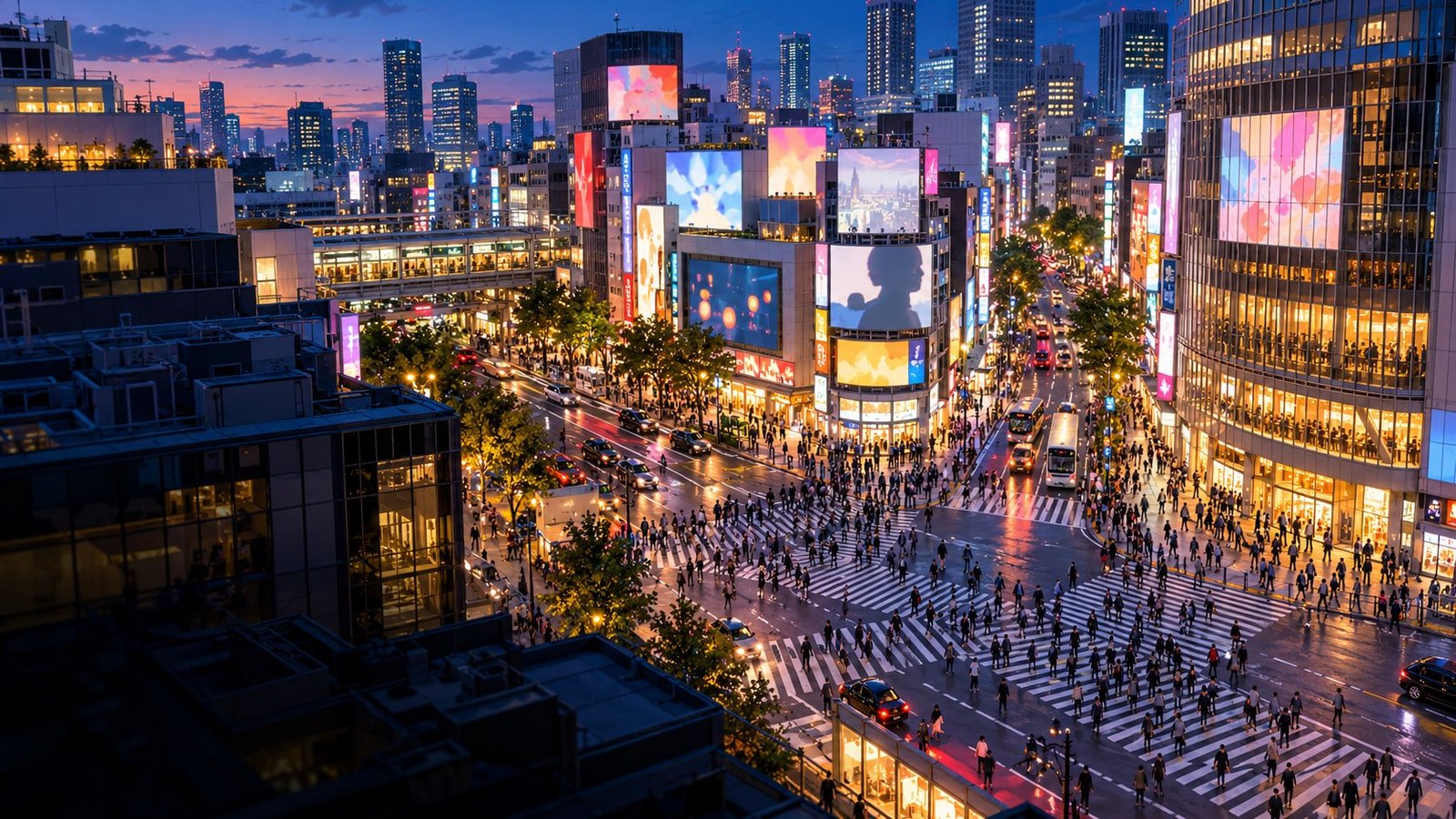
Original AI-created illustration inspired by Shibuya; not a documentary photograph.
The best things to do in Tokyo are easier to choose once you stop treating every famous sight as essential. A temple visit, a crowded crossing, a quiet garden and a meal can create a more satisfying day than several expensive tickets separated by long journeys. This guide helps you select the experiences that suit a first visit and combine them without making the whole trip a timetable.
Some links in this guide are affiliate links. Taylor’s Trailblazing Travels may earn a commission if you book or buy through them, at no extra cost to you.
Start with variety
Old and new
Balance Asakusa with the west-side streets and one skyline.
Daily capacity
Two main anchors
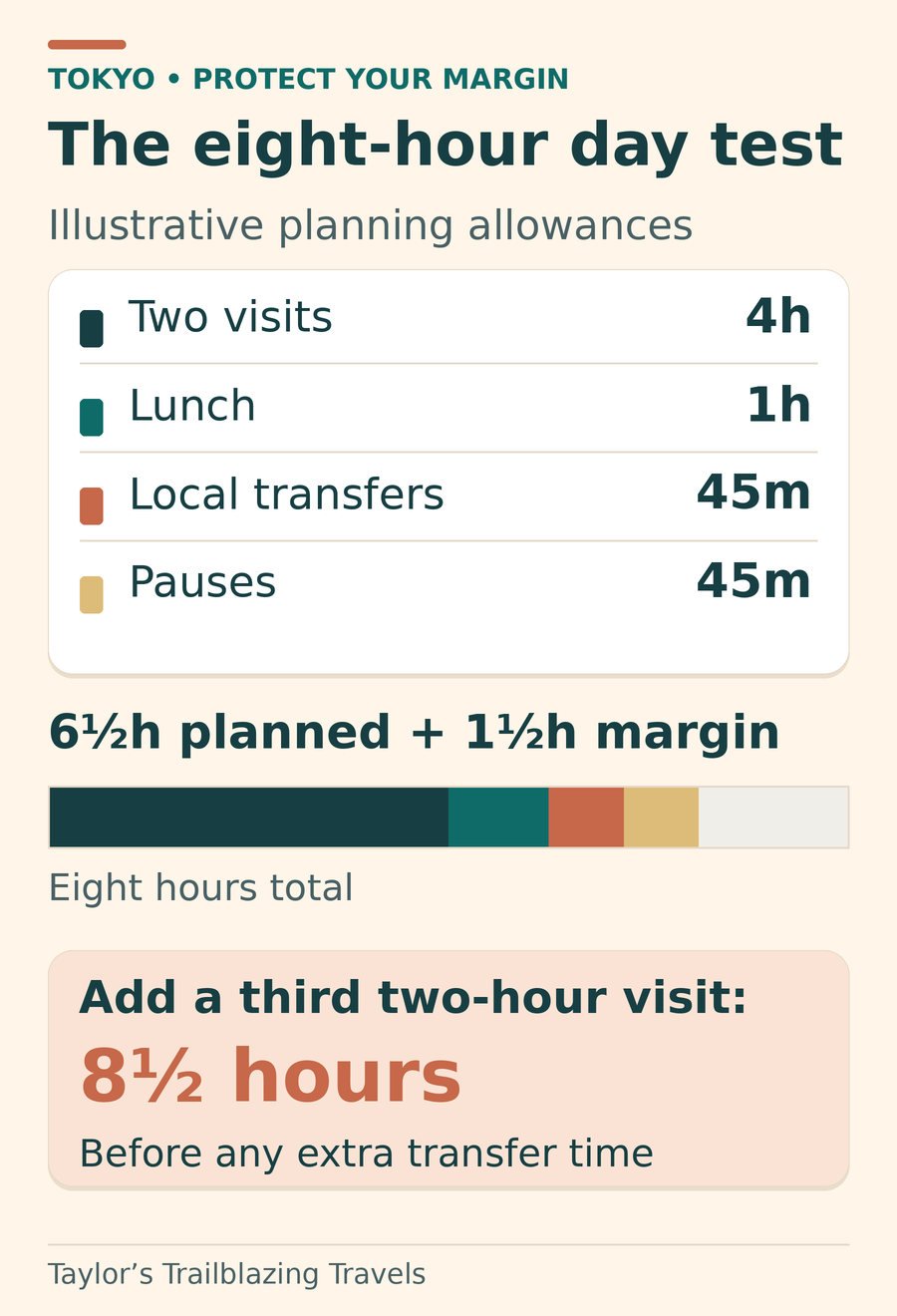
Allow room for lunch, transfers and the city between sights.
Make a choice
One teamLab
Compare location and experience before buying a ticket.
Reduce travel
Group by area
Use one coherent half-day group, then add a nearby extra.
The best things to do in Tokyo: build a varied shortlist
Choose experiences that give you different ways into the city: a temple district, a shrine and neighbourhood walk, a skyline, a meal and one collection or immersive exhibition. On a short visit, repeating the same type of attraction usually adds less than leaving time to explore the streets between them.
| Experience | Choose it for | Allow | Main trade-off |
|---|---|---|---|
| Senso-ji and Asakusa | A temple, traditional shopping streets and riverside wandering | 2–3 hours | Earlier temple visit or livelier shops later |
| Meiji Jingu, Harajuku and Omotesando | Shrine woodland, fashion and architecture | 3–4 hours | A substantial amount of walking |
| Shibuya Crossing and one viewpoint | Street energy and the scale of Tokyo | 2–3 hours with a deck | Paid rooftop views depend on weather |
| One Ueno museum | Japanese art or natural history | 2–3 hours | Choose a subject instead of trying every museum |
| Tsukiji Outer Market | A food-focused morning | 1½–2½ hours independently | Shop schedules and crowded lanes |
| One teamLab venue | Large immersive digital artworks | 2–3 hours plus arrival buffer | A timed commitment; check physical and sensory suitability |
| Shinjuku Gyoen | A slower garden interlude | 1½–2 hours | Seasonal closing times |
| Akihabara | Games, anime and specialist browsing | 1½–3 hours | Its value depends on your interests |
This selection favours variety, reasonable grouping and useful choices for a first visit. It is a research-led editorial shortlist, rather than a ranking from personal visits or a claim that every traveller needs every stop. Ticket calendars and practical details were checked on 17 October 2026; the sections below explain the evidence and the choices.
Start with Asakusa, then choose your Ueno museum
Senso-ji and the streets around it
Enter through Kaminarimon, follow Nakamise towards Senso-ji and give the temple grounds time beyond the familiar gate photograph. Senso-ji is Tokyo’s oldest temple; Nakamise’s shops sell traditional snacks, toys and souvenirs. The temple and shopping street together make a useful first introduction to Asakusa. [1]
Decide which experience matters most. An early visit prioritises the temple setting, while a later morning gives shops a better chance to be open. Do not build a dawn visit around buying specific snacks. After the main approach, choose a few side streets and a riverside pause instead of immediately racing to the next station.
A guide is worthwhile if understanding the area’s religious and historical context is a priority. The Asakusa Senso-ji Temple and Old Tokyo Walking Tour on Viator is listed as approximately two hours, with English commentary and a maximum of 12 participants. The payment is for guiding; Senso-ji itself is a free stop on its itinerary. Check the meeting point and chosen departure before booking. [17]
Ueno: Japanese art or natural history?
Choose the Tokyo National Museum if you want Japanese art, archaeological objects and historical context. Start with the Honkan, which houses Japanese art, and resist treating all the museum’s buildings as a single compulsory route. Displays rotate, so check the current exhibition list if a particular object matters. Ordinary collection admission is ¥1,000 for adults; most special exhibitions have separate pricing. The usual Monday closure has holiday exceptions. [6]
The National Museum of Nature and Science is the stronger alternative for dinosaur enthusiasts or people more interested in the natural world. Its Japan Gallery and Global Gallery cover different themes, so choose your priority before entering. Current notices include renovation closures in parts of the Global Gallery; the ComPaSS family exploration area requires its own timed reservation and ticket. [7]
For a balanced day, combine Asakusa with one museum and a proper lunch. Two major museums can work for an enthusiast, but they replace much of the neighbourhood time that makes this pairing varied.
Pair Meiji Jingu with Harajuku and Shibuya
Meiji Jingu first, shopping afterwards
Meiji Jingu offers a different experience from Asakusa: a Shinto shrine reached through woodland paths. The shrine does not charge admission, although facilities such as its museum do. Its gates open around sunrise and close around sunset, with monthly times; the shrine suggests about an hour for the main visit. Photography is prohibited in front of the main shrine where people pray. [2]
Continue into Harajuku with a deliberate choice. Takeshita Street suits colourful youth fashion and snack stops; Omotesando offers a broader boulevard of architecture, shops and cafés. Both are part of the same general outing, but there is little benefit in forcing a lengthy shopping circuit if browsing does not interest you. [3]
Shibuya Crossing, then decide whether to go up
Walk the crossing as part of exploring Shibuya, rather than treating the crossing alone as a half-day attraction. Shibuya Sky adds the wider view: its rooftop observation area is 229 metres above ground, with an indoor observation gallery as well. [4] [19]
Book the deck if an open-air skyline is one of your priorities. The operator currently advertises tickets up to two weeks ahead; check the official calendar for your date. Rooftop closure and cancellation conditions matter: bad weather can prevent the outdoor experience, even when the indoor gallery remains open. Read the conditions before entering if the roof is closed. [5] [19]
Check Shibuya Sky’s official tickets and conditions. Sunset is an attractive aim, but a suitable daytime slot can be easier to fit around the rest of your visit. A timed ticket does not guarantee clear visibility. Leave space before the reservation for finding the entrance and dealing with queues.
Make food and neighbourhood browsing part of the visit
Tsukiji Outer Market: arrive for food, not a tuna auction
Tsukiji’s outer market remains a place to explore food shops and restaurants. The wholesale market moved to Toyosu, so a Tsukiji visit should not be sold as watching the old dawn tuna auction. [9]
The market’s own guidance recommends 09:00–14:00 for public shopping; many shops close on Sundays and some Wednesdays. Confirm individual shop hours as well as the market calendar. Bring some yen because card acceptance varies, and respect working deliveries and other customers in the narrow lanes. [8]
For an independent visit, choose a few things you actually want to eat, compare menus and leave room for a seated meal. Buying one snack at every crowded stall is not a requirement. A short queue may suit you better than spending most of the morning waiting for one widely photographed dish.
A guided tasting walk makes more sense when choosing unfamiliar foods is the main obstacle. Compare the Tsukiji food walking tour with tastings on GetYourGuide. The current listing describes a three-hour English-language tour with food included and a small group. It is not listed as suitable for vegetarians, vegans, wheelchair users or people with mobility impairments; check dietary requirements and the current inclusions carefully. [10]
Ginza or Akihabara: follow your interests
Ginza is a useful continuation after Tsukiji if you enjoy department stores, design and window-shopping. A department-store food floor also gives a different food experience from the market: browse the counters, choose a takeaway meal and ask where eating is permitted. [18]
Akihabara earns a separate slot if games, manga, anime or electronics are part of your reason for visiting Japan. Its specialist shops and arcades give it that focus. [16] Decide in advance whether you want to play, browse collectibles or shop for electronics; otherwise it is easy to spend an hour circulating without finding the part that interests you.
Keep one evening open for a meal in whichever district you finish exploring. That is often more rewarding than adding a long return journey to reach an arbitrary restaurant recommendation. Check menu prices, any seating charge and dietary suitability before settling in.
Choose between teamLab Borderless and Planets
These are separate attractions in different parts of Tokyo. Borderless is at Azabudai Hills, near Kamiyacho; Planets is in Toyosu, near Shin-Toyosu. Booking one does not give entry to the other. [11] [13]
| Question | teamLab Borderless | teamLab Planets |
|---|---|---|
| What is the main appeal? | Exploring interconnected artworks without a prescribed map | A more physical experience, including barefoot water areas |
| Where is it? | Azabudai Hills, central Tokyo | Toyosu, towards Tokyo Bay |
| Which visitor does it favour? | Someone who wants to wander and discover rooms | Someone who actively wants the water and movement elements |
| What needs checking? | Dark spaces, uneven footing, light and sound effects | Water, mirrored floors, clothing and routes for individual access needs |
Borderless’s location works with a central Tokyo outing. Book through its official information and ticket page, checking the price for the selected date and time. The museum warns about dark spaces, unstable footing and sensory effects; it should not automatically be treated as the easy-access option. [11]
Choose Planets because the physical format appeals, rather than because you have seen the teamLab name more often. In the water area you remove shoes and socks, and water can reach adult knee height. Some artworks have alternative viewing routes or wheelchair restrictions. Ask the venue about the actual experience possible for your needs before paying. [13]
The official Planets ticket store currently advertises adult Entrance Passes from ¥3,800, with the date-specific price shown when booking. [12] Both venues are major indoor experiences, but booking both uses roughly two substantial sightseeing slots. For most first visits, one teamLab venue plus a neighbourhood or museum provides more variety.
Use Shinjuku Gyoen as a deliberate slower stop
Shinjuku Gyoen is a good choice when your shortlist needs an unhurried garden visit. Give it enough time to walk, sit and look, rather than treating it as a quick green shortcut between stations.
Adult entry is ¥500. From 1 October to 14 March the garden normally closes at 16:30, with last entry at 16:00; the garden closes later in the warmer months. Mondays are usually closed, with holiday and seasonal exceptions. During busy cherry-blossom periods, specified dates may require advance reservations. Consult the current calendar rather than assuming a previous spring’s arrangements apply. [14]
Visit in daylight, then make Shinjuku your evening district. The free government-building observatory is an optional addition if you have not already chosen another skyline. Allow time to move between the garden, station area and western high-rises; they are separate stops, not one compact attraction. [15]
If rain or fatigue makes a garden walk unappealing, replace it with a shorter indoor visit and an early dinner. Forcing a second green space after Meiji Jingu is unnecessary unless gardens are a particular interest.
Turn the shortlist into sensible half-days
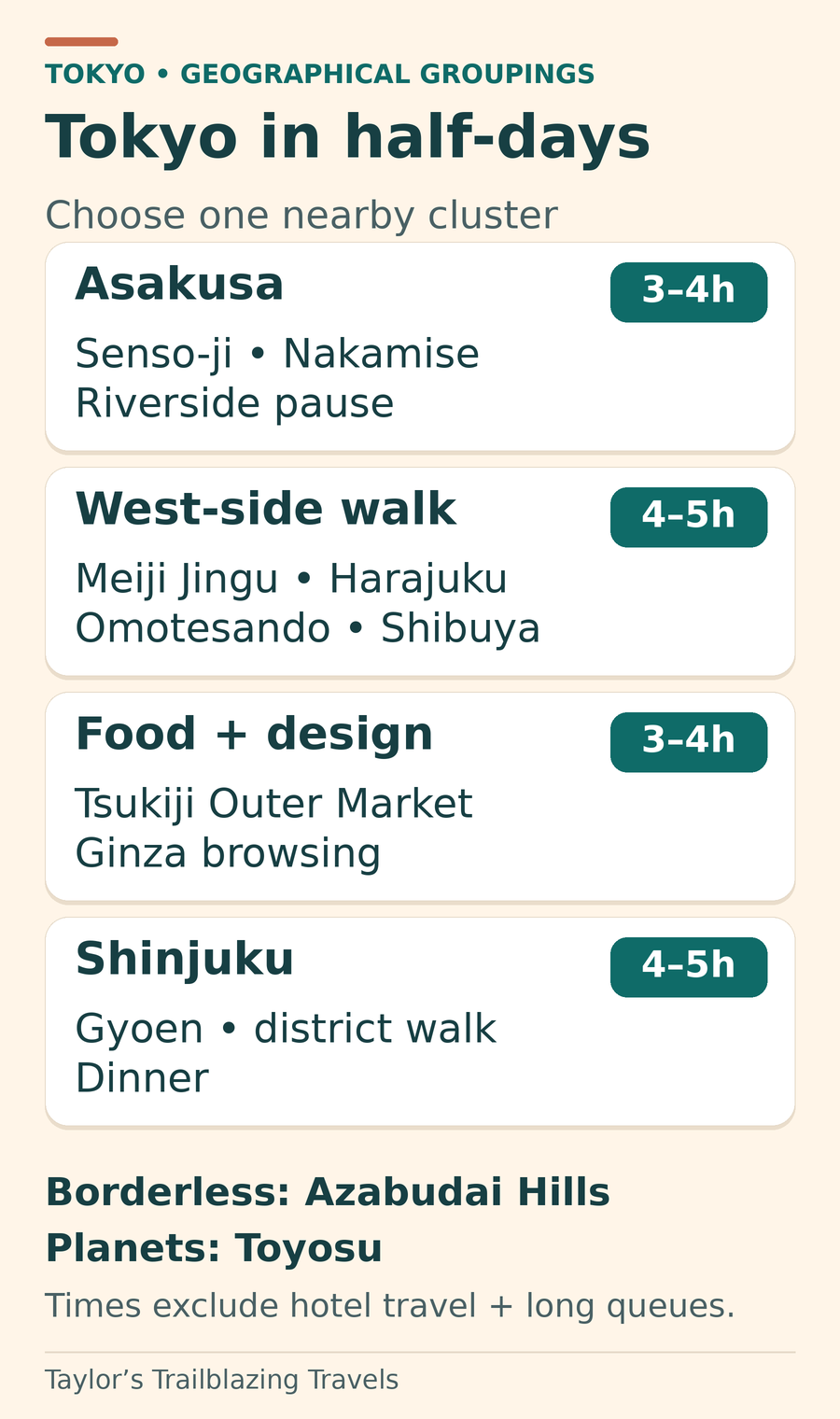
Build around neighbouring places, then decide whether you want a full day in that part of the city. The following are original pacing suggestions. Their totals include modest local movement and pauses, but exclude travel from your hotel, extended queues and substantial shopping detours.
| Outing | Core combination | Allow | To extend it |
|---|---|---|---|
| Asakusa morning | Senso-ji, Nakamise and a riverside pause | 3–4 hours | Add lunch and one Ueno museum for a full day |
| Western neighbourhoods | Meiji Jingu, a Harajuku/Omotesando walk and Shibuya streets | 4–5 hours | Add lunch and Shibuya Sky for a full day |
| Food and design | Tsukiji Outer Market and Ginza browsing | 3–4 hours | Add Borderless as a separately timed afternoon outing |
| Shinjuku afternoon | Gyoen, district wandering and dinner | 4–5 hours | Add the government-building observatory if it is your chosen view |
Planets works best as a separate Toyosu booking. A morning at Tsukiji can precede it, but budget and check the transfer rather than assuming the two food-market names put you next door. Avoid a tight timed entry immediately after a guided food tour whose finish might run late.
With one full day, choose either the Asakusa/Ueno pairing or the Meiji Jingu/Shibuya pairing according to your interests. With two days, use one of each. A third day gives you room for a food-focused outing, teamLab or a slower Shinjuku visit. This is a prioritisation rule, not a claim that three days exhausts Tokyo.
Check your hotel against the outings you choose
Before reserving a room, check its walk to the station and journeys to two or three of your chosen outings. Compare Tokyo accommodation on Agoda with Tokyo stays on Booking.com. Both open broad city searches: use the map and your dates, then compare the same room occupancy, cancellation terms and total price. A lower nightly rate may be less appealing if it adds an awkward journey to every day.
Book the commitments and keep a weather alternative
What deserves advance attention?
- Choose the correct teamLab venue, then reserve the date and admission slot through its official ticket links.
- Check Shibuya Sky’s two-week booking calendar if the rooftop is a priority. Keep a second activity in the district available if weather affects the roof.
- Reserve a food or walking tour only after checking duration, meeting point, inclusions and suitability for everyone travelling.
- Check garden and museum calendars, especially Mondays, public holidays, year-end dates and cherry-blossom arrangements. A low admission price does not mean a venue is open every day.
Choose a rain alternative with a different purpose
For rain, a Ueno museum is a practical substitute for a long outdoor walk if its opening calendar works. Ginza department stores or focused Akihabara browsing can shorten the amount of exposed walking. A pre-booked teamLab visit can anchor a wet day, but do not assume same-day tickets will remain available. An indoor viewing deck keeps you dry but does not improve poor visibility.
A lower-cost first visit can centre on Asakusa, Meiji Jingu, district walks and the free government-building view, spending on food and transport as needed. Choose an expensive attraction because it adds something you want, rather than because it appears on several lists.
Before leaving your accommodation, save the address, station exit, ticket instructions and any confirmation that is available offline. Follow the ticket provider’s own QR-code instructions: some codes only become available close to entry. [12] Carry enough phone battery for the return journey as well as the photograph.
If your usual mobile plan does not include suitable Japan roaming, a local data eSIM can help with maps, translation and tickets. Browse Airalo, then select Japan and compare the data allowance, validity and activation rules with your existing plan. Check your exact handset variant is eSIM-compatible and network-unlocked before buying. Airalo’s Japan range includes data-only options, so check separately if you need ordinary phone calls. [20] [21]
Useful questions
Is Tokyo still worth visiting without Shibuya Sky or teamLab tickets?
Yes. They are optional experiences, not requirements for understanding the city. Build the day around Asakusa or Meiji Jingu, explore the surrounding streets and choose a museum, garden or free city view if that suits your interests. Missing a particular booking does not require replacing it with another expensive ticket.
Should I visit both Senso-ji and Meiji Jingu?
They offer sufficiently different settings to justify both on a varied first visit: a Buddhist temple district in Asakusa and a Shinto shrine approached through woodland. Put them on different days or choose whichever fits your available half-day. Trying to join them into one continuous walking outing is not a sensible use of their geography.
Which choices work best with children?
Start with the child’s interests: dinosaur displays at the National Museum of Nature and Science, games in Akihabara or an unhurried garden visit may work better than repeated cultural stops. Check ComPaSS reservations separately, and read Planets’ water, stroller and supervision information before choosing it. Plan fewer stops and include a seated meal. [7] [13]
Can I fit a Mount Fuji day trip into this shortlist?
Treat it as a separate day-trip decision, with its own journey time and weather considerations. If you only have two full Tokyo days, taking one out for another region leaves very little room for the city. Choose the excursion because it is a stronger personal priority, rather than trying to append it to an already full attractions day.
Make the next planning decision
Choose the one experience you would most regret missing, reserve it if needed, then build the surrounding half-day geographically. For a balanced first visit, an Asakusa/Ueno day and a Meiji Jingu/Shibuya day give you a strong starting point. Use any additional time for food, a chosen immersive exhibition or a slower district walk. Leave at least one evening open.
Sources and checks
Research-led planning guidance, with original itinerary and decision analysis. Sources below were consulted on the dates shown. Recheck operating information, prices, access rules and booking terms for your travel dates.
- Senso-ji: official English guideChecked 17 October 2026.
- Meiji Jingu: visitor questions and opening arrangementsChecked 17 October 2026.
- GO TOKYO: visiting HarajukuChecked 17 October 2026.
- GO TOKYO: Shibuya SkyChecked 17 October 2026.
- Shibuya Sky: official ticket calendarChecked 17 October 2026.
- Tokyo National Museum: visitor and exhibition FAQChecked 17 October 2026.
- National Museum of Nature and Science: exhibitions and current closure noticesChecked 17 October 2026.
- Tsukiji Outer Market: official shopping guidanceChecked 17 October 2026.
- GO TOKYO: Tsukiji and the wholesale-market moveChecked 17 October 2026.
- GetYourGuide: Tsukiji food walking tour with tastingsChecked 17 October 2026.
- teamLab Borderless: official visitor information and ticketsChecked 17 October 2026.
- teamLab Planets: official ticket storeChecked 17 October 2026.
- teamLab Planets: official visitor and accessibility questionsChecked 17 October 2026.
- Ministry of the Environment: Shinjuku Gyoen admissionChecked 17 October 2026.
- Tokyo Metropolitan Government: building observatoriesChecked 17 October 2026.
- GO TOKYO: AkihabaraChecked 17 October 2026.
- Viator: Asakusa Senso-ji Temple and Old Tokyo Walking TourChecked 17 October 2026.
- GO TOKYO: Ginza Dori, shopping and food hallsChecked 17 October 2026.
- Shibuya Scramble Square: ticket and rooftop-closure policy announcementChecked 17 October 2026.
- Airalo — Japan eSIM plans and package conditionsChecked 17 October 2026.
- Airalo — supported devices and network-unlocked requirementChecked 17 October 2026.
Illustrations in this article were created for Taylor’s Trailblazing Travels. Third-party photographs, where used, are credited beside the image or in the source list.