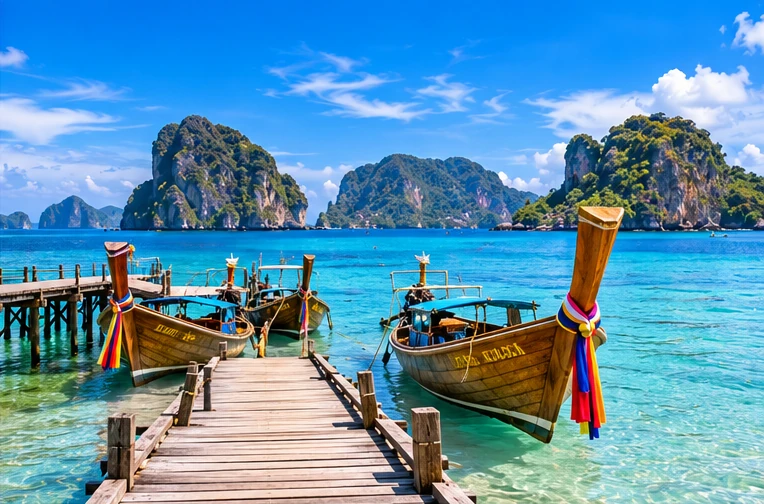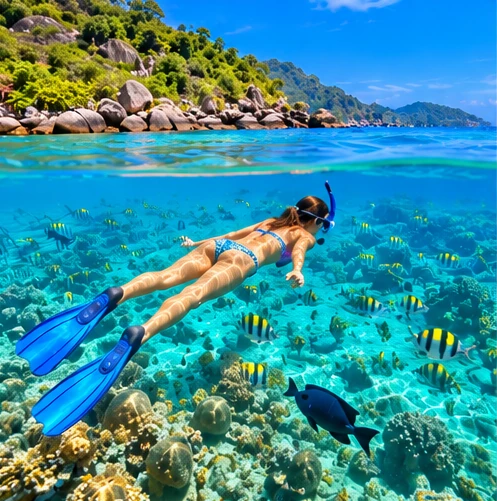
Best Thailand Islands for Snorkelling
Compare shore access, guided boat days and seasonal marine-park trips before choosing your base.
The best Thailand islands for snorkelling depend on how you want to enter the water. A reef near your hotel, a guided circuit from an inhabited island and a long marine-park day trip are three different holidays. Choosing between them matters more than finding another photograph of turquoise sea.
I would shortlist Koh Tao for a flexible island stay with guided options, Koh Kradan for a quieter beach-and-reef focus, and Koh Lipe for a dedicated southern Andaman trip. Koh Ngai and Phi Phi offer useful alternatives, while Koh Lanta works as a comfortable base for offshore excursions. Surin and Similan belong in the comparison too, but as seasonal protected-area trips rather than ordinary resort islands.
These are research-led choices, not promises about visibility, wildlife or the safety of a particular entry point. Conditions can vary between neighbouring bays on the same day. The aim is to help you choose an appropriate base and operator, then decide locally when and where the water is suitable.
Koh Tao
Compare guided bays and appropriate local shore access.
Koh Kradan
More time to wait for a suitable session near a smaller base.
Koh Lipe
Allow enough settled nights to justify the longer approach.
Parks versus bases
Surin and Similan require specific seasonal-access checks.
Comparing the best Thailand islands for snorkelling
The criteria behind this shortlist
I compared the variety of potential snorkelling, whether you can stay nearby, the dependence on boats, the demands of the wider journey and the ability to enjoy a non-snorkelling day. Tourism and operator sources establish the available settings; the recommendations weigh how those settings fit different travellers. There is no scientifically measured national reef ranking here.
A confident swimmer travelling mainly for the water can accept compromises that would make little sense for a nervous first-timer. Likewise, a family seeking a short introduction needs a different excursion from an experienced snorkeller hoping for several substantial sessions. Choose the format first, then the island.
| Base or destination | Type of experience to investigate | Practical advantage | Main limitation |
|---|---|---|---|
| Koh Tao | Guided bays and suitable shore entries | Several ways to build a water-led stay | Hills, boats and local conditions |
| Koh Kradan | Beach and nearby reef | Time to choose an appropriate session | Few alternative activities |
| Koh Lipe | Local reef and island-boat trips | A dedicated snorkelling holiday | Longer arrival and busy boat areas |
| Koh Ngai | Resort beach with nearby coral | A contained, slower stay | Dependence on the property |
| Phi Phi Don | Boat outings around the island group | Scenery plus a social base | Popular routes and variable crowding |
| Koh Lanta | Offshore Koh Haa or Koh Rok trips | Comfortable base with land alternatives | Good snorkelling is not on every main beach |
| Surin | Seasonal guided marine-park visits | A day built around several water stops | Long transfers and access restrictions |
| Similan | Seasonal scenery-and-water excursions | Beaches and offshore marine landscapes | Boat time and park availability |
On a smaller screen, swipe inside the table to compare all columns.
Koh Tao: the most flexible starting shortlist
Why it works as a base
TAT describes Koh Tao’s beaches, bays and diving scene, including boat trips for people who do not scuba dive. For a snorkelling holiday, that variety is useful: you can investigate a guided circuit, choose accommodation near a suitable bay, and retain other things to do when the sea is unhelpful. [1]
Sairee or Mae Haad can make a practical central base, but proximity to restaurants is not the same as proximity to the snorkelling you want. Ask the operator where the day’s entry points are and how the hotel transfer works. A beach room should not be purchased on the assumption that good reef access begins directly outside it.
A first guided day can help you understand the setting before considering independent shore sessions with a suitable companion. However, do not interpret a previous calm visit as permission to repeat the same route in different conditions. Local advice is specific to the day, not a permanent endorsement of the bay.
Choosing a circuit rather than a collection of promises
Compare the number of meaningful water stops, likely group size and whether the programme allows alternatives if one bay is unsuitable. A brochure’s named turtle or shark location is a place to investigate, not a wildlife guarantee. Avoid operators whose appeal depends on touching, feeding or crowding animals. [2]
I would allow several nights rather than arriving for one tightly scheduled excursion. That creates a chance to repeat a good experience, rest between sessions and move the main trip if conditions change. It also makes the ferry approach more worthwhile than a rushed overnight stop.
Koh Kradan: a reef-led stay with a small daily routine
The reason to stay rather than rush through
Koh Kradan has coral along its coast and a limited range of accommodation, according to TAT. It is worth considering when your ideal holiday combines a simple beach routine with time to investigate nearby snorkelling. Staying overnight gives you more flexibility than joining one brief stop on a multi-island excursion. [3]
That flexibility is not a guarantee that you can snorkel whenever you like. Ask the accommodation or a qualified local guide about tides, entry routes, currents and boat activity. The easiest-looking water can be too shallow over coral, while another section may be unsuitable for your ability.
Choose a room whose shade, cooling and food arrangements would keep you comfortable on a day out of the water. Kradan’s smaller scale can feel wonderfully focused, but somebody who needs varied shops, restaurants and inland outings should compare a more connected base.
Keep reef access respectful
Enter only where advised, and do not walk across coral because it looks like a convenient route to deeper water. A mask adjustment should not require standing on a living reef. If the depth, waves or your comfort make contact difficult to avoid, leave the session for another time or choose a different guided option. [2]
My preferred use of Kradan would be a short, deliberate water-and-beach stay rather than an obligatory night on a fast island-hopping chain. You gain most from being able to wait, observe and choose a sensible opportunity, not from filling every hour.
Koh Lipe: worth a dedicated trip rather than a token stop
A strong southern Andaman candidate
Koh Lipe’s surrounding coral and its main beach areas are described by TAT, while local dive information places it within a broader southern Andaman marine setting. It belongs on the shortlist when snorkelling is an important reason for the journey, rather than a casual extra squeezed into a holiday based far away. [4] [5]
Sunrise, Pattaya and Sunset are useful orientation names, but none is an island-wide safety label. Investigate the specific stretch near your room, where boats operate and which entry points are currently recommended. A busy transfer beach and a suitable snorkelling area may be close together without being interchangeable.
A locally organised boat outing can introduce several different settings. Ask which stops match your swimming confidence and whether a guide remains in the water. You should understand the return arrangement before leaving the boat, rather than discovering it after the group spreads out.
Give the transfer an honest place in the itinerary
Reaching Lipe involves a boat, often combined with a road transfer from a mainland airport. Allow time for the whole sequence, not just the final crossing. Check the operating season and current route rather than assuming a convenient connection from another Andaman island exists on every date. [5]
I would favour five settled nights over a short detour made purely to collect another destination. A longer stay gives you a choice of weather windows and time for ordinary beach days. Keep the final vulnerable boat journey away from a separate international-flight deadline wherever practical.
Koh Ngai: a contained resort-and-reef holiday
When a small setting is an advantage
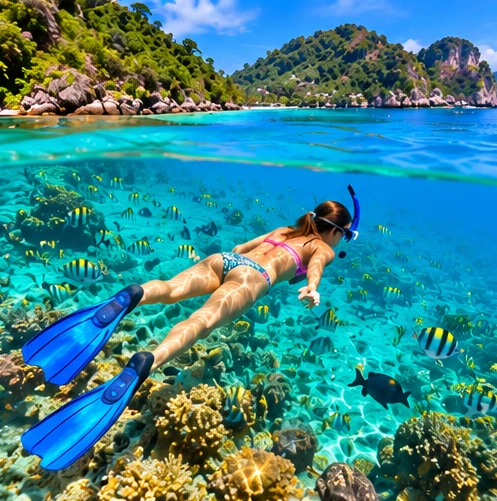
Koh Ngai has coral near its eastern beach and a limited selection of accommodation described by TAT. It can work well when you want the holiday to remain simple: a room, meals, shade and a suitable water session when local conditions permit. [6]
Before booking, ask the property how snorkelling actually works for guests. Does it provide equipment, advice or a guide? Which parts of the beach are used for boat arrivals? Are alternative activities available if you decide not to enter the sea? These answers matter more than a generic ‘excellent snorkelling’ label.
A few nights can be enough for travellers who enjoy repetition. However, a mixed group should discuss whether everyone would be content with the smaller activity range. The person who plans to stay on the sand needs an appealing holiday too.
Where expectations need adjusting
Nearby coral does not mean effortless access, guaranteed visibility or a reef that suits every swimmer. Ask about the relevant tide and do not assume a novice can simply follow more confident guests. A guided session somewhere else may be preferable to forcing the nearest option.
Ngai is strongest when the accommodation itself makes the stay enjoyable. It is weaker as a choice for travellers who want to compare several independent providers each morning or walk to a wide selection of restaurants at night.
Phi Phi: choose the water time, not just the photograph
A base with scenery and boat options
Phi Phi Don provides accommodation for visits to the wider island group. Its marine setting and diving opportunities make it a useful snorkelling candidate, especially when you want a social base and dramatic above-water scenery alongside the activity. [7] [8]
The main decision is which boat programme you buy. A trip may include beach stops, viewpoints, photographs and transit, with surprisingly little actual snorkelling. Read the detailed itinerary and ask how many sessions are planned, rather than using the total tour length as a proxy for time in the water.
An early departure may alter the crowd pattern, but no operator can guarantee you a private bay. Smaller groups can help, provided the boat, guide arrangements and route are suitable. A private charter is not automatically better if the crew cannot explain how the snorkelling will be supervised.
Maya Bay is not a general permission to swim
Access rules vary by site and can change. Treat any Maya Bay visit as a specific protected-area stop with its own restrictions, not a promise that you will snorkel anywhere shown in promotional imagery. Confirm the current park instructions and the actual snorkelling locations before booking. [9]
I would choose Phi Phi when the scenery-and-island combination matters, while comparing Tao or Kradan for a more singular snorkelling focus. There is no need to make a popular stop carry every purpose of the holiday.
Koh Lanta: a comfortable base for offshore days
Distinguish the island from the excursion
Koh Lanta can be a good snorkelling base without its main resort beaches being the principal reef attraction. Operators advertise trips to offshore places such as Koh Haa, while TAT identifies the wider island group’s marine attractions and seasonal restrictions. The important purchase is the specific trip, not an island-wide promise of shore snorkelling. [10] [11]
This arrangement suits mixed-interest travellers. One person can join a boat day while another enjoys the accommodation or a land activity. You can also build rest days between excursions, rather than relocating to a small island where the water is the only main attraction.
For Koh Haa or Koh Rok, check the season, crossing, collection zone and whether the trip combines divers and snorkellers. A mixed boat can work well, but only when snorkellers receive their own appropriate guidance rather than being treated as passengers who can improvise while the divers disappear.
Questions specific to a longer boat day
Ask about shade, toilets, boarding, ladders and the plan for somebody who remains aboard. Confirm whether the stated price includes park admission and equipment. These details are especially important for children, motion-sensitive travellers and anybody who might decide to skip a session.
I would choose Lanta when a comfortable base and occasional substantial outings appeal more than entering the sea beside the room. Budget for the excursions from the start so that the distinction does not become a disappointment after arrival.
Surin: a seasonal trip built around the sea
Think of it as an excursion destination
Surin is a protected marine-island destination rather than a conventional resort base with a broad hotel strip. An operator itinerary reviewed for this guide uses a mainland departure and several snorkelling stops across the day, with the programme explicitly subject to weather and tides. [12]
That can be appealing when your priority is a focused water day. Nevertheless, count the hotel collection and return as well as the boat journey. Staying nearer the relevant mainland departure can be more practical than accepting a very long road transfer because a tour is advertised from a better-known resort area.
Ask which pier your operator uses and what happens if the trip is cancelled. Two Surin products may describe the same national park but have different collection zones, boats and daily rhythms. Compare the product you will actually take, not the destination label alone.
Seasonal access is a separate booking gate
At the 3 October 2026 review, reporting on the park authority’s 2026 closure placed the seasonal pause through mid-October. Do not treat that as a verified opening-day guarantee: obtain the current park confirmation and an operating departure before paying for a non-refundable trip. [13]
For a holiday outside the operating window, choose a different suitable activity rather than asking a provider to find a way around restrictions. Marine-park closures are not an inconvenience to negotiate away.
Similan: scenery, beaches and offshore snorkelling
Check how the day is divided
Similan trips commonly combine snorkelling with beach and viewpoint time. The reviewed operator itinerary departs from Thap Lamu and includes several island stops, with a clear warning that the order can change with weather or tides. This is a useful example of a mixed scenery-and-water day rather than an uninterrupted snorkelling session. [14]
Choose it when that combination appeals. Somebody whose sole aim is to spend as much time as possible looking at reef life should compare the actual water schedule against a Surin or island-based option. Conversely, a travelling companion who loves beaches and photographs may appreciate the varied programme.
The boat ride is part of the decision. A beautiful destination is not automatically a good purchase for someone who finds the crossing unacceptable. Ask about the vessel and the day’s timing before focusing on what the islands look like.
Do not confuse accommodation formats
A Similan visit, a liveaboard and an ordinary beach-resort holiday are different products. Verify where you sleep, whether the trip is actually operating and which permissions it includes. At the review date, the same mid-October seasonal-access caution applied as for Surin. [13]
My recommendation is to treat the Similans as a considered highlight within a suitable mainland-based stay, not an assumed year-round outing. A flexible spare day is useful, but it cannot overcome a closed park or an unsafe sea forecast.
Why Samui and a beach photograph are not enough
A pleasant island does not guarantee a reef outside the room
Samui may make an excellent holiday base, especially when its airport and accommodation suit the wider trip. However, the fact that it has attractive beaches does not establish that your selected room has worthwhile, appropriate shore snorkelling. An offshore trip may be the relevant product instead. [15]
The same caution applies to any island. Sand, clear-looking water and palm trees are not evidence of coral quality, fish abundance or a safe route away from boats. Ask where you will enter, what you can reasonably expect to see and whether the plan suits the whole group.
Build the holiday around the dominant interest
For occasional snorkelling, choose the island where everybody enjoys the rest of the day and add a suitable excursion. For a water-led holiday, give reef access and operator choice more weight. This distinction prevents a good general beach destination being unfairly judged against a specialist snorkelling itinerary.
Matching the season without buying a weather guarantee
Start with the coast, then ask about the bay
Regional monsoon patterns matter, but they do not tell you the exact state of a reef on a particular afternoon. The Andaman is commonly investigated for its drier-season trips, while the lower Gulf may be a useful alternative for parts of the middle of the year. Use official weather information and local marine advice before committing to the day’s activity. [16]
Rainfall, wind, waves and underwater visibility are related but not interchangeable. A dry morning can still have an unsuitable sea, while a passing shower does not necessarily remove all visibility. Avoid making a last-minute cross-country move on the strength of a single weather icon.
Give yourself more than one opportunity
Place the most important boat day early enough to allow a realistic alternative. A four- or five-night stay can offer more flexibility than one night near a famous reef, even when the longer stay costs slightly more. However, ask about refund and rescheduling rules: spare time does not create a right to a replacement departure.
For protected areas, check the park as well as the forecast. The reopening of a hotel, ferry route or nearby beach is not evidence that every marine site has reopened.
Beginners, non-swimmers and mixed-confidence groups
Be specific about experience before paying
Tell the operator whether you are comfortable swimming in open water, have used a mask before and have any relevant limitations. ‘Beginner-friendly’ is too broad without an explanation of supervision, depth, entry and exit. A flotation aid can help an appropriate participant, but it does not turn unsuitable conditions into suitable ones.
Make opting out easy
For families or mixed groups, agree that anyone can skip a session without spoiling the day. Ask where they will sit, whether shade and water are available and how long the boat remains at each stop. A tired child or nervous adult should not feel obliged to enter because everyone else has already put on fins.
One shorter positive experience can be more valuable than a long uncomfortable session. Plan the day around the least confident participant’s actual needs rather than treating them as an obstacle to the itinerary.
Choosing a snorkelling operator from the details
Look beyond star ratings and animal photographs
Read the itinerary for actual locations, session length, group arrangements and the guide’s role. Ask whether the crew counts everybody before moving, how swimmers are kept away from the boat’s working area and how the group regathers. A useful answer is specific and understandable, not simply ‘we do this every day’.
Green Fins offers environmental guidance and a member directory that can help with the sustainability part of the comparison. Membership is not a substitute for checking the particular product’s safety arrangements, your suitability or the conditions on the day. [2]
Compare the complete price and cancellation terms
Check hotel collection, equipment, park fees, meals and any separate landing charges. Ask what happens if a named stop changes, the weather cancels the whole trip or you decide not to enter the water. Those are different situations and may have different refund terms.
A boat carrying fewer people is not automatically the safest or most comfortable. Choose the arrangement that is appropriate for the route, with competent staffing and clear supervision, rather than assuming either the biggest or smallest vessel wins by default.
Equipment that solves a real problem
Fit and familiarity before an expensive purchase
A comfortable, well-fitting mask is more useful than a fashionable one that leaks. Check rental equipment early enough to ask for a different size, and tell the guide if you cannot see comfortably through it. Fins should fit without creating pain or making movement difficult.
Use suitable sun protection and clothing, and follow current marine-park product rules. A rash vest can reduce exposed skin, but it is not a complete substitute for protecting your face and other exposed areas. Bring drinking water and a dry layer for the return rather than assuming the tropical setting means you cannot feel cold after a long wet day.
Cameras should follow comfort, not lead it
Practise without the camera first. If holding it prevents you from paying attention to the group, the boat or your own comfort, leave it aboard. A phone pouch intended for splashes is not automatically suitable for submersion; follow the manufacturer’s limits and do not make your essential communication device the experiment.
Reef etiquette that improves the visit
Keep distance rather than chasing the picture
Do not stand on coral, feed fish or pursue turtles for a closer image. Green Fins recommends observing marine life without touching or disturbing it. A sighting is more satisfying when the animal continues its normal behaviour rather than escaping a circle of cameras. [2]
Choose routes with your guide that let you remain clear of the reef. If you are drifting into shallow coral or losing comfortable control, signal and stop the session rather than trying to solve it by grabbing something. Good environmental behaviour and an appropriate activity level support each other.
Leave the beach as part of the same habitat
Take rubbish back when bins are unavailable, avoid removing shells and follow restrictions around nesting or protected areas. Do not assume a tour’s popularity gives permission to land anywhere. The scenery is part of the reason to visit, and respecting access rules helps preserve the experience for others.
A transparent snorkelling-trip budget
Separate the room from the water activity
These are illustrative planning allocations prepared on 3 October 2026, not verified tariffs or live booking prices. They show two ways one adult might organise four days before adding flights, insurance and arrival transfers. Replace the allowances with dated quotes from the selected accommodation and operator.
| Four-day example | Island base with two local outings | Mainland base with one substantial park day |
|---|---|---|
| Four room nights | THB 6,000 | THB 6,000 |
| Meals and drinking water | THB 2,800 | THB 2,800 |
| Activity allowance | THB 3,000 | THB 4,000 |
| Local transport and small extras | THB 1,200 | THB 1,200 |
| Flexible reserve | THB 2,000 | THB 2,000 |
| Illustrative subtotal | THB 15,000 | THB 16,000 |
On a smaller screen, swipe inside the table to compare all columns.
Do not mistake an allowance for an inclusion
A park-day quotation might include admission, while another charges it separately. Similarly, a room-and-snorkelling package may omit meals or collection from your actual hotel. Add the complete amount before comparing, and avoid using an old online minimum to decide whether a current product is overpriced.
Two realistic ways to build the holiday
Five nights on one suitable island
This plan suits Tao, Lipe or a carefully chosen smaller reef-focused base. It does not require snorkelling every day. Rest, beach time and an alternative activity help you make better decisions about whether another session is genuinely appealing.
A mainland stay with one protected-area highlight
Choose a comfortable base near the practical departure route, book the park excursion with clear weather terms and retain another day that could work. Then plan enjoyable land time regardless of whether the boat operates. The marine trip should be a highlight, not the single point on which the entire holiday depends.
Before the flight home, think about the last transfer and allow for possible disruption. Snorkelling at the surface is not scuba diving, but anyone who adds compressed-gas diving must follow the appropriate post-dive flying advice rather than treating the two activities as interchangeable. [18]
Shore entry or boat trip: decide where the flexibility sits
A shore-based stay can offer timing choice
Staying near a suitable reef may let you consider several opportunities without buying a new excursion each time. That is useful when you are happy to wait for appropriate conditions and enjoy the rest of the beach day. However, it does not mean you can bypass local advice, a companion or the need to understand the entry and exit.
The room’s location should be checked against the actual suitable access point. A resort can face the sea while the recommended entry is elsewhere, and reaching it may involve a walk or a transfer. Ask for the practical route rather than a distance measured directly across water or private land.
For a mixed group, shore-based flexibility can make it easier to separate interests. Some people may remain comfortably near the accommodation while suitable participants join a guided session. Nevertheless, do not leave somebody responsible for children or belongings by assumption; agree the arrangement before entering the water.
A boat trip can provide guidance and alternatives
A well-organised excursion can take the group to a suitable setting and explain the day’s plan. That can be valuable for visitors unfamiliar with the coast. The trade-off is a fixed departure, time aboard and dependence on the itinerary once you have left the pier.
Before paying, ask what happens when one location is unsuitable. A sensible alternative is useful, while a promise to visit every named stop regardless of conditions should prompt more questions. The boat trip should buy appropriate organisation, not a guarantee that the sea will match a brochure.
The choice is therefore not simply freedom versus supervision. A shore stay may still benefit from a local guide, and a boat trip may provide flexible choices within the day. Compare the arrangement that supports your ability rather than treating one access method as inherently better.
Three traveller examples that change the recommendation
Two confident swimmers with a reef-focused week
For a pair comfortable in open water, a settled stay on Tao or Lipe can provide opportunities to compare guided trips and repeat a worthwhile setting. The useful investment is time near an appropriate provider, rather than adding several distant islands. They should still disclose limitations and follow the local decision about each day.
Their room needs may be quite ordinary: a place to dry clothing, easy meals and a location within the operator’s collection area. Spending heavily on a distant luxury resort might contribute less than a practical base and another flexible day. This is an itinerary judgement, not a claim that every trip from those islands is suitable.
A family with very different confidence levels
A family might be better served by a comfortable Lanta base and one carefully selected excursion than by a small island whose main attraction is reef access. Those who prefer not to enter the water still need shade, food and an enjoyable day. Ask the operator about individual suitability and supervision rather than describing everybody simply as a family group.
Do not combine the first open-water experience with the most demanding available boat schedule. A shorter controlled introduction may reveal whether another session would be enjoyable. If not, the wider holiday should remain satisfying without treating the reluctant participant as the reason a special day was lost.
A traveller who mainly wants beaches and one memorable outing
For occasional snorkelling, the best island may be the one that makes the rest of the trip easy. A suitable guided excursion from a broader holiday base can be more sensible than a long detour to a specialist reef island. Compare the actual day, its boat time and the alternatives if conditions change.
This traveller should read the itinerary particularly carefully: a scenery-focused trip with a brief suitable session might be exactly right. There is no obligation to choose the product with the longest water time simply because an article discusses the best snorkelling destinations.
Reading reviews without buying somebody else’s conditions
Look for organisation you can reasonably expect again
A review describing clear briefings, well-fitting equipment and a patient guide tells you something useful about service. A review describing exceptional visibility or a rare turtle encounter mainly tells you what happened on that day. Both can be genuine, but only one is a reasonable basis for expecting repeatable organisation.
Look for comments from participants whose needs resemble yours. A strong swimmer’s enthusiastic account may not answer a beginner’s question about ladder access or staying aboard. Likewise, a complaint about a changed stop needs context: avoiding an unsuitable location can be the correct decision rather than poor service.
Use recent photographs for practical questions
Images of the actual boat, seating, ladder and group arrangements can be more informative than another underwater close-up. Check whether the product page identifies the vessel you will use or shows a representative photograph. Ask directly when the equipment or facilities are important to your participation.
Finally, separate the destination from the operator. A beautiful reef does not excuse poor organisation, and a responsible cancellation does not make an otherwise suitable provider a bad choice. The useful review question is whether the operator made sensible decisions and communicated them clearly.
Make one final comparison before booking
Write down the actual departure pier, hotel collection time, approximate time aboard, planned water sessions and the return arrangement for each shortlisted product. Then compare them against your priorities. A tour with more stops may leave less time at each one, while a simpler route may provide a more comfortable day.
Ask about meals, drinking water and time out of the sun as well. These ordinary details affect whether the last session feels enjoyable or merely tiring. When two products look similar, a clearer explanation of the day can be more valuable than another impressive marine photograph or a small difference in headline price.
Pros and cons of a snorkelling-led island holiday
What works well
- A longer stay offers more than one potential water window.
- Guided products can introduce suitable locations and local context.
- A well-chosen base supports both water and dry-land days.
What to weigh up
- Visibility, wildlife and access cannot be guaranteed.
- Boat time can dominate a short excursion.
- Non-swimmers must not assume flotation makes open-sea trips suitable.
The strongest advantage is being able to choose an appropriate moment instead of accepting one hurried stop. The limitation is that weather and water conditions still control the activity. Select somewhere you would enjoy above the surface, and the trip remains worthwhile even when the best decision is to stay dry.
Common mistakes
Buying scenery when you wanted reef time
Check how a tour divides its day between travel, photographs, beaches and actual snorkelling. An excellent sightseeing excursion can be the wrong product for a water-focused traveller. Equally, do not assume that a hotel’s sea view establishes a usable reef directly outside the property.
Treating famous locations as automatic permissions
Access, conditions and participant suitability must all align. A recognised bay can still be closed, rough or inappropriate for the group. The useful response is another activity or date, not pressure on the crew to fulfil a photograph-based expectation.
Frequently asked questions
Which island is the best all-round starting point for snorkelling?
Koh Tao is my first investigation for a flexible stay with several guided possibilities and ordinary island facilities. That is a planning recommendation, not a guarantee about every beach. Confirm the actual operator, daily conditions and hotel location, and compare Lipe or Kradan when their more focused water-and-beach style suits your route.
Is Koh Kradan better for shore snorkelling than a large resort island?
It is worth investigating specifically because TAT identifies coastal coral and a smaller beach-focused setting. However, nearby reef does not mean every shoreline is an appropriate entry. Ask about tides, currents, boat activity and your ability before planning a session. Choose the property for the non-snorkelling parts of the day as well. [3]
Can children join a snorkelling trip?
Only when the operator confirms an appropriate product for their age, swimming ability and needs. Ask about equipment sizes, supervision, boat facilities and the option to stay aboard. A generic family label is not enough. The adult’s confidence should not be used as evidence that the child will enjoy or manage the same session.
Can a non-swimmer snorkel with a life jacket?
Do not assume that this is an appropriate open-sea activity simply because flotation is provided. Discuss suitability honestly with a qualified provider and consider swimming instruction or a controlled supervised introduction first. A life jacket is not a substitute for the skills, supervision and conditions required by the particular activity. [17]
Is snorkelling from Koh Lanta mainly a boat activity?
For many visitors comparing its best-known marine outings, yes: the relevant product is an offshore trip such as Koh Haa or Koh Rok, subject to access and conditions. Do not book a random Lanta beach room expecting equivalent reef access outside it. The benefit of Lanta is a comfortable base with alternatives between boat days. [10]
Should I choose Surin or Similan?
Compare the actual itinerary. Surin products may emphasise several snorkelling sessions, while Similan outings often combine water time with beaches and scenery. Both require seasonal-access and boat checks. The better choice is the programme that fits your confidence, interests and departure location, not an unsupported claim that one always has better visibility. [12] [14]
Will I see turtles or reef sharks?
Possibly, but nobody should promise a wildlife encounter. Choose a suitable reef experience rather than buying a specific animal, and avoid chasing, feeding or touching anything to improve your chances. A responsible operator explains what might be seen while accepting that natural behaviour and conditions cannot be controlled. [2]
Do I need to buy all my own equipment?
Not necessarily. Check the rental equipment and fit before departure, and consider owning a mask only when it solves a genuine comfort problem. Follow the operator’s advice for the activity and do not bring unfamiliar equipment solely because it appears in a packing list. Drinking water, sun protection and a dry return layer also matter.
Is an early departure always better?
An earlier schedule can change crowds, temperature and the shape of the day, but it is not automatically the best water window. Tide, wind and operator planning still matter. Ask why the timing suits the proposed route, and avoid paying a premium on the assumption that ‘early bird’ guarantees empty locations or better visibility.
How should I handle a weather cancellation?
Use the written refund or rescheduling policy agreed at booking. Do not pressure the crew to depart because the excursion was the main reason for your visit. A spare day can help when another suitable departure exists, but seasonal closure or sustained poor conditions may require accepting a different activity altogether.
My final recommendation for a snorkelling holiday
Choose Tao when flexibility and a varied island base matter, Kradan or Ngai when a smaller beach-and-reef routine appeals, and Lipe when you can give a southern water-led trip enough time. Use Lanta for comfortable offshore-trip days, and consider Phi Phi when scenery and a social island stay are also important.
Treat Surin and Similan as carefully checked seasonal excursions. Wherever you choose, book the right format, describe the group’s ability honestly and leave room for local judgement. More time near a suitable setting is usually a better investment than a rushed attempt to visit every famous reef.
Sources and fact-checking notes
Research reviewed on 03 October 2026. Official destination, training, medical and provider sources inform the factual context. The island choices, example routes and budget allocations are editorial planning judgements, not first-hand inspection reports, live quotations or guarantees. Current conditions, access and event details must be confirmed for the booked date.
- Tourism Authority of Thailand: Ko TaoDestination setting and activities; old practical absolutes and undated prices were not adopted. Reviewed 03 October 2026.
- Green Fins: responsible snorkellingEnvironmental practice. The Green Fins website also provides operator/member information. Reviewed 03 October 2026.
- Tourism Authority of Thailand: Ko KradanCoastal coral, beaches and accommodation context; local access must be confirmed. Reviewed 03 October 2026.
- Tourism Authority of Thailand: Ko LipeIsland and main-beach orientation. Reviewed 03 October 2026.
- PADI: diving in Koh LipeReef, wall and drift-diving context; seasonal route descriptions are not a timetable. Reviewed 03 October 2026.
- Tourism Authority of Thailand: Ko NgaiEastern beach, nearby coral and limited accommodation. Reviewed 03 October 2026.
- Tourism Authority of Thailand: Ko Phi PhiIsland-group and inhabited-base context. Reviewed 03 October 2026.
- PADI: diving in Koh Phi PhiRecreational reef and island-group setting. Reviewed 03 October 2026.
- TripZilla: Maya Bay status and restrictions, 1 October 2026Recent travel reporting of site restrictions; confirm current park instructions before visiting. Reviewed 03 October 2026.
- Blue Planet Divers: Koh Lanta dive sitesOperator descriptions of Koh Haa, Koh Bida and offshore itineraries; confirm the chosen departure. Reviewed 03 October 2026.
- Tourism Authority of Thailand: Ko LantaIsland character, beach variety and general seasonal marine-access context. Reviewed 03 October 2026.
- Seastar Andaman: Surin day tripNamed departure and sample snorkelling programme, explicitly subject to weather and tides. Reviewed 03 October 2026.
- The Nation: Similan and Surin annual closure, 26 May 2026Dated reporting of the park authority’s 2026 closure through mid-October; not a verified opening-day departure. Reviewed 03 October 2026.
- Seastar Andaman: Similan day tripSample mixed snorkelling, beach and scenery programme, subject to changes. Reviewed 03 October 2026.
- Tourism Authority of Thailand: Ko SamuiIsland setting and airport-based access; not a live flight quotation. Reviewed 03 October 2026.
- Thailand.go.th: monsoon winds and climateRegional seasonal context; always distinguish climate from the live marine forecast. Reviewed 03 October 2026.
- Divers Alert Network: snorkelling and scuba travel injuriesWater confidence, physical demands and risk awareness; not personalised medical advice. Reviewed 03 October 2026.
- Divers Alert Network: guidelines for flying after divingScope-limited minimum intervals for symptom-free divers and the need for appropriate medical advice. Reviewed 03 October 2026.
Illustrations in this article were created for Taylor’s Trailblazing Travels. Third-party photographs, where used, are credited beside the image or in the source list.