Koh Samui Travel Guide: Beaches, Areas, Transport and Costs
A practical first-trip guide to Samui’s beaches, areas, Gulf weather, arrival routes, island transport, realistic costs and the day trips worth your time.
Koh Samui can be a simple fly-and-flop island, a family resort holiday, a food-and-wellness break or the gateway to Koh Phangan, Koh Tao and Ang Thong. The difficulty is not finding attractive options. It is choosing an area, season and transport plan that create the holiday shown in your head.
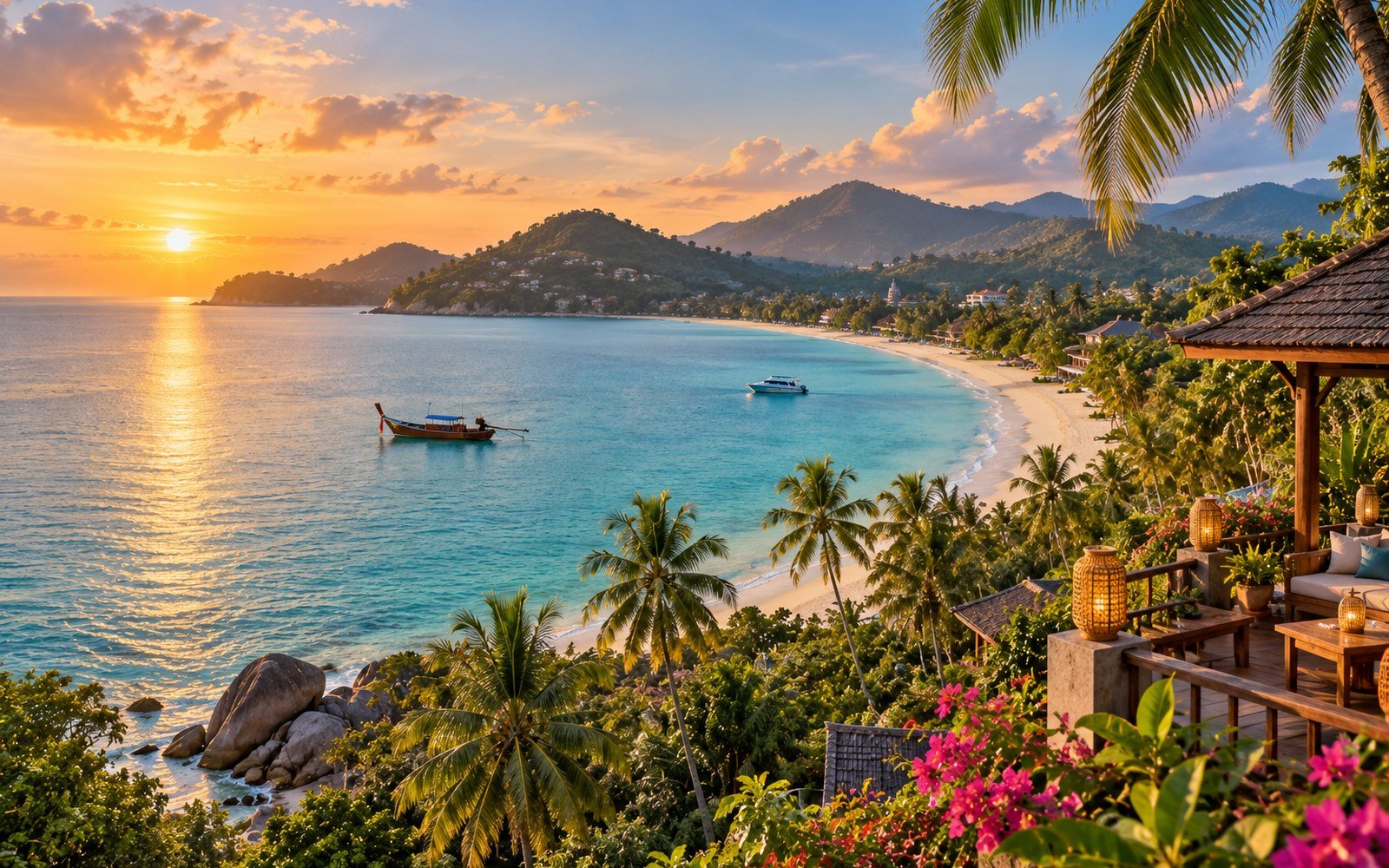
The island is far larger and more varied than a single beach photograph suggests. Chaweng offers the broadest choice and busiest nightlife. Bophut concentrates restaurants and evening walks. Lamai is lively at a smaller scale. Maenam, Choeng Mon and the west or south coast suit quieter stays, but each changes the taxi budget and daily logistics.
This Koh Samui travel guide uses official tourism, airport, ferry, weather, national-park and safety information, supported by dated commercial price checks where no official tariff is published. All changeable prices and schedules were reviewed on 18 September 2026; the provider’s live page and issued ticket remain the final authority.
Bophut
Walkable evenings, useful airport access and a practical north-coast position.
Chaweng
The widest hotel, dining and activity choice, with more noise and traffic.
Lamai
A developed beach town with a smaller scale and broad accommodation range.
Later wet season
October-November can be wetter even when Phuket and Bangkok look favourable.
This comparison is ranked by practical usefulness for a first trip, not by resort status or commission. Planning ranges were checked on 18 September 2026; live rates and conditions can move quickly.
The decisions that shape the holiday
| Decision | Strong first choice | Alternative | Typical planning range | Main trade-off |
|---|---|---|---|---|
| Length of stay | 5-7 nights | 4 nights for a focused add-on | One arrival day, three useful days and one weather buffer | Short stays lose a large share to flights, ferries and hotel transfers |
| First base | Bophut for balance | Chaweng for maximum choice; Lamai for a smaller lively base | One base for up to a week | Remote resorts increase taxi cost and reduce spontaneous evenings |
| Arrival | Fly to Samui Airport | Surat Thani or Donsak plus ferry | Ferry passenger examples around THB 200-210 before mainland and island transfers [8][9] | Cheaper segments can consume most of a day |
| Island transport | Walkable base plus taxis/songthaews | Rental car or licensed private driver | Shared songthaew often about THB 50-100 for short common trips; current small-scooter examples around THB 250-500 a day [19][21] | Scooters demand the correct licence, insurance and real experience |
| Sea day | Ang Thong for scenery | Koh Tao/Nang Yuan for snorkelling focus | Shared tours commonly start around THB 1,500-2,500; premium cruises cost more | Sea conditions, park fees and boat type change the experience |
The island is approximately 247 square kilometres, with a 53-kilometre ring road described by TAT. Map distance therefore understates taxi cost, road gradients and the time needed to cross the interior. [1]
What Samui does especially well
Koh Samui suits travellers who want a complete island holiday without depending on a passenger ferry after every flight. It has its own airport, a broad hotel market, beach towns with restaurants and evening life, wellness resorts, family facilities, cultural stops and practical day trips. TAT describes long beaches, coconut landscapes, waterfalls, local culture and access to Ang Thong National Marine Park. [1][2]
That breadth is the island’s main advantage. A couple can stay in a quiet hillside villa and still book a polished restaurant or spa day. A family can choose a resort with a kids’ club and avoid a second island transfer. Solo travellers can use Chaweng or Bophut as a social base without committing to a party island.
Where the compromise appears
Convenience has a price. Direct flights can cost more than flights to Phuket, Krabi or Surat Thani. Taxis are expensive by Thai mainland standards, while the island’s spread-out layout makes a cheap hotel in the wrong area a false economy. Samui is also developed: travellers seeking a tiny barefoot island with no malls, traffic or major resorts should compare Koh Tao, quieter parts of Koh Phangan or smaller Andaman islands instead.
Samui follows a lower-Gulf weather pattern
Do not copy a Phuket weather chart onto Koh Samui. Thailand’s two coasts respond differently to the monsoons, and TAT identifies January to May as a calm-wind planning period for Samui. [1] The Thai Meteorological Department’s 1991-2020 climate atlas is the stronger long-term reference, while the site’s own month-by-month guide places the Gulf islands among the first checks from April to September. [4][22]
| Period | Likely character | Why consider it | Planning caution |
|---|---|---|---|
| January-March | Often drier, warm and popular | Beach time, weddings, families and broad activity choice | Peak winter demand raises room and flight prices |
| April-May | Hot, with showers and strong sun | Useful Gulf-island alternative; Songkran in April | Heat changes walking pace and boat comfort |
| June-August | Popular European-summer window with mixed showers | Often a better first check than the Andaman coast | School-holiday demand and no guarantee of calm seas |
| September | Transitional and variable | Potentially softer rates and fewer crowds | Keep boat plans flexible and use refundable rooms where sensible |
| October-November | Highest risk of persistent rain and rougher seas | Low demand can reduce some hotel rates | Flooding, cancelled boats and disrupted outdoor days become more likely |
| December | Improving but still capable of unsettled spells | Festive holidays and strong resort choice | Do not assume the Gulf is dry because Bangkok and Phuket look good |
How to use a forecast properly
A week of thunderstorm icons does not prove seven washout days. Check hourly rain, wind, wave height, marine warnings and the operator’s cancellation terms. For an Ang Thong or Koh Tao trip, sea state matters more than a single rainfall percentage. Leave the boat day movable until the better forecast window appears.
Four nights: focused introduction
Four nights can work when arrival is early and departure is late. Use one beach base, one compact island sightseeing day, one sea or beach day and one slower half-day. A delayed arrival or cancelled boat will reduce the plan quickly, so avoid pre-paying every block.
Five to seven nights: strongest first trip
This range protects the island from becoming a transport exercise. It allows two relaxed beach days, one cultural and waterfall loop, one marine day trip, an evening at Fisherman’s Village and enough unscheduled time for rain, heat or a favourite beach.
Eight nights or more: resort time or split stay
Longer stays make sense for wellness, remote villas, families, diving, work or a split between a lively east-coast base and a quieter north or west-coast resort. Move only when the second base changes the holiday; switching from one nearby Chaweng hotel to another rarely earns the packing time.
Direct flight: simplest door-to-door plan
Samui International Airport is close to the north-east and east-coast resort areas. Its open-air layout, hotel desks, car-rental counters and transfer services make the arrival straightforward. The airport also publishes wheelchair and passenger-assistance information. [6]
For a short holiday, the direct flight often protects enough time to justify the higher ticket. Compare the full chain: Bangkok airport change, baggage allowance, arrival time, hotel transfer and the value of reaching the beach the same day. A cheap mainland flight followed by a bus and ferry can be excellent value, but not when it removes the only sunny afternoon in a four-night stay.
Airport to hotel
The airport introduced a local public bus or songthaew option in March 2026, creating a lower-cost alternative to private transfers on supported routes. [5] Nevertheless, services and pickup arrangements can change. Current commercial planning references place common airport transfers to north-east and east-coast areas broadly around THB 400-750 per vehicle, with longer south or west-coast trips costing more. Treat that as a dated range, not a fixed tariff.
Mainland gateways
Donsak is the main car-ferry gateway. Seatran’s published information shows the Donsak-Nathon passenger crossing at about 1 hour 30 minutes and THB 210, while Raja Ferry lists the route at THB 200 for a foot passenger. [8][9] These are sailing fares, not complete journeys. Add the train, bus or airport-to-pier transfer, check-in, baggage handling and Nathon-to-hotel transport.
Fast-catamaran and combined-ticket operators connect Samui with mainland points, Koh Phangan and Koh Tao. Lomprayah’s 2026 timetable is useful for planning, but the exact pier and departure vary by route. [10] A ticket labelled Surat Thani to Koh Samui may begin at an airport, railway station, city office or pier. Read the boarding point rather than the marketing title.
When the ferry route makes sense
- You are arriving from Surat Thani, Khao Sok, Khanom or a Gulf-island route.
- The fare saving is meaningful after all transfers are added.
- You have enough time to absorb a delayed train, bus or sailing.
- You are carrying luggage that can manage ramps, piers and vehicle changes.
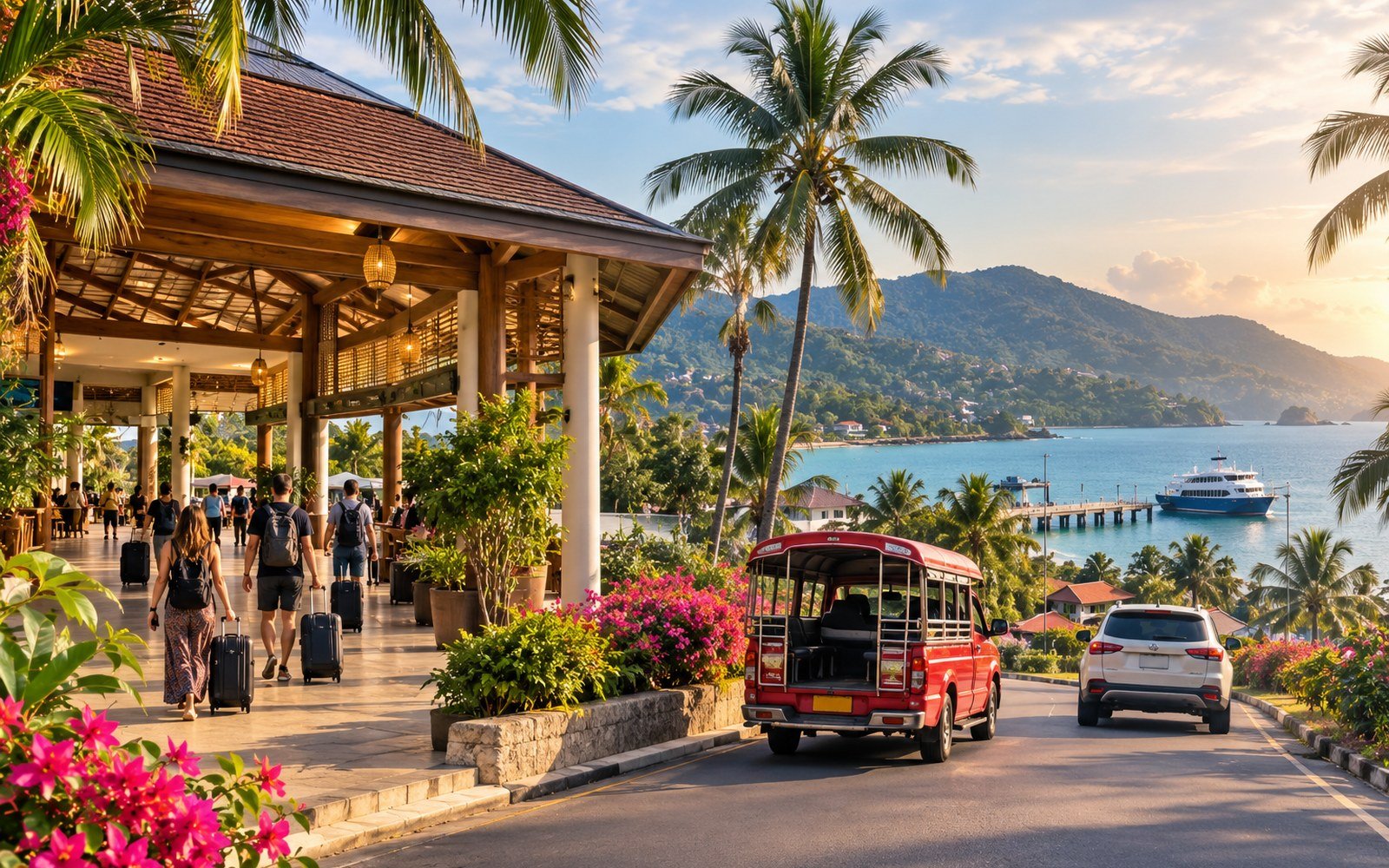
The shortlist below is ranked by the kind of trip each area creates. It does not rank one beach as universally better, because walkability, swimming conditions, nightlife and transfer cost pull in different directions.
| Area | Best for | Why it works | Main drawback | First-trip verdict |
|---|---|---|---|---|
| Bophut / Fisherman’s Village | Couples, families, evenings on foot | Restaurants, Friday market atmosphere, airport access and a contained centre | Beach quality varies by section; prices rise near the core | Best balanced first base |
| Chaweng | Beach choice, nightlife, shopping and first-time convenience | Largest concentration of rooms, food and activities | Traffic, noise and a highly developed atmosphere | Best for maximum choice |
| Chaweng Noi | Couples and families wanting beach access with less intensity | Close to Chaweng but generally calmer | Some hillside properties are not walkable to the sand | Strong east-coast compromise |
| Lamai | Independent travellers, value and a smaller lively town | Long beach, restaurants, spas and south-east access | Still spread out; exact beach section matters | Best relaxed all-rounder |
| Choeng Mon | Families, couples and calmer resort stays | Compact beach feel near airport and north-east sights | Less nightlife and fewer budget choices | Good easy-going base |
| Maenam | Quiet couples, families and longer stays | Lower-key beach, local food and north-coast position | More transport needed for major evenings and sights | Best quiet practical base |
| West / south coast | Sunsets, villas, honeymoons and true resort time | Space, scenery and less development | High taxi dependence and limited spontaneous dining | Choose only with a transport plan |
Map checks before booking
Zoom in until the route between the room, beach, main road and restaurants is visible. Recent reviews should be searched for hill, steps, construction, beach access, music, mosquitoes and taxi availability. “Five minutes from the beach” may mean a steep unlit lane rather than a flat walk.
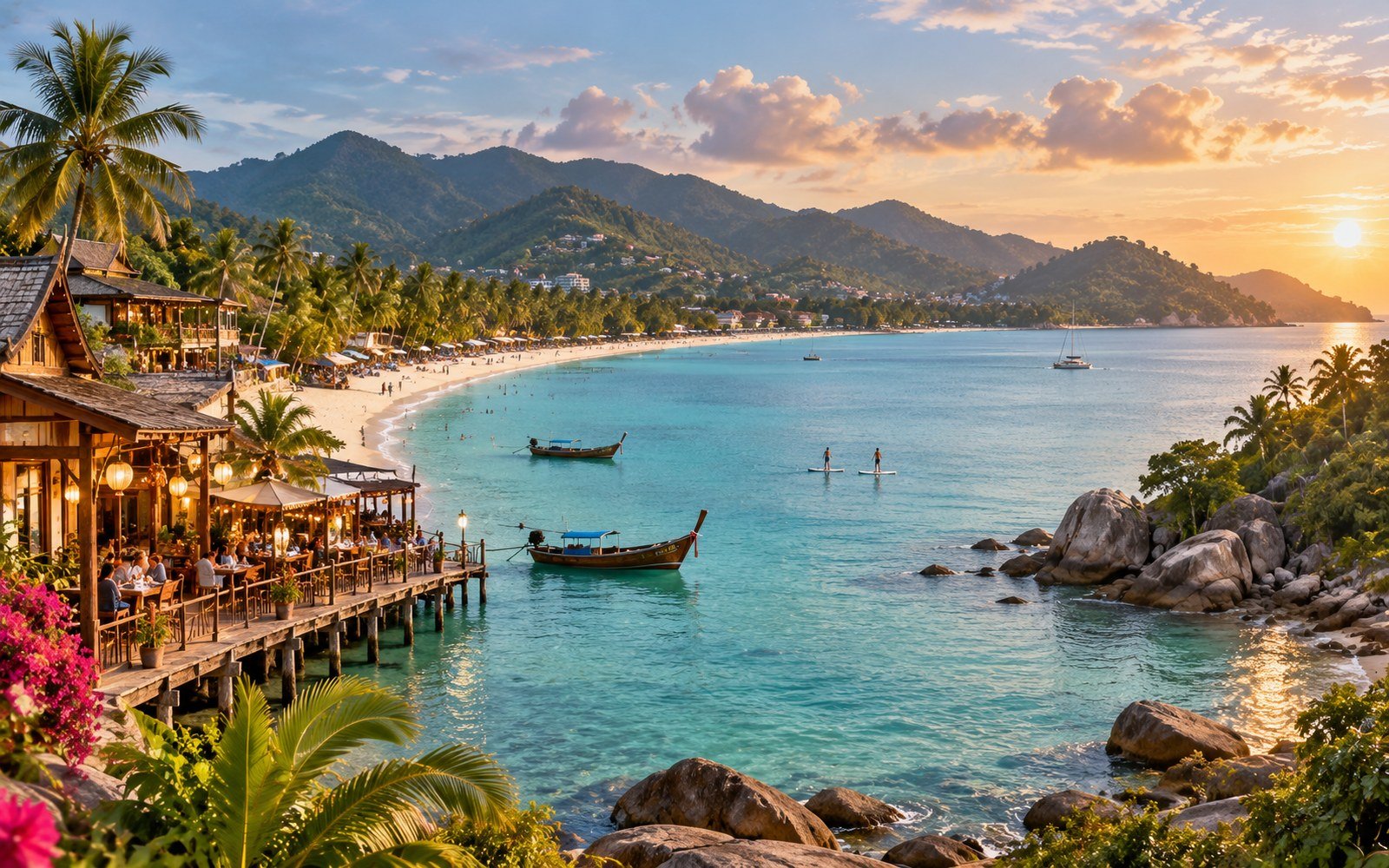
Songthaews
Red songthaews operate as informal shared taxis along common roads. They are useful for daylight trips between developed areas, although routes and fares are not controlled like a city bus network. Current local references suggest roughly THB 50-100 for many short shared journeys. [21] State the destination, confirm the per-person price and ask whether the vehicle is continuing along the ring road before boarding.
Taxis and ride-hailing
Taxis solve luggage, late evenings and awkward hotel access, but many journeys are negotiated or pre-priced rather than metered. Ride-hailing apps can help because the price appears before booking, yet availability and airport pickup rules vary. Screenshot the destination pin and keep the hotel’s contact number ready.
Car, driver or scooter
A rental car suits families and travellers staying outside walkable areas. A private driver is often the best solution for one sightseeing day because parking, navigation and the return after sunset are handled. Current advertised eight-hour private vehicle examples begin around THB 4,500, while smaller local arrangements vary. [20]
Current scooter examples commonly start near THB 250 a day and rise with engine size and insurance package. [19] The low fare does not remove the licensing and risk problem. GOV.UK lists Thailand under the 1968 international driving permit system; the traveller also needs the correct motorcycle entitlement and insurance cover. [14]
East coast: broadest choice
Chaweng delivers the longest menu of hotels, restaurants, bars and services. The beach changes character from north to south, so one review cannot describe the whole bay. Chaweng Noi is a useful alternative when the group wants the east-coast position without staying beside the busiest nightlife.
South-east: Lamai and nearby coves
Lamai remains developed but usually feels smaller and easier than Chaweng. It works for travellers who want a beach town rather than a resort compound, while nearby coves and headlands can create quieter hotel settings. Hin Ta and Hin Yai sit close enough to combine with a south-east day, though the rocks are a short stop rather than a reason to choose the base. TAT identifies Lamai and the granite formation among Samui’s well-known coast attractions. [1]
North and north-east: Bophut, Maenam and Choeng Mon
Bophut is chosen for the village evening rather than the island’s best swimming claim. Choeng Mon can work for calmer beach time near the airport, while Maenam offers a more local and lower-key north-coast stay. Beach depth and seabed change with tide and season, so ask the hotel about the exact section.
West and south: space, sunsets and transport dependence
Taling Ngam, Lipa Noi, Bang Por and southern stretches can feel far removed from Chaweng. This is a benefit when the holiday is built around a villa, spa or sunset. It becomes a frustration when every dinner requires a long return taxi. TAT highlights Taling Ngam among Samui’s notable beaches. [1]
Big Buddha and Wat Plai Laem
The north-east temple cluster works well in one morning. Wat Phra Yai’s Big Buddha is the recognisable landmark, while Wat Plai Laem adds colourful statues and a lakeside setting. These are active religious places. Cover shoulders and knees, remove footwear where requested, keep voices low and avoid posing in ways that turn sacred images into props.
Wat Khunaram and mummified monk
Wat Khunaram is culturally important but can feel confronting to some visitors. Treat the display as a religious site rather than a curiosity. A guide or careful reading creates more context than a quick photo stop.
Southern temples and communities
TAT also points to Wat Samret, Wat Lamai and Chedi Laem Sor as examples of the island’s local cultural roots. {r(1)} These places fit travellers who want more than the standard north-east loop. Combine one or two with a south-coast meal or beach, rather than racing between temples for a checklist.
Na Muang waterfalls
Na Muang is the best-known waterfall area. Water volume, access and swimming conditions change with the season, while wet rocks can become slippery. Ask locally which level is practical, wear shoes with grip and avoid treating a social-media viewpoint as an official path.
Secret Buddha Garden and mountain roads
The island interior can feel completely different from the beach strip. Gardens, coconut hills and viewpoints add variety, but approach roads may be steep, narrow or damaged after rain. A driver with an appropriate vehicle is a better choice than a first-ever scooter ride.
Build one coherent island loop
A sensible loop might combine one temple cluster, one waterfall or garden, a viewpoint, lunch and a final beach. Trying to include Big Buddha, every temple, both waterfalls, several viewpoints, Hin Ta Hin Yai and Fisherman’s Village in one day produces more vehicle time than experience.
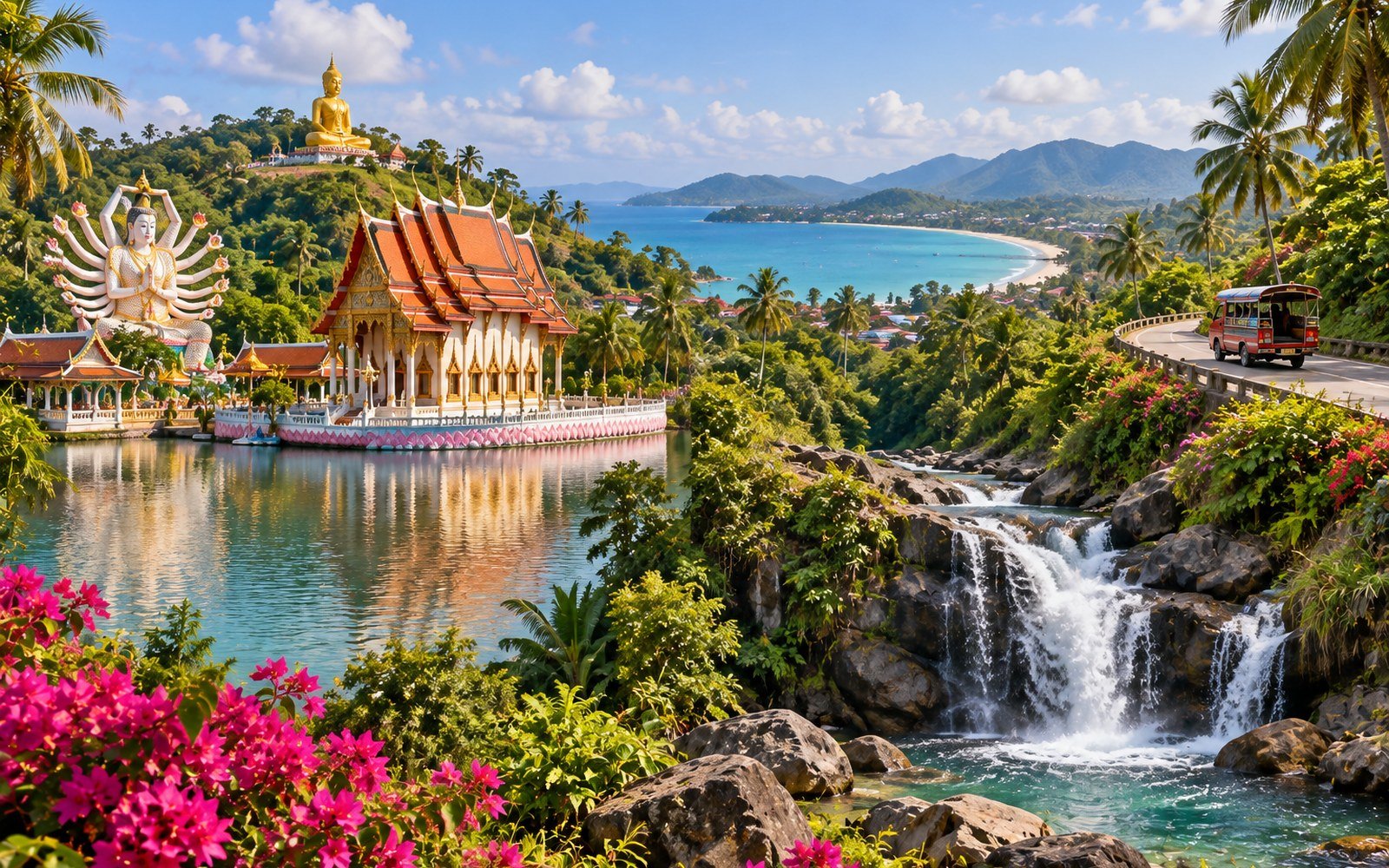
Why travellers choose it
Ang Thong offers limestone islands, viewpoints, coves and kayaking rather than a single postcard beach. The trip normally takes most of the day and involves a meaningful sea crossing. Some itineraries include a steep viewpoint or stairs, so the best product depends on mobility, heat tolerance and the boat.
What to compare before booking
- Speedboat, large boat or premium sailing vessel.
- Passenger count and shaded seating.
- Hotel pickup zone and pier.
- Kayak inclusion, snorkelling equipment and lunch.
- National-park fee treatment and child definition.
- Weather cancellation, refund and rescheduling terms.
A current speedboat listing reviewed in September 2026 identifies a THB 300 adult and THB 150 child park fee, while the Department of National Parks maintains the official fee and opening datasets. [11][12][17] Verify both immediately before travel because access and fees can change.
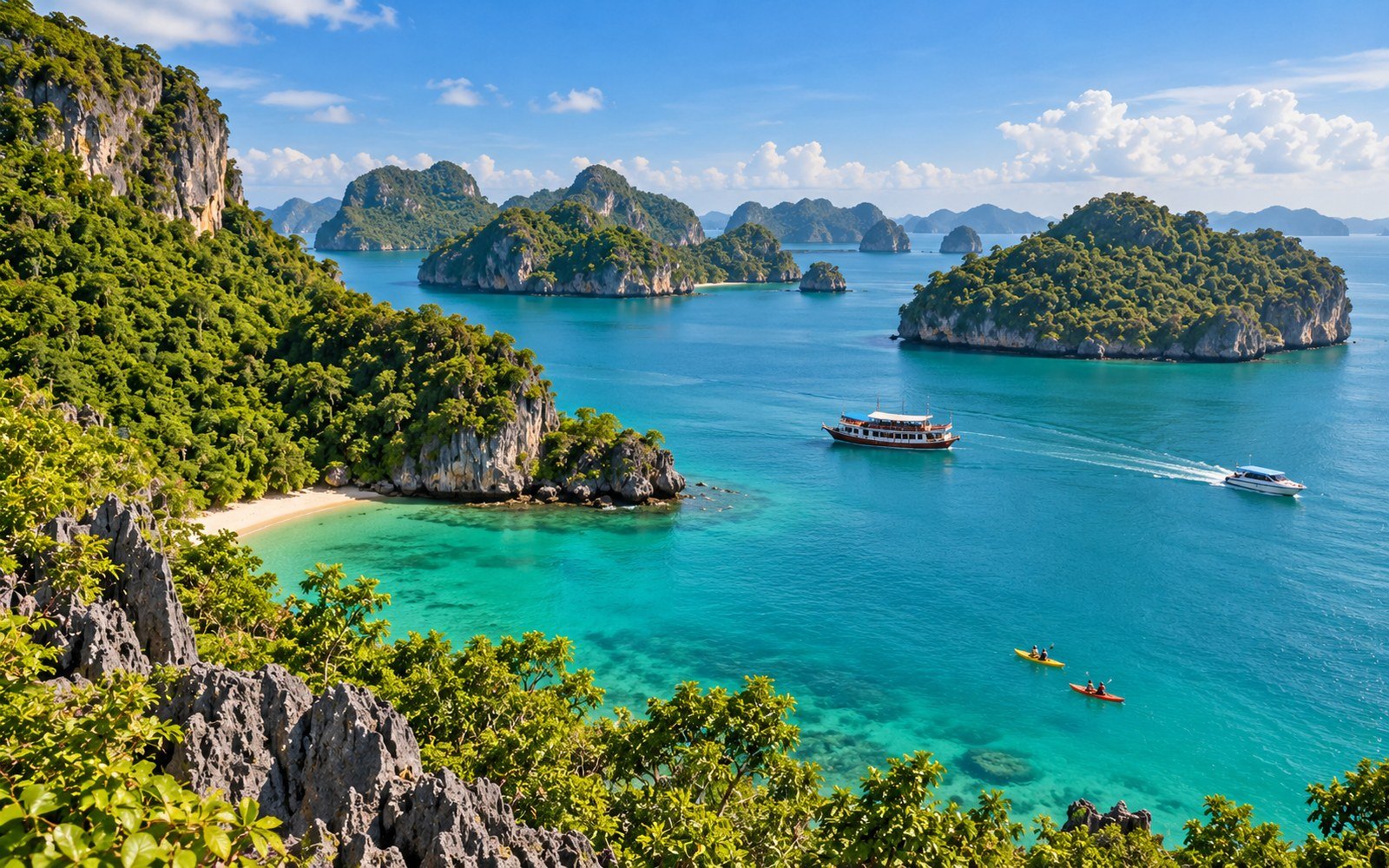
Koh Tao and Koh Nang Yuan
This is the stronger choice when snorkelling is the main goal and the group can manage a long speedboat day. Current shared examples start around THB 1,800 per adult before product-specific extras. [18] The crossing can be rough, so a traveller who becomes very seasick may enjoy a closer trip more.
Koh Phangan
Phangan is easier as a ferry add-on or overnight stay. A day trip can cover one beach or a private road loop, but it cannot explain the island’s different coasts and communities. Check Full Moon and other event dates even when parties are irrelevant, because boats and roads become busier.
Koh Tan and Pig Island
Near-Samui snorkelling and Pig Island trips are shorter and can suit families or travellers who do not want the Koh Tao crossing. Animal welfare and feeding practices should be considered, while the operator’s environmental rules matter more than a staged photograph.
Choose one major sea day
For a five-night stay, one full marine trip is enough. Two consecutive speedboat days can turn the holiday into early pickups, wet bags and repeated motion sickness. Use the second water day for a beach, paddleboard, resort kayak or short sunset cruise.
This itinerary is ranked for balance: arrival recovery first, one coherent island day, one flexible sea day and two lower-pressure beach or food days.
| Day | Morning | Afternoon | Evening |
|---|---|---|---|
| 1 | Arrive, transfer, check in and orientate locally | Beach or pool; identify pharmacy, ATM and pickup point | Simple dinner near the hotel |
| 2 | Big Buddha and Wat Plai Laem | Lunch, one viewpoint or Chaweng/Choeng Mon beach | Fisherman’s Village or relaxed local evening |
| 3 | Weather-selected Ang Thong or Koh Tao trip | Boat itinerary | Early meal and rest |
| 4 | Na Muang or inland garden with driver | Lamai, Hin Ta Hin Yai and south-east coast | Lamai dinner or sunset transfer |
| 5 | Free beach morning, spa or cooking class | Shopping, cafe or second beach | Final dinner with no long transfer |
Move Day 3, not the whole itinerary
Keep the marine trip on the best forecast day. If the sea is unsuitable, switch to the inland loop or a hotel day. Boat cancellation should change one day, not destroy a rigid week of prepaid reservations.
Seven-night version
Add one completely unplanned beach day and one optional second experience such as a cooking class, wellness day, sunset cruise or north-coast exploration. Families should keep the extra time unstructured rather than filling it with another early pickup.
Where evenings feel easiest
Fisherman’s Village provides a contained restaurant and walking area, while Chaweng offers the widest nightlife and dining range. Lamai has a smaller but still active scene. Remote west and south-coast resorts can deliver beautiful dinners, although leaving the property may require an expensive return vehicle.
What to eat
Mix resort dining with local Thai food, seafood, southern curries, grilled fish, noodle dishes and fresh fruit. Ask the price of seafood sold by weight before ordering. At markets, choose busy stalls, watch food handling and carry small notes.
Cooking classes and wellness
Samui has a mature wellness market and several cooking schools. Current group cooking-class examples commonly sit around THB 1,800-1,900 per person, while private formats can cost considerably more. Compare whether the course includes a market visit, transport, dietary accommodation, group size and the dishes prepared.
The ranges below are planning examples checked on 18 September 2026. They exclude international flights and assume two people can share a room where relevant.
| Cost area | Lean plan | Balanced plan | Comfort or resort plan |
|---|---|---|---|
| Hotel per room, per night | THB 900-1,800 | THB 2,000-5,000 | THB 6,000 and above |
| Food per person, per day | THB 500-900 | THB 1,000-2,000 | THB 2,500 and above |
| Local transport per person, per day | THB 100-350 | THB 400-1,000 | THB 1,200 and above |
| Activity day | Beach or self-guided sights | Shared boat trip around THB 1,500-2,500 | Premium cruise, private boat or driver |
| Practical daily total excluding hotel | THB 1,200-2,000 | THB 2,500-5,000 | THB 6,000 and above |
Where the budget disappears
Flights, taxis, beachfront room categories and alcohol create the largest swings. A low room rate inland can be poor value when every beach, dinner and pickup needs a private vehicle. Conversely, a more expensive central hotel can reduce transport enough to improve the total.
Five-night couple example
A balanced couple using a mid-range room, local and restaurant meals, airport transfers, one Ang Thong-style trip and one private-driver day might plan roughly THB 30,000-55,000 on the island before flights. A budget guesthouse and songthaew approach can be lower; luxury villas, private boats and premium dining can exceed the range quickly.
For a wider country budget method, use the site’s Thailand travel budget guide. [24]
Families
Prioritise a shallow or protected beach section, pool safety, family room wording, nearby food and a simple airport transfer. Choeng Mon, Bophut, Maenam and selected Chaweng or Lamai resorts are useful first checks. Ask for a child seat in writing and do not assume one will appear automatically.
Couples
Bophut works when dinners on foot matter, Chaweng Noi and Lamai offer beach convenience, and the west coast suits sunset-led resort stays. A split stay can work for a honeymoon, but only when the second hotel changes the setting rather than moving bags a few kilometres.
Solo travellers
Chaweng and Bophut provide the easiest social infrastructure. Classes, boat tours and wellness sessions create structured contact without requiring nightlife. Choose accommodation where the final walk is lit and straightforward.
Older travellers and limited mobility
Check steps between reception, room, pool and beach. Hillside villas can use buggies but still involve steep gradients. Speedboats, floating piers and Ang Thong viewpoint walks are not automatically accessible. Samui Airport publishes wheelchair assistance, but the airline and airport should be notified in advance. {r(6)}
Road risk is the main practical issue
Samui’s roads mix scooters, cars, taxis, trucks, tourists, rain and uneven shoulders. Wear a helmet, never ride after drinking, slow down before wet bends and avoid unfamiliar mountain roads after dark. FCDO travel advice should be checked for current health, weather, legal and insurance information. [13]
Sea and heat
Use life jackets supplied by the operator, follow red flags, protect shoulders and reapply sunscreen after swimming. Dehydration can build during boat days, temple stops and viewpoint climbs. A tour cancellation for wind or waves is a safety decision, not a failure of the holiday.
Emergency numbers
Save Tourist Police 1155, emergency medical services 1669 and police 191. [15][16] Keep the insurer’s emergency line, hotel address and current medication list offline. The airport also lists an information number and an on-site tourist assistance contact. [6]
Water, waste and reefs
Islands have finite waste and water systems. Refill water where safe, decline unnecessary single-use items, carry a reusable bag and keep rubbish until a proper bin is available. Do not stand on coral, chase wildlife or accept operators that anchor carelessly in sensitive areas.
Temples and communities
Dress respectfully beyond the resort boundary, keep drones away from people and sacred places, and ask before photographing individuals. Samui Airport states that drone operations within nine kilometres of the airport require prior approval, so the popular north-east of the island is not a casual launch zone. {r(7)}
Animal experiences
Do not choose an attraction solely because it offers close contact or a dramatic photo. Review handling, riding, bathing, feeding, enclosure and rescue claims carefully. Observation-led experiences usually create less pressure on animals than repeated visitor interaction.
Core island kit
- Light, breathable clothes and one proper temple outfit.
- Two sets of swimwear and a loose sun shirt.
- High-factor sunscreen, hat, sunglasses and insect repellent.
- Dry bag or waterproof pouch for ferries and boat trips.
- Secure sandals or shoes with grip for wet paths and viewpoints.
- Light rain layer, reusable bottle and personal medication.
Pack for one laundry cycle rather than every day. Keep medication, documents, batteries and one change of clothes in hand luggage. The site’s full Thailand packing list covers flights, ferries, temples and monsoon travel in detail. [23]
Mobile data
Data helps with maps, driver messages, marine forecasts and hotel contact. A travel eSIM can be installed before departure, while a local SIM may offer more data for longer stays. Check phone compatibility and whether tethering is allowed.
Booking order
- Choose the month and confirm Samui’s Gulf weather case.
- Compare direct flight against the full mainland-and-ferry chain.
- Select the area before the hotel.
- Book a refundable room when the price difference is sensible.
- Reserve only the major activity that can sell out or solve transport.
- Leave ordinary beach days, meals and most local transport flexible.
Avoid duplicate bookings
Airport transfer may already be included by the hotel. A boat tour may include pickup, lunch, snorkel gear and the park fee, or none of them. A private driver is not automatically a licensed guide. Read inclusions line by line before adding another product.
Pros
- Own airport and broad hotel choice.
- Works for families, couples, solo travellers and wellness trips.
- Several distinct beach areas.
- Good mix of temples, waterfalls, food and sea trips.
- Useful Gulf option during parts of the European summer.
- Enough infrastructure for poor-weather alternatives.
Cons
- Flights and taxis can be expensive.
- Development and traffic reduce the remote-island feel.
- Wrong hotel area creates repeated transport costs.
- Scooter risk is often underestimated.
- Late-year rain can disrupt beach and boat plans.
- Premium resorts can push the daily budget sharply upward.
Who should choose another island?
Choose Koh Tao when diving is the central purpose, Koh Phangan when a longer wellness or social stay matters, Koh Lanta for a slower Andaman family or couple trip, or a smaller island when limited services are part of the appeal rather than a problem.
- Choosing a hotel from the room photograph without checking the beach, road and hill.
- Assuming Samui has the same wet season as Phuket.
- Comparing flight and ferry ticket prices without adding every transfer.
- Renting a scooter without the correct licence, insurance or experience.
- Booking two long boat days back to back.
- Building a full sightseeing day immediately after a late arrival.
- Expecting all taxis to use a meter or every songthaew to follow a timetable.
- Using a remote villa without budgeting for dinner and shopping transport.
- Ignoring tide, wind and the exact section of a beach.
- Leaving the ferry-to-flight connection with no recovery margin.
How many days do you need in Koh Samui?
Five to seven nights is the strongest first-trip range. Four nights can cover one beach base, one island loop and one boat day, while a week gives weather flexibility and time to rest. Three nights works only when Samui is a short add-on and the arrival and departure times are useful.
Which is the best area to stay in Koh Samui?
Bophut is the easiest balanced first base for many couples and families because restaurants and evening walks are concentrated around Fisherman’s Village. Choose Chaweng for the broadest beach and nightlife choice, Lamai for a smaller lively base, Choeng Mon for a calmer north-east stay, and Maenam or the west coast for quieter resort time.
What is the best month to visit Koh Samui?
There is no guaranteed perfect month, but February to September is often the first planning window. April to August can suit travellers seeking a Gulf island during the Andaman wet season. October and November are usually the highest-risk months for prolonged rain, rougher seas and disrupted boat plans.
Is Koh Samui expensive?
Samui is usually more expensive than mainland Thailand because flights, taxis and resort areas carry island pricing. A lean independent day excluding accommodation can be about THB 1,200-2,000, a balanced day about THB 2,500-5,000, and a resort-led or private-driver day considerably more.
Is it better to fly or take the ferry to Koh Samui?
Fly when time, comfort and a simple arrival matter. Use a mainland bus, train or flight plus ferry when the fare saving is meaningful and the extra transfer day fits the route. Compare door-to-door time rather than the flight or ferry segment alone.
Can you get around Koh Samui without a scooter?
Yes. Stay in a walkable area, use songthaews for common daytime routes, book app-based or negotiated taxis for specific trips, and hire a driver for an island sightseeing day. The plan costs more than a scooter but is usually safer for inexperienced riders.
Do Grab and Bolt work on Koh Samui?
Ride-hailing availability exists but can vary by area and time. The airport also has its own transport arrangements, so do not rely on an app as the only arrival plan. Check the live app after landing and keep the hotel transfer or official airport counter as backup.
How much does a songthaew cost on Koh Samui?
Current local planning references suggest roughly THB 50-100 per person for many short shared trips on common routes, although there is no universal island-wide fare table. State the destination and agree the price before boarding, especially after dark or with luggage.
Is it safe to rent a scooter in Koh Samui?
Only rent when you hold the correct motorcycle entitlement, the required international driving permit, suitable insurance and genuine riding experience. Wear a proper helmet, avoid alcohol, inspect the scooter, photograph existing damage and skip steep or wet roads when conditions are poor.
Which beach is best for swimming?
Chaweng, Chaweng Noi, Lamai and Choeng Mon are common first checks, but swimming conditions vary by season, tide, wind and the exact beach section. Ask the hotel about current depth, rocks, currents and construction rather than choosing from an island-wide label.
Is Ang Thong Marine Park worth visiting?
Yes for limestone scenery, viewpoints, kayaking and a full sea day, provided the weather and mobility demands fit. Compare boat type, group size, park-fee inclusion, pickup zone and the steepness of viewpoint walks before booking.
Can you visit Koh Phangan or Koh Tao from Koh Samui?
Yes. Koh Phangan is the easier ferry add-on, while Koh Tao and Koh Nang Yuan create a longer and more sea-dependent day. For a relaxed holiday, staying overnight is usually better than collecting islands as exhausting day trips.
Is Koh Samui suitable for families?
Yes. Choeng Mon, Bophut, Maenam and selected Chaweng or Lamai resorts can work well when beach conditions, pool safety, room layout and nearby food are checked. Families should minimise late transfers and avoid assuming child seats are automatically available.
Is Koh Samui good for solo travellers?
It can be. Chaweng and Bophut offer the easiest social and evening infrastructure, while organised boat trips and classes create low-pressure ways to meet people. Solo travellers should plan late-night transport and avoid isolated accommodation that requires a scooter.
Do you need cash in Koh Samui?
Keep some cash for markets, small food stalls, songthaews, tips and occasional attraction or parking fees. Hotels, larger restaurants and tour desks often accept cards, but payment surcharges and minimum spends vary.
What should you pack for Koh Samui?
Pack light clothing, temple-covering clothes, two sets of swimwear, high-factor sun protection, insect repellent, a dry bag or waterproof pouch, secure sandals, a refillable bottle and a light rain layer. Add motion-sickness preparation when speedboats are planned.
Does Koh Samui have a rainy season?
Yes. Samui’s lower-Gulf pattern differs from Phuket and Krabi. The wettest risk often builds later in the year, especially around October and November, while showers can occur in any month. Check the marine forecast as well as the rain icon before boat trips.
What emergency numbers should travellers save?
Thailand’s Tourist Police number is 1155, emergency medical services are reached on 1669, and general police are reached on 191. Save insurer, hotel and transport contacts offline as well as in the phone.
For a first visit, I would book six nights in Bophut, Chaweng Noi, Choeng Mon or Lamai according to the preferred evening atmosphere. I would fly when the holiday is short, arrange the airport transfer before landing and leave the first afternoon local.
One day would combine Big Buddha, Wat Plai Laem and a nearby beach. A second would use a licensed driver for Na Muang, one inland stop and Lamai. Ang Thong would stay flexible for the best marine forecast, while the remaining time would be beach, food and rest rather than another dawn pickup.
That plan does not attempt to prove that every corner of Samui has been seen. Instead, it uses the island’s real strength: enough variety to create a complete holiday without moving hotels or catching another ferry every two days.
The guide was researched from official tourism, airport, ferry, weather, national-park, government and emergency-service information, then cross-checked against dated commercial listings where official public fares were not available. Prices are planning ranges checked on 18 September 2026, not guarantees. Operators, tides, weather, opening arrangements and hotel rates remain the final authority for the travel date.
- Tourism Authority of Thailand – Ko Samui destination overview
- Tourism Authority of Thailand – Ko Samui province and destination information
- Tourism Authority of Thailand – Surat Thani destination information
- Thai Meteorological Department – 1991-2020 Digital Climate Atlas of Thailand
- Samui International Airport – Local public transport from Samui Airport
- Samui International Airport – Passenger service centre and assistance information
- Samui International Airport – Drone permission within the airport safety area
- Seatran Ferry – Donsak-Nathon ferry schedule and passenger fare
- Raja Ferry Port – Donsak-Samui route information
- Lomprayah – Published Gulf of Thailand timetable 2026
- Department of National Parks – National park opening and closure dataset
- Department of National Parks – National park entrance-fee dataset
- GOV.UK – Thailand foreign travel advice
- GOV.UK – International driving permit requirements
- Tourist Police Bureau – Tourist Police contact information
- National Institute for Emergency Medicine – Emergency medical number 1669
- GetYourGuide – Ang Thong speedboat product details and current park-fee example
- Tour in Koh Samui – Current Koh Tao and Koh Nang Yuan day-trip planning example
- Samui Scooter Rental – Current scooter rental price examples
- Trip Thai Tour – Current private car and van planning example
- Inside Samui – Current songthaew fare planning ranges
- Taylor’s Trailblazing Travels – Best time to visit Thailand
- Taylor’s Trailblazing Travels – Thailand packing list
- Taylor’s Trailblazing Travels – Thailand travel budget
- Taylor’s Trailblazing Travels – Thailand islands guide
- Taylor’s Trailblazing Travels – Thailand transport guide
Commercial source examples are used to establish a dated planning range, not to claim that one operator is always the cheapest or best.
Illustrations in this article were created for Taylor’s Trailblazing Travels. Third-party photographs, where used, are credited beside the image or in the source list.