Northern Thailand 7-Day Itinerary
A realistic first route through Chiang Mai and Chiang Rai, with mountain days, temple art and one clean intercity transfer.
A Northern Thailand 7-day itinerary becomes much easier once the route stops trying to include Chiang Mai, Chiang Rai, Pai, Sukhothai and every mountain in between. Seven days are enough for a rewarding first visit, but only when the plan uses two proper bases and treats road time as part of the schedule.
This itinerary gives four nights to Chiang Mai and three nights to Chiang Rai. It combines the Old City, Doi Inthanon, Doi Suthep, Chiang Rai’s major temple-art sites and a separate Golden Triangle day. The route was selected by comparing transfer efficiency, overnight value, attraction spread, seasonal flexibility and the amount of meaningful time left after each journey. It was not ranked by affiliate commission.
The strongest version assumes seven hotel nights and departure on the morning after Day 7. Travellers with only six nights can still use it, although the final northern-road day must be shortened or removed.
Chiang Mai + Chiang Rai
Four nights followed by three nights gives two distinct places enough time to feel worthwhile.
Doi Inthanon
Waterfalls, cloud forest and high-altitude weather provide the strongest nature contrast.
Morning GreenBus
Published daily departures make the intercity leg predictable without hiring a private car.
Depart from Chiang Rai
An open-jaw route avoids spending the final useful hours returning to Chiang Mai.
Seven days can cover Northern Thailand well when the trip is treated as one coherent route rather than a collection of famous names. Chiang Mai and Chiang Rai form the cleanest first-time pair because each offers a different type of experience and they are connected by frequent scheduled coaches. The site’s wider regional guide reaches the same practical conclusion: Chiang Mai is the easiest anchor, while Chiang Rai is the most straightforward contrasting second base.
Why Pai is not in the main seven-day route
Pai is worthwhile when the winding mountain road, slower cafés and valley atmosphere are central to the trip. However, adding it to Chiang Mai and Chiang Rai creates either three hotel changes or a long Pai–Chiang Rai transfer through Chiang Mai. In a single week, that usually converts a sightseeing day into luggage, bends and terminal waiting. A Chiang Mai–Pai version appears later as an alternative rather than being forced into the main plan.
How this itinerary was compared
The route was judged against five criteria: useful time at each destination, hotel-to-hotel transport, variety between days, resilience to weather or air-quality changes, and how easily a first-time traveller can book each stage. Commission was not part of the ranking. Where costs or schedules are stated, they are planning examples checked on 18 September 2026 and should be reconfirmed for the exact date.
The timetable below assumes arrival in Chiang Mai on Day 1 and departure from Chiang Rai on the morning after Day 7. Swap Days 3 and 4 when the mountain forecast makes Doi Inthanon more attractive on the other day.
| Day | Main plan | Typical time block | Why it works | Sleep |
|---|---|---|---|---|
| 1 | Arrive, check in and stay close to the hotel | Arrival dependent | No timed booking is attached to a delayed flight or train | Chiang Mai |
| 2 | Old City temples, northern food and the correct evening market | 08:00–21:00 | Major heritage sights remain in one walkable cluster | Chiang Mai |
| 3 | Doi Inthanon full-day trip | 07:00–18:30 | The longest excursion has its own day | Chiang Mai |
| 4 | Doi Suthep, optional Wat Pha Lat and Nimman | 07:30–18:00 | A lighter western-city day follows the mountain journey | Chiang Mai |
| 5 | Morning coach to Chiang Rai, central evening | 08:00–20:30 | One clear transfer still leaves a useful afternoon | Chiang Rai |
| 6 | White Temple, Baan Dam, Blue Temple and Wat Huay Pla Kang | 07:45–18:00 | A driver or tour connects the spread-out temple-art sites | Chiang Rai |
| 7 | Hall of Opium, Chiang Saen and Golden Triangle | 08:00–18:00 | The long northern road day is separate from the temple circuit | Chiang Rai |
Seven hotel nights give this plan its proper shape. With six nights, leave Chiang Rai late on Day 7 or remove the Golden Triangle day and depart earlier.
The route in one sentence
Begin with Chiang Mai’s walkable history and nearby mountains, travel once by coach, then finish with Chiang Rai’s contemporary temple art and a separate Mekong-border history day.
Decide whether you have seven days or seven nights
A flight landing at 18:30 does not create a full first day, and a 09:00 departure on Day 7 removes the final day entirely. The recommended version uses seven nights: four in Chiang Mai and three in Chiang Rai, followed by a Day 8 departure. When the booking only permits six nights, protect Days 1–6 and shorten Day 7 rather than rushing every earlier day.
Use an open-jaw arrival and departure where possible
Flying or travelling into Chiang Mai and leaving from Chiang Rai avoids a final backtrack. Even when the onward flight connects through Bangkok, departing Chiang Rai can preserve most of a day. Compare the total fare, baggage and connection time rather than assuming two separate airports must cost more.
Place markets and museum closures on the calendar
Chiang Mai’s major walking streets are tied to Saturday and Sunday, while the Hall of Opium is generally reported closed on Mondays. Move evenings and Day 7 accordingly. The museum is operated by the Mae Fah Luang Foundation, whose current contact information should be used when the visit is a priority. [8]
Keep one weather-sensitive day movable
Doi Inthanon is the obvious movable day. Low cloud, intense rain or poor air quality can make a cooking class, city museum or slower neighbourhood day more valuable. Book with cancellation terms that support a sensible decision instead of forcing a mountain trip because it is non-refundable.
Compare Bangkok to Chiang Mai by door-to-door time
Flights, sleeper trains and buses solve different problems. Check the exact airport or station, baggage, arrival hour and cancellation terms before choosing the cheapest headline.
Arrival transport and hotel check-in
On arrival, save the hotel name in Thai, confirm the correct pickup point and treat the first transfer as part of the day. Chiang Mai Airport, the railway station and the long-distance bus terminals sit in different parts of the city. A hotel on the Old City edge or around Tha Phae normally makes the first four days simpler than a remote resort.
A first afternoon that survives delay
After check-in, choose a short loop near the accommodation. Walk to a moat gate, temple courtyard, café or local market; identify a pharmacy, breakfast option and the meeting point for the next morning. The purpose is orientation rather than proving that Day 1 was productive.
First-night food
Try one northern dish close to the hotel. Khao soi is an easy starting point, while sai ua sausage, nam prik ong, gaeng hung lay and grilled dishes broaden the picture. Ask about spice and allergens, carry small notes and avoid crossing the city for a reservation that becomes stressful after a delayed arrival.
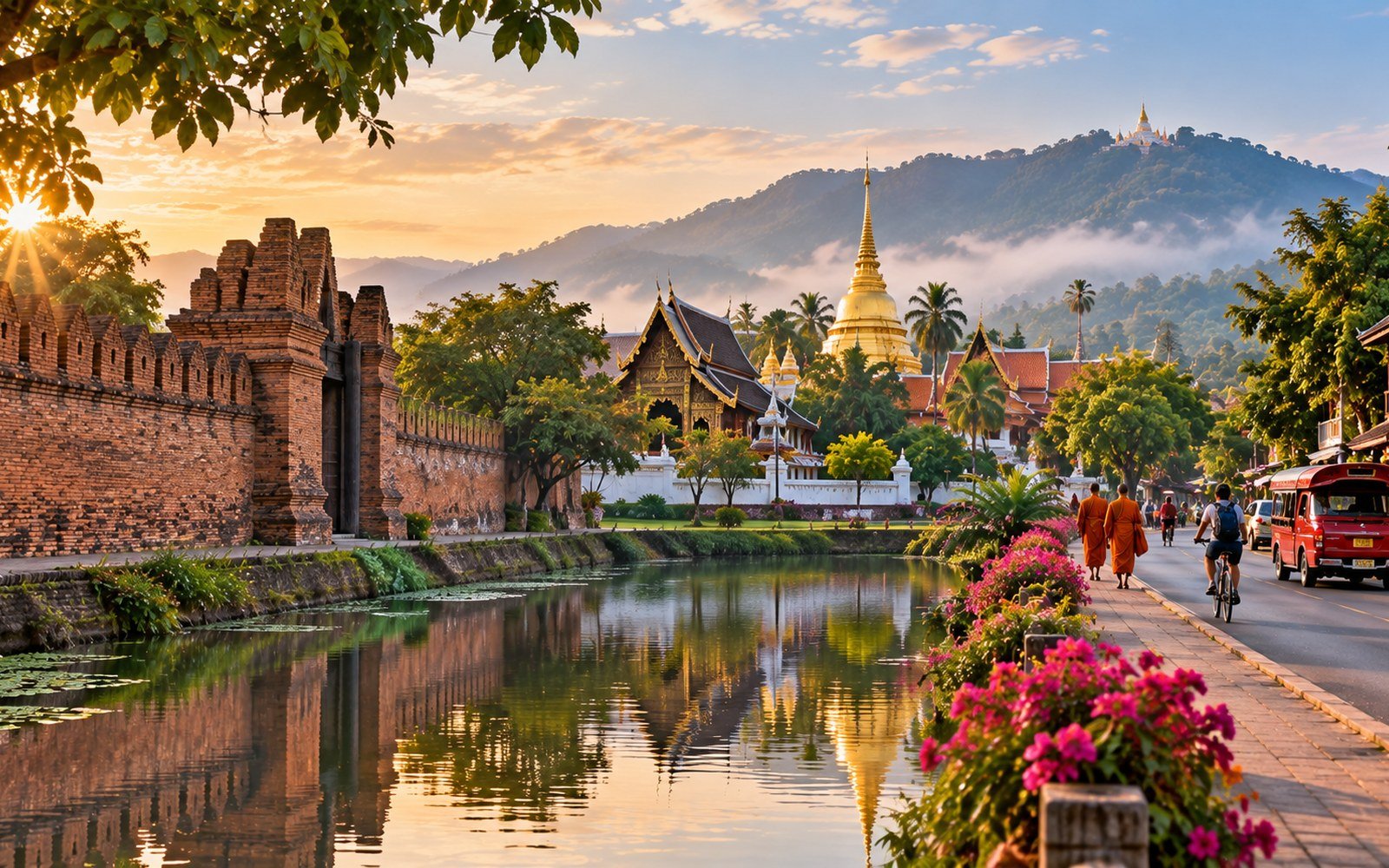
Start early and keep the route inside the historic centre. Tourism Authority of Thailand material identifies Wat Phra Singh and the moat-area attractions as central Chiang Mai experiences, while Wat Phra Singh’s official tourism listing gives daily opening around 06:00–18:00. [1]
08:00–09:30: Wat Phra Singh
Begin on the western side of the Old City. Allow time for the architecture, murals and active worship rather than treating the temple as a quick photograph. Shoulders and knees should be covered, shoes removed where requested and voices kept low. Carry cash because individual buildings or visitor arrangements can change.
09:45–11:15: Wat Chedi Luang
Walk east to the ruined chedi and surrounding monastery. The contrast with Wat Phra Singh explains more about the city than adding several similar stops. Check the current admission sign at the entrance instead of relying on an old price found online.
11:30–15:00: lunch and a real heat break
Choose lunch within the Old City, then rest. This is the sensible place for a hotel break, massage or air-conditioned museum. Adding a distant viral café at midday usually increases transport without improving the day.
15:00–17:00: one optional third stop
Wat Chiang Man, a small museum, craft shopping or a simple café all fit. The third attraction is optional. A good itinerary leaves enough attention for the evening rather than using every hour before sunset.
Evening: match the market to the weekday
| Day | Best fit | Practical approach |
|---|---|---|
| Saturday | Wua Lai walking street | Arrive before the densest period and agree a pickup point beyond the road closure |
| Sunday | Tha Phae and Ratchadamnoen walking street | Start at one end and accept that covering every stall is neither possible nor necessary |
| Monday–Friday | Night Bazaar or neighbourhood dinner | Choose the closest useful evening rather than pretending a weekday market is the Sunday event |
Doi Inthanon reaches 2,565 metres and has a much cooler, wetter microclimate than Chiang Mai city. Tourism Authority of Thailand lists the park as open around 05:00–18:00 and currently shows foreign admission of 300 baht for adults, 150 baht for children and 30 baht for a car. [3] These figures were checked on 18 September 2026; tour inclusions and separate pagoda or trail charges still need confirmation.
07:00–09:00: leave early
A shared trip normally begins with hotel collection and a long south-west drive. A private driver can leave earlier, although the price rises. Bring breakfast or check whether the operator includes a stop, because mountain days become unpleasant when the group is hungry before reaching the park.
Morning: summit area, cloud forest and seasonal trail
The summit and Ang Ka boardwalk are short stops but the temperature difference can be significant. Kew Mae Pan has seasonal closure arrangements and a compulsory local guide when open. Never assume a tour title guarantees that trail; compare the exact route and walking level.
Midday: twin pagodas and lunch
The pagoda gardens are one of the visual highlights, yet cloud can remove the long view. Treat the gardens and mountain setting as the experience rather than demanding a guaranteed panorama. Confirm whether the separate entry and lunch are included in the advertised tour price.
Afternoon: waterfall and return
Wachirathan or another waterfall often appears in day-trip routes. Wet paving and spray make shoes with grip more useful than fashion sandals. Expect the return to Chiang Mai in the early evening and keep dinner close to the hotel.
| Method | Planning price | Best for | Check before booking |
|---|---|---|---|
| Shared day tour | About 1,200–2,800 THB per person | Solo travellers and easy logistics | Park fees, pagoda fee, lunch, walking and pickup area |
| Private car and driver | Often 3,500–7,000+ THB per vehicle | Families, mobility needs and flexible stops | Vehicle hours, overtime, admission, route and child seats |
| Self-drive car | Rental, fuel, park and vehicle fees | Experienced, correctly licensed drivers | 1968 IDP where applicable, insurance, fog, rain and mountain descents |
Check the actual Doi Inthanon itinerary
Compare pickup zone, entrance fees, lunch, walking distance and cancellation terms. The lowest headline can become expensive when major charges are excluded.

Day 4 is deliberately lighter after Doi Inthanon. Wat Phra That Doi Suthep is about 11 kilometres from central Chiang Mai and remains an active religious site rather than only a viewpoint. TAT currently lists foreign admission at 30 baht and the electric tram at 50 baht for foreigners, with the tram around 06:00–18:00. [2]
07:30–10:30: Wat Phra That Doi Suthep
Go early for cooler air and lighter road traffic. Allow time for the staircase or tram, temple complex and viewpoint. Cloud can hide the city, so make the temple the purpose and the view a bonus. Dress as carefully as in the Old City even when the mountain air feels cooler.
Optional: Wat Pha Lat
The forest temple can be added by road or, for suitably prepared walkers, via the Monk’s Trail. The trail is not a casual city pavement. Heat, rain, footwear, daylight and route confidence matter. A private songthaew or driver is often the simplest way to combine both temples without leaving the return journey uncertain.
12:00 onwards: Nimman, university side or hotel rest
Eat and slow down around Nimman or the university neighbourhoods. Contemporary cafés, galleries and modern dining create a useful contrast with the Old City. This is also the time for laundry, repacking and confirming the next morning’s coach terminal.
- Early Doi Suthep before crowds and heat.
- One optional forest stop, not five roadside additions.
- Free afternoon for food, rest and transfer preparation.
- Combining Doi Suthep, Doi Inthanon and a cooking class in one day.
- Renting a scooter as a first mountain-road lesson.
- Leaving luggage and ticket checks until departure morning.
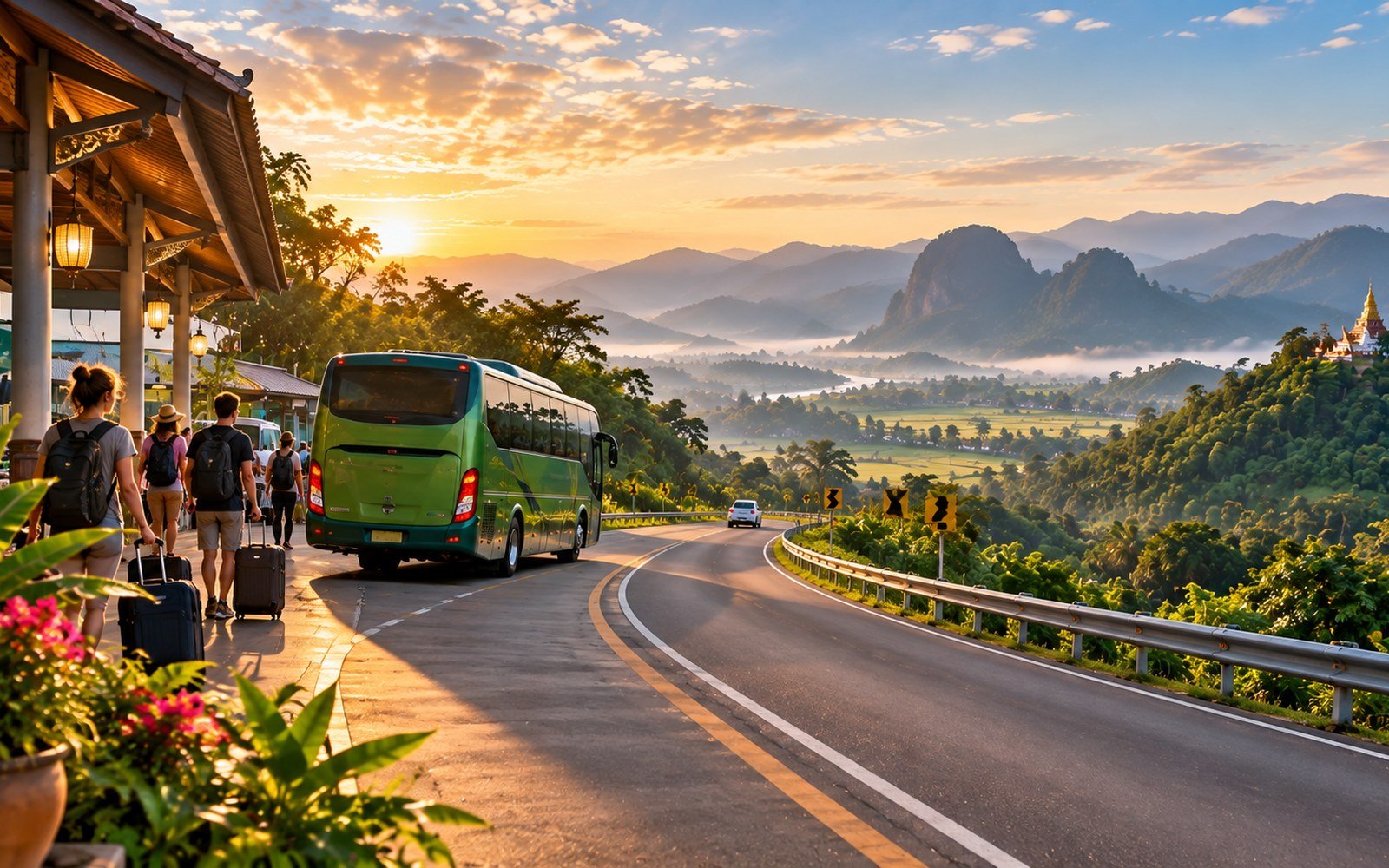
GreenBus’s official timetable, marked latest update 15 August 2026, lists multiple daily Chiang Mai–Chiang Rai departures from morning into early evening. [4] Current 12Go examples checked on 18 September 2026 showed coach journeys around 3 hours 10 minutes to 3 hours 45 minutes, with ordinary prices broadly around 270–450 baht depending on class and arrival terminal. [5]
Recommended timing
Choose a departure around 08:45 or 09:30 when it suits the live timetable. That leaves time for breakfast and a calm checkout while still reaching Chiang Rai around lunch or early afternoon. Verify whether the ticket arrives at central Bus Terminal 1 or the more distant Terminal 2.
Hotel-to-hotel reality
Add the ride to Chiang Mai Bus Terminal 3, check-in, luggage loading, possible traffic or roadworks, arrival collection and the final trip to the Chiang Rai hotel. A scheduled three-and-a-half-hour coach can occupy five or six useful hours door to door.
Afternoon and evening in Chiang Rai
After check-in, keep the plan central: Clock Tower area, Wat Phra Kaew, a café, massage or Night Bazaar. Do not add the White Temple on the way unless a private transfer has been booked specifically for that stop and luggage security is clear.
Compare the exact Chiang Mai–Chiang Rai service
Check departure terminal, arrival terminal, class, luggage, cancellation and the issued operator. The official timetable is the schedule reference; the booking page shows live inventory for the chosen date.
Chiang Rai’s major contemporary temple and art sites are spread north and south of the centre. The day therefore works best with a driver or well-designed tour. TAT identifies Wat Rong Khun, Wat Rong Suea Ten, Wat Huay Pla Kang and Baan Dam among the province’s headline attractions. [6]
08:00–09:45: Wat Rong Khun, the White Temple
Start south of the city near opening. The foreign-visitor price increased to 200 baht from 1 January 2026, according to the announced change reported by Khaosod English. [7] Check the current ticket and photography rules at the gate, dress respectfully and allow time for the full complex rather than only the bridge.
10:30–12:00: Baan Dam Museum
Travel north to Baan Dam. Current 2026 local-operator cross-checks commonly place admission around 80 baht and opening around 09:00–17:00, but confirm the live sign. The site is a large art environment rather than a single black building, so allow about an hour.
13:00–14:15: Blue Temple
After lunch, Wat Rong Suea Ten gives a vivid blue-and-gold contrast. Admission is generally free, although donations support the site. Remember that it remains a working temple; photography does not override worship or dress etiquette.
15:00–17:00: Wat Huay Pla Kang
Finish with the large Guan Yin figure and temple complex north of the centre. The grounds are generally free, while a small lift charge may apply inside the statue. Visibility from the upper level depends on weather and haze, so do not treat the view as guaranteed.
Compare starting point and inclusions
Confirm that the tour starts in Chiang Rai rather than Chiang Mai. The same attraction list can mean a manageable local day or a very long return journey.

Day 7 heads north towards Chiang Saen and Sop Ruak. It is a long road day and should not be attached to the temple circuit. The Hall of Opium is operated by the Mae Fah Luang Foundation, which publishes direct contact details for the museum. [8] Current 2026 visitor information generally lists Tuesday–Sunday operation around 08:00–16:00 and foreign admission around 200 baht. [9] Confirm before travel, especially on Mondays and holidays.
08:00: leave Chiang Rai
Use a private driver or organised group. Public transport can reach Chiang Saen, but it rarely creates a simple door-to-door museum and viewpoint day within a short itinerary. Agree the route, stops, return time and whether the price is per person or vehicle.
09:30–12:00: Hall of Opium
This is the substantial museum, not the smaller House of Opium. Allow at least two hours if the history and development context matter. A rushed thirty-minute stop removes most of the reason to go.
12:30–14:00: Chiang Saen lunch and historic context
Use Chiang Saen for lunch and a brief look at the old town or riverside. Avoid filling the schedule with distant hilltop stops simply because the car is already north; the museum and road time make this a full day.
14:15–15:30: Golden Triangle viewpoint
The riverside viewpoint at Sop Ruak looks towards Laos and Myanmar across the Mekong and Ruak river area. Boat rides are optional and depend on weather, operator, immigration arrangements and the exact route. Do not assume an informal boat outing is covered by travel insurance or that it crosses a border.
17:00–18:30: return and final evening
Return to Chiang Rai for a simple meal and packing. The best final night is central, because an early airport transfer or onward coach is easier from the city than from a remote resort.
The itinerary uses three transport layers: arrival into Chiang Mai, local day travel and one intercity coach. Comparing them by total time and friction is more useful than choosing one method for the entire week.
| Journey | Best default | Planning time | Best for | Main check |
|---|---|---|---|---|
| Bangkok–Chiang Mai | Flight or overnight train | 4.5–6 hours door to door by air; overnight by rail | Protecting a short trip or making the journey part of it | Airport/station, baggage, berth and arrival hour |
| Chiang Mai city days | Walking, songthaew, ride app | Short trips | Flexible local movement | Fare, pickup point and return availability |
| Doi Inthanon | Shared tour or private driver | 10–12 hours | Mountain stops spread along one road | Fees, lunch, trail, group size and weather |
| Chiang Mai–Chiang Rai | GreenBus | About 5–6 hours hotel to hotel | Budget and reliable scheduled travel | Terminal, class, luggage and arrival point |
| Chiang Rai day circuits | Driver or organised tour | 8–10 hours | Spread-out sites with minimal backtracking | Stops, waiting, admission and vehicle price |
When a private transfer is worth it
A private Chiang Mai–Chiang Rai car adds value for three or four travellers, several cases, mobility needs or a planned stop. It is not automatically faster after hotel pickup, breaks and traffic are included. Get a written route and confirm whether the vehicle waits at attractions or only travels between hotels.
Driving yourself
Self-drive works only when the licence, 1968 International Driving Permit where applicable, rental contract and insurance genuinely cover the vehicle. GOV.UK’s current country table lists the 1968 IDP for Thailand. [14] Mountain weather, night driving and fatigue matter more than the apparent quality of the road.
Chiang Mai: Old City edge or Tha Phae
For this route, stay near the Old City, Tha Phae or the east moat. The location supports Day 2 walking, common day-tour pickups and a straightforward taxi to Bus Terminal 3. Nimman is also good for food and modern hotels, although it adds rides to the historic core.
Chiang Rai: Clock Tower and Bus Terminal 1 area
A central hotel is the practical choice for three nights. It supports the arrival evening, Night Bazaar, restaurants and airport or tour pickup. Riverside hotels suit couples and resort time, but a low room price outside town can be offset by daily cars.
| Base | Best area | Advantages | Trade-off |
|---|---|---|---|
| Chiang Mai | Old City edge / Tha Phae | Walkable heritage, easy food and common pickups | Some roads and market nights are busy |
| Chiang Mai alternative | Nimman | Modern dining, cafés and western-city access | Not walkable to every Old City sight; aircraft noise in parts |
| Chiang Rai | Clock Tower / Night Bazaar | Best evening walkability and short local rides | More traffic and tour groups than the riverside |
| Chiang Rai alternative | Mae Kok riverside | Quieter atmosphere and resort-style stays | Taxi or ride app needed for many meals and departures |
The ranges below are planning figures checked on 18 September 2026, not guaranteed quotes. They exclude international flights and assume seven hotel nights, with accommodation shared by two people. Festival dates, Christmas, New Year and small mountain inventory can raise prices sharply.
| Category | Budget | Mid-range | Comfort |
|---|---|---|---|
| Accommodation per person | 3,500–7,000 THB | 8,000–16,000 THB | 20,000+ THB |
| Food and drinks | 2,800–4,500 THB | 5,000–8,000 THB | 10,000+ THB |
| Local transport | 1,000–2,000 THB | 2,500–5,000 THB | Private transport 8,000+ THB |
| Intercity coach | 270–450 THB | 270–450 THB | Private transfer 3,000–6,000+ THB per vehicle |
| Activities and fees | 3,000–5,000 THB | 5,500–9,000 THB | Private tours 15,000+ THB |
| Working total | 10,500–19,000 THB | 21,000–38,000 THB | 50,000+ THB |
Per-person totals are approximate and exclude the journey into Chiang Mai, the journey after Chiang Rai, shopping, alcohol and travel insurance.
Where the budget changes most
Doi Inthanon and Chiang Rai driver days create the largest swing. A solo traveller usually saves by joining a well-reviewed group, while a family may find a private car competitive once four separate tour seats are compared. Accommodation location also affects local transport: a remote cheap room can cost more overall than a central mid-range one.
Cash and cards
Carry small cash for temple fees, markets, songthaews and smaller counters. Keep cards and larger cash separate. Dynamic booking prices should always be checked at payment because currency conversion, taxes, baggage and cancellation options can change the final total.
Book scarce commitments first
- Confirm arrival in Chiang Mai and departure from Chiang Rai.
- Reserve the seven hotel nights with practical cancellation terms.
- Book the Chiang Mai–Chiang Rai coach once the hotel dates are fixed.
- Secure Doi Inthanon and the Day 7 Chiang Rai road trip if they are priorities.
- Leave city meals, ordinary local rides and most temples flexible.
Reconfirm 48 hours before each long day
Check pickup time, meeting point, vehicle, weather, air quality, admission inclusions and the operator’s contact method. Save the message and hotel address offline. A screenshot of a search result is not the same as an issued booking.
Mobile data as a practical tool
Data supports maps, ride-app pickups and last-minute operator messages, but an eSIM requires an unlocked compatible phone. Compare allowance, validity, hotspot rules and activation instructions before purchase, then keep the hotel and ticket details available offline.
Set up data before the transfer days
Activate according to the provider instructions and do not delete an installed eSIM until the trip has finished.
Chiang Mai
Use Day 2 for northern flavours without turning lunch into a cross-city expedition. Khao soi, sai ua, gaeng hung lay, nam prik ong, sticky rice and seasonal fruit all fit. Weekend walking streets add snacks and crafts, while weekday travellers can use the Night Bazaar or a neighbourhood market.
Chiang Rai
The central Night Bazaar is useful after the coach transfer because it is flexible and easy to leave when tired. On temple or Golden Triangle days, ask the driver where lunch fits naturally; a meal chosen for parking and route flow may be more practical than a famous restaurant on the opposite side of the city.
Food-safety and allergy planning
Choose busy stalls with visible turnover, drink sealed or treated water and communicate serious allergies clearly. When a seller cannot confirm an ingredient that must be avoided, choose another dish. Carry medication in hand luggage and keep travel-insurance details accessible.
Northern Thailand is not a single climate. Chiang Mai city, Doi Inthanon summit and the Chiang Rai highlands can feel very different on the same day. Use the Thai Meteorological Department for live forecasts and Air4Thai for official air-quality readings. [10] [11] [12]
| Period | Typical advantage | Main risk | Adjustment |
|---|---|---|---|
| November–January | Cooler mornings and clearer mountain conditions | Peak prices, crowds and cold summit starts | Book scarce rooms and pack a genuine layer |
| February | Often still pleasant early in the month | Air quality becomes less predictable | Use live readings and refundable bookings |
| March–April | Long daylight and festival energy | Heat, smoke and reduced views | Be willing to reroute away from the north |
| May–October | Green landscapes and stronger waterfalls | Heavy rain, slippery paths and low cloud | Move mountain days, avoid tight road connections |
Smoke is a health decision
Fine-particle pollution is more than a photography problem. Travellers with respiratory or heart conditions, pregnancy, young children or other vulnerabilities should take medical advice and be prepared to change the route when readings are poor. A mask is not a substitute for reconsidering strenuous outdoor days.
Rain changes roads and paths
Mountain rain can reduce visibility, increase stopping distances and affect trails. Keep the Doi Inthanon day movable, avoid beginner scooter trips in wet conditions and allow extra time before flights. FCDO travel advice is a useful current safety check alongside local warnings. [13]
The main route is the best first option for breadth and simple logistics. These alternatives are not inferior; they suit different priorities.
Chiang Mai + Pai
Use four nights in Chiang Mai and three in Pai when mountain-town atmosphere matters more than Chiang Rai’s temple art. Day 5 becomes the winding road to Pai, while Days 6–7 can cover the town, countryside and Pai Canyon. This version is poor for severe motion sensitivity and still benefits from a Day 8 departure.
Chiang Mai + Sukhothai
Choose four nights in Chiang Mai and three around Old Sukhothai for archaeology, cycling and a calmer historical contrast. The transfer is longer and less frequent than Chiang Rai, but the route suits travellers who value ruins over contemporary temple art.
Chiang Mai only
Seven nights in one base work for families, remote workers, food-focused travellers and anyone visiting in uncertain weather. Add Mae Kampong, a cooking class, Lamphun or a carefully assessed wildlife programme without moving hotels.
Why not Chiang Mai + Pai + Chiang Rai
It is physically possible. However, three bases create two major road transfers, and Pai–Chiang Rai normally involves Chiang Mai or a long shared transfer. Use at least nine or ten nights if all three matter. The extra days should be added before compressing the route.
Couples
Choose one riverside or design-led hotel, but keep at least one base central. A private Chiang Rai driver can create a calmer temple day, while a shared coach keeps the intercity leg sensible.
Families
Reduce the number of temples on Day 6, arrange child seats in writing and avoid consecutive 10-hour excursions. Doi Inthanon’s cool summit may appeal, but the road and early start still require snacks, layers and realistic breaks.
Solo travellers
Shared mountain tours and the GreenBus usually provide the best cost balance. Save operator details, tell somebody the day route and keep enough money for an alternative ride if a pickup changes.
Older travellers and limited mobility
Ask about vehicle step height, continuous walking, uneven paving, stairs, toilets and distance from parking to entrance. Doi Suthep has a tram alternative to the staircase, although the complex still contains walking. A private driver is often worth more than a long multi-stop group day when rest and timing need control.
Travellers who dislike early mornings
Keep Day 1 and Day 4 slow, but accept that Doi Inthanon and the Golden Triangle are long-distance choices. Removing one of them is better than starting late and rushing every stop.
- Temple clothing that covers shoulders and knees without becoming heavy in the heat.
- Comfortable walking shoes with grip for wet paving, waterfalls and mountain paths.
- A light jumper or fleece for Doi Inthanon and air-conditioned transport.
- Compact rain protection between May and October.
- Sun protection, insect repellent and a refillable bottle.
- Small cash notes for markets, songthaews and admission counters.
- Power bank, charging cable and offline copies of hotel and ticket details.
- Prescription medication in hand luggage, plus any motion-sickness plan already discussed with a pharmacist or clinician.
- A well-fitting particulate respirator when travelling near the haze period, together with willingness to alter the route.
What not to carry
A different outfit for every day, heavy denim, three pairs of shoes and a huge case all make hotel changes harder. Pack for one laundry cycle and leave working space. The site’s full Thailand packing list covers batteries, temple clothing, rain and cabin-bag rules in greater detail.
- Only two hotel bases and one intercity transfer.
- Balanced mix of cities, temples, mountain nature and regional history.
- Published coach schedules make the route bookable without driving.
- Open-jaw departure avoids unnecessary backtracking.
- Days 3 and 4 can move according to weather.
- Two full-day road excursions remain demanding.
- Pai and Sukhothai are deliberately excluded.
- Chiang Rai sightseeing still needs a driver or tour.
- Smoke, rain and cloud can reduce outdoor value.
- Seven full days work best with seven nights, not six.
Who should choose this route
It suits a first-time visitor who wants culture, food and mountain scenery without renting a vehicle. It also works for couples and independent travellers comfortable with one scheduled coach and two guided or driver-led rural days.
Who should choose something slower
Families with very young children, travellers recovering from long-haul flights, people with significant mobility needs and anyone visiting during uncertain haze may prefer seven nights in Chiang Mai or a reduced five-day sightseeing plan with recovery time.
- Calling a late arrival a full sightseeing day.
- Adding Pai because it looks close on a map.
- Booking Doi Inthanon and the Golden Triangle on consecutive days without a lighter day between.
- Choosing a remote hotel because the room rate is low, then paying for daily transport.
- Assuming every Chiang Mai–Chiang Rai ticket uses the same terminals.
- Planning the Hall of Opium on a Monday without checking.
- Using average seasonal weather instead of live air-quality and forecast information.
- Renting a scooter without the correct licence, insurance and mountain-road skill.
- Believing every tour includes entrance fees and lunch.
- Leaving the final return to Chiang Mai until Day 7 when a Chiang Rai departure was possible.
The answers below use the same route assumptions as the main guide: seven nights, Chiang Mai first and departure from Chiang Rai after Day 7.
Is seven days enough for Northern Thailand?
Yes, for two bases. Seven days are enough for Chiang Mai and Chiang Rai when the trip uses seven nights and a Day 8 departure. They are not enough for a relaxed Chiang Mai–Pai–Chiang Rai–Sukhothai circuit.
How many nights should I spend in Chiang Mai and Chiang Rai?
Use four nights in Chiang Mai and three in Chiang Rai. The split protects one full Chiang Mai mountain day and gives Chiang Rai a temple day plus a northern road day.
Should I include Pai in a seven-day first trip?
Include Pai only by replacing Chiang Rai or by adding more nights. Adding Pai to both cities creates too much mountain-road transfer time for most first visits.
Can I visit Chiang Rai as a day trip from Chiang Mai?
It is possible, but the return road creates a very long day and compresses the province into a temple-photo circuit. Staying three nights gives a much better route.
What is the best way to travel from Chiang Mai to Chiang Rai?
A morning GreenBus is the default for most independent travellers. A private car adds value for groups, several cases, mobility needs or planned stops.
Is there a train between Chiang Mai and Chiang Rai?
No direct railway connects the two cities. Use coach, shared van, private transfer or a flight connection that may involve Bangkok.
Where should I fly into and out of?
Arrive in Chiang Mai and depart from Chiang Rai when fares and onward connections are sensible. This open-jaw pattern avoids returning to Chiang Mai on the final day.
How much does this itinerary cost?
A practical planning range is about 10,500–19,000 baht per person on a budget or 21,000–38,000 baht mid-range, excluding international travel. Private tours and premium hotels can raise the total substantially.
Do I need to book Doi Inthanon in advance?
Advance booking is sensible in the cool season, on Thai holidays and when a specific small-group or private route matters. Compare the inclusion list rather than booking from the photograph alone.
What should I do if the air quality is poor?
Check Air4Thai, follow local health advice, reduce strenuous outdoor activity and be prepared to change the route. Travellers with health vulnerabilities should seek medical advice rather than relying only on a mask.
Can I drive this route myself?
Yes, but only with the correct licence and 1968 IDP where applicable, valid insurance and suitable experience. Mountain rain, night driving and long tour days make fatigue a real factor.
Is Doi Inthanon cold?
It can be genuinely cold compared with Chiang Mai city, particularly early in the cool season. Carry a proper light layer and rain protection even when the city forecast looks hot.
Is the Golden Triangle worth a full day?
It is worth the road time when paired with the Hall of Opium and Chiang Saen. The viewpoint alone rarely justifies a long day from Chiang Rai.
What happens if Day 7 falls on a Monday?
The Hall of Opium is generally closed on Mondays, so confirm current operation and use Doi Tung, Singha Park or a slower Chiang Rai day instead.
Can I do the route with a large suitcase?
Yes, but confirm coach luggage terms and choose hotels with straightforward vehicle access. A smaller case is easier for two check-ins and terminal transfers.
Which day should remain flexible?
Keep the Doi Inthanon day movable. Mountain cloud, rain and air quality can change its value more than they change the Old City or central Chiang Rai days.
For a first Northern Thailand week, choose four nights in Chiang Mai and three in Chiang Rai. Keep Chiang Mai’s Old City, Doi Inthanon and Doi Suthep on separate days, then use a morning coach to protect the Chiang Rai afternoon. In Chiang Rai, separate the temple-art circuit from the Golden Triangle and Hall of Opium road day.
This route does not attempt to collect every northern destination. That is its advantage. It gives two cities enough time to become places rather than labels, includes a genuine mountain day and removes the worst backtracking by finishing in Chiang Rai.
When dates, weather or energy make the week feel too tight, remove Day 7 before compressing the rest. The best seven-day itinerary is the one that still has room for lunch, a delayed coach and an evening that was not pre-booked.
Confirm the two route-defining journeys
Secure the journey into Chiang Mai and the Chiang Mai–Chiang Rai transfer, then compare the two full-day excursions by inclusions, cancellation and physical demand.
This guide was reviewed on 18 September 2026. Official tourism, park, weather, environmental, government and operator sources were preferred. Dynamic fares, tours and hotel prices were treated as dated planning evidence rather than guaranteed future quotes.
- Tourism Authority of Thailand — Chiang Mai province and Old City context — Destination context, major experiences and itinerary clustering.
- Wat Phra That Doi Suthep — Tourism Authority of Thailand — Current listed foreign entry, tram fee, access and temple context.
- Doi Inthanon National Park — Tourism Authority of Thailand — Opening hours, foreign admission, child and vehicle fees, summit context.
- GreenBus — official bus schedule — Chiang Mai–Chiang Rai departures; page marked latest update 15 August 2026.
- 12Go — Chiang Mai to Chiang Rai live listings — Dated inventory, duration, terminal and fare examples checked 18 September 2026.
- Tourism Authority of Thailand — Chiang Rai province overview — Major Chiang Rai attractions and provincial context.
- Khaosod English — White Temple admission change — Foreign admission of 200 baht effective 1 January 2026.
- Mae Fah Luang Foundation — Hall of Opium contact — Museum operator, telephone and direct contact route.
- Thai Holiday Guide — Hall of Opium 2026 visitor information — Current secondary cross-check for Tuesday–Sunday hours and 200-baht foreign admission.
- Air4Thai — Pollution Control Department — Live official air-quality readings.
- Thai Meteorological Department — Chiang Mai — Live provincial forecast and warnings.
- Thai Meteorological Department — Chiang Rai — Live provincial forecast and warnings.
- GOV.UK — Thailand travel advice — Current safety, health, road and national travel guidance.
- GOV.UK — International Driving Permit country table — Current UK guidance listing the 1968 IDP for Thailand.
- Singha Park Chiang Rai — Current attraction, farm-tour and contact information for a Day 7 alternative.
Illustrations in this article were created for Taylor’s Trailblazing Travels. Third-party photographs, where used, are credited beside the image or in the source list.