Thailand Food Guide for First-Time Visitors
What to order, how to explore regional flavours and which questions matter before the first mouthful.
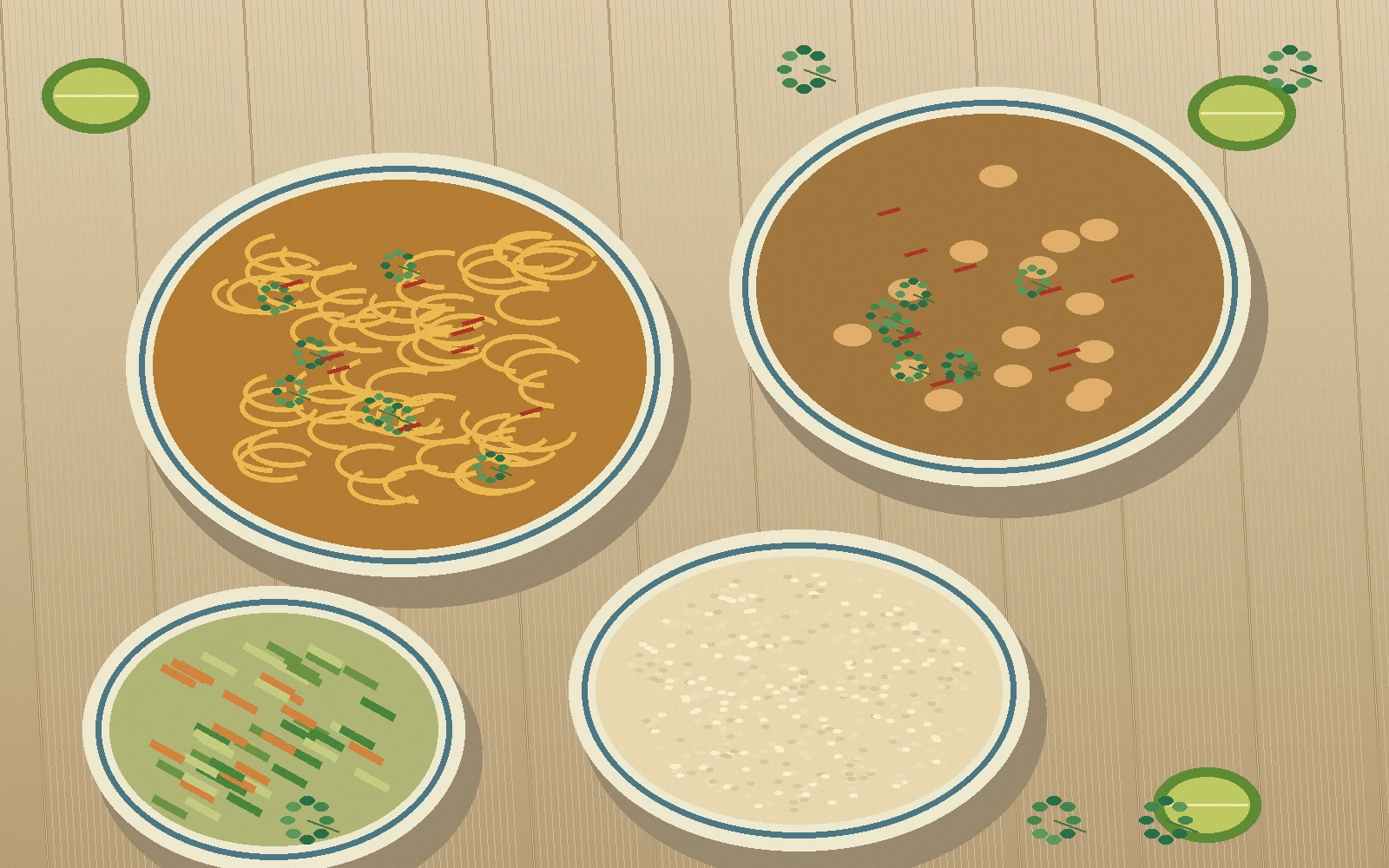
An illustrative Thai meal, not a photograph of a particular restaurant or an ingredient guarantee.
A useful Thailand food guide should make the first meal easier, not hand you a hundred dishes to memorise. Start with a few recognisable formats, learn how to ask about the ingredients that matter to you, and let each region add something different. A rice plate, a noodle bowl and a shared meal already give you three distinct ways to eat.
The aim is not to prove that you can tolerate the hottest chilli or find the least expensive stall. It is to enjoy food without spending the whole holiday hungry, overwhelmed or uncertain about what you have ordered. A comfortable food court, a family-run restaurant and a guided tasting walk can all belong in a good trip.
This guide combines culinary references with tourism information and current health guidance reviewed on 6 October 2026. The shortlist is selected for variety, availability and usefulness to first-time visitors, not arranged as a claim about Thailand's objectively best dishes. Recommendations are research-led; no restaurant visit or personal tasting is invented.
A freshly cooked rice dish
Choose the protein, ask about chilli and confirm sauces.
One small cooking class
Understand ingredients you will encounter throughout the trip.
Ask before ordering
A familiar dish name does not guarantee familiar ingredients.
Vegetables do not mean vegan
Stock, curry paste and finishing sauces still matter.
Thailand food guide: build confidence one meal at a time
Learn formats before long dish lists
Think first about how you want to eat. A single rice plate is straightforward when travelling alone or arriving tired. A noodle bowl gives you another self-contained meal. Shared dishes suit two or more people who want to compare flavours, provided everyone is clear about the ingredients and nobody assumes that every plate is suitable for the whole table.
Start with one unfamiliar element rather than an entirely unfamiliar meal. You might order a familiar protein in a new sauce, or try a regional noodle bowl while keeping the drink and side simple. That approach makes it easier to work out what you enjoyed, what was too hot and what you would order differently next time.
Choose enjoyment over a performance
There is no obligation to eat at a pavement stall, finish a large tasting menu or accept food that makes you uncomfortable. Asking questions is not disrespectful when done politely. Equally, refusing an ingredient does not require a judgement about the people who enjoy it.
A useful first-day goal is simply to find two or three meals you would happily repeat. Then broaden the choices as confidence grows. Returning to a convenient restaurant is not a failure of exploration; it can create the comfortable base that makes the next unfamiliar meal enjoyable rather than stressful.
Rice dishes and wok cooking: the practical first meal
Start with the complete plate
Rice dishes are useful because they make the shape of the meal easy to understand. Ask whether the price covers the protein, rice and any egg rather than adding everything automatically. The most useful choice after a long journey is often a freshly prepared plate you can eat comfortably, not the restaurant's most elaborate speciality.
For a basil stir-fry or another chilli-based dish, make the heat request before cooking starts. However, a request for less chilli is not the same as a request to remove every spicy ingredient: prepared pastes or sauces may already contribute heat. If avoiding chilli is essential, ask which dish can genuinely be prepared without it.
Look beyond the main ingredient
A chicken dish can also contain fish sauce, oyster sauce, egg or a stock made with another animal ingredient. Likewise, a vegetable stir-fry may use a non-vegetarian sauce. The visible protein is only one part of the recipe, which is why ingredient-specific questions work better than relying on the menu heading. [6]
When sharing, ask for separate serving utensils where needed and make sure the group understands any dietary boundary. A little sauce moved from one dish to another can matter to someone with an allergy even when it seems insignificant to everybody else. Choose the restaurant around the most restrictive requirement first.
Noodles: pad Thai, soup bowls and northern khao soi
Pad Thai is not simply plain noodles
Pad Thai commonly combines rice noodles with tamarind, fish sauce, egg and ingredients or toppings such as dried shrimp and peanuts. The balance is often sour, sweet and savoury rather than dominated by chilli, but that does not make the dish suitable for every diet. Ask about the full preparation rather than only requesting no prawns. [3]
Noodle soups require another set of questions. Identify the broth, meat, meatballs or other additions, then ask about garnishes and seasonings. A clear-looking broth can still be made from an animal stock, while noodles that appear similar can have different ingredients. For a serious restriction, do not infer suitability from appearance.
Save room for khao soi in the north
Khao soi is a useful northern introduction: a curry-style broth with soft noodles and crisp noodles on top, often served with separate accompaniments. Pailin Chongchitnant's culinary reference describes egg noodles and a coconut-based curry broth. Individual kitchens choose different proteins and seasonings, so the bowl is a starting point for questions, not a standard formula. [4]
Curries and tom yum: colour does not predict comfort
Ask about the paste and the portion
Do not assume that green means mild, red means hot or coconut milk removes all chilli. Thai curries vary in their pastes, liquid bases and seasoning; some use coconut milk while others do not. The better question is which preparation the kitchen recommends for your actual heat preference. [7]
Also establish whether the curry is a shared dish and whether rice is included. A bowl that looks small may be intended to flavour several portions of rice, while a large shared order may be far too much for one person. Ask the server to help you build a balanced meal instead of ordering by the size of a menu photograph.
Tom yum has variations too
Tom yum is a family of aromatic, sour and spicy soups rather than one identical bowl served throughout the country. The tourism authority's regional coverage itself shows how widely the dish appears. Ask which protein is used and whether the preparation contains additional paste, milk or other ingredients relevant to your diet. [8]
For two people, one curry or soup with rice and a contrasting cooked dish is often a useful first shared meal. Ordering two rich curries and several fried starters can overwhelm appetite before you appreciate the differences. Leave space for the flavours to be distinct rather than treating variety as a competition in plate count.
Som tam, sticky rice and northeastern flavours
Understand what the salad can contain
Som tam is a category of pounded salads with different styles, not an automatic vegetarian option. A common Thai-style papaya version can include fish sauce, dried shrimp and peanuts, alongside lime, chilli and other ingredients. Ask which version is being prepared and do not assume that removing a topping removes everything associated with that ingredient. [5]
Culinary interest and food-safety preference are separate decisions. A raw salad may be an important regional dish, but travellers following a lower-risk food plan may decide to choose a freshly cooked alternative. The same applies to raw accompaniments served beside an otherwise cooked meal. You can appreciate a food tradition without eating every part of it. [1]
Make a coherent shared meal
Sticky rice, a cooked grilled dish and a suitable vegetable preparation can create a satisfying meal without ordering several versions of the same salad. Ask which dishes are hot, sour, salty or mild so the table has contrast. If only one person wants strong chilli, keep that dish separate rather than making the whole meal uncomfortable.
Regional recipes are not fixed by provincial borders. Expect variations between households, restaurants and communities, including different fermented ingredients and seasoning preferences. The useful habit is curiosity about the specific dish in front of you, not arguing that it differs from a single version you saw online. [9]
Northern Thailand: give regional food more than one lunch
Food is a reason to slow the route
A northern visit provides time to compare noodle dishes, cooked vegetables, dips and shared meals rather than repeatedly ordering the same international restaurant favourites. Choose a few meals with different formats. A morning market, a bowl of noodles and an evening shared meal reveal different parts of everyday eating without requiring a long checklist. [9]
Make the route work first. Travelling from Bangkok to Chiang Mai solely for one dish is rarely a sensible use of a short holiday, whereas adding several northern nights can combine food with temples, neighbourhoods and countryside. The journey should support the overall trip rather than turning meals into distant appointments.
When a local food walk helps
A guided northern food outing is useful when the explanation matters to you: what distinguishes the dishes, how ingredients are used and why a particular stop belongs in the route. Ask for the expected menu and whether tastings replace a meal. A long list of samples can sound generous while leaving little time to understand any of them.
For independent exploring, a conveniently located room makes it easier to split eating into short outings with breaks. Check the actual walking route and return options rather than assuming every point inside a broad neighbourhood label is equally convenient.
Desserts, fruit and drinks: ask about the additions
Sweet does not mean ingredient-simple
Mango with sticky rice, coconut-based sweets and small market desserts can provide a useful change from savoury dishes. Nevertheless, toppings, fillings and preparation methods vary. Ask about nuts, sesame, dairy, eggs and other relevant ingredients rather than assuming that a coconut description means dairy-free or that a fruit dessert contains only fruit.
For fruit, choose preparation consistent with your food-safety plan. Fruit you can wash with safe water and peel yourself is a more controllable option than fruit whose cutting, rinsing and storage you cannot assess. A beautifully arranged display does not answer those practical questions. [1]
Drinks can change the meal budget
Before ordering an iced tea, coffee or fruit drink, ask about added sugar, milk and whether the drink is premixed. A request made after pouring may be too late. When safe water or ice preparation is uncertain, a sealed beverage is a straightforward alternative; do not judge ice safety solely by its shape. [10]
Drinks and snacks also accumulate across a hot sightseeing day. Decide whether a cafe stop is mainly refreshment, a seated break or a destination in its own right. All are valid, but recognising the purpose helps you avoid buying a second full meal simply because the menu is attractive.
Ordering politely and getting the answer you need
Make one clear request at a time
Point to the dish, establish the portion and ask the most important ingredient question first. Then discuss heat or optional toppings. A long spoken list delivered while a stallholder is cooking several orders is less effective than a short, clear explanation supported by written information when necessary.
For ordinary menu translation, a phone can help identify ingredients or communicate a preference. However, automatic translation is not enough for a serious allergy conversation. Keep a professionally checked dietary card available offline and do not treat a friendly nod as evidence that cross-contact has been understood.
Be willing to choose somewhere else
A kitchen may honestly explain that it cannot change a prepared paste or keep equipment separate. That is useful information, not poor service. Thank the staff and select another meal or venue rather than trying to persuade them to promise something outside their control.
When several people are ordering, give the restriction a clear owner and check the arriving dishes before sharing. Keep sauces and serving utensils organised. This practical conversation is easier before food reaches the table than after plates have already been passed around.
Street food and food courts: judge the process, not the label
Neither setting is automatically safer
An expensive room, a long queue or an air-conditioned dining area does not guarantee safe handling. Equally, popularity on social media cannot establish how food was stored earlier in the day. Focus on the preparation you can assess, the information staff can provide and your own risk requirements.
CDC guidance favours thoroughly cooked food served hot and cautions about raw food and uncertain hygiene. That supports choosing a freshly cooked meal rather than assuming every item in a busy market is equivalent. Wash hands with safe facilities where available and avoid treating a quick wipe as a complete substitute. [1]
Use comfort as part of the decision
A food court can be valuable for seating, shelter and a group that wants different dishes. First check its payment system and whether unused credit can be refunded. Then choose stalls with clear preparation and ingredient answers rather than making the environment itself the deciding factor.
At an outdoor market, keep the first circuit exploratory. Notice where you can sit, how you will pay and where you can step aside without blocking customers. Ordering smaller amounts as you go reduces waste and gives you time to make deliberate decisions rather than buying every appealing item immediately.
Food safety without turning the holiday into a medical experiment
Keep the guidance practical
For travellers seeking to reduce foodborne risk, fully cooked food served hot, safe drinking water and fruit they can peel themselves are useful starting points. Raw seafood, undercooked meat and food held at uncertain temperatures deserve particular caution. A recommendation in a travel article is not a certification of a kitchen. [1]
Keep this separate from judging a cuisine. Foodborne illness depends on ingredients, handling and exposure, not whether a dish is unfamiliar or whether locals enjoy it. Choosing a lower-risk meal is a personal travel decision and does not require describing other people's food as dirty or inferior.
Plan around your own health needs
Travellers who are pregnant, immunocompromised, managing a medical condition or travelling with a vulnerable family member should obtain individual advice before departure. A general food guide cannot tailor food choices or treatment to those circumstances. The same applies when you need advice about travel medicines or what to do if illness occurs. [11]
If somebody becomes unwell, do not use a tasting itinerary as a reason to push through. Rest, obtain appropriate medical advice when needed and change the programme. Prepaid food experiences are less important than the person's condition, comfort and access to care.
Vegetarian, vegan and halal planning
Check sauces, stock and shared cooking
A vegetable dish can still use fish or oyster sauce, and a curry paste or broth may contain animal ingredients. Explain what you exclude in concrete terms instead of assuming the word vegetarian produces the same interpretation in every kitchen. Specialist venues can simplify the conversation, but their ingredients and practices still need checking. [6]
Vegan preparation and allergy-safe preparation are different questions. A dish intentionally made without an animal ingredient may still share equipment with it. Anyone avoiding an ingredient for medical reasons should explain that separately rather than relying on a lifestyle label. [12]
Religious requirements deserve their own checks
For halal needs, identify suitable restaurants or trusted certification information in advance and ask about the actual preparation. A dish without visible pork is not automatically enough, and a seafood-focused menu does not answer every question about ingredients or kitchen practices. Choose a food tour only after the operator has described how it handles your requirement.
For a mixed group, build the shared meal around a venue that can meet the strictest needs, then let others add suitable choices. This is usually easier than trying to retrofit a restrictive diet into the fifth stop of a fixed tasting route. A little advance planning protects both the meal and the group's mood.
Bangkok food neighbourhoods: shorten the journey between meals
Pick an area and explore it properly
A first food evening works better in one manageable area than as a cross-city hunt for several famous addresses. Chinatown offers one possible tasting focus, while another neighbourhood near your hotel may provide a calmer introduction. The right choice depends on your appetite for crowds, walking and decisions after a full sightseeing day.
Do not assume a popular street is operating in the same way every evening. Individual businesses have their own hours and closures. Confirm a specific restaurant when it matters to the plan, but leave alternatives nearby so one closed door does not become an expensive taxi journey.
Choose accommodation for everyday eating too
A useful base provides more than access to a celebrated dinner. Think about breakfast, a simple lunch, a late arrival meal and a nearby option when rain changes the evening. A convenient cluster of ordinary choices can improve a trip more than staying close to one restaurant you may visit once.
A guided market visit can add value when you want ingredient explanations and help understanding how the place works. Check whether it is a tasting walk, a shopping tour or part of a cooking class; those are different experiences even when the photographs look similar.
Ordering for a group without ending up with six identical dishes
Give the meal a simple structure
For three people sharing, begin by agreeing the dietary boundaries, then choose a rice base and two or three contrasting cooked dishes. You might want one broth-based dish, one vegetable preparation and one protein dish rather than three rich curries with similar flavours. Ask the server whether the portions suit the group and order more only when you understand the first plates.
This is a portion-planning example, not a rule of Thai dining. Appetite, menu style and the kitchen's serving sizes vary. The benefit is that everyone understands the plan before several people independently order food for the whole table. It also makes the final bill easier to recognise.
Keep preferences separate from medical needs
Someone who dislikes strong chilli can often choose a different shared plate. A serious allergy may require a separate preparation arrangement and utensils, or a different venue entirely. Do not treat those situations as equivalent requests that the group can solve by removing a garnish after serving.
When one person is unsure about a dish, leave the decision with them. Enthusiasm is welcome; pressure to take a small taste is not. A good shared meal allows curiosity without making anyone justify a health requirement or eat beyond their comfort.
A realistic food budget: separate allowances from price claims
Use a worked allowance, not a national average
The following figures are editorial planning examples set on 6 October 2026, not surveyed nationwide prices or quotes from named restaurants. They show how breakfast, meals, drinks and snacks accumulate. Tourist locations, premium seafood, hotel dining and special dietary requirements can all change the total.
| Illustrative daily food plan | Arithmetic | Allowance |
|---|---|---|
| Simple mixed day | Breakfast 80 + lunch 100 + dinner 180 + drinks/snacks 140 | 500 THB per person |
| More comfortable mixed day | Breakfast 150 + lunch 200 + dinner 350 + drinks/snacks 200 | 900 THB per person |
| Not included | Alcohol, tasting tours, classes, premium seafood or transport | Add separately |
On a small screen, scroll within the table to compare every column.
Use the examples as a worksheet. Replace each amount with the kind of meal you actually expect to buy, then add transport and organised food experiences separately. Someone eating modest meals but buying several cafe drinks may spend more than a traveller who pays for one substantial lunch and drinks mainly water.
Check the final bill structure
Read the menu for taxes, service charges, portion sizes and any items priced by weight. Ask for clarification before ordering an unfamiliar seafood item or a shared platter. A small misunderstanding about the unit of price can matter far more than a minor difference between two ordinary noodle bowls.
Carry a practical payment alternative rather than relying entirely on a phone or card. Check the actual arrangement at a market or food court before ordering. Paying smoothly is part of a relaxed meal, especially when a small business is serving a queue of other customers.
A price-by-weight example worth checking
Suppose a menu quotes an illustrative 180 THB per 100 grams and the selected fish weighs 600 grams. The arithmetic is 1,080 THB before any separately charged preparation or extras. This constructed example is dated 6 October 2026 and is not a current restaurant quote. Its purpose is to show why the unit matters as much as the number.
Ask to confirm the weight, complete cooking price and any added side dishes before agreeing. For a shared order, make sure the group knows the expected total too. A clear conversation at the start prevents an ordinary menu misunderstanding from becoming an uncomfortable argument after the meal.
The same principle applies to a tasting menu or class advertised from a low starting amount: identify exactly what the chosen date, group and option include. Comparing complete meals is more useful than comparing incomplete headline prices.
Food tour or cooking class: buy the learning you want
These experiences solve different problems
A food tour reduces the number of decisions and adds explanation between tastings. By contrast, a class gives you time with ingredients and techniques. A market visit can explain what is being sold without including either a full meal or hands-on cooking. Choose the experience that addresses your uncertainty rather than whichever advertises the greatest number of stops.
| Choice | What you gain | Check before paying |
|---|---|---|
| Independent meal | Flexibility and your own pace | Ingredients, opening and the final bill |
| Food walk | Context and a planned sequence | Distance, portions, exclusions and substitutions |
| Cooking class | Ingredient knowledge and practical skills | Individual stations, recipes and kitchen arrangements |
| Market visit | Understanding produce and everyday buying | Whether the visit includes cooking or only browsing |
On a small screen, scroll within the table to compare every column.
Compare the practical details
Check group size, walking distance, transport, toilets, water and what happens in heavy rain. Ask how substitutions are handled and whether the operator can accommodate your needs across every stop. For a class, distinguish watching a demonstration from cooking at your own station.
A recipe booklet can be useful, but the lasting value is understanding what each ingredient does and which questions to ask later. Photograph packaging or take notes only with permission, particularly when people are working in a busy kitchen. Leave the experience with a few clear lessons instead of a phone full of unlabelled plates.
Check the class timetable against the rest of the day
A market visit and cooking session can occupy most of a morning or afternoon once collection and the return journey are counted. Do not place a museum booking or station departure immediately after the advertised finish without checking the actual drop-off arrangement. Ask whether the class ends at the kitchen or back at your hotel.
Wear clothing suited to a warm working kitchen and secure long hair as instructed. Tell the organiser about dietary needs before the ingredients are prepared, not after the first dish has been cooked. Finally, ask whether leftovers can be taken and stored safely; carrying a large meal around in the heat is not a useful souvenir.
A three-day food introduction that still leaves room for sightseeing
Day one: recognise and compare
Choose one simple cooked meal on arrival, then use dinner to try a contrasting format. A rice plate followed later by a soup or noodle dish is enough. Keep the first night near your base so you can learn without also solving a long return journey.
On day two, explore one food neighbourhood or take a small tasting walk. Keep lunch lighter when the evening experience includes several substantial portions. Build in water, shade and a seated break rather than treating continuous eating and walking as the only way to make the booking worthwhile.
Day three: learn an ingredient pattern
A cooking class or slower shared meal can consolidate what you have noticed. Ask about the paste, broth and seasonings you encountered earlier, then choose a dish you would like to understand well enough to order confidently again. Leave the next meal flexible because appetite varies after a class.
This is a learning sequence, not a demand to remain in Bangkok or follow one exact menu. Apply the same pattern in the north or at the coast: first become comfortable, then compare, then go deeper. Regional variety works best when it develops naturally within a sensible travel route.
Pros, cons and common first-time mistakes
Advantages
A small starting shortlist makes unfamiliar menus less intimidating while leaving plenty of room for regional discovery. Combining independent meals with one carefully chosen guided experience can provide both freedom and explanation. It also avoids spending every evening on a fixed schedule when appetite or energy changes.
Trade-offs
The compromise is that you will not try everything, and some dietary needs may rule out a particular venue or experience. That is normal. A successful food trip is measured by meals you enjoyed and understood, not by completing a national checklist or proving that you can tolerate any ingredient.
Habits to leave behind
Avoid ordering several full meals because each appears inexpensive, confusing less chilli with no allergen, assuming raw garnishes are harmless or treating a busy stall as a safety guarantee. Also resist building a day around distant famous restaurants without checking the route and opening arrangements.
Most importantly, do not let a paid booking pressure you into eating something you cannot confidently assess. The operator's menu, a restaurant's reputation and another traveller's experience cannot replace the ingredient and preparation information needed for your own situation.
Frequently asked questions
What should I eat on my first day in Thailand?
Start with a freshly cooked dish whose format you recognise, such as a rice plate or noodle bowl. Ask about the protein, sauce, added egg and chilli before ordering. Then choose one contrasting meal later rather than trying many unfamiliar dishes at once. This is a confidence-building approach, not a guarantee that a particular dish suits every diet.
Is all Thai food very spicy?
No, but heat varies between kitchens and preparations. Explain your preference before cooking begins and ask which dish can genuinely be made without chilli when that is necessary. Removing visible chillies from a finished curry or sauce may not remove its heat. Taste before adding table condiments, and keep one comfortable option available for a mixed group.
Is street food safe for visitors?
No travel guide can certify all street food or guarantee a particular stall. Reduce risk by following current food-and-water advice, including choosing thoroughly cooked food served hot and safe drinks. Queues, price and attractive surroundings do not establish storage or hygiene. Travellers with specific health vulnerabilities should obtain individual advice rather than relying on a general recommendation. [1]
Can I drink tap water or use any ice?
CDC's Thailand guidance advises against drinking tap water and cautions about ice. Use safe bottled or otherwise appropriately treated water and choose sealed drinks when you cannot establish how water or ice was handled. The shape or clarity of an ice cube is not a reliable safety test. Apply the same care to drinks as to the meal. [10]
Is pad Thai vegetarian or gluten-free?
Not automatically. A typical preparation may include fish sauce, dried shrimp, egg and peanuts, while individual kitchens may use other sauces. Rice noodles alone do not establish that the whole dish meets a gluten-free requirement. Ask about ingredients and cross-contact; a menu name or removal of the visible protein is not sufficient. [3] [12]
Are food tours suitable for serious allergies?
Only when the provider can answer the specific preparation and cross-contact questions your situation requires. Several stops can mean several kitchens with different capabilities. Obtain clear information before booking and follow your clinician's travel plan. A guide's willingness to help is valuable, but it cannot substitute for a kitchen's ability to prepare suitable food. [2]
How many food activities should I book?
For a short stay, one well-chosen tour or class is usually enough to add explanation without controlling every meal. Keep the remaining days flexible so you can repeat a dish, explore your neighbourhood or eat lightly when tired. Booking a substantial class and a long tasting tour on the same day often creates more food than useful learning.
Will vegetarian and vegan travellers find enough choice?
Planning is more important than memorising one reassuring phrase. Identify venues that understand your exclusions, then ask about sauces, stocks, curry pastes and shared cooking. A vegetable-based dish may still contain fish or oyster sauce. Specialist options can simplify the conversation, but anyone with a medical allergy needs separate cross-contact information as well. [6] [12]
Do I need to visit the most famous restaurant?
No. A convenient place with clear information, suitable food and a comfortable atmosphere may be the better choice for your day. Famous addresses can be worthwhile when the dish genuinely interests you and the journey fits, but they should not make every meal a transport project. Leave alternatives nearby and check current opening arrangements before committing.
The way I would explore Thai food
I would begin with a small set of recognisable dishes, keep the first evening close to the hotel and use one guided experience to understand ingredients rather than simply collect tastings. Then I would let the route introduce regional differences, with enough unplanned meals to revisit something enjoyable.
The habits worth carrying throughout the trip are straightforward: ask before ordering, separate flavour preferences from medical restrictions, consider the preparation rather than the appearance and stop eating when you have had enough. Curiosity works best alongside clear information and a comfortable pace. There is no need to turn every meal into a test.
Sources and fact-checking notes
Official tourism, attraction, transport and specialist sources were reviewed on 06 October 2026. Named schedules and fees are published reference points, not guarantees for a future date. Suggested routes, visit lengths and constructed budgets are editorial planning judgements. Recheck the operator or attraction before committing to a time-sensitive booking.
- CDC Yellow Book 2026 – food and water precautionsHealth guidance on cooked food, safe water and uncertain hygiene; not a guarantee for any venue.
- Anaphylaxis UK – travelling with serious allergiesTranslation cards, preparation and individual allergy action plans.
- Pailin Chongchitnant, Hot Thai Kitchen – pad ThaiFirst-party culinary reference for typical ingredients; individual restaurants use different recipes.
- Pailin Chongchitnant, Hot Thai Kitchen – khao soiFirst-party culinary reference for the noodle dish and accompaniments.
- Pailin Chongchitnant, Hot Thai Kitchen – som tum ThaiTypical papaya-salad ingredients; not a food-safety or allergen guarantee.
- Pailin Chongchitnant, Hot Thai Kitchen – meatless Thai foodExplains why vegetable dishes can still use fish or oyster sauce.
- Hot Thai Kitchen – Thai curry referencesCoconut-based and water-based curry examples; heat and ingredients vary.
- Tourism Authority of Thailand – regional tom yum kungShows regional variation rather than one standard nationwide recipe.
- Tourism Authority of Thailand – Thai Foodie Map 2.0Regional food examples. Historic restaurant hours are not republished as current guarantees.
- CDC Yellow Book – ThailandDestination-specific precautions; medical advice should be individualised by a qualified professional.
- UK FCDO – Thailand health and air qualitySeasonal haze, health preparation and local emergency contact information.
- Food Standards Agency – allergen guidanceIngredient and cross-contact concepts only; UK legal requirements are not presented as Thai law.
Illustrations in this article were created for Taylor’s Trailblazing Travels. Third-party photographs, where used, are credited beside the image or in the source list.