

The planning, in a more useful order.
Plan Your Thailand Trip
Bring together routes, budgets, weather, packing, connectivity and the practical decisions behind a Thailand trip.
Trailblazing Travels
Original editorial illustration from Taylor's Trailblazing Travels; not a photograph of a specific location.
The guide collection
Thailand planning guides
Showing 100–108 of 113 guides
Page 12 of 13 · thailand planning guides
Thailand planning guides
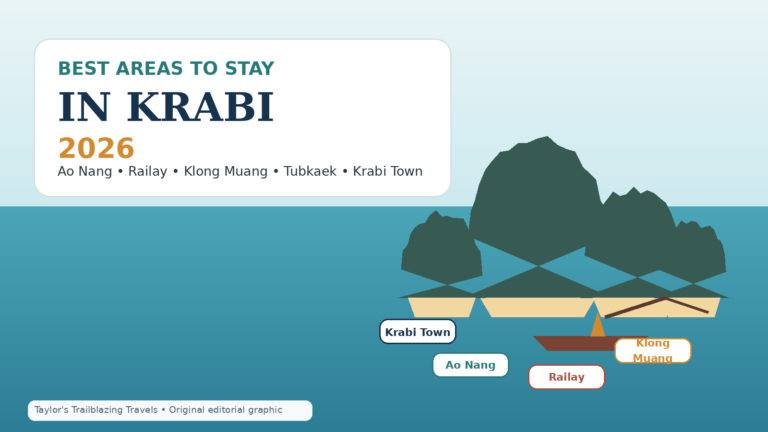
Best Areas to Stay in Krabi 2026: 7 Areas Compared
Compare seven Krabi bases by beach access, transfers, evening convenience, traveller type and hotel-location trade-offs.
Read the guide
Thailand planning guides
15 Best Restaurants in Phuket in 2026: Local Favourites, Seafood and Fine Dining
Compare 15 Phuket restaurants by area, cuisine, price and booking needs, from local favourites and seafood to special-occasion tasting menus.
Read the guide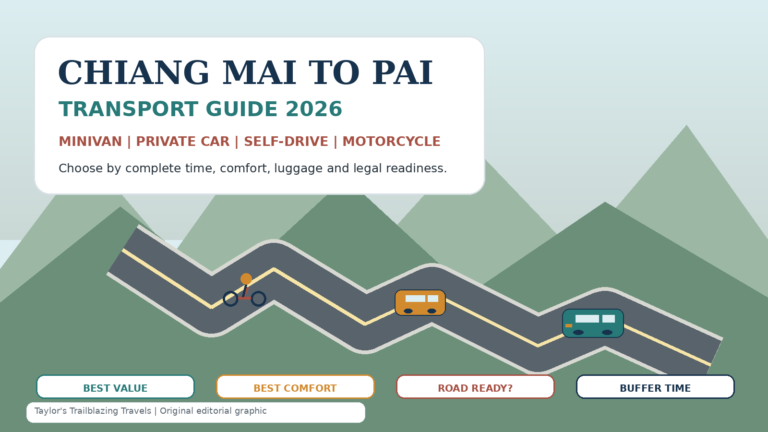
Thailand planning guides
Chiang Mai to Pai Transport 2026: Van, Car or Scooter?
Compare van, minibus, private car and self-drive options for Chiang Mai to Pai, including fares, luggage and motion-sickness planning.
Read the guide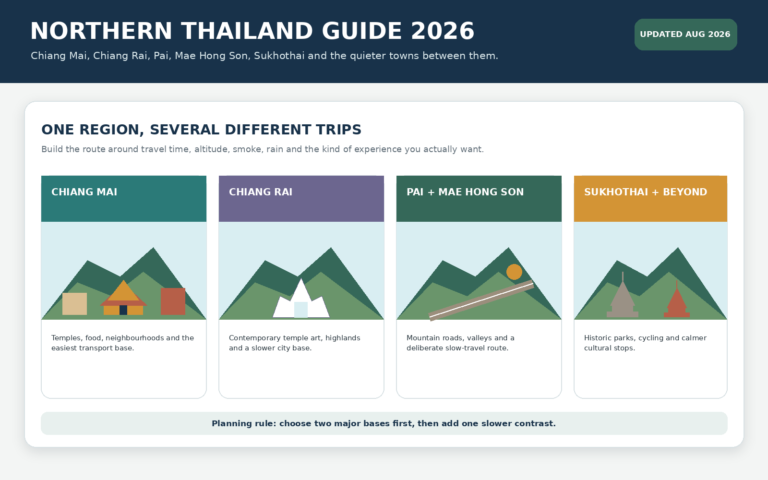
Thailand planning guides
Northern Thailand Guide 2026: Best Places, Routes, Costs and Smoke Season
Plan Chiang Mai, Chiang Rai, Pai, Mae Hong Son and Sukhothai with realistic routes, costs, transport and smoke-season checks.
Read the guide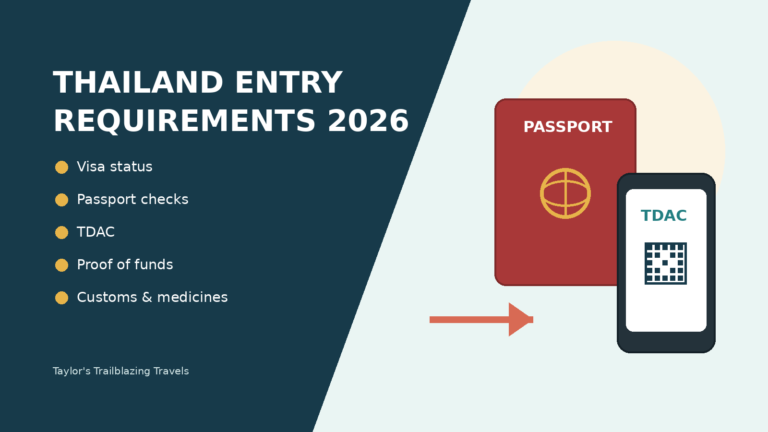
Thailand planning guides
Thailand Entry Requirements 2026: Visa, TDAC, Passport & Customs
Check Thailand entry requirements for 2026, including passport validity, the latest visa position, TDAC, proof of funds, customs and medicines.
Read the guide
Thailand planning guides
Thailand Travel Insurance Guide 2026: What Cover Do You Actually Need?
Review UK-focused travel-insurance questions for Thailand, including medical care, scooters, diving, cancellation, baggage and claims.
Read the guide
Thailand planning guides
Thailand Scams to Avoid in 2026: Tourist Traps, Red Flags and What to Do
Recognise common Thailand tourist traps, booking scams, payment red flags and rental disputes without becoming suspicious of everyone.
Read the guide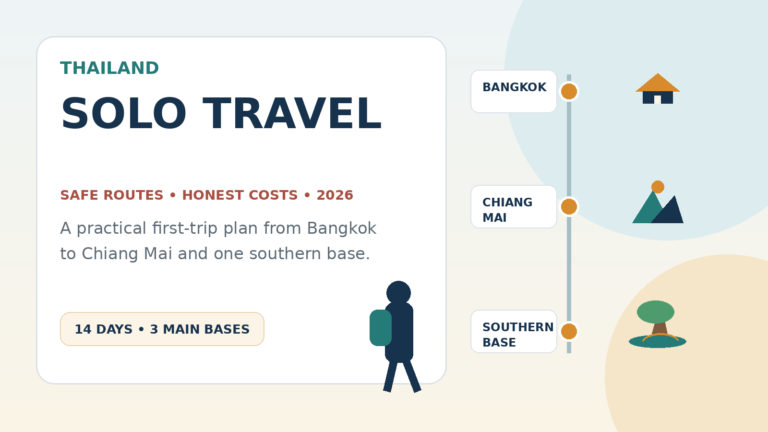
Thailand planning guides
Thailand Solo Travel Guide 2026: Safe Routes, Costs and Where to Stay
Plan a first solo Thailand trip with a realistic route, safe-arrival checks, solo-friendly bases, transport choices and daily budget ranges.
Read the guide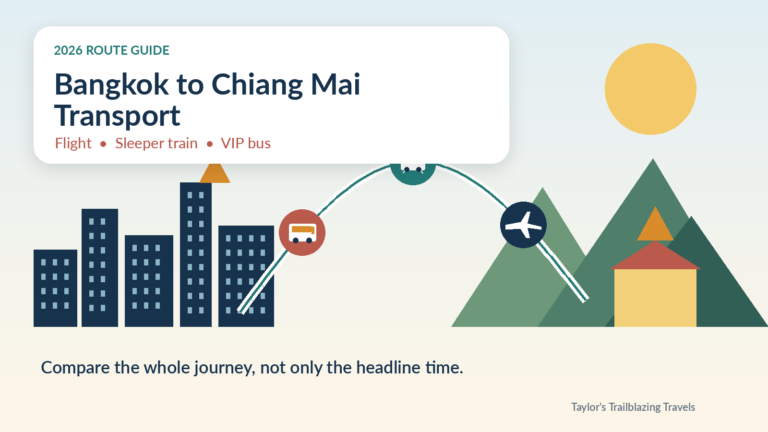
Thailand planning guides
Bangkok to Chiang Mai Transport 2026: Flight, Sleeper Train or Bus?
Compare flights, sleeper trains and buses by door-to-door time, cost, comfort, booking difficulty and arrival practicality.
Read the guidePage 12 of 13 · thailand planning guides
A little context before you go
Planning notes for this collection
Planning Thailand becomes much easier when you make the decisions in the right order. Start with the length of the trip and the regions you want to combine. Check weather and transport before committing to hotels. Build the budget around the route, then deal with packing, connectivity, insurance and final checks.
Use this page as your planning sequence. You do not need to solve every detail on the first day.
Step 1: Fix the dates and usable trip length
Count usable days, not only the dates on the booking confirmation. A late arrival, jet lag, an early departure and a long domestic transfer can remove several hours from the route.
Write down:
- International arrival airport and time.
- International departure airport and time.
- Number of full days between them.
- Any fixed event, festival, wedding or tour date.
- The number of major transfer days you are comfortable with.
A shorter route with more time in each base is usually easier than an ambitious list of destinations connected by repeated flights and ferries.
Step 2: Choose the regions
Use the Thailand Destinations hub to compare Bangkok, Northern Thailand, Central Thailand and the islands and beaches.
A first trip commonly combines:
- Bangkok plus Northern Thailand.
- Bangkok plus one southern beach region.
- Bangkok, Chiang Mai and one southern base.
- A southern trip focused on Phuket, Krabi or the Gulf islands.
There is no requirement to include every famous place. Choose regions that create contrast without turning the holiday into a chain of check-outs.
Step 3: Build a realistic itinerary
Use the Thailand Itineraries hub to compare route lengths and destination combinations. Look at the number of nights, not only the number of days, and allow a buffer before an international flight.
A sensible itinerary should answer:
- Where will you sleep each night?
- How long is each door-to-door transfer?
- Which days depend on weather or sea conditions?
- Which bookings can be moved or cancelled?
- Where is the recovery time after a long journey?
Step 4: Check the season before booking the coast
Thailand’s weather varies by region. A month described as generally wet or dry does not create identical conditions in Bangkok, Chiang Mai, Phuket and the Gulf islands.
Use the Best Time to Visit Thailand guide to compare regions and months. Then check official short-range forecasts close to travel.
Questions to answer before choosing the dates
- Is your priority comfortable sightseeing, lower prices or beach conditions?
- Does your route include Northern Thailand during a period of possible smoke or poor air quality?
- Are marine parks, ferries or tours affected by seasonal arrangements?
- Are you travelling during a major Thai or international holiday?
Step 5: Check transport before paying for hotels
A route that looks short on a map may involve a hotel transfer, airport wait, flight, baggage collection, road journey, pier and ferry. Use door-to-door time when comparing options.
The Thailand Transport Guide brings together flight, train, bus, ferry and local-transfer advice.
Before booking, record:
- Departure point and actual terminal or pier.
- Check-in time.
- Luggage allowance.
- Arrival point and final hotel transfer.
- Cancellation and change conditions.
- A backup plan for weather-sensitive journeys.
Step 6: Set a realistic budget
Use the Thailand Travel Budget guide for current planning ranges and example trip totals.
Separate the budget into:
- International flights.
- Domestic transport.
- Accommodation.
- Food and drink.
- Activities and entrance fees.
- Insurance and connectivity.
- Local transport.
- An emergency and change buffer.
Do not compare hotel prices without checking location. A cheaper room that creates two taxi journeys every day may not be the cheaper overall choice.
Step 7: Choose accommodation by area
Use Where to Stay in Thailand to compare bases by transport, atmosphere, evening convenience and the journeys you will actually make.
Check the map before the photographs. Look for:
- Walking distance to the transport or beach you will use.
- Recent reviews about noise, access and construction.
- Cancellation terms.
- Airport, station or pier transfer time.
- Whether the surrounding area suits your evenings.
Step 8: Arrange phone and internet access
The Thailand SIM Card and eSIM Guide compares local tourist SIMs and travel eSIMs.
Before buying, check:
- Whether your phone is unlocked.
- Whether it supports eSIM.
- How much data you realistically need.
- The activation date and validity period.
- Whether calls and texts are included.
- Passport-registration requirements for a physical SIM.
Mobile data is useful for maps, pickup messages, weather warnings and booking changes, so it is worth arranging before a complicated first transfer.
Step 9: Buy appropriate insurance
Use the Thailand Travel Insurance Guide to compare medical cover, cancellation, baggage, scooters, diving and activity exclusions.
Read the policy wording rather than relying on the headline benefit. Pay particular attention to:
- Medical treatment and evacuation.
- Pre-existing conditions.
- Scooter and motorcycle licence requirements.
- Alcohol exclusions.
- Diving and adventure activities.
- Missed departures and independently booked connections.
- Evidence required for a claim.
Step 10: Pack for the route rather than the country name
The Thailand Packing List covers city heat, temples, islands, rain, domestic flights and multi-stop routes.
A practical packing plan includes:
- Light clothing that works in heat and humidity.
- Respectful temple clothing.
- Rain protection suited to the season.
- Comfortable footwear for the actual activities.
- Medication and copies of prescriptions where relevant.
- Sun and mosquito protection.
- A small transfer-day bag.
- Luggage that fits domestic transport limits.
Pack fewer duplicates and leave room for laundry. Moving a heavy case through piers, stairs and uneven pavements is very different from moving it through an airport only.
Step 11: Prepare for scams, safety and changing plans
Read the Thailand Safety and Scams hub before travel. The aim is not to make you suspicious of everyone. It is to recognise common pressure tactics, protect payment information and know what to do when a booking or transfer goes wrong.
Keep copies of:
- Passport and insurance details.
- Booking references.
- Emergency contacts.
- Important medication information.
- The address of the first accommodation.
Step 12: Solo travel checks
The Thailand Solo Travel Guide covers route design, accommodation areas, budgets and practical safety routines for a first independent trip.
Solo travellers should pay particular attention to late-night arrivals, isolated accommodation, luggage during transfers, activity exclusions and the cost difference between private and shared transport.
Step 13: Complete the final 72-hour check
Shortly before departure:
- Check official entry requirements and travel advice.
- Confirm the first accommodation and airport transfer.
- Recheck domestic transport times and terminals.
- Review weather and marine forecasts.
- Download offline copies of important bookings.
- Confirm phone activation and insurance documents.
- Tell a trusted person where the first few nights are booked.
Keep exploring
The next part of your plan




Planning with Taylor's Trailblazing Travels
Research-led guides by Karen Taylor. Read the full articles for sources, image credits and the checks that matter before you book.
About Karen Taylor →