Koh Samet Travel Guide
Find your beach rhythm, understand the boat handovers and make a short island break feel unhurried.
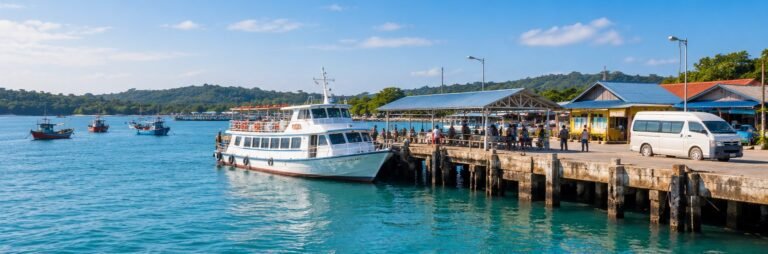
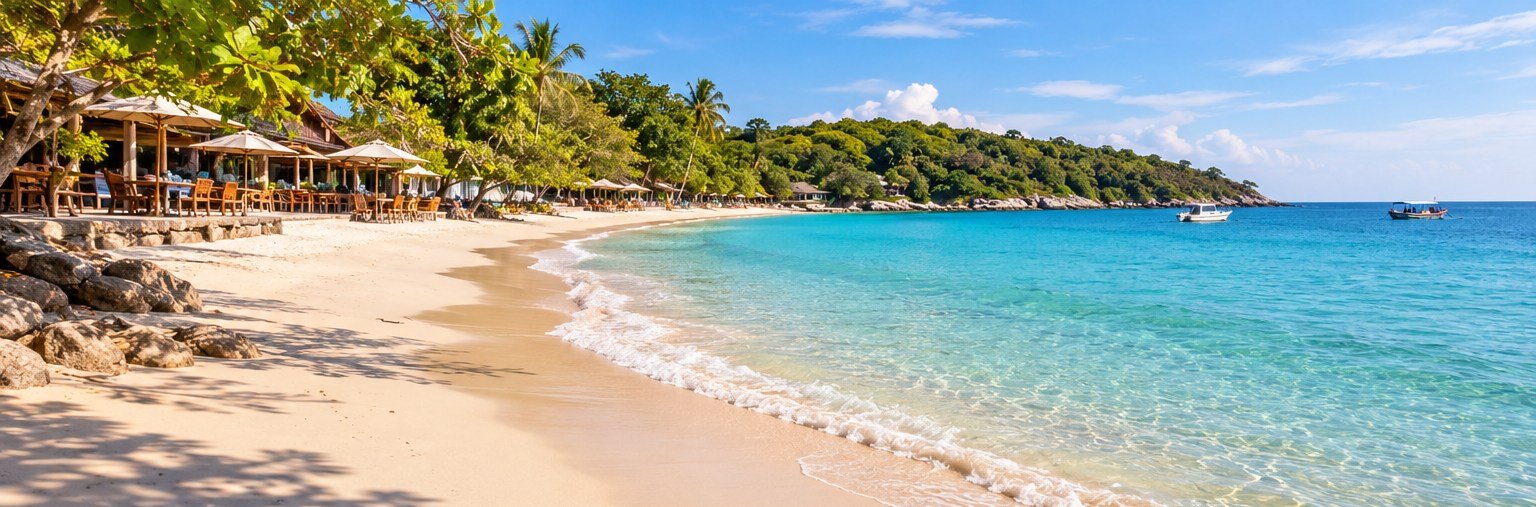
Original scene inspired by Koh Samet’s low, forested beach landscape; not a documentary photograph or a named hotel frontage.
A practical place to begin
A Koh Samet travel guide should begin with the kind of break you want. This is an island where choosing the right bay can matter more than assembling a long attraction list. Some visitors want restaurants and activity nearby; others are happiest with a quiet cove, a comfortable room and no elaborate daily plan.
The practical work happens before the beach: choosing the accommodation, reaching the correct Ban Phe pier and understanding which boat and hotel transfer you have bought. A short crossing can make the island accessible, but it does not remove those handovers or the need to leave room for the return journey.
Here you will find a research-led way to choose a base, organise two or three nights and separate the fixed costs from optional spending. Price references carry a review date, while the itinerary and budget examples are clearly identified as planning choices rather than promises.
Sai Kaew and the north
Useful when meals, supplies and simpler orientation matter.
Wong Duean or smaller bays
Choose the immediate room and beach setting, not only the area name.
Ao Prao or the south
Confirm meals and transfers before committing to a secluded stay.
Boat plus park plus hotel
These are separate costs unless explicitly combined.
Choose the hotel before the boat when the property has its own transfer. Keep park entry separate unless the rate explicitly includes it.
Koh Samet travel guide: is this your kind of island?
Koh Samet works particularly well when you want a short island stay without flying south. The mainland gateway is Ban Phe in Rayong, followed by a passenger-boat crossing. Once you arrive, the choice is less about collecting attractions and more about selecting a beach whose atmosphere suits the holiday. A lively restaurant-lined stretch and a secluded resort cove can feel like different destinations. [1]
This guide compares places by convenience, beach setting, evening atmosphere and the effort needed to reach them. It does not rank them from personal visits or imply that the photographs on booking sites represent every room. The advice is research-led, with transport, park and property information reviewed on 4 October 2026.
A small island does not mean an effortless transfer
The sea crossing can be short, yet Bangkok to your room still involves several stages. You must reach the right mainland pier, check in, board, collect luggage and complete any island transfer. Therefore, two nights are usually more rewarding than travelling all the way from Bangkok for a hurried afternoon on the sand. A day visit makes more sense from nearby Rayong than from a distant Bangkok hotel.
Koh Samet also rewards a realistic view of its scale. Come for beaches, swimming when conditions permit, leisurely meals and perhaps a boat excursion. Travellers wanting a large choice of inland hikes, extensive shopping or a different major attraction each day may prefer a larger island. There is nothing wrong with doing less here; that is often the point.
Understand the island before choosing a beach
The northern arrival area and Sai Kaew are convenient starting points for a first visit. Farther down the east coast, a sequence of bays offers different mixtures of accommodation and restaurants. Ao Prao sits on the western side, while the more secluded southern coves require closer attention to resort transfers. TAT’s destination information identifies these distinct beach areas rather than treating Samet as one continuous resort strip. [1]
Convenience versus seclusion
The useful question is not which beach is universally best. It is whether you want to walk out to several dinner choices or prefer the resort to provide most of the stay. A remote room can be wonderfully peaceful, but repeated taxi journeys may reduce the saving from a low room rate. Conversely, staying beside entertainment is inconvenient if silence after an early bedtime is essential.
Look beyond the beach name on the booking page. Check the exact pin, room position and path to the sand. A property can cover more than one area, or offer rooms set back from the beachfront. Ask whether there are steps, a road crossing or an uneven path between your room and the facilities you expect to use.
A first-visit beach shortlist · On a narrow screen, scroll the table sideways.
| Area | A useful fit | Check before booking |
|---|---|---|
| Sai Kaew / north | Restaurants and easier first-time orientation | Room proximity to evening activity and the exact beach route. |
| Ao Phai / Tubtim | A smaller-bay routine with nearby alternatives | Walking paths, after-dark access and room position. |
| Wong Duean | A self-contained beach-focused stay | Boat landing and the last transfer to the property. |
| Ao Prao | A west-coast resort break | Hillside steps, dining and resort transfer times. |
| Southern coves | A quieter, more secluded stay | Dependence on resort meals and pre-arranged transport. |
Area descriptions reflect TAT geography and research-led fit, reviewed 4 October 2026. Individual properties and daily sea conditions differ. [1]
Choose one base for a short stay
For two or three nights, changing hotels often creates more work than benefit. You lose time packing, waiting for rooms and arranging local transport. A better plan is to choose one suitable base and visit another bay for lunch or a carefully planned evening. Reserve a split stay for a longer visit where the contrast itself is part of the holiday.
When to go: season, weekends and expectations
TAT describes October to April as the more favourable period for calmer conditions around Koh Samet, while also noting its popularity with weekend visitors. That is seasonal context, not a weather forecast for your dates. Rain can occur outside the wetter months, and a promising seasonal label does not override a marine warning or an operator’s cancellation. [1]
Weekday and weekend holidays feel different
For a quieter beach break, compare a midweek stay with Friday and Saturday nights before settling on the itinerary. The island’s convenient mainland access makes it attractive for short breaks, so a beach that looks peaceful in a weekday photograph may be busier at the weekend. Hotel prices and room availability should be checked for the actual nights rather than inferred from a monthly average.
Entertainment can also be tied to particular evenings. For example, a resort may advertise weekly live music or a weekend fire show rather than a performance every night. Treat those as optional additions, not the reason to choose a room whose location otherwise does not suit you. Confirm the event directly if it is important to the visit. [2]
Plan a weather-flexible stay
Keep at least one day without a prepaid sea excursion. That allows a boat trip to move if the operator offers a safer alternative day, or lets you enjoy the beach when conditions improve. A covered restaurant, a comfortable room and a shaded resort area can make an unsettled afternoon pleasant; an itinerary depending entirely on sunshine is much less forgiving.
For departure, leave more flexibility than the advertised crossing time suggests. The ferry is only one stage of the return to Bangkok, and bad weather can affect both marine operations and the road journey. An overnight mainland or Bangkok stop before an important flight is a practical buffer, not an admission that the island is difficult to visit.
Getting there without confusing the piers
Cost references and illustrative calculations reviewed 4 October 2026; reconfirm actual quotes and inclusions.
The normal overland approach from Bangkok is towards Ban Phe, not directly onto the island. Public buses, combined transfers and private cars offer different levels of coordination. A through booking can simplify the handover, but read whether it ends at the mainland pier, Na Dan on Samet or your hotel. Those are three different products. [3]
Ban Phe is a gateway, not one universal counter
Several services use the Ban Phe area. The correct check-in address is the one attached to your boat ticket or resort confirmation. Do not ask a taxi simply for the Koh Samet ferry and assume every counter can accept every ticket. Also avoid buying a replacement ticket from an unrelated seller before contacting the company you have already paid.
Resort boats may use a private mainland pier. The Samed Resorts group, for example, refers to Ao Prao Pier on the mainland for several of its properties. That name should not be confused with Ao Prao beach on the island. A resort’s transfer instructions can therefore be more important than the arrival advice in a general guide. [4]
Keep the crossing separate from the complete journey
A September 2026 Boonsiri Sealine notice advertises a particular Ban Phe–Na Dan service at 180 baht one way, with an approximately ten-minute scheduled crossing. Checked 4 October 2026. This describes that service, not all Samet ferries, and excludes park entry and hotel transfers unless your booking says otherwise. [5]
The short sailing time is not a reason to reach the counter at the last moment. Allow for finding the correct pier, check-in, boarding and baggage handling. For a family or a traveller needing assistance, confirm the boarding arrangement before paying; a speedboat and a larger passenger vessel can require very different movements.
National park entry and practical arrival costs
Cost references and illustrative calculations reviewed 4 October 2026; reconfirm actual quotes and inclusions.
Koh Samet is associated with Khao Laem Ya–Mu Ko Samet National Park. A TAT article published in April 2026 lists foreign-visitor admission at 200 baht for an adult and 100 baht for a child; Thai visitor rates are different. Checked 4 October 2026. Bring Thai baht and follow the current collection arrangements on arrival. [6]
Do not confuse the mainland park with the island
The national park name covers more than the beach where you are staying. Khao Laem Ya’s mainland facilities and walking routes should not be presented as attractions you can stroll to from your Samet hotel. An excursion there requires a separate mainland journey. This distinction matters when an itinerary combines places under the same park name.
Keep any entry receipt and ask staff about the applicable conditions when re-entering or making another park visit. Do not rely on an assumed number of free re-entry days copied from an old travel forum. Rules, ticket categories and the places covered should be confirmed by the collecting authority.
Build a small arrival envelope
Before leaving Bangkok, separate money for the boat, park admission and island transport where these are not prepaid. Then keep ordinary spending money elsewhere so a busy pier transaction does not require taking out everything you carry. Ask for a receipt where one is issued and check which charge it represents.
A hotel package may include its own boat or land transfer but not national park entry. Equally, a public ferry fare may exclude a separate local transfer. The useful question is not whether the package is all inclusive in a broad sense, but whether each stage and mandatory charge on your route is actually included.
Where to stay for a first visit
Sai Kaew and the nearby northern areas are sensible starting points when easy dining and a straightforward arrival matter. Ao Phai or Tubtim can suit travellers seeking a smaller-bay setting while keeping some access to neighbouring areas. Wong Duean is worth considering for a beach-centred stay, while Ao Prao and the southern resort coves deserve attention when seclusion is the priority. [1]
Choose the room as carefully as the resort
Sai Kaew Beach Resort describes several zones, including a more secluded section near Pineapple Beach and livelier facilities around its main beach setting. That illustrates why a resort name alone does not settle the noise or location question. Ask where the available room sits relative to restaurants, music, the pool and the beach. [2]
Samed Villa’s own room descriptions also distinguish settings rather than promising that every room is directly on the sand. Meanwhile, Samed Cabana identifies its location at the northern end of Wong Duean. These are useful examples to investigate, not an assertion that either is the best hotel for every budget or traveller. [7] [8]
Compare inclusions rather than decorative photographs
Check breakfast, transfer arrangements, cancellation terms and whether the displayed price applies to the room occupancy you need. For a family, a room that sleeps two adults is not automatically suitable for two adults and children merely because extra space appears in the photograph.
Ask about current works or events near the room, especially for a special occasion. A resort may be operating normally while one wing is being improved. A direct answer about the actual room category is more useful than a general promise that the property is peaceful.
A realistic three-day plan
Day one: arrive and stay close to your base
Make the first afternoon about settling in. Confirm your return transfer while the arrival arrangements are fresh, put away the bags and find the easiest route from your room to the beach and restaurant. Then enjoy a short swim only if local conditions are suitable. There is no need to add a distant sunset stop merely because the crossing itself was brief.
For dinner, choose somewhere you can reach comfortably after dark. The first evening is a poor time to discover that an apparently short beach walk involves rocks, an unlit path or a tide-dependent section. Ask the hotel for a reliable route and a return arrangement before going farther away.
Day two: one main activity, not five
Use the morning for the activity you care about most: a relaxed beach session, a confirmed snorkelling excursion or a visit to another bay. Keep the afternoon lighter. A full boat outing followed by multiple taxi rides and a late entertainment booking can turn a short island holiday into a timetable exercise.
For a beach-led day, take water, sun protection and enough cash, then choose a lunch stop near the destination. For a boat-led day, prioritise the operator’s route, safety briefing and cancellation policy. The number of islands printed in the title is much less useful than how much time you actually spend in the water.
Day three: enjoy the morning without risking the boat
Pack before breakfast and establish the checkout arrangements. A final beach walk is more relaxing when you know when to leave for the pier and how the bags will travel. Do not rely on finding an available vehicle at the last moment from a quieter bay.
If your boat departs before a long Bangkok transfer, treat the rest of the day as a travel day. A reserved dinner or flight immediately after the advertised arrival adds unnecessary pressure. Longer stays can simply repeat the enjoyable parts of day two, with an extra bay or a free afternoon, rather than seeking more distant attractions to fill every hour.
Beaches, swimming and snorkelling choices
The right swimming decision is made on the beach that day. Look at flags, the water, boat movements and local advice before entering. A beautiful sheltered-looking photograph cannot establish the current, wave conditions or swimming depth for your visit. Children and less confident swimmers need close supervision even when the surface appears calm. [9]
Separate swimming space from boat space
Popular beaches can have boats arriving or departing. Keep away from operating vessels and any marked access channels. When selecting a beach spot, consider shade, a safe entry point and the route back to your belongings, not only the emptiest patch of sand.
Do not assume a quiet bay has a lifeguard or an easy rescue response. Seclusion is an atmosphere advantage, not a safety certification. Ask locally before swimming at an unfamiliar cove, and avoid going out alone or after drinking. The same cautious approach applies to paddleboards and kayaks when the wind changes.
Book a snorkelling trip around its actual programme
Operators may offer short nearby-island circuits and longer excursions that reach different sites. Samed Pavilion’s activity information, for example, distinguishes programmes rather than presenting every island tour as the same outing. Check the launch point, duration, meal arrangements, equipment and any extra park charges. [10]
Tell the operator about swimming ability and any assistance required before booking. Ask whether a flotation aid is provided and whether there is guidance in the water. A boat carrying both experienced swimmers and beginners should still be able to explain how each person can participate appropriately. No responsible itinerary can guarantee clear water, particular wildlife or access to every advertised stop.
Food, evenings and a quieter alternative
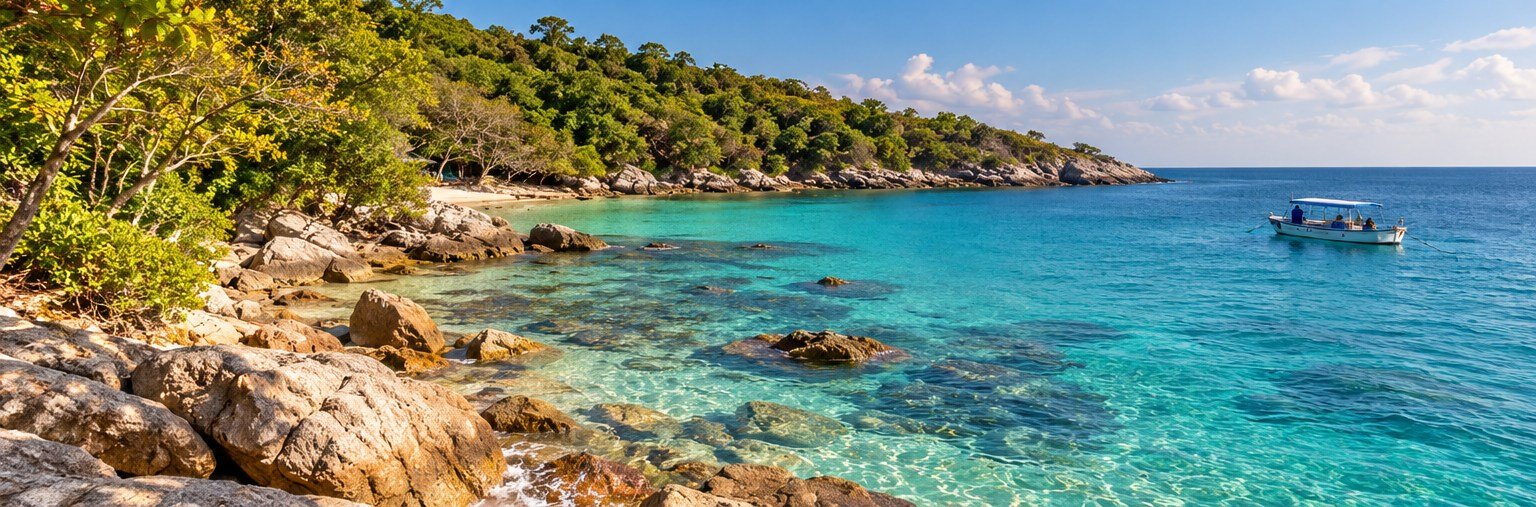
Part of Samet’s appeal is being able to make dinner the main event rather than rushing to another attraction. A beach table, a simple meal and a short walk can be enough. However, location still matters: somewhere lively after sunset may not be where you want your bedroom window.
Decide how much entertainment you want nearby
For travellers interested in music or fire performances, choose a base that makes the evening easy to reach and the return straightforward. Confirm the actual programme rather than assuming every beach has a show nightly. Keep a respectful distance from performers and equipment, and do not let a good viewpoint put children close to flames or busy service routes. [2]
For a quieter stay, ask whether there is evening music near the available room, not just whether the resort has a bar. A property can have pleasant public spaces and still include rooms close to activity. Equally, quiet rooms may require a longer walk or steps, so tell the hotel which compromise matters most.
Dietary requirements need a clear conversation
Explain allergies or dietary restrictions before ordering and avoid relying on the appearance of a dish. A seafood restaurant may use fish-based ingredients in meals that look vegetarian. For a serious allergy, obtain appropriate medical advice before travel and use a clear written explanation that the kitchen can understand.
For breakfast, compare the convenience of an included meal with the freedom to eat elsewhere. The difference matters more at an isolated resort, where alternatives may require a journey. A higher room rate with suitable meals and transfers can sometimes be better value than a cheaper room whose everyday extras are difficult to avoid.
What to budget for a short Samet stay
The following figures are editorial spending allowances for a sample trip, prepared on 4 October 2026. They are not live hotel quotations or official tariffs. The purpose is to expose the separate costs, not promise that a particular room will be available at the midpoint.
Build a Samet budget from separate items · On a narrow screen, scroll the table sideways.
| Item | How to budget | What to verify |
|---|---|---|
| Room | Use a live quote per room, per night. | Dates, occupancy, meals and cancellation terms. |
| Mainland journey | Add both directions and the Bangkok terminal ride. | Private vehicle versus per-person seats. |
| Boat | One checked service: 180 baht each way. [5] | Operator, pier, bags and whether a hotel already includes it. |
| Park entry | Published foreign adult/child example: 200 / 100 baht. [6] | Current collection, category and any inclusion. |
| Island rides / food / activity | Set separate spending allowances. | Do not treat a generic daily total as an all-inclusive quote. |
Fee references checked 4 October 2026. Other entries are a budgeting method, not price quotations.
Count travel days as well as beach days
Two nights normally contain arrival, one full day and departure. That means a premium on each transfer can have a significant effect on the total, even though the holiday feels short. Before paying extra for a fast boat, consider whether the check-in and waiting arrangements actually improve your schedule.
Similarly, a remote room may increase the cost of visiting restaurants or other beaches. A central room can reduce those journeys, but could bring a noise compromise. The sensible budget is the one attached to the holiday you will actually enjoy, rather than the lowest total assembled from incompatible assumptions.
Keep optional spending genuinely optional
Choose a main experience and leave other purchases undecided. A boat trip, a resort meal or a room upgrade may be worthwhile, but buying all three automatically is not necessary for a satisfying stay. Check cancellation terms carefully where an excursion depends on the sea.
Avoid storing every payment method together. Carry enough cash for ordinary transactions and keep a backup separately. Card acceptance, connection problems and cash-machine availability can vary, particularly outside the busiest area. A little preparation before the mainland departure is easier than reorganising the afternoon around finding cash.
A two-night budget worked through
Cost references and illustrative calculations reviewed 4 October 2026; reconfirm actual quotes and inclusions.
A transparent example for two adults
Consider two adults sharing a room for two nights. For this calculation only, choose a room allowance of 2,000 baht per night, making accommodation 4,000 baht. This is a selected budgeting assumption prepared on 4 October 2026, not an offer from a named hotel. Substituting the actual room quote is the first step before using the total.
Using the checked park rate of 200 baht for each foreign adult adds 400 baht. Using the particular 180-baht one-way boat example in both directions for both people adds 720 baht. Those two items therefore contribute 1,120 baht, assuming neither is already included in the accommodation or transport package. Avoid adding them again when comparing a genuinely inclusive deal. [6] [5]
For the remaining costs, this example sets aside 1,600 baht for the couple’s mainland return transport, 600 baht for island rides and 1,800 baht for food and drinks. These are spending allowances, not verified tariffs. With the room and the two checked-fee examples, the total is 9,120 baht for two adults before optional activities, insurance or a contingency. A further 1,000-baht reserve would bring the working pot to 10,120 baht.
Change the largest assumption first
Replacing the 2,000-baht room assumption with a 4,000-baht room adds 4,000 baht across the two nights. That difference is much larger than a modest variation in the ferry fare. Consequently, it is usually more productive to compare room categories, included breakfast and cancellation terms before spending a great deal of effort chasing a small boat discount.
A private mainland transfer can also change the calculation substantially. Replace the mainland allowance with the actual return quote, check whether the boat is included and calculate again. The example is useful because every line is visible; it is not useful as a claim that every couple can buy precisely this holiday for the same total.
Samet or a larger island?
Choose Samet for a contained beach break
Samet is appealing when you want to add a few beach nights to Bangkok without making the island the central expedition of the trip. Its bays let you concentrate on a small number of enjoyable places. A shorter itinerary can be an advantage when the alternative involves another airport, a longer road journey or several hotel changes.
However, convenience depends on the accommodation and departure point you choose. A secluded resort with a limited private-boat schedule is a different proposition from a room near the main northern arrival area. Compare the actual handovers rather than assuming every Samet holiday has the same simple connection.
Consider a larger island for a longer, more varied stay
Koh Chang in Trat has a mountainous interior, a larger spread of coastal bases and activities such as waterfall visits and boat excursions. It involves a different mainland approach and its own ferry logistics. That makes it worth considering for travellers who want more variety and can give the island a larger share of their itinerary. It is not a quick extension to a Samet afternoon. [11]
Rather than trying to visit both in a very short break, decide which holiday you are actually seeking. Three relaxed Samet nights can be more satisfying than dividing the same time between islands and spending the middle day moving. For a longer trip, a combined journey may be reasonable, but it needs a separate transfer day and confirmed connections rather than a casual line between two map pins.
Use your evenings as the tie-breaker
Imagine where you want to be after dinner. A busy beach with several nearby choices, a small cove with one favourite restaurant and a secluded resort terrace imply different accommodation decisions. Once you have answered that question, much of the uncertainty about which island or bay to choose becomes easier to resolve.
Getting around and packing lightly
Ask your hotel how local transport works for the route you need. A shared ride, a private vehicle and a resort transfer can have different prices and availability. Confirm whether a quote is per person or for the vehicle, where pickup occurs and whether a return is included. Do not assume that an outward driver will wait unless you have agreed it.
Walking is not always the shortest practical route
A map may suggest adjoining bays are close, but beach access can involve uneven ground, rocks or a longer road route. Check the path before committing to a walk in sandals with luggage or after dark. For a family or someone with reduced mobility, a known vehicle transfer can be more sensible than an improvised coastal shortcut.
Scooter rental should not be treated as the default solution to every distance. Appropriate licensing, insurance, protective equipment and genuine riding ability still matter. A holiday is not a good place to learn on unfamiliar roads. A rental company’s willingness to hand over a key does not establish that you are properly covered. [9]
Pack for boat boarding and sun exposure
Use luggage you can manage at the pier, and keep travel documents, medication and electronics in a smaller protected bag. A waterproof pouch can be useful for incidental spray, but its closure and limitations matter; do not assume an ordinary dry bag is safe for prolonged immersion.
Bring a refillable bottle and reduce disposable packaging before travelling. Samed Resorts highlights the national park’s restrictions on plastic bags and foam. Follow current park instructions, take litter back from quieter beaches and avoid collecting shells or disturbing marine life. Respecting a small island’s limited resources is part of enjoying it. [4]
Families, accessibility and bad-weather plans
A family-friendly island stay is built around manageable transfers, appropriate sleeping arrangements and a beach that suits the conditions. It is not established by a property using the word family in its description. Ask about cot or bed arrangements, pool access, shade and the path between the room and meals.
Describe accessibility needs in detail
For reduced mobility, check mainland boarding, the island arrival point, the vehicle transfer and the room route separately. A step-free bedroom does not solve a difficult boat boarding. Ask for photographs or a clear description of the relevant steps and ramps, and confirm whether assistance is available for the actual departure.
Beach landings require particular care. Some services may use a pier, while private or resort arrangements can differ. A traveller unable to step into shallow water or negotiate a moving boat should not assume that a direct beach arrival is more convenient. The most suitable route may be a longer but more predictable one.
Give unsettled weather a realistic role
On a rainy afternoon, slow down rather than immediately paying to move around the island. Read, rest, enjoy a covered meal or make the following day’s arrangements. Choose accommodation with a room and public spaces you would be happy to spend time in if the beach is temporarily unappealing.
For rough sea conditions, follow the operator and local authorities. Do not seek an unregulated alternative simply because a booked service has stopped. Contact your accommodation and onward provider early, keep receipts for any necessary changes and follow the claim requirements in your own insurance policy. Safety and a documented change of plan are more useful than trying to preserve an unrealistic timetable.
Pros, cons and mistakes to avoid
Where Koh Samet makes sense
The island is a strong candidate for a short beach break from Bangkok or Rayong, especially when you prefer one comfortable base and a relaxed daily rhythm. Different bays allow a choice between dining convenience and seclusion. A passenger crossing keeps the journey recognisably island-like without requiring a domestic flight. [1]
Where it may disappoint
A traveller expecting extensive inland sightseeing, guaranteed empty beaches or an uninterrupted coastline they can walk end to end may find the reality less convenient. Weekends can feel busier than weekday promotional photographs suggest. Some attractive resorts also make you more dependent on their meals and transfer arrangements.
The avoidable errors are booking by beach name without checking the room pin, confusing a mainland private pier with an island beach, and assuming the ferry includes park admission. Another is choosing a remote base while planning to eat in the busy north every evening. Finally, do not make a short return crossing the sole basis for a tight onward flight connection.
Frequently asked questions
Cost references and illustrative calculations reviewed 4 October 2026; reconfirm actual quotes and inclusions.
How many nights should I spend on Koh Samet?
Two nights provide a useful minimum for a Bangkok-based beach escape because you gain one complete island day between transfers. Three nights allow more flexibility for a boat trip or unsettled weather. Longer stays suit people who genuinely enjoy repeating a relaxed beach routine. They are less compelling when your main aim is to visit a different major attraction every day.
Which beach is best for a first visit?
Sai Kaew is a practical place to begin comparing accommodation when restaurants and straightforward access matter. Ao Phai, Tubtim and Wong Duean may suit a more bay-centred holiday, while Ao Prao and southern resorts merit attention for seclusion. There is no universal winner: room position, noise tolerance, transfer arrangements and the current swimming conditions matter more than a simple beach ranking. [1]
Is Samet suitable for children?
It can be, with the right room, transfer and beach conditions. Confirm the sleeping arrangement and how the family boards the boat before booking. Keep the daily schedule modest, supervise children closely around water and choose meals that are easy to reach. A quiet resort is not automatically easier if getting there requires a boarding method unsuitable for your child or pushchair.
Can I bring a car onto the island?
Plan around leaving a mainland vehicle in the Ban Phe area and travelling as a passenger, rather than expecting the conventional car-ferry experience available on some other islands. Confirm the parking arrangement, daily charge and access hours with the provider. Then arrange the island transfer separately. Do not book a mainland car on the assumption that it will be useful beside your Samet room. [5]
Is the national park fee included in the boat ticket?
Not necessarily. Treat it as separate until the booking explicitly includes it. TAT’s published foreign-visitor rates were 200 baht per adult and 100 baht per child when checked on 4 October 2026. Keep cash available, retain the receipt and follow the current collection instructions. A resort boat included in the room price does not by itself establish that park admission is covered. [6]
Can I snorkel directly from every beach?
Do not assume so. Underwater visibility, entry conditions, boats and suitable habitat differ. Ask locally about a safe place that day, and do not walk on coral or pursue animals. A guided excursion may offer more suitable sites, but it still cannot guarantee visibility or wildlife. Choose the operator’s safety arrangements and realistic programme rather than the most ambitious promotional list.
Is Koh Samet a good rainy-season choice?
It can be a pleasant quieter break, but only with flexible expectations about the sea and outdoor activities. Choose accommodation you would enjoy during an indoor afternoon and avoid a tightly connected departure. Seasonal averages cannot settle whether a particular boat will run or a particular beach will be suitable for swimming. Check local conditions close to travel and be willing to change the plan.
Should I book a mainland overnight stay before an early return flight?
For an early or costly flight, leaving the island the previous day is the more robust arrangement. A short scheduled crossing does not remove the risks of a cancelled boat, a missed handover or road delays to Bangkok. Compare the cost of an overnight stop with the consequence of missing the flight rather than treating that night as wasted beach time.
The recommendation: choose your beach rhythm first
For a first Samet visit, choose a bay that matches how you want to spend the evening, then confirm the room and transfer in detail. Stay at least two nights when coming from Bangkok, leave room for one weather-flexible activity and keep the departure day free of fragile connections.
The island is most rewarding when you stop trying to make it perform like a large sightseeing destination. A suitable beach, a comfortable place to sleep, an enjoyable meal and a boat plan that actually fits together are enough to make a short break feel complete.
Sources and fact-checking notes
Sources below were reviewed on 4 October 2026. Recheck operational details before travel. Illustrations are not used as evidence for routes, facilities or conditions.
- Tourism Authority of Thailand: Ko Samet
Destination geography, beach areas and broad seasonality. General descriptions do not establish daily swimming conditions.
- Sai Kaew Beach Resort: official property information
Primary descriptions of the different resort zones and evening facilities. A property example, not an independently inspected hotel review.
- Boonsiri: Bangkok to Koh Samet connection
Provider announcement dated September 2026. Check the selected pickup and included destination; not every listed location implies a daily route.
- Samed Resorts: arrival and environmental information
Primary hotel-group source. Mainland private piers and resort transfers are property-specific, not universal public-boat arrangements.
- Boonsiri Sealine: Samet ferry notice
Operator notice dated 14 September 2026, checked 4 October. Describes one service only. Its sample review passages are not treated as genuine testimonials.
- TAT: Khao Laem Ya-Mu Ko Samet National Park
Thai-language article published April 2026; lists foreign adult/child entry at 200/100 baht. Follow current park collection and re-entry instructions.
- Samed Villa: official accommodation descriptions
Primary room-location information around Ao Phai. Different categories do not all have identical beachfront access.
- Samed Cabana: official resort website
Primary location and room categories at Wong Duean; verify the specific room and transfer.
- FCDO: safety and security in Thailand
Official guidance on transport, personal safety and water activities. Check again before travel.
- Samed Pavilion: snorkelling programmes
Operator-associated descriptions of different island programmes. Stops and visibility remain weather-dependent.
- Tourism Authority of Thailand: Ko Chang
Trat island geography and attraction overview. Island-size rankings and unverified wildlife claims are not used here.
Illustrations in this article were created for Taylor’s Trailblazing Travels. Third-party photographs, where used, are credited beside the image or in the source list.