Ayutthaya vs Sukhothai
Two extraordinary historic landscapes, but very different demands on your time, route and energy.
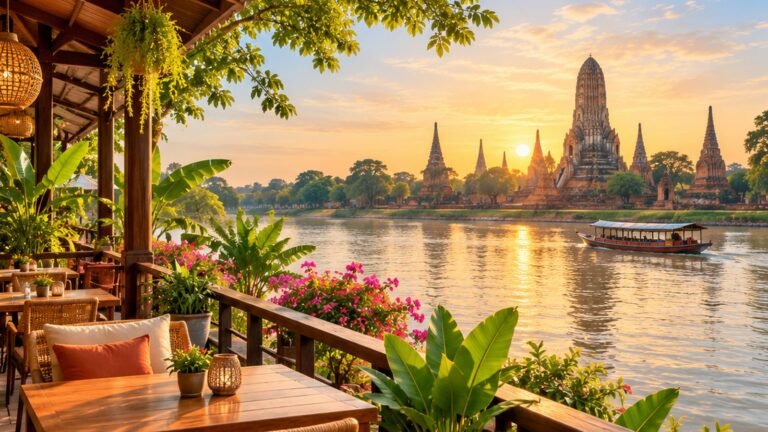
Original heritage illustration inspired by Ayutthaya; monument placement is illustrative.
Ayutthaya vs Sukhothai is not a contest that can be settled by counting temples. The more useful question is how you want to experience them. Are you adding one cultural day to Bangkok, or making room for an unhurried heritage stop on a journey north? That difference matters more than a photograph of a single famous ruin.
Ayutthaya suits a shorter Bangkok-based visit particularly well. Sukhothai asks for more travel time but rewards a stay planned around its historic landscape rather than a hurried arrival and departure. Both can be worthwhile on the same trip when they play different roles.
This comparison uses official heritage and park information, transport listings and practical route design. The choices below are planning judgements, not a claim that one city's history is more valuable than the other's. Fees and operational information were reviewed on 4 October 2026, with conflicting official admission pages identified rather than silently combined.
Some links below are affiliate links. If you book through them, Taylor’s Trailblazing Travels may earn a commission at no additional cost to you. Compare the provider’s current terms before booking.
Ayutthaya
A focused heritage day fits more easily around a Bangkok stay.
Sukhothai
Give the landscape two mornings rather than one hurried circuit.
Travel time
Entry tickets matter less than the journey you add to the holiday.
Different roles
One river-city visit and one relaxed historic-park stay.
Ayutthaya vs Sukhothai: the decision that matters
Choose the visit you have time to enjoy
For a Bangkok holiday with one spare day, begin with Ayutthaya. For a longer trip with room for a dedicated heritage stay, consider Sukhothai. That is a judgement about the route, not about which place deserves greater admiration. A destination can be extraordinary and still be the wrong addition to a particular itinerary.
The useful comparison is between complete experiences. A day from Bangkok includes getting out of the city, travelling to the ruins, moving between sites and returning. An overnight Sukhothai visit includes a longer approach but may give you a quiet morning, a midday rest and another session later. Those are different uses of holiday time.
Look beyond the most familiar photograph
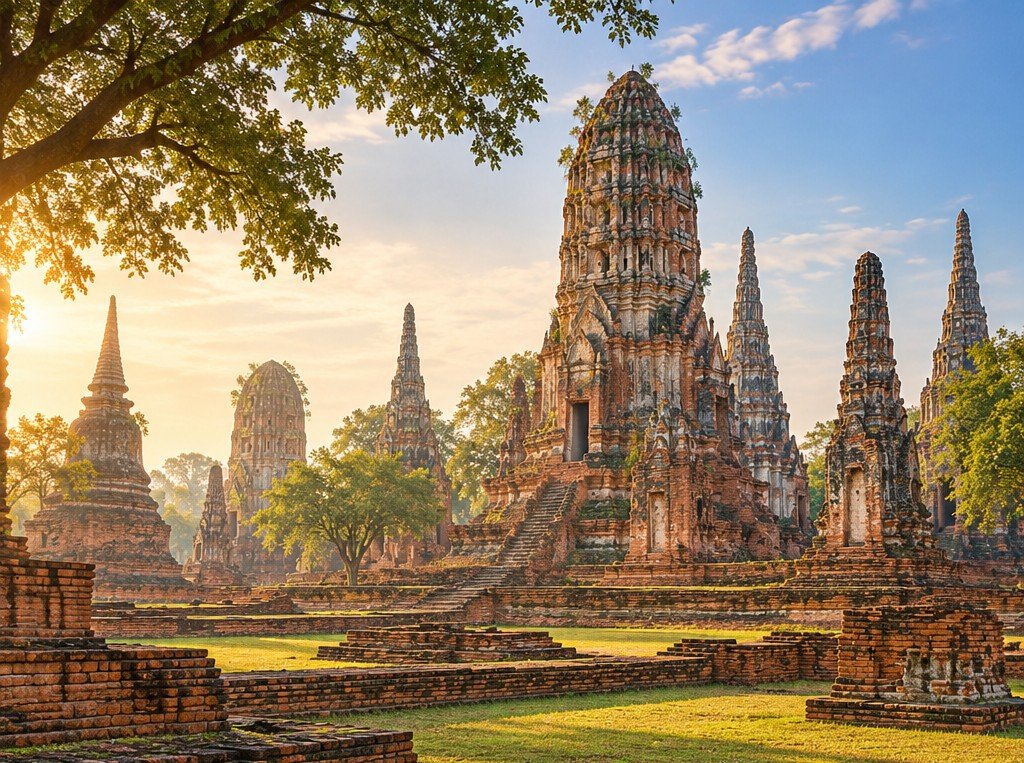
Ayutthaya's remains sit within a river-island historic setting, while Sukhothai's heritage is strongly associated with a planned landscape of monuments and water. UNESCO describes both as significant historic urban places, with distinct architectural and archaeological character. Reduce either to one photograph and you miss why the wider setting matters. [1] [2]
On a small screen, swipe within the table to see all columns.
| Your priority | A practical starting choice | Why it fits |
|---|---|---|
| One extra day from Bangkok | Ayutthaya | Less route disruption |
| Two unhurried heritage mornings | Sukhothai | A park-focused overnight stay |
| A short first taste of historic ruins | Ayutthaya | Easier to keep the commitment manageable |
| Landscape, cycling and slower observation | Sukhothai | A visit built around the park rather than a single stop |
| A detailed cultural journey north | Potentially both | Give each a different role and sufficient time |
What is historically different?
Ayutthaya: a large trading capital
UNESCO dates Ayutthaya's foundation to 1350 and describes its development as a major centre of diplomacy and commerce before its destruction in 1767. Its island setting, river connections, monumental monasteries and tall prang help explain the scale and outward connections of the former city. That context makes the gaps between surviving buildings meaningful rather than empty spaces to hurry through. [1]
For a visitor, the practical implication is to combine a few substantial sites with an explanation of how the city functioned. A knowledgeable guide, a reliable introductory account or good museum interpretation can transform a sequence of brick structures into a coherent visit. You do not need to memorise every ruler to notice the relationship between waterways, religious buildings and urban scale.
Sukhothai: monuments within a designed landscape
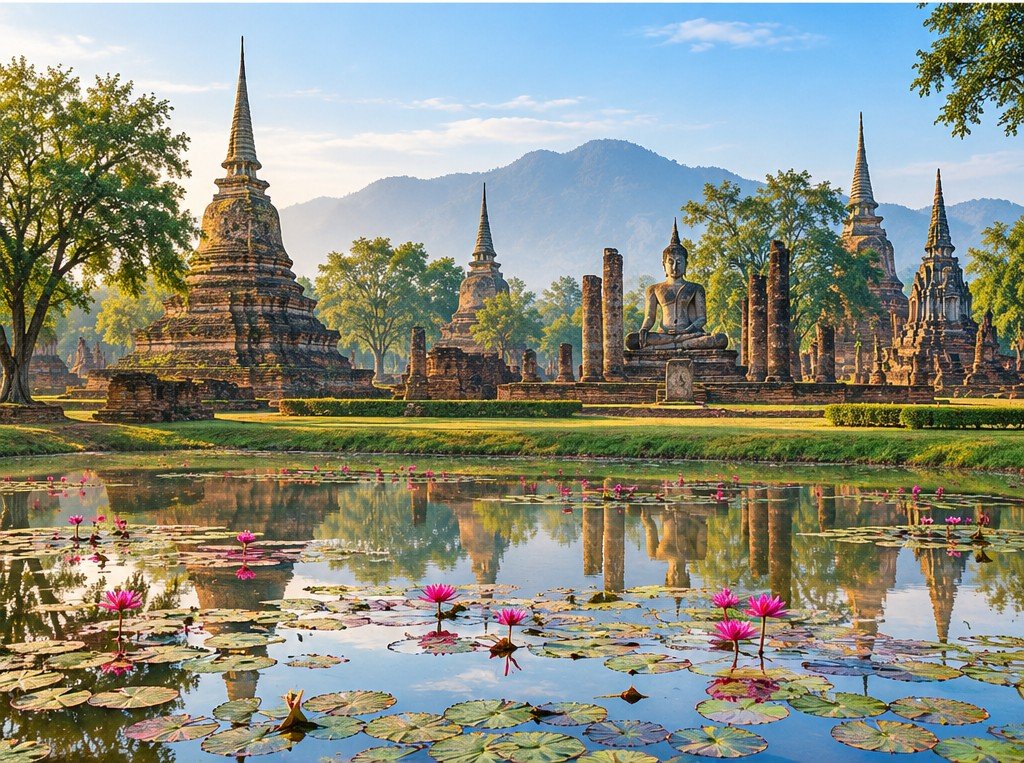
The Sukhothai World Heritage listing covers three associated historic towns: Sukhothai, Si Satchanalai and Kamphaeng Phet. UNESCO emphasises architecture, sculpture and sophisticated water-management landscapes among their shared significance. However, those three places are not one compact attraction that can all be casually added to a single park ticket or morning circuit. [2]
At Sukhothai, allow time to look across the setting, not just at the nearest Buddha image. The relationship between structures, open ground and water is part of the interest. That makes a slower pace useful even for travellers who do not usually seek out detailed architectural history.
How much time should you allow?
Ayutthaya works as a focused day or one-night stop
A day visit can provide a satisfying introduction when the attraction list is controlled. Choose several contrasting stops and leave space for a meal and the return journey. Do not confuse the number of temple names on a tour page with the depth of the experience. Five hurried entrances can be less rewarding than three sites understood properly.
An overnight stay creates a different visit: you can pause during the hotter part of the day, enjoy an evening locally and begin again before making the onward journey. It is especially useful when photography, slower walking or a museum visit matters. Nevertheless, a single night is not automatically two full sightseeing days; arrival and departure still consume time.
Sukhothai benefits from at least two nights
Two nights is a practical starting recommendation rather than an official minimum. It allows an arrival afternoon, a complete park day and a less rushed departure. With three nights, you can consider an additional historic area or simply spread the central and outer zones across more comfortable sessions.
A one-night stop is possible, particularly on an existing northern route, but examine the actual arrival time. Reaching the hotel late and leaving after breakfast barely creates a visit at all. If the timetable only leaves that window, either extend the stay or choose Ayutthaya and use the saved travel day elsewhere.
Getting to Ayutthaya from Bangkok
Compare station-to-site, not station-to-station
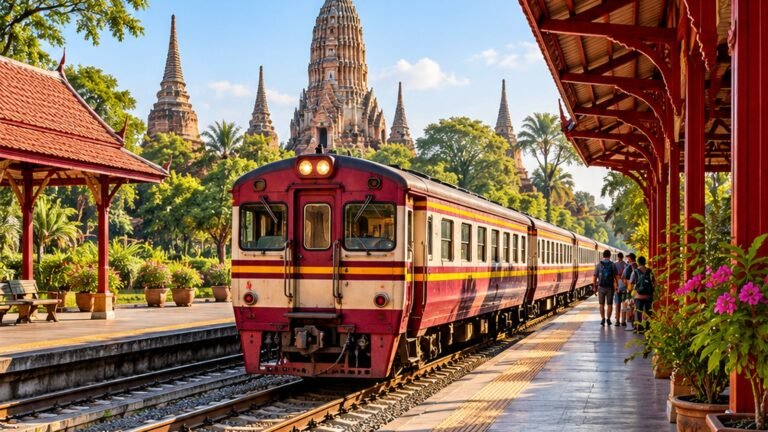
Ayutthaya is practical from Bangkok, but your arrival transport is only one part of the day. Decide how you will reach the first attraction and move between the others. A train can be economical and enjoyable, yet it does not drop you directly beside every ruin. A van or private tour can have a different arrival point and collection process.
Before buying, check the named Bangkok station or office, the return arrangement and any local transfer required. Do not assume all trains leave from the same station or that a service labelled "Bangkok" is convenient for your hotel. Read the exact departure details for the chosen service.
Independent visit or organised day?
Independent transport suits travellers who enjoy choosing their own pace and are comfortable arranging the local journey. A guided day can be more practical when time is short, interpretation matters or your group has differing walking abilities. Compare what the tour actually includes: entry, lunch, guide language, hotel pickup and the duration of each stop.
For a private arrangement, give the operator a priority list rather than accepting a long standard circuit automatically. Ask which stops can be removed if the weather changes or someone tires. A good visit should have a clear central purpose and an acceptable shortened version, not depend on completing everything exactly on schedule.
Getting to Sukhothai and continuing north
The longer approach changes the calculation
Sukhothai requires a more substantial travel commitment from Bangkok. Marketplace listings show long-distance buses and flights, with materially different departure points, arrival times and onward transfers. Treat live dated inventory as more useful than old descriptive route text, which may preserve obsolete frequencies or prices. [8]
A flight can reduce the main journey, but airport access, check-in and the drive to your accommodation still count. Bangkok Airways identifies Sukhothai Airport in Sawankhalok, separate from the historic park. Therefore, a short flight is not equivalent to stepping straight into the ruins. Arrange the last leg before deciding what fits on arrival day. [7]
A northern route can make the stop more logical
Sukhothai is easier to justify when it is part of the route rather than a hurried out-and-back detour. Compare the onward journey to your next destination while deciding how many nights to book. Make sure the departure point is reachable from the accommodation area you choose.
Do not use "on the way north" as permission to insert another destination without accounting for its travel day. A route with many one-night stops can feel less like exploring and more like repeatedly packing. Leave enough time that Sukhothai adds a distinct experience rather than becoming a brief photograph between bus journeys.
What the sightseeing feels like
Ayutthaya rewards selective movement
Think of Ayutthaya as a collection of historic places within a living urban area, not a single enclosed garden. UNESCO's description of the former city and its surrounding river system explains why the wider setting extends beyond one monument. For planning, this means deciding how to connect sites instead of assuming every worthwhile stop is a comfortable walk from the previous one. [1]
Choose contrasts: a large monastic complex, a different architectural form, and perhaps a river-related perspective. Then give each enough time for observation. A lunch break is not wasted sightseeing time if it means the final visit is still enjoyable.
Sukhothai invites a broader view
Sukhothai's central area lends itself to looking across water, lawns and groups of monuments, while outer areas need their own time and transport decisions. The park's official visitor information distinguishes the central, northern and western zones, rather than presenting everything as one uniform circuit. [4]
A bicycle can help connect the central sights, but the point is not to turn the day into a distance target. Stop, park appropriately and walk around the permitted areas. Someone on foot or using an arranged vehicle can still appreciate the landscape; cycling is a useful option, not an admission requirement or a test of being an independent traveller.
Temples and monuments: choose contrasts, not a total
Build an Ayutthaya visit around different questions
Wat Mahathat and Wat Phra Si Sanphet appear in UNESCO's account of Ayutthaya's architectural and cultural significance. Use such major sites as an introduction to the scale and organisation of the former capital rather than visiting only to reproduce a familiar camera angle. Ask what the buildings were for, how they related to one another and what survives today. [1]
Then choose another stop because it adds a different perspective. A guide should be able to explain that difference. If the reason for every addition is simply "another famous temple", the itinerary may need editing. Leave a little time to notice details that are not on the headline list.
Give Sukhothai's major images their setting
TAT highlights Wat Mahathat and Wat Si Chum among Sukhothai's principal sights. They are not interchangeable stops, and the northern-zone visit to Wat Si Chum should be planned separately from wandering the central area. Check access, ticket coverage and opening times before placing it at the very end of the day. [6] [4]
Avoid attaching a guaranteed crowd-free promise to an early visit. Starting early can make a day more comfortable and provide different light, but it does not reserve the site for you. Good pacing is useful regardless of whether another group arrives at the same time.
Cycling, walking and non-cycling alternatives
Sukhothai is the stronger cycling proposition for many visitors
For someone already comfortable on a bicycle, a park-focused Sukhothai day can make cycling an enjoyable way to connect stops. Official visitor information lists walking, private bicycle hire and other transport arrangements, while distinguishing the private operation of some visitor services from the park itself. Check what is available on your date rather than assuming every advertised option is included in admission. [5]
Inspect brakes, tyre condition, saddle adjustment and the lock before leaving the rental point. Try a short loop first. Carry water and avoid hanging a heavy bag from the handlebars. If the bike is uncomfortable after five minutes, change it before committing to a long route.
Do not force cycling into an Ayutthaya day
Cycling can also be an option in Ayutthaya, but it should match your confidence with the actual roads between your chosen sites. A peaceful-looking temple photograph tells you nothing about the junction on the way there. A local vehicle, guide or shorter walking-based route may be a better fit for mixed abilities.
For either destination, ask about step-free access, distances from vehicle stops, toilets and shaded rest points in concrete terms. "Suitable for everyone" is not enough detail for someone with limited mobility. A modified route that gives three comfortable visits is more useful than a nominally comprehensive itinerary that cannot be enjoyed.
Admission prices and the conflicting official pages
Budget from identified sources, not undated summaries
The table below records foreign-visitor figures shown on the Fine Arts Department's park contact pages when checked on 4 October 2026. Eligibility, included sites, validity and vehicle charges should still be confirmed locally. These are not all-inclusive sightseeing-day prices. [3] [4]
On a small screen, swipe within the table to see all columns.
| Ticket reference | Figure displayed | What to confirm |
|---|---|---|
| Ayutthaya individual admission reference | THB 80 | Which monument is covered |
| Ayutthaya combined ticket | THB 300 | Participating sites and validity |
| Sukhothai central zone | THB 200 | Visitor eligibility and any vehicle charge |
| Sukhothai northern zone | THB 120 | Coverage of the intended sites |
| Sukhothai western zone | THB 120 | Access and closing time |
| Sukhothai combined ticket | THB 400 | Zones covered and use across your planned visit |
Why some guides show lower amounts
A separate official Sukhothai QR-code page still lists THB 100 per zone, also checked on 4 October 2026. This guide uses the more detailed contact-page figures as a conservative working budget and flags the disagreement. It does not claim to have resolved the discrepancy with the ticket office. [5] [4]
The same caution applies to older Ayutthaya prices copied between travel pages. Before arguing that a booth is overcharging, verify which ticket, visitor category and site are involved. Keep small cash available, retain tickets where re-entry or combination coverage matters, and ask before buying a pass you will not fully use.
Two quick ticket calculations
Using the contact-page figures checked on 4 October 2026, Sukhothai central plus northern admission totals THB 320, compared with THB 400 for the combined ticket. The extra THB 80 only makes sense when its coverage and validity suit the rest of your intended visit. Ask whether separate entries or visits on different days change the calculation before paying. A pass is useful because you will use it, not because its name sounds more complete. [4]
For Ayutthaya, the same dated reference gives THB 80 per participating individual site and THB 300 combined. Three qualifying individual entries would total THB 240, while four would total THB 320. That arithmetic is only relevant if the monuments you actually want are included in the combined ticket and its terms fit your visit. Do not add an unwanted stop simply to justify a pass already purchased. Check the included-site list at the booth, then choose the ticket that supports the day you want to spend. [3]
The real cost comparison
Travel and accommodation matter more than small entry differences
An Ayutthaya day from an existing Bangkok base may avoid an additional hotel move. Sukhothai usually adds a longer transfer and dedicated nights, even if the day-to-day local spending is modest. Therefore, compare the extra cost of the whole stop rather than asking only which park ticket is cheaper.
Build a simple total for each option: main transport, local transfers, admission, accommodation nights that would not otherwise be needed, and the activities you genuinely plan to book. Keep ordinary meals separate if you would be buying them elsewhere anyway. This avoids making one destination look artificially expensive by counting costs that belong to both.
Use your own itinerary as the budget unit
For an illustrative calculation, take the verified admission references above and add actual transport and room quotes for your dates. A pair visiting fewer Ayutthaya sites may not need a combined ticket; a Sukhothai visitor concentrating on the central and northern zones should compare those individual totals with the combined pass. Do not buy maximum coverage simply because it sounds comprehensive.
Room prices and transport quotations should be compared with the same cancellation terms and passenger count. A cheap overnight bus and a daytime flight create different arrival conditions, and a low room rate far from the park can add repeated transfers. The cheapest isolated booking is not necessarily the lowest-cost comfortable visit.
Where to stay in Ayutthaya
Choose your evening and morning first
For a short stay, select accommodation around the part of Ayutthaya you will actually use. A convenient base for central historic sites may make an early start simpler; a riverside property may provide a pleasant evening but require additional transport. Neither advantage should be assumed from a broad city search result.
Check the actual entrance, luggage storage, check-in time and how you reach the first site. Ask whether a local driver or bicycle can be arranged, and confirm what that service costs separately. A room beside a busy road can look close to everything while providing a less restful night than expected.
One night should solve a problem
An overnight stay is worthwhile when it gives you a calmer pace, a useful evening or a better next-day route. It is less useful when you arrive too late to enjoy the place and leave so early that the hotel simply adds packing and transfers. Compare the stay against returning to the same Bangkok room, especially with large luggage.
If you are continuing north, confirm the onward station and departure before selecting the hotel. The most photogenic view may not be the easiest base for a very early train. Decide whether the view, sightseeing convenience or departure logistics is the priority rather than expecting one property to optimise all three.
Where to stay in Sukhothai
Old town and modern town serve different purposes
For a visit centred on the ruins, begin by searching around Mueang Kao and the historical park. Verify the actual route to the entrance; "near the park" can cover different distances and roads. A base that makes an early start and midday rest easy can improve the whole visit without requiring an expensive room.
The modern town can suit other priorities, including a different range of everyday services or an onward-transport arrangement. However, do not assume that a hotel labelled Sukhothai places you beside the main monuments. Ask how long the transfer takes at the times you plan to travel and whether it must be booked in advance.
Check the quiet hours as well as the distance
A park-area stay should have a workable dinner plan and a way back after dark. A modern-town stay should have a workable early-morning route to the park. Both are manageable when arranged, but they create different routines.
For a short visit, avoid changing hotels solely to sample both areas. The time spent checking out, moving bags and waiting for another room may be better used at the monuments or resting. Choose one base that supports the intended days, then organise an excursion from it if another neighbourhood interests you.
A satisfying Ayutthaya day plan
Morning: fewer sites, more understanding
Leave Bangkok early enough to have a useful morning, but choose a departure you can reach without a frantic hotel exit. Begin with one major complex and allow time to understand its layout. Then move to a contrasting site rather than adding the nearest name simply because it is famous.
A practical morning is two substantial visits with a short transfer between them, not continuous rushing. Keep water, sun protection and modest temple clothing accessible. The exact order should respond to current access, your arrival point and the guide's local information rather than an inflexible list copied from a map.
Afternoon: protect the return
Take a proper lunch break. Afterwards, choose either another significant site, an interpretive museum visit that is confirmed open, or a slower river-related perspective. Do not automatically add all three. Leave time to reach the return station or meeting point without watching the clock through the final attraction.
If staying overnight, turn the late afternoon into a gentler session and move the remaining priority to the next morning. A second visit made with fresh attention can be more rewarding than a fifth stop completed while hot and tired. The purpose is to leave with a sense of the former city, not only a camera roll of entrances.
A satisfying Sukhothai two-night plan
Arrival and the first full morning
Use arrival day to settle in, check the park entrance and arrange the next morning's transport. A short orientation walk or bicycle test is enough after a long journey. Avoid committing the main visit to the final hour before a zone closes simply because you have already reached the hotel.
On the full day, begin with the central area and a deliberately modest route. Pause at the principal monuments, then allow unplanned time to look across the landscape. Return for a meal and rest if the heat makes that sensible. Later, choose another session only if the current opening hours and your energy support it.
Departure morning or an additional day
Use the next morning for the northern zone or another clear priority, provided the onward departure leaves adequate time. Do not assume every zone opens as early or closes as late as the central area; the official visitor page lists different hours. [4]
With an extra night, a separate historic town or a more detailed outer-zone visit becomes easier to consider. However, its transfer and admission need their own plan. The combined UNESCO designation does not remove the physical distance between the associated towns. A local guide can help decide whether that addition matches your interests better than another slow session in Sukhothai itself. [2]
Can you visit both on one Thailand trip?
Give the stops different jobs
A good two-destination itinerary might use Ayutthaya as an introduction to the river-city capital, followed later by a slower Sukhothai stay focused on landscape and cycling. That creates contrast rather than repetition. It also avoids demanding that each place provide the same experience in the same amount of time.
Before booking, place the actual travel days on a calendar. Count nights, not just destination names, and mark the hours that arrival and departure consume. If the result leaves very little uncommitted time, remove a stop or extend the trip. Heritage visits benefit from attention; they are poor candidates for a relentless series of late arrivals.
Do not make both compulsory
For a first Thailand holiday that also includes Bangkok, mountains and a beach, one of the two may be enough. Choose the destination that fits the route and the group's interest. Someone who is only mildly interested in ruins may enjoy one thoughtful day more than several successive days of similar-looking photographs.
Conversely, a traveller fascinated by architecture can find meaningful differences across both places. The decision should come from that interest, not fear that omitting a famous destination makes the holiday incomplete. A well-paced route is a positive choice, not a failure to see everything.
Heat, rain and respectful visiting
Comfort is part of good sightseeing
Both visits involve substantial outdoor time. Break the day into sessions, carry drinking water and choose footwear that remains secure on uneven surfaces. Dress respectfully for religious places and follow the specific signs at each site. Do not climb on ruins or cross barriers for a less crowded photograph.
When rain arrives, be willing to pause rather than pushing through slippery surfaces. Keep a dry layer or rain cover for electronics and paperwork. A museum or cafe break can be useful, but check its actual opening and transport arrangements rather than treating every indoor pin on the map as an available backup.
Check temporary conditions without overgeneralising
The official travel advice reviewed on 4 October 2026 includes flooding disruption in parts of Thailand. Reconfirm the routes and sites relevant to your trip; this is not evidence that both historical parks are closed. Ask the hotel or operator about current access and leave a flexible alternative where practical. [10]
For cycling, road travel or any boat component, use appropriate operators and follow local safety instructions. Do not assume that a cultural outing carries no transport risk because the attractions themselves look peaceful. Plan the movements between them as carefully as the entry tickets. [9]
Pros and cons: what each choice gives up
Ayutthaya's strengths and limitations
Ayutthaya is a strong choice when proximity to a Bangkok itinerary matters. It can provide a substantial cultural experience without requiring a dedicated flight or several extra hotel nights. An overnight stay offers a useful upgrade in pace rather than being necessary for every visitor.
The compromise is that an independent day still needs transport between selected sites, and a rushed tour can turn the visit into a repetitive sequence. The famous images are only part of the place. A short visit works best when the route is selective and someone in the group is willing to prioritise understanding over quantity.
Sukhothai's strengths and limitations
Sukhothai supports a slower, landscape-centred visit and can reward two mornings rather than one intense session. The central and outer-zone distinction also allows you to build the visit in manageable parts. For confident cyclists, that can produce a particularly enjoyable rhythm. [4] [5]
Its main disadvantage for a short Bangkok holiday is the additional travel commitment. A park-focused hotel may also be less convenient for another type of evening or an onward departure. None of those makes Sukhothai inferior; they explain why it should earn its place in the route rather than being inserted as a casual detour.
Common planning mistakes
Comparing a day trip with a full stay
Do not judge Ayutthaya only by a hurried day tour and Sukhothai only by an ideal two-night visit. A fair comparison asks how each works with the same available time and energy. Likewise, avoid assuming that more nights automatically create more interest; the activities still need to match the travellers.
A related mistake is booking a hotel before checking which part of Sukhothai it occupies. The park area and modern town create different daily transport needs. Read the map, then read recent location comments, and ask the property any unresolved questions before paying.
Treating tickets and geography as interchangeable
A UNESCO listing is not a visitor pass. Sukhothai's associated historic towns are not all contained within the central park, and a combined park ticket should not be assumed to cover every museum or neighbouring site. Confirm scope and validity locally. [2] [4]
Finally, avoid copying old entrance prices as though a recent article date proves they were checked. The conflicting official Sukhothai pages show why transparent sourcing matters. Carry a reasonable margin, keep the current source available and ask politely at the booth rather than building the whole budget around the smallest number found online.
Frequently asked questions
Which is better for a first visit to Thailand?
For a Bangkok-based itinerary with limited spare time, Ayutthaya is usually the more practical first choice. For a longer trip with a strong interest in historic landscapes, Sukhothai may be worth the extra journey. This is a recommendation about fit, not a hierarchy of cultural value. Look at the days you can actually allocate, the transport involved and whether your group prefers a focused excursion or a slower overnight stay.
Is Sukhothai worth visiting after Ayutthaya?
It can be, especially when you want to compare different historic settings rather than repeat the same temple checklist. Sukhothai's landscape and associated historic towns offer a distinct context. However, leave sufficient time for that difference to emerge. Arriving late, taking one rushed circuit and leaving immediately is less likely to justify the additional travel than a stay with a complete day and two useful mornings. [2]
Can Ayutthaya be enjoyed without a guide?
Yes, provided you arrange the movements between sites and bring some reliable historical context. A guide is most useful when interpretation, limited time or the group's access needs justify the cost. Independent travel does not require cycling, and hiring transport does not mean surrendering control of the itinerary. Choose a few contrasting sites, allow for heat and meals, and preserve enough time to reach your return departure calmly.
Do I have to cycle in Sukhothai?
No. Official visitor information includes walking and other visitor-transport options alongside bicycle hire. Confirm what is operating and which zones can be reached in the way you prefer. Cycling is appealing when you are already comfortable on a bike, but it should not become an obstacle to visiting. A shorter route on foot or a properly arranged vehicle can provide a rewarding day without forcing anyone beyond their confidence or physical ability. [5]
Are the old 100-baht Sukhothai ticket prices still correct?
The official QR page still displays THB 100 per zone, but the park contact page reviewed on 4 October 2026 shows THB 200 central, THB 120 north, THB 120 west and THB 400 combined. This guide budgets from the contact page and discloses the disagreement. Confirm the applicable ticket and any vehicle charge at the booth; the research did not include a telephone confirmation from park staff. [5] [4]
Should I stay in old or new Sukhothai?
For a short visit centred on the historical park, start with the old-town/Mueang Kao area and inspect the actual route to the entrance. The modern town can suit other priorities, but adds a daily journey to the ruins. Neither label guarantees a particular atmosphere, accessible route or restaurant choice. Match the hotel to your morning start, dinner plan and onward departure, then check the precise entrance and transfer arrangements.
Is one night enough in either place?
One night can work in Ayutthaya when it gives a useful afternoon and morning. In Sukhothai, it depends heavily on arrival and departure times; two nights is the more forgiving starting plan. Count usable hours rather than assuming a night equals a full day. A late arrival followed by an early departure gives little opportunity to appreciate a historic landscape, no matter how close the hotel appears to the park.
Can I fly to Sukhothai and visit the ruins immediately?
You can arrange a transfer after a suitable flight, but do not treat the airport as the historical park entrance. Bangkok Airways places the airport in Sawankhalok, so the journey continues on the ground. Build in baggage collection, the hotel or luggage arrangement, and current park hours. A relaxed arrival session may be sensible; making the main visit depend on a perfectly punctual flight is a more fragile plan. [7]
The final choice
Choose Ayutthaya when you want a meaningful heritage addition without reshaping a short Bangkok holiday. Sukhothai is the better fit when you can give the historic landscape a proper stay and make the longer journey part of a coherent route. Choose both when your interest and available days support two different experiences.
Whichever you select, spend the budget on useful time: a well-located base, appropriate local transport, good interpretation where needed and a pace that allows you to notice what you are seeing. A smaller number of thoughtful visits will usually leave a clearer memory than the longest possible list of ruins.
Sources and fact-checking notes
Research reviewed on 4 October 2026. Official pages are prioritised; conflicting information is identified rather than silently reconciled. Timings described as planning windows and hypothetical budgets are editorial assumptions, not supplier guarantees. Recheck details that affect your own dates.
- UNESCO: Historic City of AyutthayaHistorical context, river-island setting and the significance of the World Heritage property.
- UNESCO: Historic Town of Sukhothai and Associated Historic TownsHistorical and landscape context. The listing includes Sukhothai, Si Satchanalai and Kamphaeng Phet, not one single visitor site.
- Fine Arts Department: Ayutthaya park visitor informationThai-language official page reviewed on 4 October 2026: foreign admission 80 baht and combined ticket 300 baht; listed general hours 08:00-18:00. Confirm coverage at the booth.
- Fine Arts Department: Sukhothai park visitor informationCurrent park contact page lists foreign admission of 200 baht central, 120 north, 120 west and 400 combined. Zone hours differ.
- Fine Arts Department: Sukhothai QR visitor pageA separate official page still shows 100 baht per zone. This inconsistency is disclosed; the more detailed park contact page is used for budgeting.
- Tourism Authority of Thailand: SukhothaiTemple highlights and regional context, including Wat Si Chum and Wat Mahathat.
- Bangkok Airways: Sukhothai AirportConfirms the airport is in Sawankhalok, separate from the historical park. Flight dates and transfers need a separate booking check.
- 12Go: Bangkok to SukhothaiMarketplace comparison of bus and flight journeys. Static prose can lag live inventory; use named services and exact dates.
- FCDO: Thailand safety and securityOfficial guidance on road travel, swimming, boats, valuables and emergencies. Read the complete current advice before departure.
- FCDO: Thailand travel adviceThe version checked on 4 October 2026 includes severe-flooding disruption advice. This is a dated notice, not a permanent description of conditions.
Illustrations in this article were created for Taylor’s Trailblazing Travels. Third-party photographs, where used, are credited beside the image or in the source list.