Seasons / Hot-weather travel
Thailand Hot Season Guide
Trade the overloaded sightseeing day for well-timed visits, proper cooling and a holiday everyone can enjoy.
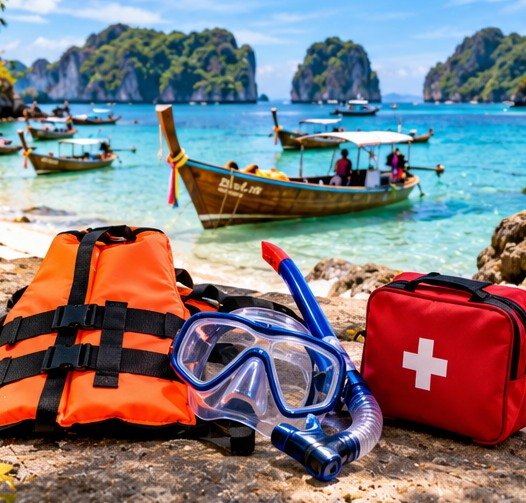
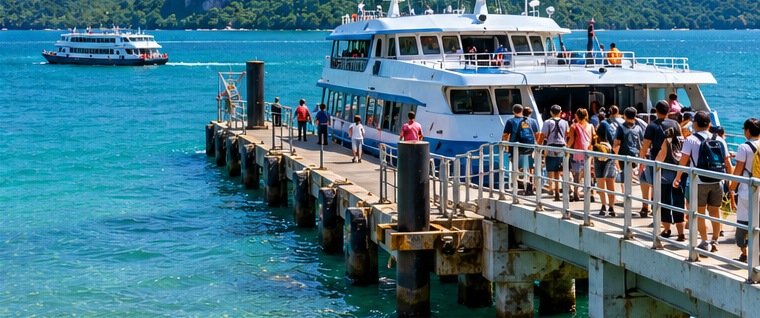
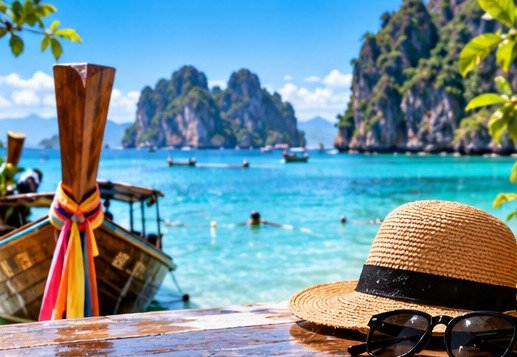
Original hot-weather travel scene. Blue skies and shade in an illustration do not establish current heat, UV or swimming conditions.
A Thailand hot season guide should help you enjoy the country without turning every sightseeing day into a test of endurance. The problem is rarely solved by carrying one more bottle of water while keeping an overfilled itinerary unchanged. Where you stay, when you walk and how easily you can reach a cool place often matter more than another accessory.
Start by separating the experiences you want from the timetable you originally imagined. A temple visit, a good meal and time by the sea can still make a rewarding day, but they do not all need to happen during the most exposed hours. A comfortable afternoon indoors is part of a well-designed hot-weather holiday, not wasted time that must be recovered with a rushed evening.
This guide combines official seasonal information with public-health and manufacturer advice. The route examples, daily rhythm and budget comparisons are editorial planning suggestions, not personalised medical advice or promises about a particular week. Travellers with health conditions, relevant medication or concerns about heat tolerance should obtain individual advice before departure. The aim is a trip that remains enjoyable at a sensible pace, rather than a supposedly perfect plan that depends on everyone ignoring how they feel.
Daily rhythm
One main exposed visit
Leave a real cool break rather than a vague pause.
Accommodation
Book for the afternoon too
Useful cooling and location change the whole day.
Protection
Heat and UV are different
Use shade, suitable clothing and sensible routines.
Stop signal
Take serious symptoms seriously
Emergency signs need help, not another attraction.
Thailand hot season guide: understand the calendar
A broad season is not an exact forecast
The Thai Meteorological Department places the hot season broadly from mid-February to mid-May. Its weather classification describes 35.0-39.9 degrees Celsius as hot and 40 degrees or above as very hot. Those categories describe temperature, not a universal personal limit or a forecast that every location will reach the same figure. [1]
Heat can still matter outside those months. Therefore, check the conditions for the actual destination and dates instead of assuming a booking labelled shoulder season will be comfortable. A daily maximum also does not explain the temperature inside an exposed vehicle, on a sunlit pavement or in a poorly cooled room.
Design for a range rather than an ideal day
Identify which activities require prolonged exposure and which can move indoors or into a different part of the day. Keep the most demanding plans optional until the conditions and your own response are clearer. A booking made months earlier should not dictate how hard someone pushes themselves in unfamiliar heat.
The framework below is selected by practical exposure and access to relief. It is not a ranking of destinations by measured temperature or a guarantee that any itinerary is suitable for everyone.
| Part of the trip | Useful design choice | Weak arrangement to avoid |
|---|---|---|
| Sightseeing | One main exposed visit and nearby indoor options | Several distant outdoor sites back to back |
| Accommodation | Effective cooling and a room worth using by day | Booking only for a pool or low nightly price |
| Local travel | Short, planned walks and manageable waiting | Long exposed searches for a pickup point |
| Beach time | Shade, suitable timing and current water advice | Assuming sea breeze removes heat and UV risks |
| Active excursions | Flexible intensity and an exit option | Treating a prepaid booking as a reason to continue |
Temperature, humidity and UV are different measurements
Read more than the headline number
The heat index combines air temperature and relative humidity to describe how conditions can feel. National Weather Service guidance explains that its standard heat-index values concern shaded conditions; direct sun can add to the burden. A weather app’s number therefore should not be treated as a precise reading of your body’s situation. [2]
A sheltered walk, an exposed climb and a crowded queue can feel very different on the same day. Add the actual activity and access to cooling to the decision rather than choosing a universal temperature at which you will automatically do everything or nothing.
UV needs its own protection plan
The UV Index measures ultraviolet radiation, not how hot the air feels. WHO advises protective action as UV levels rise, using shade, clothing, a hat, sunglasses and sunscreen. A breeze or cloudy spell is not a reason to decide that sun protection has become unnecessary. [3]
Look at the local UV information alongside the forecast, and plan exposed activities accordingly. Avoid translating a UK seasonal clock-time recommendation mechanically into a precise Thai schedule. The useful principle is to reduce exposure around the strongest sun and follow local conditions, not to assume one fixed timetable removes the risk.
Choose regions for the whole holiday, not one temperature
City, coast and north have different trade-offs
A coastal breeze may feel pleasant, but it does not make beach exposure unlimited or remove the need for shade. A northern mountain setting may appeal, yet dry-season smoke can be a separate issue. Check air quality as well as heat before planning strenuous outdoor days in an affected region. [4]
For a city stay, the important advantage may be access to indoor places and short transport connections rather than a lower temperature. For an island stay, the advantage may be a comfortable resort and a slower rhythm. Evaluate the practical day rather than selecting a destination from a single weather statistic.
Keep the alternative genuinely attractive
If you dislike spending afternoons indoors, consider whether another season better suits the trip. Replacing every planned activity with a mall visit is not a successful holiday merely because it reduces exposure. Choose dates and a route that still match your interests after sensible adjustments.
Build a daily rhythm with a real midday break
Leave before the day becomes crowded and exposed
Where opening hours and conditions permit, place the main outdoor visit earlier, then move towards lunch and a cool indoor setting. The exact start time should suit the attraction, transport and people travelling. An early departure is useful only if everyone has rested and can reach the site without an exhausting scramble.
This is a sample rhythm, not a safety timetable: breakfast, one focused visit, a nearby indoor stop or meal, a substantial rest, then a modest evening activity. Keep the middle of the day deliberately light rather than inserting another outdoor attraction because the map shows spare time.
Make the break a destination, not a vague intention
Know where you will rest before setting out. A hotel room, appropriate museum or comfortable indoor venue is more dependable than hoping to find a cool cafe at the moment someone becomes tired. Check opening hours, access and whether the space actually offers effective relief from the conditions.
Allow the evening to remain optional. A successful morning does not create an obligation to fill the night, and an afternoon rest is not permission to ignore continued symptoms. Judge the day by how it works for the group, not by the number of places crossed off a list.
Bangkok temples and historic sites without overloading the day
Make one exposed site the main event
A temple or historic precinct can involve more walking, queues and open space than a quick glance at a map suggests. Choose the visit that matters most and give it enough time without immediately adding several others. Read current opening and dress requirements directly before leaving.
Wear a suitable modest outfit that is comfortable for movement and the venue’s rules. Do not rely on an improvised layer that feels unbearable after a few minutes, or assume every attraction provides something appropriate to borrow. A small amount of preparation reduces unnecessary waiting and extra walking.
Keep the next stop close and useful
Pair the exposed visit with a meal or indoor attraction in a practical area, not an ambitious cross-city transfer. Compare Bangkok museum and indoor activity options for ideas, then verify the actual location and opening information before booking.
Ask a guide how the pace, shade and breaks are handled, especially on a private tour. A flexible guide should understand the need to adjust the programme. Paying for more stops is not better value when the extra exposure makes the day uncomfortable or unsuitable.
Beaches, pools and boat trips still need limits
Cooling water does not cancel sun exposure
A beach or pool can feel like the obvious solution to hot weather, but time in the water still requires sun protection and ordinary safety precautions. Keep shade available and follow local flags, staff guidance and current sea conditions. A clear sky is not proof that a particular beach is safe for swimming. [5]
Choose a base where you can return indoors easily. A long, exposed walk between the room and the only shaded area can make a simple beach day harder than the hotel photographs imply. Check the actual layout when travelling with children or anyone who needs assistance.
Ask about the whole boat excursion
Before booking, ask how much time is spent in direct sun, what shelter is available and how long the full journey lasts. The attractive swim stop may be only a small part of an otherwise exposed day. Choose the trip for its complete format, not just the headline destination.
Browse Thailand activity listings on Viator as a starting point, then confirm those details with the operator. Do not use a generic activity description as reassurance about shade, cooling or suitability. The right choice may be a shorter outing or a land-based day instead.
Choose accommodation for cooling and location
Ask about the actual room
Air conditioning in the amenity list does not tell you how comfortably the intended room performs or whether there are limitations on its use. Ask about the room category, windows, afternoon exposure and any restrictions relevant to a daytime rest. Read recent reviews for practical observations rather than relying only on a star rating.
When shortlisting Bangkok accommodation on Booking.com, consider how easily you can return during the day. A slightly more convenient base can reduce repeated exposed journeys and make a proper break much more realistic.
Inspect facilities beyond the pool
For a coastal stay, compare Phuket accommodation and ask about shaded areas, food access and the distance between the room and facilities. Similarly, Koh Samui accommodation on Agoda can help build a shortlist, but direct questions remain necessary.
Local transport: reduce exposed waiting and unnecessary walking
Plan the beginning and end of each journey
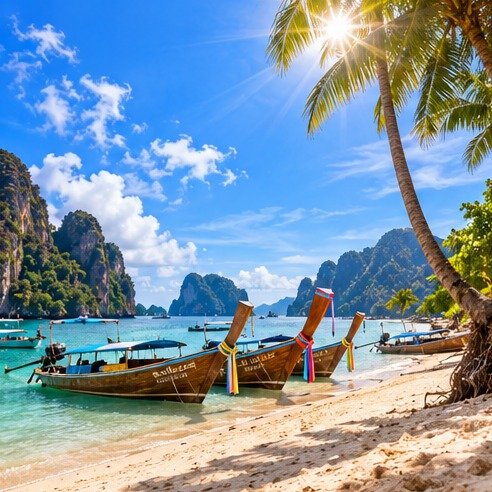
Knowing which vehicle to take is only part of the trip. Identify the pickup point, the sheltered place to wait and the final walk from arrival to the destination. A low fare does not automatically mean good value when it comes with a long exposed search carrying luggage.
Keep the address and meeting instructions accessible offline. A compatible Airalo data plan for Thailand may help with changes, but it should support a prepared journey rather than becoming the only place the directions exist.
Compare the complete door-to-door effort
For a longer transfer, such as Bangkok to Hua Hin transport, look at the mode, pickup arrangements and luggage handling. A journey that appears shorter on a booking page can still involve awkward waiting or several separate connections. Choose for the complete experience, particularly with children or mobility needs.
Avoid scheduling an ambitious outdoor visit immediately after a tiring travel day. Check in, recover and decide what feels sensible once you know the room and local conditions. Protecting the first afternoon often produces a better next morning than trying to recover imaginary lost sightseeing time.
Hydration: make drinking practical, not competitive
Keep appropriate drinks accessible
Carry safe drinking water and arrange regular opportunities to obtain more. A reusable travel water bottle is useful when filled from a source you know is suitable; the bottle itself does not make unsafe water drinkable. Keep it easy to reach rather than buried beneath the day’s equipment.
There is no single number of litres that this guide can safely prescribe for every visitor. Activity, body size, health conditions and medical restrictions differ. CDC heat guidance emphasises staying hydrated and reducing heat exposure, while people with individual fluid advice should follow their clinician’s plan. [6]
Food, rest and cooling belong in the same plan
Do not treat drinking as a way to make an overloaded itinerary safe. Regular meals, breaks and a suitable cool setting remain part of the day. Avoid relying on alcohol as the main fluid during a hot outing, and be cautious about an evening that leaves the next morning poorly rested.
For prolonged exertion, illness or questions about electrolyte products, get appropriate professional advice. More is not automatically better, and concentrated or incorrectly mixed products are not a shortcut to heat tolerance. The aim is a sensible routine, not competing to consume a particular quantity because a travel checklist supplied a universal target.
Recognise when heat discomfort needs a response
Stop early rather than pushing through
Heat exhaustion can involve tiredness, dizziness, headache, nausea, excessive sweating or cramps. Stop the activity, move to a cool place, loosen unnecessary clothing and begin cooling. Someone who is fully alert and able to swallow can take fluids. Seek medical advice when symptoms are concerning, worsening or difficult to manage. [7]
Do not require someone to finish a temple visit, reach the next scheduled stop or prove a particular temperature reading before taking them seriously. The useful response begins with how the person is doing, not whether everyone else appears comfortable.
Know the emergency signs
Confusion, collapse, seizures, severe breathing difficulty or a very hot and seriously unwell person can indicate an emergency. Heatstroke can occur with sweating as well as dry skin. Call for urgent help; Thailand’s local emergency medical number is 1669. Do not wait for a 30-minute trial when serious signs are present. [8] [4]
Sun protection that fits the day
Use several forms of protection together
Choose shade and covering clothing, and use appropriate sunscreen rather than expecting one product to do everything. NHS guidance recommends at least SPF30 with suitable UVA protection and regular reapplication, including after swimming or sweating. Follow the actual product instructions instead of stretching a small amount over an entire day. [9]
Compare broad-spectrum travel sunscreens by suitable protection, authenticity and the needs of the person using them. A marketplace search is not a guarantee that every listed product has the right specification or suits sensitive skin; read the label carefully.
Make the wearable items comfortable
A comfortable wide-brimmed travel hat and properly specified UV-protective sunglasses are more useful when you actually wear them. Check fit before departure, including with a backpack, hearing aids or prescription glasses where relevant.
Clothing and small cooling accessories
Prioritise loose, useful garments
Choose comfortable clothing that allows movement and suits the activities and venues. A lightweight covering travel shirt can be useful for sun exposure and modest dress, but inspect the material and any claimed UV rating. Not every thin fabric provides identical protection.
Plan enough clothing for comfort with a realistic laundry cycle. A completely minimal wardrobe can become inconvenient when everything is damp with sweat and you are leaving early. On the other hand, carrying several additional heavy outfits creates more work during the hottest transfers.
Treat a fan as comfort equipment
A small portable fan may improve comfort in some settings, but it is not a substitute for a cooler environment, rest or medical care. Do not use it to justify remaining in conditions that are making someone unwell. The same applies to cooling towels and other small accessories.
Try any gadget before packing it, including its battery and charging requirements. A dependable hat and a lighter bag may solve more practical problems than several devices that all need power. Keep the kit focused on what you will use rather than what promises the most dramatic relief in an advertisement.
Children, older travellers and mixed-pace groups
Set the pace for the people actually travelling
Children, older adults and people with some long-term conditions can need additional care in heat. Plan frequent opportunities for cooling and check how everyone is doing rather than waiting for a complaint. Public-health guidance identifies these groups as needing particular attention. [6]
Give carers a manageable load and a simple route back to accommodation. A day that is technically possible for the fastest adult may be unsuitable for the whole group. Choose fewer exposed transitions and avoid making anyone feel responsible for spoiling the holiday by needing a break.
Keep choices available without splitting the group unsafely
It can help to have an optional short activity for people who want more, while others rest in an appropriate setting. Agree the meeting arrangement and communication first. Do not leave a vulnerable traveller waiting alone in an unsuitable place while the rest complete a long visit.
For families, familiar food and a predictable rest routine may be more valuable than squeezing in another attraction. Keep the day understandable and avoid replacing a missed outing with a late, tiring evening that makes the next day harder as well.
Medication and health conditions deserve advance planning
Ask about heat before departure
Some medicines and health conditions can affect the response to heat or dehydration. CDC’s clinician guidance highlights medication-related considerations and the importance of an individual plan. Ask a clinician or pharmacist what applies to you, and never change a prescribed dose based on a travel article. [10]
Discuss any existing fluid restriction, previous heat illness or activity limitation before committing to demanding excursions. The answer may influence the accommodation and timetable more than the packing list. An early conversation is easier than trying to resolve the question from a remote hotel.
Keep storage and access realistic
Follow the medicine’s storage instructions and professional advice. A hot car, direct sun or an unsuitable refrigerator can create a problem; an ordinary insulated pouch should not be assumed to maintain a regulated temperature indefinitely. Ask about appropriate travel storage where needed.
Carry the relevant documentation and enough properly arranged medication for the trip, with a plan for delays. Keep essential items accessible during transfers rather than placing everything in luggage you cannot reach. Personal medical arrangements should be settled independently of any affiliate purchase mentioned elsewhere in the article.

Exercise, hiking and demanding excursions
Give yourself time to understand the conditions
Do not begin with the hardest planned activity immediately after a long flight and poor sleep. A gentler first day lets you see how the heat, walking surfaces and pace feel. The CDC Yellow Book discusses travel-related heat exposure and prevention; it does not turn general fitness into protection from every hot-weather problem. [11]
Ask the operator about shade, water access, rest opportunities, route difficulty and how the activity can be shortened. An answer based only on the average completion time may leave out the circumstances that matter to you.
Keep an exit option that you can actually use
A flexible start is not enough when there is no practical way to stop once the route begins. Check how the group would return if someone becomes unwell or cannot continue. Avoid arrangements that depend on pushing through to a distant endpoint regardless of conditions.
Songkran: a celebration still needs a heat plan
Check the actual event and year
Songkran celebrations take place in April, but individual programmes and locations vary. TAT’s 2026 coverage described the Bangkok world water festival at Benchakitti Park from 11 to 15 April; that is a dated example, not an announcement of the following year’s venue or programme. Check the current official calendar for your visit. [12]
Choose the part of the celebration you want to experience, whether cultural activities, a family-friendly event or a short period in a busier area. Do not assume that taking part requires staying outside for the entire day.
Plan how to leave before joining the crowd
Identify a suitable route back, protect essential documents and electronics, and agree how travelling companions will meet if separated. Water play can feel cooling without removing the need for drinking water, shade and rest. Keep those ordinary needs in the plan even when the atmosphere is lively.
Read local instructions and be considerate of people who are not participating. A flexible visit is easier to enjoy than one tied to an exhausting timetable, particularly when traffic, access and event arrangements differ from an ordinary sightseeing day.
Phones, cameras and batteries in the heat
Protect the connection you depend on
Apple notes that excessive heat can affect charging, display behaviour and device performance. Keep the phone out of prolonged direct sun and follow the manufacturer’s response to temperature warnings. A phone mounted in an exposed position while navigating can face a different environment from the shaded air temperature in the forecast. [13]
Save the hotel address, booking references and essential contacts offline. A second copy with a travelling companion can be useful when one device stops working. Avoid making every return journey depend on an overheated phone recovering immediately.
Keep charging sensible and equipment minimal
Use suitable, undamaged charging equipment in a safe dry place, and do not leave devices in a parked vehicle or direct sun. If the phone needs to cool, let it recover as the manufacturer advises rather than using an improvised extreme-cooling method.
For travel batteries, check the current airline’s carriage, use and storage rules before flying. Rules can be more restrictive than a generic shopping description suggests. The best hot-weather technology kit is often the smallest dependable arrangement, not the largest collection of power-hungry devices.
Budget for comfort, not just the lowest room rate
Compare total daily effort and cost
A cheaper room farther from your activities may require more transfers, exposed walks or paid indoor breaks. Compare the whole day rather than deciding from the nightly rate alone. A well-located room that makes a midday return easy can have practical value even when it is not the cheapest option.
As a constructed example dated 5 October 2026, a room costing THB300 more per night adds THB1,500 across five nights. These are illustrative figures, not hotel quotes. Compare that difference with the extra transport and facilities you would otherwise buy before deciding whether it is worthwhile.
Keep activity spending flexible
Reserve some of the budget for a shorter excursion, an indoor alternative or a change of transport on a demanding day. Do not prepay every possible activity simply to make the itinerary feel complete. Read the specific cancellation and change terms before assuming a booking can move.
The aim is not to make every inconvenience expensive. It is to preserve affordable choices when conditions or energy differ from expectations. A modest reserve can be more useful than paying for an additional attraction that you feel obliged to use despite being uncomfortable.
Two itinerary styles that leave room to recover
A city-and-coast fortnight
For a 14-day holiday, an editorial starting point is three nights in Bangkok, nine at one coastal base and one final night in the departure city when the flight route makes that sensible. That gives 13 nights without collecting several additional destinations. Select the coast using the actual weather, access and interests of the group.
Keep transfer days light and place optional excursions within the longer stay. This gives you several chances to choose a suitable day rather than making a particular boat trip the only worthwhile activity on a fixed date. It is a planning structure, not a timetable or a forecast.
A shorter cultural break
For a week, one main city base with a few carefully selected visits may be more rewarding than adding distant overnight stops. Alternate exposed activities with suitable indoor time, and leave one day lightly planned. The advantage is not that every day becomes identical; it is that the holiday can adjust without losing its main purpose.
Heat can overlap with storms and smoke
Do not solve one problem by ignoring another
The hot season can include thunderstorms, and northern heat can overlap with regional haze. Check the relevant current warnings rather than using a single sunny icon as a complete travel assessment. A plan suitable for dry warmth may be unsuitable when lightning, heavy rain or poor air quality is involved. [14] [4]
Keep the exposed excursion replaceable, especially when reaching proper shelter would be difficult. Follow operator and local instructions, and be prepared to postpone the activity even when the morning began pleasantly.
A cooling shower is not an all-clear
Rain can change how the air feels without proving that every hazard has passed. Wait for appropriate advice and conditions before returning to exposed places. Similarly, a cleaner-looking sky after a storm is not a substitute for a relevant air-quality reading when smoke has affected the area.
Treat the day as a sequence of decisions rather than one decision made at breakfast. A sensible morning plan can need changing later. Building that flexibility into the schedule is more useful than trying to preserve every booking against changing conditions.
Protect the first day after a long flight
Leave recovery time before the first major outing
A long journey can combine poor sleep, queues, luggage handling and an unfamiliar climate. Arrange the arrival so you can reach the accommodation without an unnecessary extra task. Save the address, confirm the pickup where relevant and keep the first meal straightforward.
When check-in is later, ask in advance what facilities are available while waiting. Do not assume an early room or a cool resting area is included. Knowing the arrangement beforehand is more useful than arriving tired and discovering that the only plan is to keep walking until the room becomes available.
Make the next morning the first proper test
A modest first evening leaves room to see how everyone feels after rest. Start the next day with an activity that can be shortened easily, rather than the hardest excursion of the trip. This is an editorial pacing suggestion, not a claim that one night’s sleep creates heat acclimatisation.
Keep the first couple of days adjustable and learn from the actual experience. The time needed for breakfast, transport, shade and recovery may differ from what looked efficient on the itinerary. Changing that rhythm early can improve the whole stay rather than repeatedly struggling with the same overambitious day.
Check the night-time room as carefully as the daytime plan
Rest depends on more than a cooling label
During the first evening, learn the room controls and ask staff about anything unclear. Check whether cooling, noise and bedding allow a comfortable night, and raise a problem while it can be addressed. Do not assume that a room which felt acceptable for a brief check-in will perform the same way throughout the night.
For someone with a particular health or care need, clarify suitable arrangements before booking. An individual requirement should not be left to an improvised solution after arrival. Keep necessary medication storage separate from a general preference for a cooler room.
Avoid unsafe attempts to alter the setup
Do not cover air-conditioning equipment, obstruct ventilation or use damaged electrical accessories in an attempt to improve the room. Ask the property for a suitable change. Where smoke is also an issue, discuss both cooling and filtration rather than solving one by creating an uncontrolled exposure to the other.
A better room or a changed property can sometimes be the practical answer, subject to availability and cost. Treat sleep and recovery as part of the holiday’s basic infrastructure. Repeatedly leaving an unresolved room problem to the next night makes every following day’s sensible pacing harder to maintain.
Pros and cons of visiting during the hot season
What can make the trip rewarding
A slower holiday with comfortable accommodation, carefully timed visits and a well-chosen coastal stay can still deliver memorable experiences. April celebrations may be part of the appeal when their current programmes suit your interests. The season is not automatically unsuitable simply because the itinerary needs a different rhythm.
There can also be useful flexibility in the way you divide the day. A focused morning and relaxed evening may leave more time to enjoy meals and the place you are staying than an itinerary built around constant movement.
What you need to accept
Long outdoor days may be less comfortable or inappropriate, and effective cooling can become a more important accommodation requirement. A midday break reduces the apparent sightseeing hours, while extra transport or a better-located room can affect the budget. These are real trade-offs rather than minor details to dismiss.
For someone whose main goal is intensive walking or who has significant heat-related concerns, different dates may be a better fit. A suitable holiday is more valuable than one booked for a theoretical saving and then spent struggling through the wrong conditions.
Common mistakes that turn heat into a daily problem
Treating fitness or enthusiasm as protection
Being active at home does not justify ignoring unfamiliar heat, poor sleep or symptoms. Avoid starting with the most demanding excursion and assuming that anyone who needs a break is simply not trying hard enough. A group’s pace should reflect the people and conditions, not a pre-written target.
Another mistake is using water, a fan or a pool as proof that unlimited exposure is acceptable. These can support comfort in suitable circumstances, but they do not replace rest, cooling, sun protection or the decision to stop.
Booking accommodation only for the night
A room that is awkward to return to or unpleasant during the day weakens the entire heat plan. Look at location and daytime comfort before choosing the lowest rate. Similarly, do not arrange a series of distant activities and then discover there is no practical place to recover between them.
Finally, take symptoms seriously without waiting for an exact temperature or the absence of sweating. A person who is confused, collapsing or seriously unwell needs urgent help, not a debate about whether the weather forecast looked severe enough.
Frequently asked questions
When is Thailand’s hot season?
The broad national description places it around mid-February to mid-May, but heat can matter beyond those dates and conditions differ by location. Use the season as a reason to plan the pace and accommodation carefully, then check the actual local forecast. It is not a calendar guarantee that every day inside or outside the period will feel the same.
Is April too hot for a first visit?
April can suit a traveller who is comfortable with a slower rhythm, effective cooling and shorter exposed activities. However, it may be a poor fit for someone expecting full days of intensive walking or with particular heat-related concerns. Compare the holiday you would actually take, including rest periods, with what you hoped to do before deciding on the dates.
Is an island always cooler and easier than Bangkok?
Not automatically. A breeze can feel pleasant, but beach exposure, UV and the journey between facilities still matter. A city can offer practical indoor alternatives, while an island resort can offer a relaxed base. Choose using the complete day, accommodation and activities rather than assuming one destination category removes the need for heat planning.
How much water should I drink each day?
This guide does not prescribe a universal volume. Needs vary with activity, health conditions and other circumstances, and some people have medical fluid restrictions. Keep safe drinking water accessible, take regular breaks and follow personal clinical advice. Drinking more is not a substitute for reducing exposure or seeking help when someone becomes unwell.
Can I visit temples wearing only beach clothes?
Check the current requirements of each venue rather than assuming one rule applies everywhere. Carry or wear a comfortable modest outfit that fits the visit and allows movement. Planning this before leaving prevents unnecessary queues, extra walking or reliance on an uncomfortable improvised layer during an already hot day.
Is a portable fan enough to prevent heat illness?
No. It is a comfort accessory, not a guarantee of safety or a replacement for a cooler environment, rest and appropriate drinking. Do not use it to justify continuing an activity when someone feels unwell. A simple route back to effective cooling can be more important than any small device in the day bag.
Can someone have heatstroke while still sweating?
Yes. CDC guidance includes heatstroke with dry skin or profuse sweating, so the presence of sweat does not rule it out. Serious symptoms such as confusion, collapse or seizures require urgent medical help. In Thailand, call 1669 for emergency medical assistance and begin safe cooling while following the responder’s instructions. [8] [4]
Should I book every excursion in advance?
Book essential activities when availability requires it, but read the specific change and cancellation terms. Leave some demanding or weather-sensitive outings flexible so you can choose a suitable day. An itinerary with space to adjust is usually more useful than a complete set of prepaid commitments that creates pressure to continue when conditions or health say otherwise.
Final recommendation: design a holiday with somewhere cool to return to
Choose the accommodation and daily rhythm before buying extra hot-weather equipment. A convenient room with effective cooling, one focused outdoor visit and a practical afternoon retreat can transform the experience more than adding accessories to an overloaded day bag. Keep drinks, suitable clothing and sun protection straightforward, and let the schedule remain lighter than a cool-weather sightseeing plan.
For children, older travellers and anyone with relevant health needs, make individual arrangements early and keep the group pace realistic. Discuss medication or fluid questions with a clinician rather than following a generic travel target. Know the serious warning signs and seek help promptly when they appear.
Thailand’s hot season can still offer a rewarding trip, but it should be the holiday you are actually prepared to take. Leave room to rest, change an excursion or choose different dates when the fit is wrong. Enjoying fewer places comfortably is a better outcome than reaching every planned stop at the expense of the people travelling.
Sources and fact-checking notes
- Thai Meteorological Department: Seasons of Thailand
Climatological seasonal boundaries and the different late-year rainfall pattern in southern Thailand; not a forecast for a particular visit.
Reviewed 5 October 2026. - US National Weather Service: What is the heat index?
Difference between air temperature, humidity and heat index; standard heat-index values are for shaded conditions.
Reviewed 5 October 2026. - World Health Organization: The ultraviolet index
UV is distinct from temperature; protection depends on radiation exposure, not only perceived heat.
Reviewed 5 October 2026. - UK Foreign, Commonwealth & Development Office: Thailand health advice
Emergency medical number 1669, destination healthcare planning and regional air-pollution concerns.
Reviewed 5 October 2026. - UK Foreign, Commonwealth & Development Office: Thailand safety and security
Travel safety, swimming, boat travel and intense rainfall. The broad southeast rainy-season window is not identical to TMD's peak-rain description.
Reviewed 5 October 2026. - US Centers for Disease Control and Prevention: Heat and health
Heat risk and prevention, including higher-risk groups. This guide does not prescribe a universal fluid intake.
Reviewed 5 October 2026. - NHS: Heat exhaustion and heatstroke
Recognising heat illness, cooling and urgent escalation. Thailand's emergency number replaces UK service numbers in this guide.
Reviewed 5 October 2026. - CDC / NIOSH: Heat-related illnesses
Heatstroke can involve dry skin or profuse sweating. Emergency response is adapted to Thailand; severe symptoms should not wait for a timed cooling trial.
Reviewed 5 October 2026. - NHS: Sunscreen and sun safety
Shade, clothing, UVA/UVB protection and reapplication. UK clock-time advice is not treated as a precise Thai local UV forecast.
Reviewed 5 October 2026. - US Centers for Disease Control and Prevention: Heat and medications
Ask a clinician or pharmacist about medication and heat; never change prescribed treatment based on a travel article.
Reviewed 5 October 2026. - CDC Yellow Book: Heat and cold illness in travellers
Travel-specific heat exposure, prevention and medical context.
Reviewed 5 October 2026. - Tourism Authority of Thailand: Maha Songkran World Water Festival 2026
Dated example of the 11-15 April 2026 Bangkok event. It is not presented as the following year's announced programme.
Reviewed 5 October 2026. - Apple Support: Devices that get too hot or too cold
Heat-related performance changes and safe cooling; advice here is identified as manufacturer guidance.
Reviewed 5 October 2026. - Thai Meteorological Department: Weather warnings
Rolling official warning page. Check its issue time, dates and affected provinces when travelling.
Reviewed 5 October 2026.
Illustrations in this article were created for Taylor’s Trailblazing Travels. Third-party photographs, where used, are credited beside the image or in the source list.