First-time Thailand / Practical safety
Thailand Safety Guide for First-Time Visitors
Make the important decisions before you are tired, distracted or under pressure to say yes.
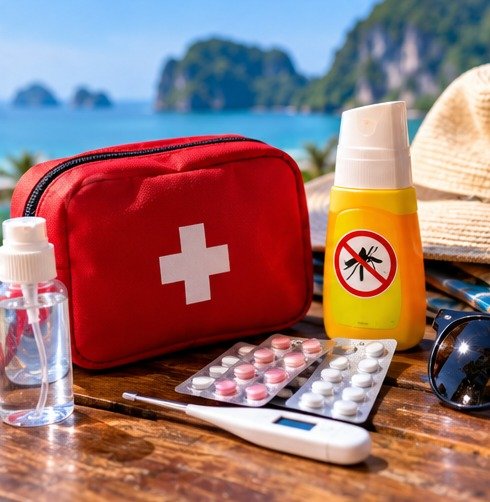
Original Thai-inspired travel illustration, not a photograph of an inspected location or evidence that an area is currently safe.
A Thailand safety guide is most useful when it helps you decide what to do, rather than asking you to memorise a catalogue of frightening possibilities. Your first airport transfer, the location of your room and the way you return after dinner are decisions you can prepare. That leaves more attention for enjoying the country once you arrive.
There is no honest percentage that describes how safe every visitor will be. A family using booked transfers has a different exposure from someone learning to ride a scooter on a wet island road. Likewise, a city-centre stay and a journey near a restricted border cannot be treated as the same trip. The sensible aim is to remove avoidable risks without pretending that preparation can remove every uncertainty.
This guide puts choices in a practical order: check official warnings, make transport and accommodation workable, protect your ability to contact help, then assess individual activities. The order is editorial judgement, not a measured ranking of every hazard. Advice is research-led; it does not claim personal inspections, medical expertise or a guarantee about any named business. Official guidance is linked beside factual claims, while the examples show how to turn it into a usable plan.
Biggest practical choice
Transport before discounts
Prefer a journey you can assess over an unfamiliar scooter or a rushed late-night connection.
Before departure
Check the actual route
Read current official warnings for border areas, weather and disruption, not just the destination name.
At the beach
Local warnings decide
A red flag or a closed activity outweighs sunshine, photographs and a prepaid booking.
When things go wrong
Know whom to call
Keep ambulance 1669, police 191 and Tourist Police 1155 available offline.
Thailand safety guide: put decisions in a useful order
Start with exposure, not reassurance
Ask what you will actually be doing each day. A beachfront hotel does not tell you whether you must cross a busy road for breakfast, take a boat after dark or ride a motorcycle to reach dinner. Write down the movement between places as carefully as the places themselves. That is often where an apparently simple holiday becomes difficult.
Use three questions: can I avoid this risk, can I reduce it, and what happens if something goes wrong? For example, avoiding a scooter changes the exposure entirely. Wearing a helmet reduces some consequences but does not remove the chance of a collision. Having insurance addresses certain financial consequences, subject to its terms; it does not prevent injury. Those are different tools, not interchangeable promises.
Spend effort where it changes the plan
The CDC highlights vehicle selection, restraints, impairment and night driving in its traveller road-safety guidance. Treat that as a reason to examine ordinary journeys, rather than concentrating only on dramatic scams. A modest change of hotel or arrival time may remove several awkward journeys at once. [2]
Keep a small reserve for changing an unsuitable transfer or staying another night. There is no universal amount because a solo city stay and an island family holiday need different fallbacks. The useful test is whether you can decline a poor option without becoming stranded.
| Decision | Useful evidence | Reason to stop and check |
|---|---|---|
| Arrival transfer | Named operator, meeting point and usable restraints | Unclear pickup or overcrowding |
| Accommodation | Practical access, working locks and an evening return route | Essential arrangements cannot be confirmed |
| Sea excursion | Suitable equipment and a current weather decision | Local closure, warning or missing lifejacket |
| Rental vehicle | Correct entitlement and written insurance terms | The seller’s reassurance is the only evidence |
Read current warnings for your route
A country name is not a risk assessment
At the editorial review on 05 October 2026, FCDO advice included all-but-essential-travel restrictions within 20 kilometres of Thailand’s land border with Cambodia, specified southern provinces and districts near Malaysia, and the Hat Yai-Padang Besar railway. It also carried a severe-flooding notice. This is a dated snapshot, not a permanent description of every Thai destination. [3]
Open the official page and match it to your actual road, border crossing and overnight stop. Do not assume that a familiar province name means every part has identical advice. When a route skirts a restricted area, ask the operator for its exact itinerary rather than accepting a broad reassurance that the destination remains popular.
Recheck at decision points
A sensible routine is to check before paying for non-refundable arrangements, shortly before departure, and before a weather-sensitive journey. Read the issue date as well as the headline. Old screenshots circulate easily, while an advisory can change after a blog’s review date.
If official advice changes, contact your insurer and travel providers about your particular booking. Refunds, rerouting and cover are contractual questions; a warning does not automatically produce the same outcome for every traveller. Keep the written replies with the booking records. [4]
Make the first arrival deliberately simple
Reduce decisions after the flight
Save your accommodation name in English and Thai, its address, telephone number and map pin. Keep a screenshot of the agreed pickup instructions and what to do if the flight is late. Do this before leaving home, not while balancing bags beside an unfamiliar airport exit.
Choose one arrival route and one fallback. For instance, compare a booked car with the airport’s official transport arrangements, rather than accumulating six partly understood options. Check passenger capacity, luggage space and the actual meeting point. A transfer described as private may still require you to walk to a designated collection area.
Do not start with the hardest connection
For a first visit, consider an overnight stop instead of a tight airport-to-last-ferry chain. That is an editorial preference for reducing pressure, not a rule that all same-day connections are unsuitable. The relevant question is whether a delay leaves a comfortable, affordable alternative.
You can compare Bangkok airport transfer listings before travelling, but read the operator’s instructions and cancellation terms individually. A listing is a way to find a service, not proof of vehicle condition or driver competence. Confirm the final details directly through the booking channel.
Choose transport you can assess
Seat belts and the right vehicle matter
Look for an identifiable operator, a sensible passenger limit and a functioning restraint for each person. Do not accept an overcrowded vehicle simply because it is the last departure. If a seat belt is hidden beneath a seat, ask for it to be made usable before setting off. Avoid riding with an impaired driver. [5]
For a longer journey, compare the entire chain: station access, arrival time, transfers and the final journey to your room. A train can remove a long road leg, but a late arrival still needs a workable onward plan. Likewise, a flight is not a complete door-to-door transport arrangement.
Avoid making your holiday a riding lesson
A rental desk handing over a scooter is not evidence that you hold the correct licence or insurance. The FCDO warns about motorcycle accidents and the consequences of driving without valid entitlement. For a novice, declining the bike is a much clearer decision than trying to make an unfamiliar road feel manageable. [6]
Use Bangkok-Chiang Mai transport comparisons to explore alternatives to a long road journey. Check whether the result is a train, coach, flight or combined service, and verify the actual departure and arrival points before booking.
Book a room with a safe daily routine
Assess the last few hundred metres
When comparing accommodation, investigate how you will get back after dinner. A property can be close to a restaurant on a map yet separated by a main road, a steep unlit lane or an unsuitable walking route. Ask the property for the usual evening arrival method and whether reception is staffed when you expect to arrive.
Read recent reviews for recurring practical issues: inaccessible entrances, broken locks, poor lighting or an unreliable shuttle. Reviews are useful leads, not an inspection certificate. If something matters to your party, such as step-free access, obtain a specific answer rather than relying on a filter label.
Check the room when you arrive
Find the exit route, check the door and window locks, and establish how to contact reception. If a lock fails, ask for another room or a repair before unpacking. Keep the decision simple: an unresolved essential problem is not compensated for by an attractive view or an apologetic discount.
Compare Bangkok accommodation locations and, for the north, Chiang Mai accommodation options with your evening routine in mind. The purpose is to reduce awkward journeys, not to suggest that either search result is independently safety-checked.

Keep money, documents and backup access separate
Avoid a single point of failure
Carry what you need for the day’s spending and keep a separate reserve. Split important items so losing one bag does not also remove every payment card, your phone and the information needed to replace them. A companion can hold a copy of essential contact details without needing access to your full accounts.
Keep passport scans in a protected account and an offline copy where you can reach them. A photo is useful for reference, but it is not a universal replacement for the original document. When a service needs identity verification, distinguish showing the passport from surrendering it as collateral.
Do not use your passport as a deposit
FCDO specifically advises against handing passports to motorcycle or jet-ski rental businesses as a guarantee. Find another provider or decline the activity when the only arrangement offered leaves your travel document outside your control. Photographs of existing damage are useful, but they do not make an unfair contract acceptable. [6]
A zipped travel document organiser can make papers easier to find; it does not make them theft-proof. Its value is organisation. Avoid turning one convenient pouch into the place where every irreplaceable item travels together.
Make the replacement plan usable
Before travelling, record how to freeze or cancel each payment card and how to reach the relevant issuer without the banking app. Keep that information separate from the cards themselves. A companion does not need your PIN or password to help you find the correct contact route.
If an item is lost, deal with the access it controls as well as the item. Losing a phone may affect bookings, messages and account recovery together. A simple backup plan helps you restore the essentials without sharing sensitive details with somebody offering unsolicited assistance.
Respond to pressure and scams without confrontation
Pause when the story changes
A useful warning sign is a sudden change that benefits the person telling you: your attraction is supposedly closed, your hotel has allegedly moved, or an agreed journey now includes a shop visit. Verify the claim through the original business or an official information point before accepting a replacement.
You do not need to prove that someone is dishonest. It is enough to say that the proposed arrangement does not suit you. Move to a staffed public place, keep your belongings with you and contact the booking provider. An argument on a pavement rarely improves your ability to verify a story.
Make the agreement visible
Before an unmetered service, confirm the destination, total price, passengers and whether stops are included. Keep the details in writing when practical. For damage disputes, preserve your check-in photographs and ask for an itemised explanation. Do not hand over extra documents or sign something you cannot understand simply to end an uncomfortable conversation.
If you feel threatened, prioritise leaving the confrontation safely and obtaining assistance. Tourist Police can be contacted on 1155. They are a contact route for help, not a promise that every commercial disagreement will be resolved in your favour. [7]
Plan nightlife around the journey home
Agree the return before the evening begins
Decide how your group will get back and where you will meet if separated. Keep enough battery and payment access for a booked car. A plan that depends on everyone remaining together, sober and fully charged is fragile; each person should know the accommodation address independently.
Choose a venue where you can understand what you are ordering and keep your drink in sight. FCDO reports drink-spiking and alcohol-related vulnerability in tourist areas. These precautions reduce opportunities for harm, but responsibility for an assault always lies with the perpetrator, not the person targeted. [6]
Treat unusual illness seriously
Methanol cannot be reliably identified by a drink’s taste or smell. Serious illness after drinking, including visual problems or breathing difficulties, needs urgent medical attention rather than an assumption that it is an ordinary hangover. Tell the clinician what was consumed and when. Do not wait for everyone in the group to become ill. [8]
After an assault, move to safety and seek medical support promptly; some treatments are time-sensitive. The FCDO’s Thailand survivor guidance explains medical care and reporting choices. You do not have to decide every legal question before asking for healthcare. [9]
Adapt the plan for solo travel and different needs
Independence works better with a check-in routine
For solo travel, tell a trusted person the next overnight location and agree what should happen after a missed check-in. An occasional message is more useful when both people understand the plan. Share live location only with people you trust, and avoid posting your room number or real-time absence publicly.
A structured activity can be a comfortable way to become familiar with an area. You might compare guided Bangkok walking tours, then ask about the meeting point, group size, walking conditions and return arrangements. A guide can simplify logistics, but the booking still needs to match your mobility, health and comfort.
Ask for the practical detail you need
Women, LGBT+ visitors, older travellers and people with disabilities should not have to rely on a generic claim that a place is welcoming. Ask the relevant questions about privacy, room arrangements, accessible entrances and assistance. A respectful, specific response is more useful than a broad marketing label.
Set boundaries without apologising for them. You can change a room, decline a shared ride or stop an activity that feels unsuitable. The purpose is not to restrict independent travel; it is to preserve the ability to choose how your day unfolds.
Make family and accessibility arrangements explicit
Do not leave restraints to chance
For children, request an appropriate car or booster seat and confirm the child’s age, height and weight with the transfer provider. Ask for the actual seat type and installation arrangement. A baby travelling on an adult’s lap is not an equivalent substitute for a suitable restraint. CDC guidance recommends planning this in advance and bringing a seat when availability cannot be assured. [2]
For mobility needs, ask about the vehicle step, luggage lift, wheelchair storage and the distance between drop-off and reception. A service can be accessible at one end and unusable at the other. Photographs or measurements often answer these questions more clearly than a yes-or-no accessibility badge.
Give the day more room
Plan fewer changes of location and allow time for toilets, food, rest and slower boarding. This is particularly useful when one adult is managing bags while another helps a child or companion. A schedule that only works when everyone moves quickly is not a generous holiday plan.
Agree who holds the documents and who watches children during transitions. Do not assume the responsibility transfers automatically at a taxi rank or pier. A short, explicit handover is a practical habit that costs nothing and prevents confusion.
Treat beaches and boats as separate safety decisions
Sunshine does not settle the swimming question
Read the local flags and ask lifeguards about the current conditions. A calm-looking gap between breaking waves can still be hazardous, and strong swimming ability does not remove rip-current risk. Do not enter when red flags or local instructions say not to swim. [10] [6]
If caught in a rip, avoid exhausting yourself by fighting directly against it. Float, signal for help and, if able, move parallel to the shore to escape the flow. Alert trained help when somebody else is in difficulty rather than entering and creating a second casualty. Use Thailand’s local emergency arrangements, not the UK numbers shown on overseas guidance. [10]
Inspect the practical arrangements before boarding
Ask where lifejackets are kept and whether suitable sizes are available for everyone. Assess the actual boat, passenger load and weather decision, not only the photographs attached to a tour. A prepaid excursion does not create an obligation to board when the conditions or equipment concern you.
For activities around Krabi, compare excursion descriptions and ask the operator about cancellation, return arrangements and assistance for your party. Do not interpret a high review score as a substitute for lifejackets, a sensible weather policy or your own insurance conditions.
Be conservative around weather and outdoor activities
Change the activity, not the warning
Check Thai Meteorological Department warnings before exposed boat trips or journeys through mountains. Match the warning to its date and affected area. Rainfall somewhere else in the catchment can matter for a waterfall or river visit, even when the place you are standing looks dry. [11]
Choose an alternative before you need it: an indoor visit, a shorter route or a rest afternoon. That makes cancellation a normal part of the itinerary rather than a failure. For caves, rivers and waterfalls, follow closures and local instructions; do not cross a barrier because another visitor has done so.
Keep wildlife encounters at a distance
Do not feed or handle unfamiliar mammals for a photograph. Animal bites and scratches require prompt medical assessment because the consequences can extend beyond the visible wound. A friendly appearance is not evidence that an animal cannot transmit infection. Children need particularly clear supervision around animals. [12]
For adventure activities, ask what training is required, what rescue arrangements exist and how far suitable medical help is away. A consent form does not demonstrate good risk management. If the operator cannot explain the basics clearly, choose a different activity rather than trying to fill the gaps yourself.
Build ordinary health precautions into the day
Prepare before departure
Arrange a travel-health assessment with enough time to discuss your itinerary, routine vaccinations and any additional protection you may need. Mention rural nights, animal contact, pregnancy, ongoing conditions and medicines. The discussion is more useful when it describes the real trip rather than simply naming Thailand. [13]
Take familiar medicines in their original packaging with the appropriate documentation, and check Thai restrictions on the ingredients you carry. A medicine available without prescription at home is not automatically unrestricted abroad. Use the Thai FDA’s official checker and permit information when relevant. [14]
Make the daily routine easy to follow
Build shade, drinks and meal stops into the plan instead of treating them as optional extras once you feel unwell. A refillable bottle helps carry water, but only fill it from a source known to be safe; the bottle itself does not treat water. Choose freshly cooked food and practise hand hygiene. [15]
If illness develops, let symptoms change the itinerary. A missed tour is not a reason to ignore fever, repeated vomiting or increasing weakness. General blog guidance cannot identify the cause, and obtaining local clinical advice is often the decision that prevents a manageable problem becoming a difficult journey.
Check laws before copying what you see
Availability does not mean permission
A product openly advertised on a street is not necessarily lawful for a tourist to buy, possess, use or carry across a border. FCDO guidance currently warns about vaping restrictions, drug laws and tightly restricted cannabis use. Read the current official wording rather than relying on an old account of deregulation. [6]
Do not carry parcels or luggage for someone you barely know, even when the request sounds harmless. Keep control of your own bags between packing and check-in. For medicines, use the separate FDA rules rather than trying to infer legality from a general discussion about drugs.
Respect the local context
Avoid political demonstrations and follow instructions from local authorities. Be cautious with public comments and social-media posts about sensitive subjects, including the monarchy. The point is not to give a complete legal summary here; it is to identify decisions that need current official advice rather than a traveller’s anecdote. [6]
Before flying a drone, undertaking paid work or importing specialist equipment, check the applicable rules directly. Do not assume that a tourist entry permission also authorises every activity. Where the answer affects your legal position, obtain appropriate professional advice instead of treating a blog as a legal opinion.
Keep digital access useful without making it essential
Protect the accounts behind the phone
Use a strong screen lock, current software and multi-factor authentication for important accounts. Protect your email especially carefully because it may control password resets for banking and bookings. Store recovery information somewhere other than the same phone. NCSC guidance explains these basic controls without requiring a complicated security setup. [16]
Keep the accommodation address, insurer contact and key reservations available offline. Ask yourself what you would do if the phone were lost, wet or out of power. A second way to access information is more useful than simply installing another app on the same device.
Do not confuse mobile data with emergency calling
You can check Airalo’s Thailand connectivity options, but confirm phone compatibility, activation and whether calls are included. A data-only plan is not a promise of ordinary voice service. Know how to ask reception, a shop or a nearby person to call for help when needed.
A clearly labelled travel power bank can support navigation and messages. Check its watt-hour marking and your airline’s rules before flying. More importantly, charge it before a travel day and carry a compatible cable; a backup that cannot connect is only extra luggage.
Prepare an emergency plan people can actually use
Save the short version
For Thailand, keep ambulance 1669, police 191 and Tourist Police 1155 available on paper as well as in your phone. Add your insurer’s assistance number and accommodation contact. Give the same information to anyone who might need to act on your behalf. [1]
When calling, start with your location and the nature of the emergency. A road name, nearby landmark, hotel name or map pin may be more useful than a long description of the day’s events. Ask a Thai speaker to assist where possible, but do not delay seeking help while trying to produce a perfect translation.
Put care before paperwork
For a serious injury or sudden severe illness, seek emergency assistance first. Contact the insurer as soon as practical, and keep clinical records and receipts. Do not delay urgent care while comparing hospitals online or asking a tour company to decide whether symptoms are serious.
For theft or loss, secure accounts and cards, then establish what reports your insurer or consulate needs. Write a factual timeline while the details are fresh. Keep copies of correspondence without posting sensitive passport, medical or banking information in public review threads.
| Situation | First contact | Useful information to have ready |
|---|---|---|
| Serious injury or acute medical emergency | Ambulance: 1669 | Location, symptoms and number of people affected |
| Immediate police assistance | Police: 191 | Location and what is happening now |
| Tourist assistance or language help | Tourist Police: 1155 | Booking details, address and a factual explanation |
| Hospital referral or claim support | Your insurer’s assistance team | Policy number and treating facility |
Emergency numbers checked 05 October 2026. [1]
Turn the advice into a first-day plan
A city arrival with no urgent onward journey
Imagine arriving in Bangkok after an overnight flight. Your room is booked, the hotel knows your expected arrival time and you have saved the airport transport instructions. Rather than arranging an ambitious afternoon across the city, leave the first few hours for checking in, eating and establishing how to return after dinner. This is an illustrative itinerary, not a claim about how long airport procedures will take.
Before leaving the hotel, confirm the address, locate the closest practical transport stop and identify somewhere staffed where you could ask for help. Keep the first outing close enough that returning early is straightforward. The benefit is not that a nearby neighbourhood is automatically safer; it is that you are making fewer unfamiliar decisions while tired and can discover how the local arrangements work without a tight deadline.
An island arrival with a weather-sensitive connection
Now imagine landing on the mainland with a separate boat booking. Before travelling, identify the last confirmed departure and the operator’s missed-connection policy. Ask where you would stay if you cannot reach the pier in time, and whether the accommodation on the island can move your arrival. Do not use an advertised minimum transfer time as your only margin.
On the day, a delay may make the overnight fallback the better choice. Tell the boat operator and hotel promptly, then make a fresh decision using the remaining daylight and current conditions. The fallback exists precisely so you do not have to negotiate a hurried private boat or an unfamiliar vehicle under pressure. A changed evening is inconvenient; it need not become a chain of increasingly poor decisions.
Give somebody else enough information to help
A useful shared note contains the accommodation address, next transfer, emergency numbers and insurer contact. Leave out passwords, full card numbers and unnecessary medical detail. Agree when the note will be updated and what a missed check-in actually means. Without that agreement, one person may worry after an ordinary loss of signal while another assumes silence means everything is fine.
This approach also helps a couple or family whose organiser becomes unwell. The second person can contact the hotel, find the booking and explain the immediate problem without searching through someone else’s locked email. Independence within a group is a practical safety feature: everybody does not need to organise the holiday, but essential information should not depend entirely on one person.
Advantages and limits of a prepared first trip
What preparation genuinely improves
A clear plan reduces decisions made under fatigue or social pressure. You know where to sleep, how to return, which information needs checking and what an acceptable alternative looks like. It also makes it easier for travelling companions to speak up because the group has already agreed that changing a plan is allowed.
Preparation can save money indirectly by preventing rushed purchases or unnecessary detours. However, that is a planning benefit, not a guaranteed financial return. Sometimes the sensible choice costs more: a different transfer, another night’s accommodation or an activity cancellation. Budget for flexibility rather than expecting every protective decision to be free.
What it cannot promise
No checklist can certify a driver, eliminate crime or forecast every local disruption. Nor can an article replace a clinician’s assessment or an insurer’s written terms. Treat the guide as a way to ask better questions and recognise uncertainty, not as permission to ignore new information.
The disadvantage of overplanning is that it can turn normal travel into constant threat-checking. Keep the routine proportionate: prepare the essentials, make a brief daily check when conditions matter, and then enjoy the day. Repeatedly reading alarming anecdotes rarely improves a decision that has already been sensibly made.
Common mistakes worth avoiding
Saving money in the wrong place
Do not compare only the headline price of a journey. An inconvenient arrival may create an expensive final transfer, while an isolated room may require transport for every meal. Examine the combined arrangement before deciding which option is cheaper or easier.
Another mistake is buying equipment before understanding the task. A secure pouch is not a substitute for keeping valuables attended; a water bottle does not purify water; and an app cannot assess sea conditions. Choose a purchase only when you can explain the practical problem it solves.
Letting the group override a clear concern
A friend having done something safely before does not establish that it is suitable today. Different weather, vehicles, licences and health needs change the decision. Make room for different comfort levels without labelling someone difficult or timid.
Finally, do not treat a deposit or prepaid ticket as a reason to continue an unsuitable activity. The money is already committed. The remaining decision is whether proceeding makes sense now, using the conditions and information currently available.
Frequently asked questions
Is Thailand safe for a first holiday abroad?
A first visit can be planned around straightforward transport, well-located accommodation and activities suited to your experience. However, no whole-country safety guarantee is credible. Check current official warnings, investigate your actual route and make arrangements that leave you an alternative when conditions change. The type of trip matters more than a reassuring slogan.
Should I avoid all street food?
A blanket ban is less useful than understanding food handling, cooking, temperature and water. Choose food cooked thoroughly and served hot, practise hand hygiene and be more cautious when medically vulnerable. Hygiene problems can also occur in restaurants and resorts. Getting ill is not proof that a traveller was careless. [17]
Do I need a scooter to enjoy the islands?
No. Choose a base with the facilities you need nearby, then compare transfers or organised outings for longer trips. Availability and cost differ by destination, so investigate them before booking an isolated room. Avoid designing a holiday around riding when you do not already have appropriate experience, documents and insurance.
What should I do when a tour goes ahead despite bad weather?
Check official warnings and ask the operator what has changed in its plan. An operating departure is not a guarantee of suitable conditions. You can decline to board, although refund rights depend on the booking terms and circumstances. Keep the explanation in writing and contact the booking provider without delaying a safety decision.
Is travel insurance enough on its own?
No. Cover depends on the policy, declared conditions, activities and exclusions. It cannot prevent an accident or guarantee immediate transport from a remote location. Read the wording before departure and ask the insurer to clarify anything important in writing. Keep the assistance number available even when your phone has no data. [4]
How often should I recheck safety information?
Use the points at which new information could change a decision: before a non-refundable booking, near departure and before a weather-sensitive or remote journey. A routine city day does not require constant monitoring of every incident in the country. However, an official warning affecting your route deserves attention even when the accommodation or tour is already paid for. Keep the check focused on your actual travel rather than alarming headlines without a relevant location.
Which number should I use for urgent medical help?
The local ambulance number is 1669. Police are reached on 191 and Tourist Police on 1155. Save the numbers before travelling and provide a clear location when calling. An ordinary emergency call may require a different arrangement from a data-only travel eSIM, so keep a way to ask nearby staff for assistance. [1]
Final recommendation: make the easy choices early
A good first-trip safety plan is deliberately ordinary. Choose a manageable arrival, a room with a workable evening route and transport that does not depend on skills you have never learnt. Check official warnings for the places and dates that matter, then keep enough flexibility to change your mind.
Make the plan shared rather than personal. Travelling companions should know the address, emergency contacts and the agreed response to a missed connection or separation. That prevents one phone or one organiser becoming the only source of essential information.
Once those decisions are made, you do not need to spend the holiday looking for danger. Use current conditions, sensible boundaries and a willingness to stop when an arrangement is unsuitable. The reward is not a promise that nothing will happen; it is a trip with fewer avoidable pressures and a clearer response when something does.
Sources and fact-checking notes
This is general travel-planning information, not personalised legal or medical advice. Official sources were reviewed on 05 October 2026. Border advice, weather warnings, laws and service arrangements can change; check the linked sources again before departure and during the trip. Product and booking links are optional comparison routes, not safety endorsements. No incident probability, inspected-hotel claim or live transport quote is asserted.
- FCDO: Getting help in Thailand
Emergency and consular contact routes. Reviewed 05 October 2026.
- CDC: Traffic and road safety
Seat belts, child restraints, vehicle selection and pedestrian precautions. Reviewed 05 October 2026.
- FCDO: Thailand warnings and insurance
Current border restrictions and disruption notices; recheck before travel. Reviewed 05 October 2026.
- FCDO: Foreign travel insurance
Choosing cover and understanding exclusions; not an insurer recommendation. Reviewed 05 October 2026.
- CDC Yellow Book: Injury and death during travel
Travel injury prevention, transport selection and restraint advice. Reviewed 05 October 2026.
- FCDO: Thailand safety and security
Country-specific security, law, transport and outdoor-risk advice. Reviewed 05 October 2026.
- Thailand Tourist Police: contact information
Official Tourist Police contact details, including 1155. Reviewed 05 October 2026.
- FCDO Travel Aware: Spiking and methanol poisoning
Recognition, prevention limits and urgent care. Reviewed 05 October 2026.
- FCDO: Support after sexual assault in Thailand
Medical, reporting and support options for survivors. Reviewed 05 October 2026.
- RNLI: Rip currents
General rip-current avoidance and response; UK emergency numbers are not used for Thailand. Reviewed 05 October 2026.
- Thai Meteorological Department: Warnings
Official weather warnings; check the issue date and affected area. Reviewed 05 October 2026.
- NHS: Rabies
Animal exposure, vaccination and immediate post-exposure assessment. Reviewed 05 October 2026.
- NHS: Travel vaccinations
Timing and access to a personalised pre-travel vaccination assessment. Reviewed 05 October 2026.
- Thai Food and Drug Administration: Medicines for travellers
Official drug checker and permit process; restrictions depend on the ingredient and quantity. Reviewed 05 October 2026.
- NaTHNaC: Food and water hygiene
Safer drinks, cooking, water treatment and higher-risk food choices. Reviewed 05 October 2026.
- National Cyber Security Centre: Staying secure online
Account security and scam-prevention fundamentals. Reviewed 05 October 2026.
- NaTHNaC: Food and water hygiene reminder
Illness can occur in resorts; prevention and return-home precautions. Reviewed 05 October 2026.
Illustrations in this article were created for Taylor’s Trailblazing Travels. Third-party photographs, where used, are credited beside the image or in the source list.