Ayutthaya · Travel planning
Ayutthaya Travel Guide
A former capital, a living river city and a better way to choose the temples you actually want to see.
Written and researched by Karen Taylor | Last editorial review: 4 October 2026
Ayutthaya is easy to underestimate on a map. The old capital lies close enough to Bangkok for a day trip, yet its temples, museum, rivers and living neighbourhoods deserve more than a hurried sequence of photo stops. A good Ayutthaya travel guide should help you choose what to leave out as well as what to see.
For most first-time visitors, the strongest introduction is a small group of central ruins, one museum or riverside stop and enough shade breaks to enjoy them. Staying a night creates a second morning and removes the pressure of returning to Bangkok immediately after the final temple.
This is a research-led planning guide, not a claim of personal visits. Its recommendations compare historical variety, geography, heat exposure and transport effort. Published fees and opening information are dated, while suggested visit lengths and budgets are clearly presented as planning allowances rather than guaranteed schedules or live quotations.
This guide contains affiliate links. Taylor’s Trailblazing Travels may earn a commission when you book or buy through them, at no extra cost to you. Recommendations are based on the planning fit, not the commission.
First-visit core
Contrasting ruins
Choose a small central cluster.
Worth the time
Museum context
Connect objects to the sites you have seen.
Ticket decision
Buy for the route
A combined ticket is not an all-city pass.
More breathing room
Stay one night
Use two outdoor visiting windows.
Ayutthaya travel guide: decide how much time to give it
A day trip is a selection, not the whole city
A well-planned day can introduce the central ruins and still leave time for lunch. However, the journey from your Bangkok hotel, the station or drop-off point and the return connection all belong in the day’s total. Arriving in Ayutthaya is not the same as standing at your first temple.
Choose a day trip when you want a historical introduction without moving accommodation. Pick a small number of contrasting stops instead of trying to justify the journey by visiting everything. A guide can help connect the sites, but a busy itinerary does not automatically provide a deeper understanding.
Why one night can be worth the move
An overnight stay gives you two separate outdoor visiting windows and a chance to rest during the hottest part of the day. It also leaves room for a museum, an unhurried dinner or a different side of the city rather than merely doubling the number of ruins.
Two nights suit a visitor who wants slower exploration, time for research or photography and space for poor weather. They are not necessary for everyone. Decide according to the experience you want, not a belief that staying longer makes a trip inherently more authentic.
Understand the old capital before choosing temples
A city connected to the wider world
UNESCO describes Ayutthaya as a capital founded in the fourteenth century, flourishing as a centre of international commerce and diplomacy before its destruction in 1767. Its island setting linked the city to surrounding rivers and onward trade routes. That context helps explain why a visit involves more than isolated religious buildings. [1]
Think of the ruins as fragments of a former urban system: royal spaces, monasteries, waterways and communities. The remains are not an intact palace city, and the modern town has its own everyday life. A market, school or restaurant beside a monument is not an intrusion into a museum; it is part of the city you are visiting.
Look for differences rather than collecting names
At each stop, choose one feature to notice. It might be the shape of a tower, the arrangement of a courtyard or the relationship between a building and the river. Taking a moment to compare those features can make three sites more memorable than eight rushed entrances.
Do not assume every visible surface is untouched original fabric. Archaeological places are conserved and sometimes restored. Read the interpretation at the site and distinguish what you can see from what a guide or reconstruction explains about the past.
Get oriented: island, station, west bank and east side
The main zones are not all walkable as one circuit
Several major ruins sit on the central island, but important temples also lie beyond it. Wat Chaiwatthanaram is on the western side of the river, while Wat Yai Chaimongkhon is southeast of the island. The railway station is outside the central monument cluster. Grouping sites by zone prevents repeated crossings and unnecessary backtracking. [7][8][15]
A practical first route starts with the central cluster and adds only one outer area. Another approach is to arrange a driver for the off-island sights and explore a smaller central section on foot. Both can work; the mistake is treating every attraction pin as part of an effortless walking loop.
Choose meeting points you can recognise
Save the actual entrance to a temple, not the centre of a large archaeological area. Tell a driver which gate or car park you will use and agree how to make contact when you finish. A photograph of the pickup location can help when several entrances look similar.
Keep the accommodation or return-station address offline. English spellings vary across maps and ticketing sites, so compare the location as well as the name. That is especially useful when arranging transport to a temple with a name similar to another place in Thailand.
Getting from Bangkok to Ayutthaya
Train: identify the actual departure station
Use State Railway of Thailand information to find a service for your date and confirm its Bangkok departure station. Services can use different stations and ticket classes; do not assume that every train leaves from Hua Lamphong or that every local service appears as a reservable online ticket. [11]
As an editorial planning envelope, allow roughly one to two hours on many rail journeys, then add the separate hotel-to-station and Ayutthaya-station transfers. This is not a promise about a particular service. Choose the actual train first and calculate the day around its published timing.
Van, car or organised excursion
A road option can be convenient when its pickup point is close to your hotel, but check the destination drop-off and luggage rules. A low fare to an inconvenient terminal may not save much once you add another vehicle. Traffic also makes an exact door-to-door promise unwise.
For a private car, ask whether the quotation is transport only or includes a licensed guide, waiting time and admission. A driver need not be a historical guide. For a group excursion, look at the number of sites, time at each and shopping stops, not merely whether the headline says full day.
Arrival and departure: the overlooked parts of the day
Do not start sightseeing with the wrong bag
Day-trippers should carry only what they need for the outing, with water, sun protection and a light rain layer accessible. Overnight visitors should arrange luggage storage with their accommodation before turning up ahead of check-in. A hotel may help, but it should be confirmed rather than assumed.
At the station, arrange the onward journey without immediately committing to the first entire-day package offered. Compare the proposed route with your priorities and ask what happens if you spend longer at a site. A clear plan is more valuable than an impressive number of stops.
Protect the return connection
Decide your departure margin before visiting the last temple. Include the journey back, collection of stored luggage and time to find the platform or meeting point. A ticketing cut-off at a temple and a train departure are separate deadlines; being inside one attraction late in the day can still leave you short of time.
When continuing beyond Ayutthaya, check whether the onward service actually calls there and whether you have a suitable reservation. Do not assume that being on a major rail corridor guarantees a seat on a particular long-distance train.
Wat Mahathat: look beyond the tree-root photograph
The famous detail is only part of the site
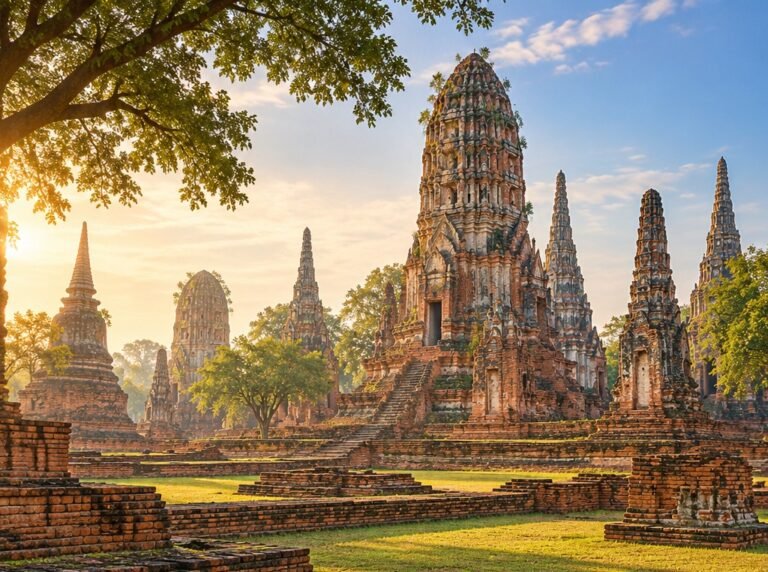
Wat Mahathat is associated with the Buddha head surrounded by tree roots, but its archaeological setting is the reason to give it more than a quick photo stop. TAT describes the temple’s former central prang and important excavated objects. Let the wider layout help you understand the smaller, widely photographed detail. [4]
Allow roughly 45-60 minutes as a suggested first visit, with longer for a guide or careful reading. Avoid making the entire stop depend on getting a photograph without other visitors. A popular image can draw a queue while other parts of the site remain available to explore.
Photograph respectfully
Follow signs and staff guidance around Buddha images. Do not climb walls, touch fragile remains or move into restricted areas for a better angle. If people are waiting, take a considered photograph and make room rather than turning a shared space into a private shoot.
Bring shade with you in a way that does not block other visitors. A hat or small umbrella can be useful, but keep visibility clear on uneven ground. The site should be experienced at a comfortable pace, not as a test of how long you can stand in the sun.
Wat Ratchaburana: pair it with its neighbour
A logical second stop
Wat Ratchaburana sits opposite the Wat Mahathat area and provides a useful contrast through its prominent prang and surviving architectural details. The excavations also connect with objects now associated with Chao Sam Phraya National Museum. Visiting the two places gives those objects a physical setting rather than treating them as isolated treasures. [5]
A suggested 40-60-minute visit works for many first-time plans. However, access to specific stairs, chambers or elevated sections can change. Do not build the value of the visit around entering a particular crypt; follow the route open on the day.
Use the pairing to simplify the itinerary
Two nearby sites are a good reason to pause afterwards, not automatically add a third before lunch. Find shade, review how much time remains and decide whether the group’s interest is still high. The next stop should add variety rather than merely another admission stamp.
For travellers with limited mobility, ask about the ground-level route and the parts visible without climbing. A companion can choose to explore an accessible section together rather than splitting the visit into an endurance challenge and a long wait.
Wat Phra Si Sanphet and the former royal area
A different shape and a different role
The three large chedis at Wat Phra Si Sanphet make an immediate visual contrast with the prang-led sites. TAT places the temple within the former royal-palace area. That distinction is useful for understanding why the site mattered, rather than seeing it as another set of old brick structures. [6]
Give the visit enough time to look at the arrangement of the chedis and the scale of the surrounding remains. A suggested 45-60 minutes can work within a selective day, but keen photographers or visitors with a guide may want longer. There is no benefit in rushing a place you specifically came to see.
Add a nearby active religious space only when appropriate
If you include a neighbouring place of worship, recognise the change from archaeological sightseeing to an active religious setting. Dress and behave accordingly, and follow local instructions about shoes and photography. Visitors should not interrupt worship to complete an itinerary.
This cluster can also be a sensible point to end the central outdoor circuit. Choosing lunch or a museum next gives the day a different texture and leaves room for a later riverside visit, rather than using all your energy before the afternoon.
Wat Chaiwatthanaram: plan the west-bank journey
A strong final temple, not a guaranteed sunset show
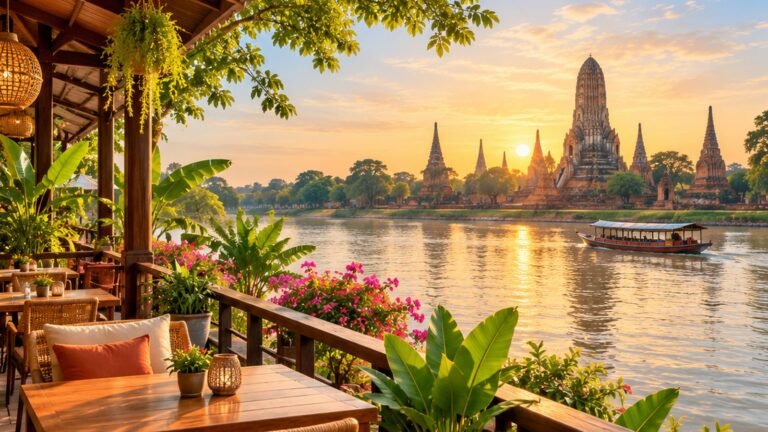
Wat Chaiwatthanaram stands outside the island on the west bank and has a distinctive central prang and surrounding structures. Its position makes it a useful contrast to the central cluster. However, the journey there and back must be included in the plan rather than treated as an incidental walk. [7]
Late-afternoon light is a reason to consider the stop, not a promise of a particular photograph. Clouds, weather, crowds and the position from which you can legally view the site all affect the result. Choose a visit you would still appreciate without an ideal sunset.
Ticket sales can finish before the visiting window
The TAT listing gives normal ticket sales ending at 17:00, with visiting until 18:00, checked on 4 October 2026. Arriving close to a site’s published closing time is therefore a poor plan. Special events may use different hours, but an old festival announcement is not evidence of routine night opening. [7]
Arrange the return vehicle before you become absorbed in the view. A riverside meal afterwards is appealing only if the restaurant, route and journey back work for you. An overnight visitor has more flexibility here than someone protecting an evening train to Bangkok.
Wat Yai Chaimongkhon and the eastern side
Choose it for contrast, not to fill a gap
Wat Yai Chaimongkhon lies southeast of the island and is known for its large chedi. Its setting gives a different kind of visit from the central ruin cluster. TAT lists it as a separate temple attraction, so do not assume the historical-park combined ticket covers admission there. [8][3]
This is a sensible addition when you have arranged an eastern-side route or are staying longer. For a short day, decide whether it contributes more to your interests than another central site or the museum. Adding it simply because the map looks close can create an awkward final journey.
Make the route suit your ability
You do not have to climb every available staircase to appreciate a temple. Ask which parts can be enjoyed from ground level and take account of heat, footwear and wet surfaces. A route that suits one confident visitor may be an uncomfortable choice for another.
If combining eastern-side sights, have the driver or guide describe the order before leaving. Confirm whether the final destination is your hotel, the station or another attraction. A clear endpoint prevents a reasonable sightseeing price turning into an unexpected extra transport negotiation.
Chao Sam Phraya National Museum: the context stop
Why it can change the whole visit
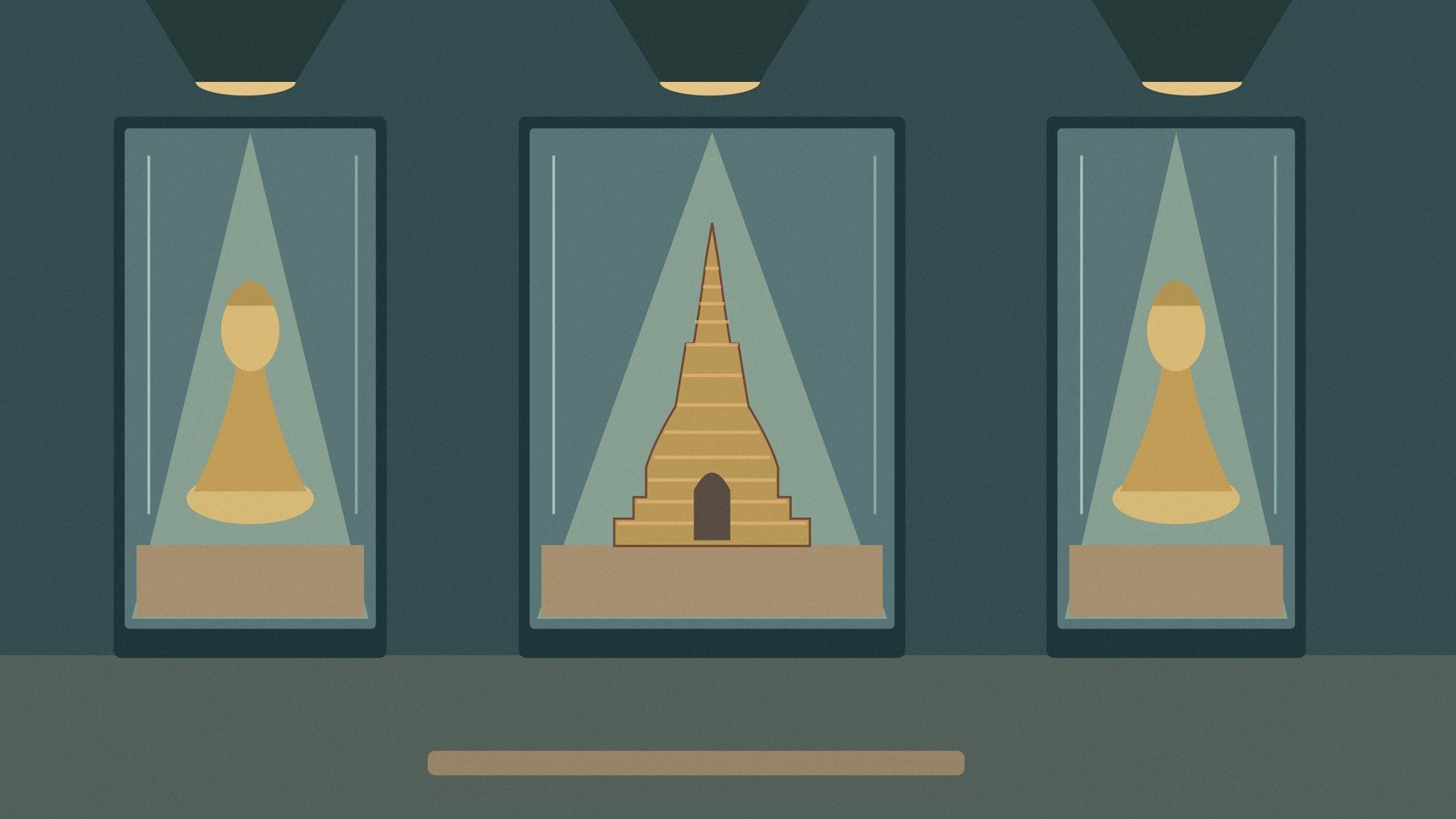
The museum’s collection includes objects recovered from Ayutthaya’s major archaeological sites, including goldwork linked to Wat Ratchaburana. Seeing those objects after the ruins can help you imagine the craftsmanship and richness that bare brick alone cannot convey. It is a different experience, not merely an indoor substitute when the weather is poor. [9]
Allow around 90 minutes to two hours as a planning suggestion. Choose a few objects to examine closely, read the labels and connect them to the places you have visited. A museum visit can add more depth than another temple whose history you have no time to understand.
A genuine information conflict to resolve before visiting
The TAT listing checked on 4 October 2026 states Tuesday-Sunday, 09:00-16:00 and foreign-visitor admission of 200 baht. An older Fine Arts virtual-museum page instead says daily and 150 baht. This guide budgets for the higher published figure and treats Monday as unavailable unless the museum confirms otherwise; the conflict is not presented as fully resolved. [9][10]
For a Monday-based trip, move the museum to another day only after checking the actual opening arrangement. Ask about photography and bag storage on arrival, particularly in galleries with sensitive or valuable objects.
Tickets and opening hours: buy for your actual route
The combined ticket is not an all-city pass
The Fine Arts Department lists single foreign-visitor entry at 80 baht and a combined ticket at 300 baht. An April 2026 notice names seven included monuments: Wat Mahathat, Wat Ratchaburana, Wat Phra Ram, Wat Phra Si Sanphet and the Royal Palace area, Wat Chaiwatthanaram, Wat Maheyong and Wat Kudi Dao. Checked on 4 October 2026. [2][3]
Museums and other temples should be treated separately unless explicitly included. Ask the ticket office about date validity and keep the ticket accessible. Do not assume a pass can be shared, reused for unlimited entries or carried across both days of an overnight visit without confirmation.
Do the small calculation before buying
At the published figures checked on 4 October 2026, three separate entries cost 240 baht and four cost 320 baht. The 300-baht combined ticket therefore becomes cheaper at four included single-entry visits, assuming the ticket is valid for the route and dates you intend. That is arithmetic, not a reason to visit a fourth site you do not want. [2][3]
The park’s general opening window is 08:00-18:00, but ticket-office hours and particular sites can differ. Aim to arrive comfortably before the last-sale deadline. A broad park timetable should never be used as proof that every gate remains selling tickets until closing. [2][4][7]
Getting around: walking, cycling, tuk-tuk or car
Walking and cycling have different limits
Walking works best within a selected cluster. A whole-day walking route across the city can add long, exposed stretches with little sightseeing value. Use actual walking directions and think about where you will stop for water and shade before choosing it as the default.
Cycling can give you independence, but it also puts you into ordinary traffic and changing road conditions. Check brakes, tyres, lights where relevant and the fit of the bicycle. Avoid a route you would not feel comfortable riding at home simply because bicycle hire is readily available.
Agree the vehicle arrangement clearly
For a tuk-tuk or car, specify the route, total duration, waiting time, passenger number and final drop-off. Ask how extra stops or overtime are charged. A driver offering transport should not automatically be described as a licensed guide; confirm the service you are paying for.
For a small group, a vehicle may be worthwhile because it reduces heat exposure and makes off-island sights easier to combine. A solo visitor might prefer a guided group or a shorter self-led route. Compare the full day’s convenience, not just the cheapest headline mode.
Where to stay: location before a river-view photograph
Central island for a compact visit
An island base can simplify early access to the central ruins and an evening meal. However, verify the exact street, noise, air conditioning and check-in arrangements. A property described as near the historical park may still require transport to the particular sites you intend to visit.
For a one-night stay, prioritise luggage storage and an easy arrival. A beautiful room is less useful if the only check-in window conflicts with your train or a midday break is difficult. Ask whether a taxi can reach the entrance and whether stairs are unavoidable.
Riverside for a slower stay
A riverside property can make dinner and downtime part of the visit, but the view may come with a longer journey to the central cluster. Check which bank it occupies and how you will cross. A straight-line distance across water is not a walking route.
Read recent comments about room sound, mosquitoes, bathroom access and the actual view category. Do not infer that every room shares the photograph shown at the top of the listing. Compare refundable rates and confirm weather-related access before a stay during unsettled conditions.
Food: make lunch part of the city, not an interruption
Try a local speciality without turning it into a queue challenge
TAT highlights Ayutthaya’s noodles, river fish and prawns, alongside roti sai mai. The latter combines fine spun sugar with thin roti and is associated with the city’s Muslim food traditions. Choose a place that fits your route and appetite rather than crossing town solely because one stall appears repeatedly online. [15][16]
Roti sai mai is easy to share, but ask about ingredients when allergies matter. A familiar-looking pancake or sweet can still contain something unsuitable for you. Keep food purchases separate from assumptions about dietary labels or certification.
Ask how larger dishes are priced
For river prawns or whole fish, establish whether the menu price is per item, portion or weight before ordering. Check the size you are choosing and the final preparation charge where relevant. That simple question is more useful than a vague claim that a meal should be cheap.
Plan a shaded or air-conditioned lunch around the part of the route that would otherwise be least comfortable. A proper break is not lost sightseeing time. It helps you appreciate the later stop instead of arriving overheated and impatient.
Read the ruins: a small vocabulary that helps
Towers, chedis and the space around them
You do not need an architectural qualification to notice that Ayutthaya’s monuments use different forms. TAT’s destination overview describes prang towers with Khmer influence and pointed stupas within the wider architectural mix. Compare the tower-led composition of one site with the three-chedi arrangement at Wat Phra Si Sanphet rather than trying to memorise a long list of dates. [15][6]
The surrounding space is just as useful. Look at where an entrance faces, how a courtyard directs movement and where the river or former royal area sits in relation to the buildings. These are prompts for observation, not a claim that every surviving feature can be interpreted confidently without further research.
Use one question at each stop
At Wat Mahathat, ask what the wider complex tells you beyond the famous tree roots. Then, at Wat Ratchaburana, connect the surviving architecture with the museum collection. At Wat Chaiwatthanaram, consider how the riverside setting changes the way you approach and view the temple. A few different questions keep the visits from merging into one memory of old brick.
When interpretation is unclear, record the name and question rather than inventing an answer from the shape of a ruin. A knowledgeable guide or reliable museum label can add detail later. That habit is more useful than accepting every confident anecdote as established history.
Guided or independent: choose where explanation adds value
When a guide can improve the visit
A guide can connect chronology, religious use and the relationship between sites, particularly when the remains are difficult to read. Ask about language, group size and the time available for questions. Someone interested in architecture may want a different emphasis from a family seeking a shorter introduction.
For an independently arranged vehicle, clarify whether historical guiding is included. Good transport and good interpretation are different services. A driver who gets you comfortably between gates should not be expected to provide specialist explanation unless that is part of the agreed role.
When self-led exploration works well
An independent visit can suit travellers who like choosing their own pace, reading labels and spending longer at a few places. Prepare a small route, download useful information and keep the return arrangement clear. The freedom is valuable when it allows closer attention, not merely when it removes every planned stop.
A compromise is to use a guide for the first cluster and explore a later museum or temple independently. That gives you a foundation without requiring the entire stay to follow someone else’s timetable. Compare the cost and logistics with a full-day tour before choosing the split.
Beyond the main ruins: trade, communities and quieter choices
Add a different subject rather than another similar temple
Ayutthaya’s former international connections can be explored through places such as Baan Hollanda and the Japanese Village. These are interpretation sites associated with earlier communities and trade, not intact neighbourhoods preserved exactly as they were centuries ago. Check each site’s current opening before making a dedicated journey. [17][18]
A visitor interested in social history may gain more from one of these stops than from a further central ruin. Someone chiefly interested in architecture may prefer another carefully chosen temple. There is no need to make one style of visit stand in for the other.
Keep smaller sites in a sensible geographic group
Some places lie outside the island’s main cluster, so pair them with an appropriate road route rather than adding isolated detours. Ask a guide to explain why two stops belong together historically as well as geographically. That makes the journey itself more coherent.
Smaller sites can have limited facilities, temporary closures or different admission arrangements. Carry water and avoid assuming there will be a café, a guide or card payment at every entrance. A flexible afternoon is a better setting for exploratory stops than the final hour before a train.
Weather, heat and the best visiting rhythm
Choose the season, then plan the actual day
Thailand’s meteorological service describes a broadly cooler period from around mid-October to mid-February, a hotter period into May and a rainy period through much of the following months, with regional and year-to-year variation. Central Thailand can remain unsettled during transitions. Use that pattern for broad planning, not as a promise of dry temple paths. [14]
A late-year or early-year visit may be more comfortable for extensive outdoor exploration, but the daily rhythm still matters. Start early enough to use the morning, pause during the least comfortable hours and leave a manageable late-afternoon option. Do not schedule every exposed site consecutively.
Heavy rain needs a different decision
Check weather and local access notices during unsettled periods. A river city and low-lying approaches deserve more attention than simply packing an umbrella. The late-September TAT update is dated context, while local advice and current closures determine whether a particular outing is sensible. [12]
Do not cycle or wade through floodwater. Replace the outdoor route with a confirmed-open indoor visit, shorten the day or postpone. A pre-bought admission is not a reason to ignore changing conditions.
A realistic budget for Ayutthaya
Use the right unit for each cost
The table combines published admission figures with editorial planning allowances prepared on 4 October 2026. Accommodation is per room per night; other allowances are per adult unless stated. They are not live availability quotes, and private transport can substantially change the total.
| Item | Dated figure or suggested allowance | Important distinction |
|---|---|---|
| Selected historical-park site | 80 baht | Foreign-visitor single entry [2] |
| Combined historical-park ticket | 300 baht | Seven named monuments; verify validity [3] |
| Chao Sam Phraya museum | Budget 200 baht | Published sources disagree; verify [9][10] |
| Food, drinks and small breaks | 350-700 baht | Editorial daily allowance, not a restaurant quote |
| Simple private room | 900-1,800 baht | Editorial room allowance; dates and facilities matter |
| More comfortable riverside room | 2,000-4,500+ baht | Editorial room allowance, not a guaranteed river-view rate |
Leave transport flexible enough to be useful
Price the actual return journey and local sightseeing arrangement separately. A low-cost train does not eliminate the cost of reaching the ruins, and a private driver quote may exclude admission. For two people, write the costs as a shared total before comparing them with per-person tour prices.
Keep a small cash reserve for admissions or transport where cards are not accepted. Choose spending that solves a real problem: shade, a knowledgeable guide or a convenient base can be worth more than an extra attraction you are too tired to enjoy.
A one-day outline and an overnight alternative
One day: a focused introduction
Arrive with a plan for the transfer from the station or drop-off. Visit Wat Mahathat and Wat Ratchaburana, pause for lunch, then choose Wat Phra Si Sanphet and either the museum or a west-bank finish according to opening hours, energy and your return margin.
That is a suggested framework, not a promise to complete every stop. If the first sites take longer, remove the least important addition. Keep the departure connection fixed and let the sightseeing list flex around it.
One night: use the extra morning intelligently
Spend the first day on the central sites and a later west-bank visit when conditions suit. On the second day, choose the museum and one eastern-side or trading-history stop rather than repeating the same circuit. Arrange luggage collection and the onward journey before starting the final visit.
The overnight advantage is not the right to fit twice as much into the schedule. It is the ability to enjoy different parts of the city at a more comfortable pace. A longer lunch, an evening by the river or a second look at an interesting place can be a worthwhile use of that time.
Temple etiquette, photography and practical access
Dress for religious places as well as ruins
Wear clothing that covers shoulders and knees and follow the rules at each entrance. Carry a useful cover-up rather than expecting every site to supply one. Active worship areas can require shoe removal and different photography behaviour from an outdoor archaeological zone.
Stay on permitted routes and never climb fragile structures for a photograph. Keep drones out of the plan unless you have checked all registration, permission and site restrictions; a large open space does not establish permission to fly. General Thai drone rules and local site permission are separate matters. [13]
Ask for the route, not a label
For limited mobility, ask which surfaces, steps and entrances a proposed visit involves. A ground-level section may provide an enjoyable introduction even when elevated areas are unsuitable. Build the day around those usable parts rather than assuming the entire site must be completed.
A private vehicle can reduce transfer effort without making every monument accessible. Explain the practical need to the operator and ask for a realistic route. Time for shade, seating and toilets should be part of the itinerary, not an afterthought.
Pros and cons of including Ayutthaya
Reasons to make room for it
Ayutthaya adds a different historical setting to a Bangkok-centred trip, with a manageable choice between a day excursion and a short stay. A small selection of ruins plus museum context can be rewarding without requiring specialist knowledge in advance.
The city also allows different styles of visit: guided, self-led, food-focused or slower and photography-led. Choose the format that helps you engage with it rather than following a fixed count of must-see temples.
Reasons to simplify or postpone
Extensive outdoor sightseeing may be a poor fit during severe weather or when the group is already exhausted. A short trip with competing priorities can also make a rushed day feel more like transport than exploration.
In those circumstances, reduce the route or save Ayutthaya for a future visit. A thoughtful half-dozen experiences across an entire holiday can be more memorable than a destination added only to lengthen the list.
Common mistakes first-time visitors make
Assuming the combined ticket covers everything
Check the named monuments and do not include museum or independent-temple admission in your calculation unless confirmed. Ask about validity before planning to spread entries across two dates. A pass is a payment tool, not an itinerary.
Choosing transport after choosing too many sights
A route that works with a waiting car may be unpleasant on foot or unrealistic by bicycle for your group. Decide the mode and its limits first, then select the attractions. That avoids repeatedly renegotiating the day once you arrive.
Arriving for sunset after ticket sales end
Visiting hours and last admission are not the same thing. Reach a late-afternoon site well before the ticket-office deadline and allow time to enjoy it. An old special-event photograph does not prove routine night access.
Using a museum listing without noticing the conflict
Chao Sam Phraya’s published fee and opening information differs between sources. Budget conservatively, confirm the day and keep an alternative. Presenting an uncertain schedule as definite would be less useful than acknowledging the small but important gap.
Frequently asked questions
Is Ayutthaya worth a day trip from Bangkok?
It is a strong option for visitors who want a historical contrast and are happy to make a selective route. Allow for the hotel-to-station journey and local transport, not only the train ride. Choose a few sites that add different perspectives instead of making the day depend on seeing every famous name.
Is one night enough?
One night can give you two outdoor visiting windows, a museum visit and an evening without an immediate return to Bangkok. It is a useful balance for many first-timers. Two nights are more appropriate when you want slower exploration, extra interpretation sites or room for weather rather than a larger temple count alone.
Can I walk between all the main temples?
Not comfortably as a universal recommendation. Several central sites can form a manageable cluster, but important attractions lie outside it and some journeys cross the river. Use actual walking routes and account for heat, crossings and shade. A short walk plus a vehicle transfer is often more sensible than insisting on one transport mode.
Is cycling the best way to explore?
It can suit confident cyclists in appropriate conditions, but it is not automatically best for every visitor. Consider road traffic, heat, bike condition and the route’s length. A guided cycle outing may help with navigation, while a car or tuk-tuk can make more sense for a group with different abilities.
How much are the main temple tickets?
The Fine Arts Department lists 80 baht for a foreign-visitor single entry and 300 baht for a seven-monument combined ticket, checked on 4 October 2026. Verify the participating sites and date validity at purchase. Other temples and museums should be budgeted separately unless their inclusion is explicitly stated. [2][3]
Should I visit the museum before or after the ruins?
Either order can work. Beforehand, the collection provides context; afterwards, you can connect objects with places you have seen. The more important constraint is its actual opening day and the time you can give it. Avoid leaving a substantial museum visit to the last few minutes before closing.
Can I combine Ayutthaya with another major destination in one day?
A tour may sell a combination, but compare the travel time with the time left at each stop. For a first visit, one focused Ayutthaya day is usually easier to enjoy than a string of distant attractions. Choose a combination only when its specific inclusions match your priorities and the pace is acceptable.
The visit I would plan for a first-timer
I would choose one full day for a highlights introduction or one night when the wider itinerary allows it. The core would be a few contrasting ruins, a proper break and either museum context or a west-bank finish. Transport would be chosen to match the group’s ability, not because one mode is portrayed as the only authentic option.
Check the museum’s current arrangements, buy tickets for the sites you actually want and protect the return connection. Those decisions remove more frustration than adding another famous temple to the route.
Ayutthaya becomes more interesting when you slow down enough to notice how its pieces fit together. Give the city a manageable plan, and leave some room for the meal, museum label or quiet corner that was not the reason you first put it on the itinerary.
Sources and fact-checking notes
The historical-park fees and the seven-monument announcement were checked on 4 October 2026. Chao Sam Phraya museum information conflicts between TAT and an older Fine Arts page; the difference is explained in the article, not silently resolved.
Official sources support the dated factual details. Visit sequences, suggested durations, comparison judgements and illustrative spending allowances are editorial planning advice. Check the current operator or venue notice before making a time-sensitive booking.
- UNESCO: Historic City of AyutthayaHistorical context, island geography and World Heritage significance.
- Fine Arts Department: Ayutthaya Historical ParkPosted general opening window and foreign-visitor admission. Individual ticket-office cut-offs may be earlier.
- Fine Arts Department: seven-monument combined ticketApril 2026 announcement identifies the seven participating monuments and the foreign-visitor combined price. Confirm validity across two dates at purchase.
- TAT: Wat Mahathat, AyutthayaBuddha head within tree roots, archaeology and earlier ticket-sales deadline.
- TAT: Wat RatchaburanaPrang, temple layout and links between the excavations and the museum collection.
- TAT: Wat Phra Si SanphetThree chedis and former royal-palace setting.
- TAT: Wat ChaiwatthanaramWest-bank setting outside the island and normal ticket-office window.
- TAT: Wat Yai ChaimongkhonSoutheastern off-island location and large chedi.
- TAT: Chao Sam Phraya National MuseumTAT lists Tuesday-Sunday, 09:00-16:00 and 200 baht for foreign visitors; this conflicts with an older Fine Arts virtual-museum page.
- Fine Arts virtual museum: older visitor informationOlder page says daily and 150 baht; the disagreement is disclosed rather than treated as settled.
- State Railway of Thailand: D-TicketRecheck named departure station, dated services and available ticket classes; some local trains require station purchase.
- TAT: Bangkok and surrounding-area travel conditionsDated situation report; not a guarantee of conditions on a later travel day.
- FCDO: Thailand safety and securityPersonal security, transport, flooding and local restrictions.
- Thai Meteorological Department: Thailand seasonsBroad climate pattern, not a day-specific forecast; central Thailand can remain unsettled during the seasonal transition.
- TAT: Ayutthaya destination overviewGeography, food and the distinction between the living city and its monuments.
- TAT: roti sai mai in AyutthayaFood description and the area near Ayutthaya Hospital; no claim that every stall has the same ingredients.
- Baan Hollanda: official information centreDutch-Thai trading history; verify current exhibition access and opening before travel.
- TAT Japan: Japanese Village in AyutthayaHistorical settlement interpretation and its location outside the central island sights.
Illustrations in this article were created for Taylor’s Trailblazing Travels. Third-party photographs, where used, are credited beside the image or in the source list.