Vietnam Entry Requirements for British Travellers: Visa and Arrival Checklist
Choose your entry route, check the documents that matter, and keep changing arrival procedures separate from your visa.
An illustrative travel-document scene. AI-generated editorial illustration; not an image of an official document or particular airport.
Start with the passport you will use, the dates you will enter and leave, and whether your route crosses the Vietnamese border more than once. Those three details determine which questions need answering before you pay for a visa service.
This guide to Vietnam entry requirements for British travellers covers ordinary visits on a full British citizen passport. UK residence alone does not establish eligibility. Other passport categories, emergency documents, work, study and unusual circumstances need a separate check with the Vietnamese authorities. [1]
Some links in this guide are affiliate links. If you book or buy through them, Taylor’s Trailblazing Travels may earn a commission at no extra cost to you.
Passport first
Check the passport category, expiry, condition and blank pages before choosing a visa route.
Permission second
Match the length and number of visits to the permission you intend to use.
Arrival forms
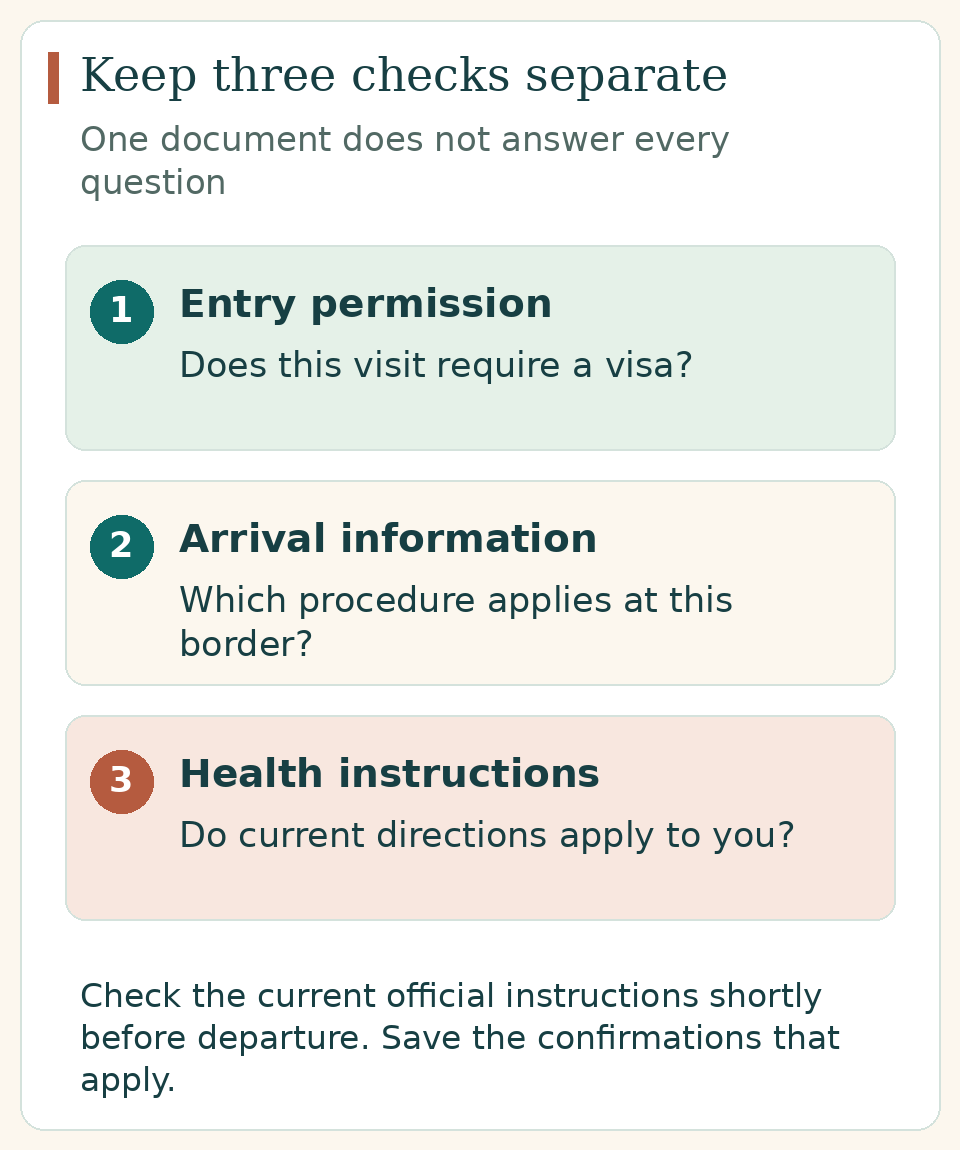
A visa, arrival declaration and health declaration serve different purposes.
Keep an exit margin
Plan a departure that leaves room for disruption; check the admission stamp before leaving the desk.
Choose the entry permission that fits your visit
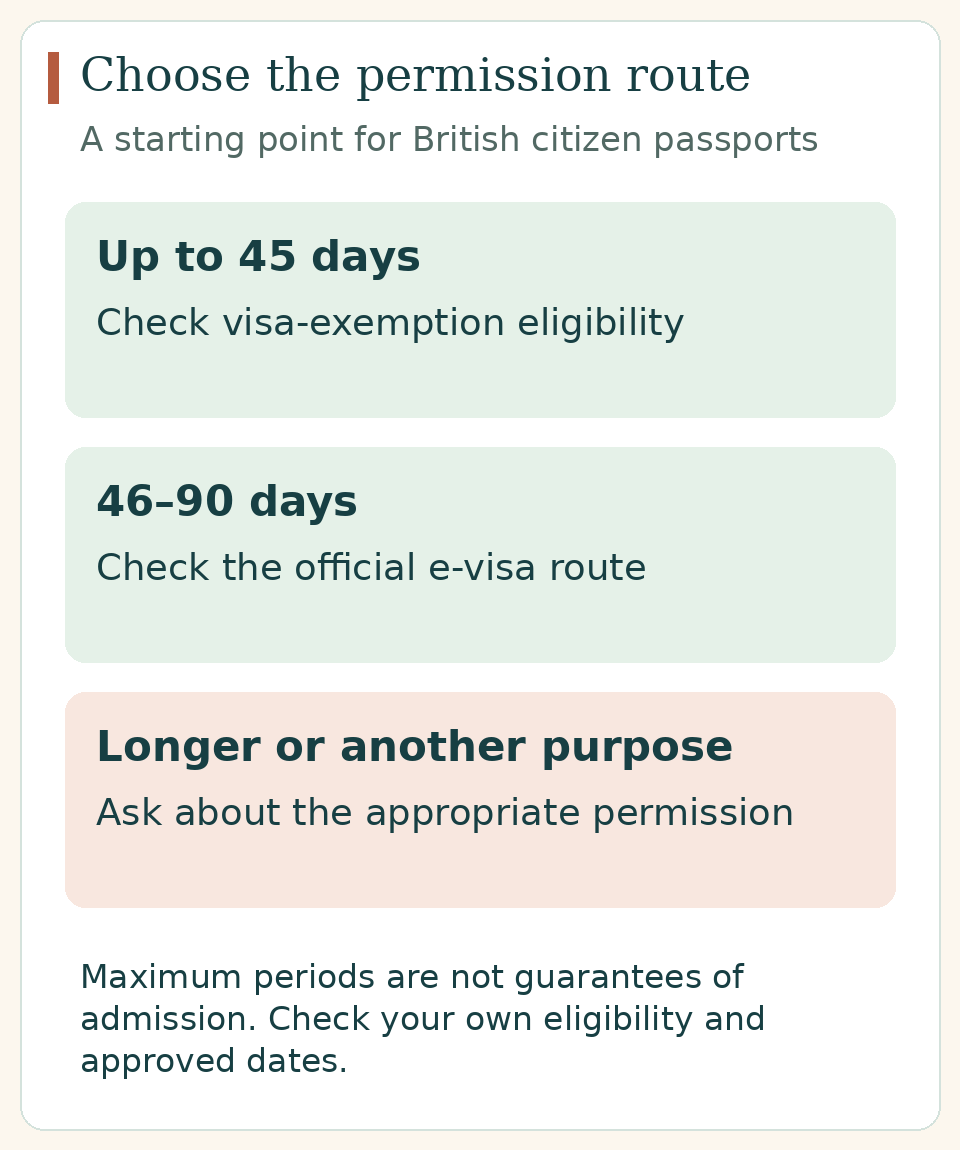
The Ministry of Foreign Affairs includes the United Kingdom in the 45-day exemption under Resolution 44/NQ-CP. Eligibility remains subject to Vietnam’s entry conditions. The current policy period runs from 15 March 2025 to 14 March 2028; check again if your journey falls beyond it. [2] [4]
| Your plan | Starting route | What to settle before departure |
|---|---|---|
| A normal visit of 45 days or fewer | Check eligibility for the visa exemption. | Passport, admission conditions and intended exit date. |
| A visit longer than 45 days, up to 90 days | Consider the official e-visa route. | Approved validity dates, entry count and permitted border crossings. |
| More than 90 days, or work or study | Ask the Vietnamese mission or Immigration Department about the appropriate permission. | Resolve the purpose and duration before booking around a tourist assumption. |
| Leaving Vietnam and returning | Check each arrival separately. | A single-entry visa does not cover a second arrival. Do not assume a side trip resets your permission. |
The e-visa maximum is a ceiling, not a promise that every application receives the full period. Immigration describes single and multiple-entry options. [3]
Three practical examples
A straightforward two-week holiday normally starts with the exemption check. A 60-day stay needs a longer-permission plan. A Vietnam–Cambodia–Vietnam itinerary introduces a second border arrival, even if the whole holiday is short. These examples are a way to organise your questions, not a guarantee of admission.
For a route with several border crossings, list every entry and exit date on one line before choosing a visa option. Keep the same travel-document details across the itinerary and application. A booking confirmation is useful evidence of a plan; it is not entry permission.
Check the passport and the travel dates together
Check the original passport in good light, then compare its details against your bookings. Do this before the final week, when correcting an avoidable error becomes much harder.
- Read the nationality or passport-category wording; do not infer it from your address in the UK.
- Compare the expiry date with the date you arrive, using the six-month requirement above.
- Inspect the cover, personal-details page and binding, and count the unused pages.
- Use the same passport for entry and exit, and ask for any incorrect admission stamp to be addressed before you leave border control. [1]
For families, make one row per traveller: passport number, expiry, permission route and confirmation saved. One adult completing a checklist does not establish that every accompanying person’s documents are ready.
Planning margin: avoid building a holiday around the last possible permitted departure date. A buffer is an editorial precaution for disruption, not extra permission. The date granted at the border or on your visa remains the relevant limit.
If a passport is renewed after an application, or a name or number differs between documents, ask the issuing authority and airline how to correct the position before travel. Do not assume that carrying both versions resolves it.
Use the official e-visa route when you need it
The Immigration Department directs applicants to evisa.gov.vn and thithucdientu.gov.vn. Its older portal contains a notice identifying these as the replacement domains. [3]
| Option | Government fee | Decision to make |
|---|---|---|
| Single entry | US$25 | Will you enter only once during the approved validity? |
| Multiple entry | US$50 | Does your route require more than one arrival during that validity? |
The Immigration Department’s published legacy instructions give these fees and describe processing in three working days. Treat that as published guidance, not a deadline you can safely plan a flight around. The fee is not refunded if an application is refused. [5] [3]
An application check in five steps
- Open the government portal directly. Confirm the domain before entering passport or payment details.
- Prepare a clear passport data-page image and portrait. Follow the current form’s specifications rather than an old blog’s file-size advice.
- Check the spelling, document number, proposed validity, entry count and border details against the itinerary before paying.
- Save the application reference, payment record and a copy of what you submitted. A payment receipt alone is not an approved visa.
- Check the result, inspect the issued document and print it if approved. Save a separate offline copy for travel. [5]
Apply with enough time to correct a rejected image or mistaken detail. The appropriate margin depends on your departure date and the consequences of a delay; this guide does not promise a guaranteed approval time. If the live portal is unavailable, return to the Immigration Department’s official notice rather than choosing a similarly named commercial website.
Check arrival declarations separately from the visa
An arrival-information form records the journey; it does not replace a visa where one is needed. The official pre-arrival address is prearrival.immigration.gov.vn. [6]
Official descriptions currently differ
On 23 October 2026, FCDO advice describes the Tan Son Nhat scheme as encouraged and not mandatory. The Vietnamese Consulate in Fukuoka describes a wider rollout, submission within 72 hours before the expected arrival time and retention of a QR confirmation. It uses stronger language about completing the declaration. These pages do not provide one consistent statement of compulsory coverage. [1] [6]
Before flying, check the official portal and ask your airline or the Vietnamese mission which instructions apply to your arrival point. Complete the official form when instructed and retain the confirmation. Do not assume either that every border has the same procedure or that no form is needed outside Ho Chi Minh City.
Health declarations are a different check
The Vietnamese Consulate in San Francisco explains that the July 2026 rules do not impose a routine declaration on every traveller at all times. Requirements depend on Ministry of Health directions and the disease situation. Its notice also says the ministry was not using the older tokhaiyte.vn website for this purpose. [7]
Follow current instructions for your route and circumstances; do not pay an intermediary for a supposedly universal health form on the strength of a social-media post. Check TravelHealthPro’s Vietnam advice for the separate question of travel-health preparation and vaccination recommendations. [8]
Build one small arrival folder
This is a preparation checklist. It distinguishes documents needed for your circumstances from practical information that makes arrival easier; it does not claim every item is a universal immigration requirement.
| Item | Save or check | Why it helps |
|---|---|---|
| Passport | Original document and a separately stored copy. | Compare identity details without searching through bookings. |
| Entry permission | Approved visa if required; your checked exemption basis otherwise. | Keep an approval separate from an application receipt. |
| Flight or border itinerary | Arrival and departure details, including onward sectors. | Spot a date or border-crossing mismatch before travel. |
| Arrival declaration | Current instructions and any submitted confirmation. | Answer the specific procedure applying to your arrival point. |
| First accommodation | Name, full address, contact details and check-in arrangement. | Complete information requests and reach the correct property. |
| Useful support | Insurance contact, airline contact and relevant medical paperwork. | Have a usable fallback if plans change. |
Choose the first stay before making the arrival file
If accommodation is still undecided, compare Vietnam stays on Agoda and Vietnam stays on Booking.com. These are country-wide accommodation searches. Select the actual arrival city, check-in date and cancellation terms, then save the confirmed property’s address rather than the search page.
Make the file usable without a signal
Keep key documents available offline and a printed copy of the e-visa if applicable. If you want mobile data for maps and accommodation messages, compare eSIM plans with Airalo; the link opens the general service, so select Vietnam and check your device compatibility and package terms before buying. Vietnam plans are listed by the provider, but an eSIM is optional and does not replace offline documents. [9]
Check the admission before leaving the desk
At the border, keep the travel document and any required permission ready together. Once admitted, read the stamp or recorded permitted stay while a correction can still be raised with the immigration officer. Save a clear photograph for your own records and compare it with the planned exit.
If an international journey connects to a domestic flight in Hanoi or Ho Chi Minh City, FCDO says you must clear immigration and enter Vietnam. A domestic connection therefore needs an entry check; do not assume the word “transit” removes it. [1]
After arrival, put the permitted departure date in your calendar, alongside an earlier reminder to review the journey out. If a disruption affects your plans, contact the relevant airline and Vietnamese authorities promptly. Do not treat a cancelled flight, a new booking or an unanswered application as an automatic extension.
Mistakes this checklist is designed to prevent
- Paying for an e-visa before checking whether a straightforward short visit qualifies for exemption.
- Confusing the maximum period with the particular dates or entry count granted.
- Leaving a passport-number typo or changed arrival point to resolve at the airport.
- Using a payment receipt as if it were approval.
- Conflating the arrival card with a health declaration.
- Relying on an online-only document when your phone has no connection.
Questions travellers ask
Does living in Britain mean I qualify for the British visa exemption?
No. Start with the nationality and category of the passport you will use. A UK address or residence permission does not establish that you hold a British citizen passport. Ask the Vietnamese mission about any other document category.
Should I buy a visa for a two-week holiday just in case?
First check whether the 45-day exemption applies to your passport and circumstances. Buying a visa unnecessarily does not fix a damaged passport or a mismatch in travel details. Use the permission route that fits the actual visit. [2]
Is a QR arrival confirmation the same as an e-visa?
No. Keep the entry-permission check and arrival-information check separate. Save both confirmations when both apply, and verify which current arrival procedure your airport uses.
What if my plans change after the visa is issued?
Compare the revised dates, entry count, travel document and border crossings with the permission already granted. Ask the issuing authority what needs changing before travelling; do not assume the original approval automatically covers the revised route.
Sources and research notes
Sources checked on 23 October 2026. Operator prices, schedules, border procedures and availability can change. Planning models and recommendations are editorial judgements with their assumptions stated in the guide.
- FCDO: Vietnam entry requirementsBritish-citizen scope, passport checks, admission and transit; arrival wording compared with the Fukuoka consular notice.
- Vietnam Ministry of Foreign Affairs: visa exemption listUnited Kingdom exemption under Resolution 44/NQ-CP and the 45-day limit.
- Vietnam Immigration Department: e-visa and replacement portal noticeOfficial replacement domains, maximum 90-day validity, entry options and fee-refund rule.
- Vietnam National Authority of Tourism: visa exemption policy periodPolicy period from 15 March 2025 to 14 March 2028.
- Vietnam Immigration Department: published application instructionsOfficial legacy instructions: fees, application checks, processing description and printed approval. Use the replacement portal for applications.
- Consulate General of Vietnam in Fukuoka: pre-arrival information noticeConsular description of rollout, 72-hour timing and QR confirmation; compulsory coverage is not consistently described across official pages.
- Consulate General of Vietnam in San Francisco: health declaration clarificationExplains conditional health declarations and the status of the older declaration website.
- NaTHNaC / TravelHealthPro: VietnamTravel-health preparation and vaccination recommendations, distinct from immigration permission.
- Airalo: Vietnam eSIM plansProvider offers Vietnam data packages and links to device-compatibility information; availability is not a device-compatibility guarantee.
Illustrations in this article were created for Taylor’s Trailblazing Travels. Third-party photographs, where used, are credited beside the image or in the source list.