Lampang Travel Guide 2026: Things to Do, Stay and Transport
River streets, wooden temples and rooster-bowl ceramics, with enough time to enjoy the city between excursions.
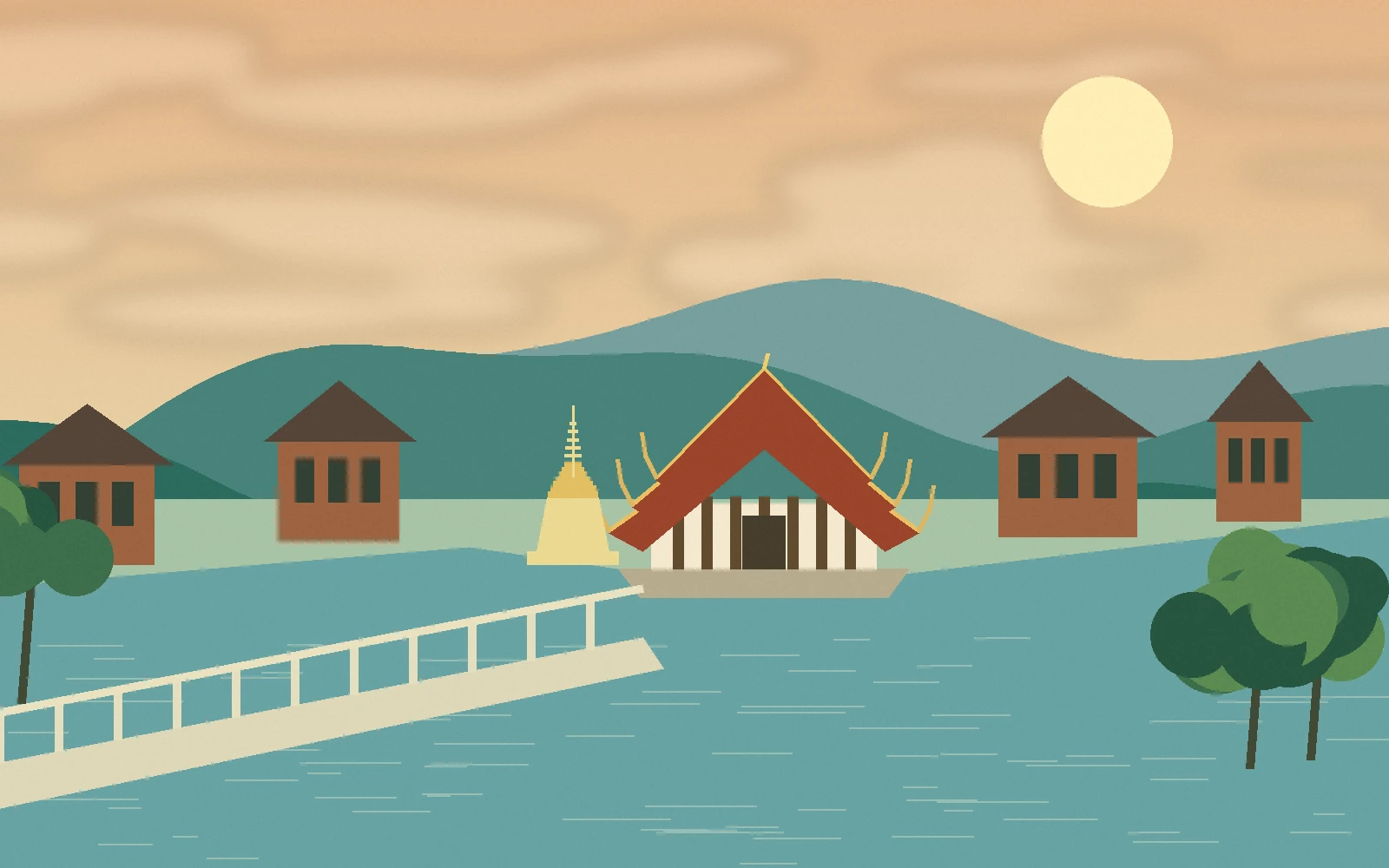
An interpretative Lampang river scene, not a precise reconstruction of one street.
This Lampang travel guide is for travellers who would rather understand one northern city than race through a dozen temple stops. Lampang's river streets, architecture and ceramic heritage reward a slower visit, while the wider province offers hilltop temples and national-park days that need a different transport plan.
For a first stay, I would choose two nights in or near the centre, spend one day on the city and ceramics, and reserve another block for Wat Phra That Lampang Luang. Add a third night when a mountain excursion genuinely interests you. The important distinction is between Lampang city and Lampang province: sharing a destination name does not make all the attractions neighbours.
The selection below is based on variety, cultural relevance, practical access and how well the stops combine. It is not a ranking by admission price or affiliate commission. Research was reviewed on 6 October 2026, with published schedules labelled and variable transport arrangements left for date-specific confirmation. No first-hand visits are claimed.
Near the river and city centre
Prioritise a useful evening walking route.
Wat Phra That Lampang Luang
Treat Ko Kha as a planned trip outside the centre.
Dhanabadee Ceramic Museum
Check the guided session, not only the opening time.
One countryside day
Choose a mountain or national-park route, not every distant sight.
Lampang travel guide: decide how much of the province you want
Start with the city, then add one excursion
Lampang works best when you resist the temptation to make every famous provincial attraction part of one day. The centre offers river-side streets, temples and ceramic heritage, while the outlying hills and national park require deliberate journeys. A short stay can still be rewarding when it concentrates on the city rather than treating it as a place to sleep between long drives. [1]
For most first-time visitors, two nights provide a useful balance: an arrival evening, a complete day and another morning or half-day before moving on. Three nights create room for a countryside outing without deleting the city experience. A single overnight is workable, but the itinerary should become smaller rather than faster.
| Stop | Useful visit block | Transport logic |
|---|---|---|
| Kad Kong Ta and river streets | A slow morning or evening | Walk a compact section; do not assume market stalls operate daily |
| Pong Sanuk and city temples | A selective half-day circuit | Walk where comfortable and use a short arranged ride where needed |
| Dhanabadee Ceramic Museum | A booked tour session plus browsing | Match the museum session to your transfer |
| Lampang Luang, Ko Kha | A separate half-day outing | Arrange the return with the outward ride |
| Mountain temple or Chae Son | A substantial countryside day | Check access, weather and the full driving route |
On a small screen, scroll within the table to compare every column.
How the highlights were selected
The selection combines architectural variety, local craft, ordinary city life and one or two contrasting landscapes. It deliberately avoids presenting every temple as interchangeable. Some stops are useful because of their setting, others because of their history or the chance to understand a working craft. Choose the ones that match your interests instead of pursuing a fixed total.
Getting to Lampang from Chiang Mai
Road or rail: compare the arrival you actually receive
When travelling from Chiang Mai, compare the date-specific road and rail options with the final hotel transfer included. A service can look convenient until you notice the arrival time, station location or long wait before check-in. The most useful ticket is the one that leaves a comfortable first block in Lampang, not necessarily the one with the lowest fare.
For rail, use the official SRT booking channel to confirm the current train, class and station name. Do not confuse Lampang with Lamphun, another northern destination. Read the full confirmation carefully, and keep it available offline rather than relying on a remembered departure from a previous journey. [3]
Do not overload the transfer day
An arrival afternoon is ideal for checking in, finding food and walking a manageable section of the river quarter. A distant mountain temple is a poor default addition because it creates another transport dependency before you understand the local arrangements. Save the important excursion for a day with enough daylight and flexibility.
If visiting Lampang only as a day trip from Chiang Mai, choose a narrow purpose: perhaps a major temple and ceramics, or a compact heritage route. A tour that promises the city, several mountain sites and a national park deserves careful scrutiny of the actual driving and visiting time.
Arriving from Bangkok or by air
Overnight travel needs an honest first morning
A rail or coach journey from Bangkok can make Lampang part of a longer northbound route. However, a ticket that replaces a hotel night does not guarantee a good night's sleep. Allow for breakfast, luggage storage and a room that may not be available immediately on arrival before deciding how much sightseeing to book.
Train categories, seats and sleeping arrangements differ, so examine the actual class rather than the headline journey name. The official railway booking system is the source for date-specific availability. When using a comparison platform, check whether the process involves a confirmed electronic ticket or another collection arrangement. [3]
Flights are a date-specific alternative
Lampang appears in Bangkok Airways' flight-schedule search, but that is not a promise of a particular frequency or fare for your trip. Search the exact date and airport combination. Older airline announcements can describe services that are no longer operating in the same pattern, so do not build a connection around a historical timetable. [4]
Compare the total journey, including airport time and the final ride. For a short stay, a suitable flight may preserve energy; for a slower itinerary, rail may be part of the experience you want. Keep important onward travel separate from an ambitious last-day countryside outing.
Kad Kong Ta: architecture first, market second
Enjoy the street outside the market window
Kad Kong Ta, also written Kat Kong Ta, is a historic commercial area beside the Wang River near Ratsadaphisek Bridge. TAT describes a mixture of architectural influences reflecting its trading past. It is worth approaching as a streetscape, not only as a place to buy food from evening stalls. [5]
The evening market is not an everyday promise
TAT publishes a Saturday-and-Sunday evening market window of 17:00-22:00, checked on 6 October 2026. Individual stalls and special events can vary, so confirm locally when the market is a key reason for choosing your dates. A weekday visit still offers the area, but not necessarily the same stall-filled atmosphere. [5]
| Published visitor information | Details | Checked |
|---|---|---|
| Kad Kong Ta evening market | Saturday and Sunday, 17:00-22:00 | 6 October 2026; individual stalls vary |
| Dhanabadee museum | Daily, 08:30-17:00; guided sessions are separate | 6 October 2026; confirm your session |
| Wat Phra That Lampang Luang | Published window 07:30-17:00 | 6 October 2026; ceremonies can affect access |
| Chae Son foreign entry | Adult 200 THB; child 100 THB | 6 October 2026; reconfirm and add extras |
On a small screen, scroll within the table to compare every column.
For a market evening, arrive with enough time to browse before committing to a meal. Carry an appropriate payment method and leave space around stalls for other customers. A room within a comfortable walking route can make the evening far more relaxed than planning a late transfer afterwards.
The Wang River and Ratsadaphisek Bridge
Make the river a pause, not another checklist item
The river and bridge help give the city a legible centre. Use them to orient yourself, then choose a manageable loop through nearby streets. The purpose is to notice how the city fits together, not to turn the bridge into a five-minute stop between vehicle journeys. TAT identifies both the river and the bridge among Lampang's defining features. [1]
Early or later daylight can be more comfortable for walking than the middle of a hot day. Nevertheless, choose the timing around weather and your own pace rather than chasing a guaranteed photograph. Keep water available and identify a place to sit before the group becomes tired.
Check the real walking route
A hotel advertised as river-side may sit on a different bank or beyond the section you want to explore. Look at the actual bridge and pavement route, especially for luggage, pushchairs or anyone with mobility limitations. A short straight-line distance can still produce an awkward walk.
Avoid assuming that every attractive river edge is a continuous promenade. Roads, private frontages and changing surfaces can interrupt the route. Ask the property to describe a practical evening walk to food and back; a specific answer is more useful than the general reassurance that the centre is nearby.
Wat Pong Sanuk: give the wooden pavilion time
Look closely rather than visiting quickly
Wat Pong Sanuk Nuea is a particularly useful city temple because its wooden pavilion offers a different architectural emphasis from a large, single monumental stupa. TAT describes a combination of Lanna, Burmese and Chinese influences and notes its conservation recognition. You do not need to memorise every architectural term to appreciate the workmanship and the care involved in maintaining it. [6]
Allow time to look from different permitted positions and read the available interpretation. Details become easier to notice when you are not immediately comparing the site with the next temple on the list. A short but attentive visit can be more meaningful than a longer stop spent mainly arranging photographs.
Remember that it remains a place of worship
Dress and behave according to the site's requirements, remove shoes where asked and keep clear of worshippers. Do not assume that an attractive interior is open simply because the grounds are accessible. A ceremony or local activity may change where visitors can go.
If the history particularly interests you, consider a heritage guide who can explain the differences between sites. Confirm that the booking includes interpretation rather than only a driver and a sequence of stops. The two services solve different needs and should not be compared as if they were identical.
Wat Si Chum and the city's other temple contrasts
This is Lampang's Wat Si Chum
Lampang's Wat Si Chum is not the better-known Sukhothai monument with the same name. TAT's Lampang listing describes Burmese architectural influence and the rebuilding that followed a serious fire. That distinction is useful both for understanding the visit and for avoiding the wrong map result when searching quickly. [7]
Use it as a contrast to Pong Sanuk rather than as another identical temple stop. Look at the roof forms, material treatment and setting, then leave enough time to absorb what makes the site different. Avoid repeating a dramatic historical detail from a casual source when the site's own interpretation gives a more careful account.
Add selectively, not automatically
Wat Phra Kaew Don Tao Suchadaram and other city temples can extend the circuit, but the right number depends on your interest and energy. TAT's city overview identifies several options; it does not mean a first visit needs to include all of them. Choose a small route that leaves time for lunch and the streets between sites. [1]
For a mixed group, alternate a temple with a different kind of stop. Ceramics, a river walk or a seated break can restore attention. Three carefully chosen experiences often provide a stronger memory than eight sites visited with declining interest.
Tha Ma O and historic-house streets: look beyond interiors
A different way to read the city
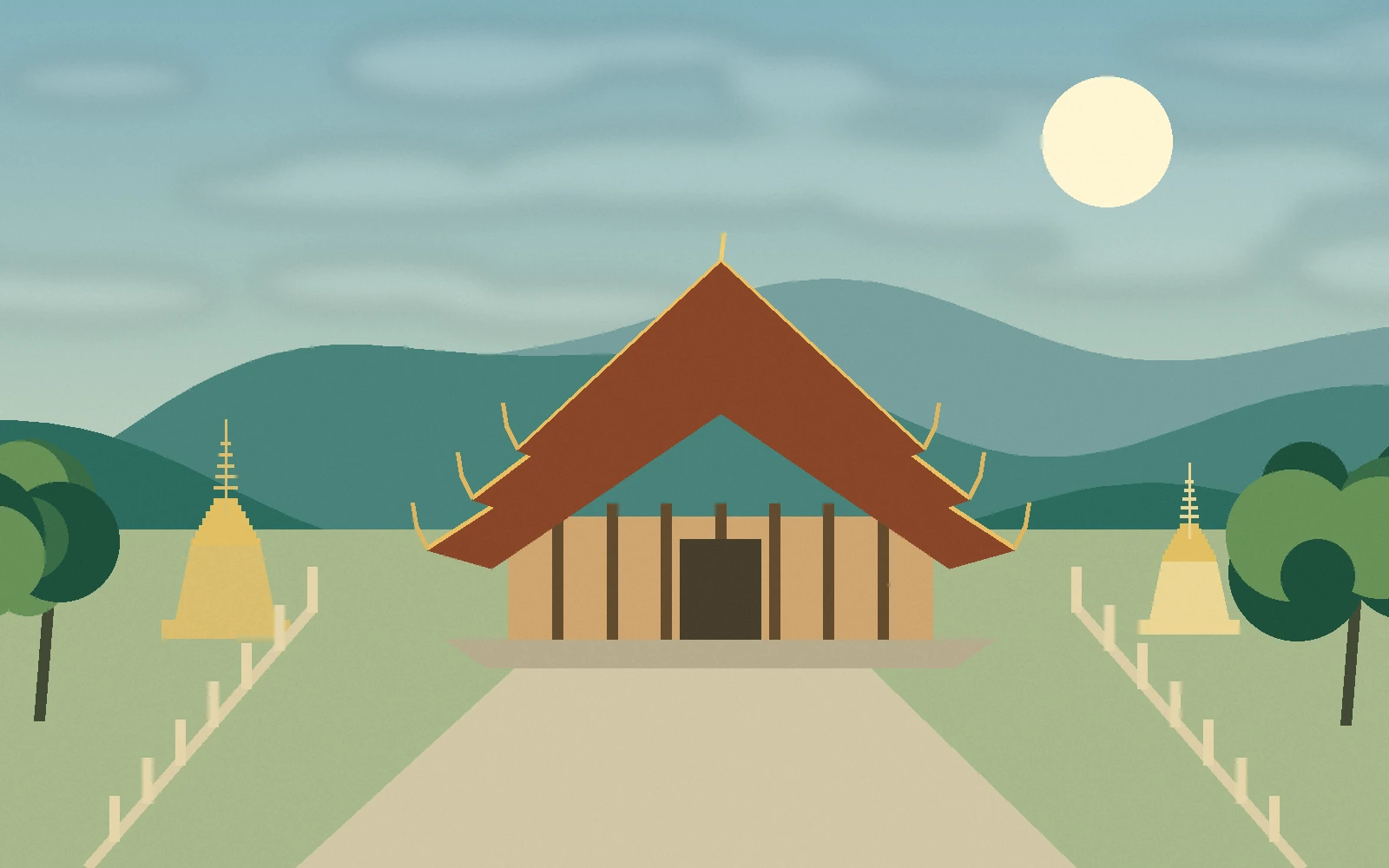
The Tha Ma O area and historic-house stops such as Ban Sao Nak and Baan Louise appear in TAT's Lampang city overview. They offer a way to think about the city's timber-era connections and residential fabric alongside its temples. However, a building being listed as a visitor interest does not guarantee that its interior is currently open. [1]
Before making a house the centre of a morning, ask about current entry, hours and guided arrangements. When only an exterior or surrounding street can be visited, decide whether that still interests you. An architecture-focused walk can remain worthwhile without implying access to somebody's home or a closed building.
Keep the walk respectful and selective
Choose a small route and look for differences in timber, roofs, balconies and the relationship between buildings and the street. You do not need to assign a confident historical label to every feature. Where interpretation is limited, describe what you can actually observe rather than inventing a story to make the stop sound more important.
Stay on public or permitted routes and ask before entering a courtyard. A quiet residential area is still an everyday neighbourhood. The best visit leaves residents able to go about their business rather than treating the street as a set that should stop for photography.
Dhanabadee Ceramic Museum: more than a souvenir stop
Understand the rooster bowl before buying one
Dhanabadee's museum focuses on ceramic production and Lampang's familiar rooster-bowl heritage. The value is the explanation of the craft and its development, not simply the opportunity to leave with a bag of pottery. Treat the guided visit as the main event and shopping as an optional extension. [8]
Ask which parts of the process will be demonstrated during your session and whether the language suits your group. A working demonstration can make the difference between recognising a decorated bowl and understanding how it was made. However, do not assume every process runs continuously throughout opening hours.
Book around the guided session
The museum's own site publishes daily opening from 08:30 to 17:00 and lists separate morning and afternoon guided departures. Those details were checked on 6 October 2026. Confirm a suitable session rather than arriving just before closing and assuming a complete tour will still begin. [9]
When buying ceramics, think about the rest of your route. Ask how items will be wrapped and whether they fit your baggage safely. A beautiful but fragile purchase can become an inconvenience on a multi-stop trip, so choose a manageable item or investigate the seller's delivery terms instead of improvising later.

Wat Phra That Lampang Luang: make Ko Kha a proper outing
The major temple outside the centre
Wat Phra That Lampang Luang is in Ko Kha, not a casual extension of the river walk. Its architecture and stupa make it a central cultural choice for a first Lampang visit, but the transport should be arranged as an outward-and-return outing. TAT publishes a 07:30-17:00 visiting window, checked on 6 October 2026. [2]
Allow a comfortable block rather than squeezing it between a museum session and a distant mountain drive. Time spent looking, resting and following the site's circulation is part of the visit. The main entrance and grounds may not answer every accessibility question, so request details about the specific areas you hope to see.
Avoid the cheapest one-way arrangement
Tours advertised under Lampang may start in Chiang Mai. Check that detail before comparing prices or assuming hotel collection. A longer intercity excursion and a locally departing temple outing include very different amounts of transport, even when their main attraction is the same.
Wat Phra That Doi Phra Chan: a hilltop alternative
Choose it for the setting as well as the temple
Wat Phra That Doi Phra Chan lies in Mae Tha and is associated with a hilltop outlook over the surrounding landscape. It can provide a different experience from the city temples, but it should be selected deliberately for that combination of setting and architecture. TAT confirms the Mae Tha location; check current access arrangements before departure. [10]
Ask how the final approach works, where vehicles stop and which parts involve steps. A general description such as hilltop temple does not reveal whether the route suits everyone in your party. Cloud, rain or haze can also change the scenic value of the visit.
Keep the route coherent
It may be possible to combine southern-area stops within a private outing, but request a realistic route rather than assuming every attractive pin belongs together. The driver or guide should explain the sequence and expected road time. Leave the option to remove a stop if the first visit takes longer or conditions worsen.
Do not confuse Doi Phra Chan with the white mountain-top pagodas often shown in Lampang advertising. They are different sites with different approaches. Send the exact name and map location when requesting a quote so the day does not begin with a misunderstanding about which temple you booked.
The floating-pagoda mountain day
Beautiful images hide the effort
The mountain-top white pagodas commonly associated with Wat Chaloem Phra Kiat are one of Lampang province's most striking images. They are also a separate countryside excursion, not a short detour from the central river streets. TAT includes the site among the province's highlights; the current transport and access details should be checked directly. [1]
Ask about the local vehicle or shuttle arrangement, the climb, the surfaces and the time needed to return. Do not judge suitability only from photographs of the pagodas. Someone who is comfortable walking around a city temple may find a steep, exposed mountain approach very different.
Let the weather make the final decision
A cloudy or wet day can reduce views and make steps less comfortable. Keep the operator's cancellation and alternative-route terms clear before paying, and accept that the right choice may be a different outing. The aim is an enjoyable visit, not reaching a viewpoint because it was the most expensive item on the itinerary.
Avoid booking a fixed long-distance departure immediately afterwards. A mountain day deserves enough margin for queues, slower walking and changing conditions. Staying another night can be a more sensible adjustment than trying to make the entire province fit before an evening train.

Chae Son National Park: a separate nature day
Hot springs and waterfall scenery
Chae Son offers hot-spring and waterfall experiences rather than another city heritage stop. TAT describes several natural features and visitor facilities, but the activities you can actually use depend on current access and local conditions. Plan the visit as a substantial countryside day with its own transport, food and return arrangements. [11]
The tourism listing gives foreign entry of 200 THB for an adult and 100 THB for a child, checked on 6 October 2026. Treat these as published reference fees, not an all-inclusive quote. Bathing facilities, vehicle charges or other services may need separate payment and confirmation. [11]
Do not assume every hot-water area is for bathing
Follow designated areas and current signs rather than entering water because other visitors are nearby. Ask which facilities suit your group and what clothing or equipment is needed. A scenic hot-spring area, a managed bathing facility and a waterfall path are different activities with different practical requirements.
Combining Chae Son with a mountain temple can create a long day. Only do so when the full route, access and your group's energy support it. A focused national-park visit may be more satisfying than dividing the day between distant attractions and watching the clock throughout both.
Where to stay in Lampang
Prioritise the evening, not only the arrival
For a first cultural visit, a central base near the streets you want to explore is usually more useful than staying beside a transport terminal. Think about the walk to dinner and the return after dark. Ask about the exact room, noise and vehicle access rather than relying on the property being described as central.
| Stay area | Why choose it | What to check |
|---|---|---|
| Central river quarter | Architecture, meals and an enjoyable evening base | Actual pavement, bridge and after-dark route |
| Wider city centre | Practical hotel choice and easier vehicle access | Distance from the streets you want to explore |
| Station or terminal area | Early departure or late arrival | Whether the location sacrifices most of the sightseeing stay |
| Ko Kha or countryside | A deliberate rural or temple-focused break | Transport for every meal and excursion |
On a small screen, scroll within the table to compare every column.
Compare like-for-like room conditions across platforms. Breakfast, taxes, cancellation terms and whether the price is for the room or the person can change the apparent bargain. A cheaper room becomes less attractive when its location requires repeated rides for ordinary meals.
When a rural base makes sense
Ko Kha or a countryside property can work when that setting is the purpose of the stay and you have arranged transport. It is less suitable as an accidental budget choice for someone intending to spend every evening in the city. Check food access, pickup coverage and how an early departure will work.
A two-base stay inside the same province is usually unnecessary for a short first visit. Moving luggage can consume the time you hoped to gain. Choose one useful base and pay for a coherent excursion unless a longer rural stay genuinely adds something you want.
Getting around: walking clusters and arranged rides
Do not force the whole city into one walk
Walk the comfortable central clusters, then use transport where the distance, heat or route makes that sensible. A map can encourage a continuous circuit that looks tidy but involves tiring road sections between the interesting places. Split the day into blocks and include a proper seated break.
For a hired car and driver, specify the destinations, start time, waiting, final drop-off and whether interpretation is included. A transport-only booking should not be represented as a guided cultural tour. Ask for the total rather than negotiating a separate fare at every stop.
Keep practical details outside your phone signal
Save addresses, meeting points and the return contact offline. Tell the accommodation about any early pickup and confirm whether breakfast or luggage storage is possible. These small details become more important when you are relying on arranged transport rather than simply walking out to a frequent service.
If considering self-driving or riding, check the correct licence, insurance and experience for the vehicle. A quieter destination is not automatically an easy place to learn an unfamiliar form of transport. Follow current road-safety guidance and do not use a holiday itinerary as a reason to ride beyond your ability. [12]
Food, markets and ordinary city time
Leave room for meals that are not attractions
A useful Lampang day includes time to eat without immediately leaving for the next booking. Choose a convenient place, ask about ingredients and enjoy the break. The city's appeal is weakened when every meal becomes takeaway food consumed while crossing the province.
Kad Kong Ta can provide an evening food focus when the market is operating, but it should not be the only meal plan. Check nearby alternatives, particularly on weekdays or when rain changes the evening. A hotel with a practical food neighbourhood is valuable for exactly these ordinary situations. [5]
Shopping should fit the remaining journey
Ceramics are an obvious local interest, but there is no need to buy the largest item to make the visit worthwhile. Ask about production, use and packing, and choose something that suits the baggage you actually have. A small, well-chosen piece may be more useful than a fragile collection carried through several hotels.
For any food or craft purchase, ask before photographing the seller or handling displays. Working businesses are not sets for visitors. A respectful conversation often adds more to the experience than treating every shop as a backdrop and moving on without engaging.
A gentle Lampang day for children or mixed mobility
Build the programme around attention, not distance
A short architecture walk, one suitable temple area and a timed museum session can make a varied day without requiring a long rural transfer. Ask children to notice a roof shape, a carved detail or a ceramic pattern, then change the activity before attention disappears. That creates a purpose without turning the outing into another formal lesson.
For limited mobility, request practical information about the exact entrance, steps, seating and toilets at each chosen stop. A general tourism accessibility label cannot replace the route details needed by an individual visitor. Keep a nearby alternative so that an unexpected barrier does not remove the whole morning.
Leave the mountain day optional
Not every member of a group needs to climb a mountain temple to have visited Lampang properly. A city-based alternative can provide a complete day, particularly when heat, fatigue or balance concerns make the climb unattractive. Agree that choice before paying for a vehicle so nobody feels pressured by money already spent.
Build in a lunch place where everyone can sit comfortably and take as long as needed. A less crowded programme often means the last stop receives the same curiosity as the first, rather than being completed merely because it remains on the schedule.
Two-day and three-day Lampang plans
Two days: city detail and one major outing
On the first day, combine a manageable river-quarter walk with one or two city temples and a confirmed ceramic-museum session. Keep the evening near your base. If it is a weekend and the market is operating, use Kad Kong Ta as an option rather than a deadline that forces you to rush the afternoon.
Use the second day for Wat Phra That Lampang Luang and a relaxed return. Add another nearby stop only when the route and energy make it worthwhile. This structure gives the city and the major outlying temple their own attention instead of making both brief pauses on a longer drive.
Three days: choose one countryside theme
A third day can support the mountain-pagoda outing or Chae Son. Choose according to your interest, mobility and the conditions, not simply which image receives more attention online. Keep the final evening uncomplicated and avoid making the next morning's departure dependent on a late return.
These are route shapes, not fixed schedules. Museum sessions, ceremonies, weather and transport availability may change the order. The important principle is to keep geographically related stops together and protect enough time at each place to enjoy it.
Using Lampang as a route stop rather than a detour
Lampang can be considered within a slower journey towards or away from Chiang Mai, but confirm that the actual services and arrival times support the stop. Do not assume a ticket lets you break the journey whenever you wish. Separate bookings need their own availability, conditions and buffers. [3]
The stop earns its place when it produces a useful evening and enough time for the city's distinctive interests. If the proposed connection gives you only a late arrival and early departure, a different train, another night or leaving Lampang for a future route may provide a better experience.
Costs, seasonality and responsible choices
A transparent two-night allowance
For two people, an assumed room at 1,000 THB per night for two nights and food-and-drink spending of 500 THB per person per day produces a 4,000 THB subtotal. These are editorial budgeting assumptions dated 6 October 2026, not surveyed averages or hotel quotes. Transport, admission and excursions remain additional.
| Two-night example for two people | Assumption | Amount |
|---|---|---|
| Room | 1,000 THB per night x two | 2,000 THB |
| Food and drinks | 500 THB each per day x two days | 2,000 THB |
| Subtotal before travel and sightseeing | Constructed allowance only | 4,000 THB |
| Add separately | Intercity travel, local rides, admissions, guide and extra services | Obtain current quotes |
On a small screen, scroll within the table to compare every column.
Obtain the excursion quote before deciding whether an extra night is affordable. A room can be modestly priced while a private countryside vehicle becomes the largest expense. Comparing the full stay avoids choosing a destination on one attractive accommodation rate alone.
Weather and animal-related activities
Check current weather and air-quality information, particularly when scenic views or outdoor walks are central to the plan. A quieter northern city is not automatically outside regional haze or disruption. Keep the ability to shorten an outdoor day or change a mountain outing when conditions are unsuitable. [13] [14]
Horse carriages are associated with Lampang, but their presence in tourism imagery is not a welfare endorsement. Anyone considering a ride should assess the individual animal, handling, heat, rest and load, and be willing to decline. Likewise, do not assume an animal attraction is responsible solely because conservation appears in its name.
Pros, cons and common mistakes
Advantages
Lampang is a strong choice when you want architecture, ceramics and a slower city stay within a northern route. It rewards looking closely and leaving space between excursions. It is less suited to someone expecting a dense, late-night visitor district or a completely effortless circuit of distant provincial attractions.
Trade-offs
The main practical compromises are local transport and the separation between city sights and countryside days. Those are manageable when planned, but they become frustrating when ignored. A central hotel and one coherent excursion can solve more than an ambitious list of places.
Mistakes to avoid before leaving
Do not confuse Lampang with Lamphun, Lampang's Wat Si Chum with the Sukhothai temple, or Doi Phra Chan with the floating-pagoda mountain site. Confirm map locations when requesting transport. Also check the museum session and weekend-market pattern rather than assuming all attractions operate continuously every day.
Leave the final departure clear of a distant excursion and confirm whether your ticket uses the station or terminal you expect. A calm final morning is usually worth more than one extra stop that puts the onward journey at risk.
Frequently asked questions
Is Lampang worth staying overnight?
Yes, particularly when you enjoy architecture, ceramics and a slower city rhythm. An overnight lets you experience the river quarter beyond a brief day-tour stop, while two nights leave room for a major outlying temple. The stay is most worthwhile when you actually protect city time instead of filling every day with distant excursions.
How long should a first visit be?
Two nights is a useful starting point for the centre, ceramics and Wat Phra That Lampang Luang. Add a third night for a mountain temple or national-park day. A shorter visit can work with a smaller shortlist, but the answer should not be to compress every provincial highlight into the available hours.
Can I visit Lampang without a car?
Yes. Choose a practical central base, walk comfortable clusters and arrange rides for the outlying sights. Confirm the return when booking the outward journey. The difficult version is staying remotely while expecting every meal and excursion to be spontaneous; solve the transport around the accommodation before paying for the room.
Is Kad Kong Ta open every evening?
TAT publishes the main evening-market window as Saturday and Sunday from 17:00 to 22:00, checked on 6 October 2026. Individual operations and events may vary. The historic area can still be explored outside that period, but a weekday architecture walk should not be confused with the full evening-market experience. [5]
Do I need to reserve the ceramic museum?
Contact the museum to confirm a suitable guided session, especially when you have limited time, language needs or a group. The published daily opening window does not mean a complete tour starts whenever you arrive. Check the session and transfer together so a late arrival does not remove the main reason for visiting. [9]
Are the floating pagodas suitable for everyone?
Not automatically. Ask about the actual transport, climb, steps, surfaces and weather conditions before deciding. A dramatic photograph does not reveal the effort involved. Anyone with mobility, balance or height concerns should obtain route-specific information and be comfortable choosing a different excursion when the approach is unsuitable.
Can I combine every main sight in one day?
That would turn much of the visit into driving and brief stops. Separate the city, the southern temple area and the more distant mountain or national-park routes. A focused day with time to look and rest is usually more rewarding than a comprehensive list completed without enough time at any one place.
Should I choose Lampang or Chiang Mai?
Chiang Mai is the broader all-round northern base, while Lampang provides a quieter cultural contrast for travellers interested in its particular architecture and craft heritage. On a short first northern stay, one base may be enough. Add Lampang when the route allows at least a meaningful overnight rather than using another hotel move simply to increase the destination count.
The Lampang stay I would book
I would choose two nights near a useful central walking area, confirm a Dhanabadee session and build one relaxed city day around the river streets and a small temple selection. Then I would arrange a complete outward-and-return visit to Wat Phra That Lampang Luang rather than negotiating the return afterwards.
With another night, I would add one countryside theme according to conditions and the group's ability. Lampang does not need to imitate Chiang Mai or compete through a longer attraction list. Its strength is the chance to spend enough time with the details that make this city distinct.
Sources and fact-checking notes
Official tourism, attraction, transport and specialist sources were reviewed on 06 October 2026. Named schedules and fees are published reference points, not guarantees for a future date. Suggested routes, visit lengths and constructed budgets are editorial planning judgements. Recheck the operator or attraction before committing to a time-sensitive booking.
- Tourism Authority of Thailand – LampangCity, river, ceramics and wider-province context.
- Tourism Authority of Thailand – Wat Phrathat Lampang LuangLocation in Ko Kha, architecture and published opening window.
- State Railway of Thailand – D-TicketOfficial date-specific train booking; no static timetable is represented as a current departure guarantee.
- Bangkok Airways – flight schedule searchCheck the actual travel date and airport; historical route announcements are not current flight promises.
- Tourism Authority of Thailand – Kat Kong TaHistoric riverside architecture and published Saturday/Sunday evening-market window.
- Tourism Authority of Thailand – Wat Pong Sanuk NueaWooden pavilion and cultural conservation context.
- Tourism Authority of Thailand – Wat Si Chum, LampangBurmese architectural influence and restoration history; this is not the Sukhothai temple of the same name.
- Dhanabadee Ceramic Museum – collections and backgroundLampang rooster-bowl history and museum focus.
- Dhanabadee Ceramic Museum – visitor informationThe museum publishes daily hours and separate guided-tour departure slots.
- Tourism Authority of Thailand – Wat Phra That Doi Phra ChanMae Tha hilltop location and outlook; check current access arrangements.
- Tourism Authority of Thailand – Chae Son National ParkHot springs, waterfalls, published foreign-visitor entry fee; additional services can cost extra.
- UK FCDO – Thailand safety and securityRoad safety, activities and local legal precautions.
- UK FCDO – Thailand health and air qualitySeasonal haze, health preparation and local emergency contact information.
- UK FCDO – Thailand travel adviceAdvice and disruption alerts checked on the editorial review date; check again before departure.
Illustrations in this article were created for Taylor’s Trailblazing Travels. Third-party photographs, where used, are credited beside the image or in the source list.