12 Best Restaurants in Bangkok for First-Time Visitors in 2026
Twelve useful dining choices, from a quick roast-duck lunch to a deliberately planned occasion dinner.
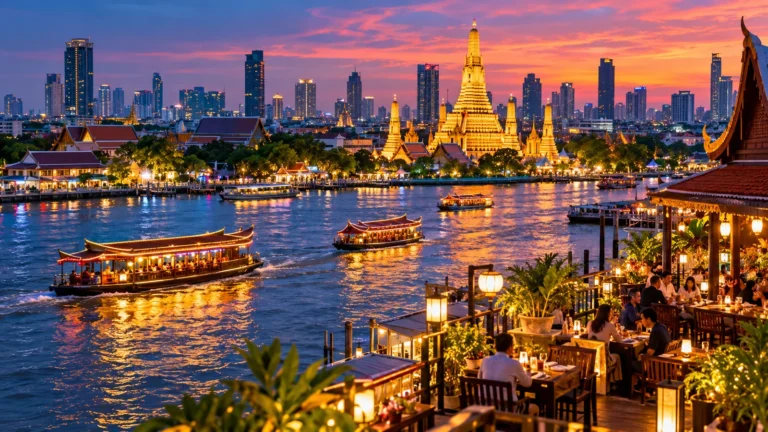
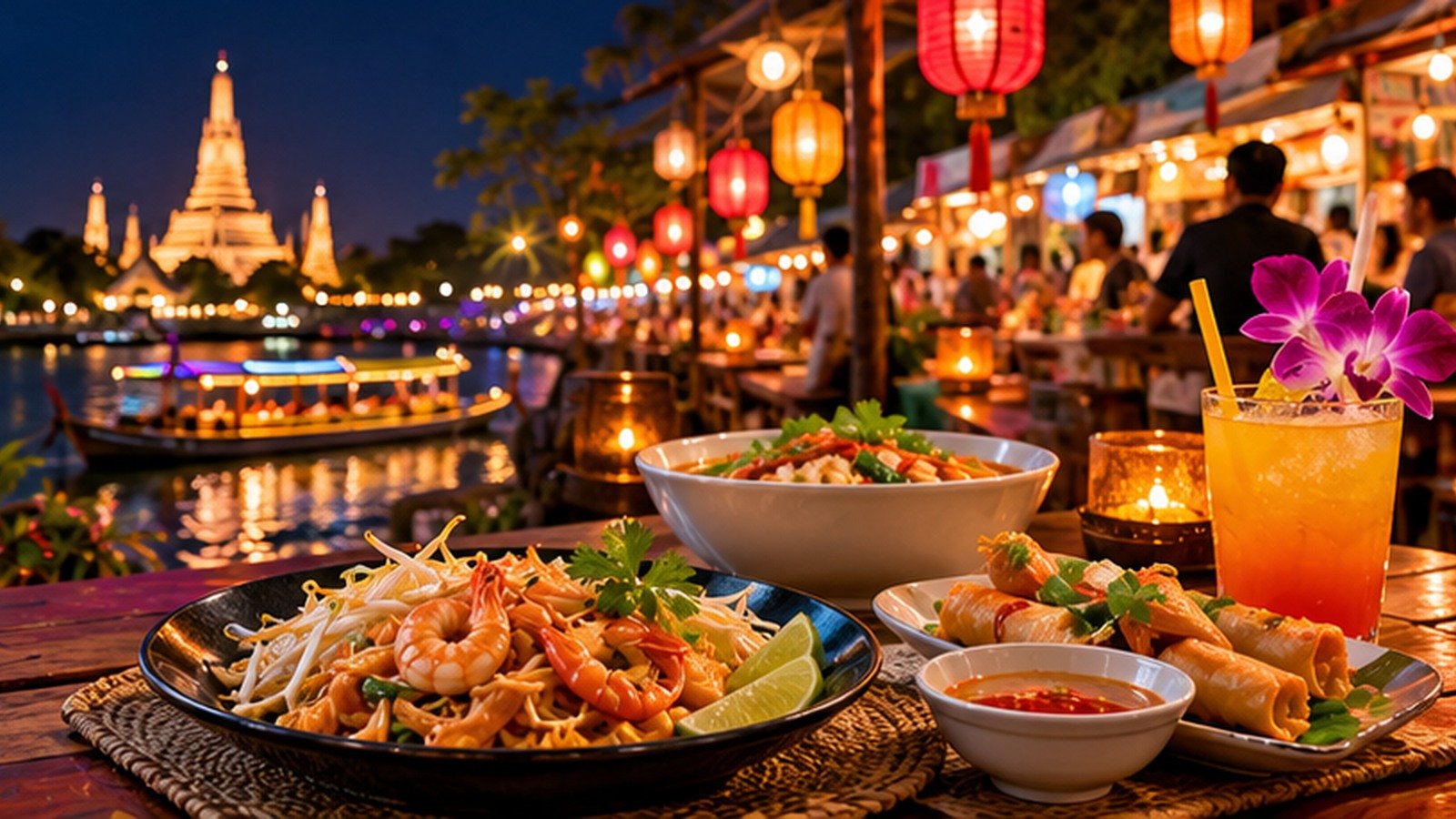
An imagined Bangkok dining scene, not a photograph of a named restaurant or its current menu.
The best restaurants in Bangkok for a first visit are the ones that help you understand more than one side of the city’s food. That might mean roast duck at lunchtime, a sharp Isan salad the following day and a carefully chosen riverfront dinner. It does not have to mean twelve reservations, twelve queues or twelve versions of the same dish.
This selection balances specialist everyday places, comfortable Thai dining rooms, regional cooking, a vegetarian-friendly option and one tasting-menu treat. The restaurants are grouped as useful choices rather than ranked by an invented flavour score. Venue information comes from the sources below; the suggested orders and meal routes are research-led planning advice, not claims that Karen has personally eaten there.
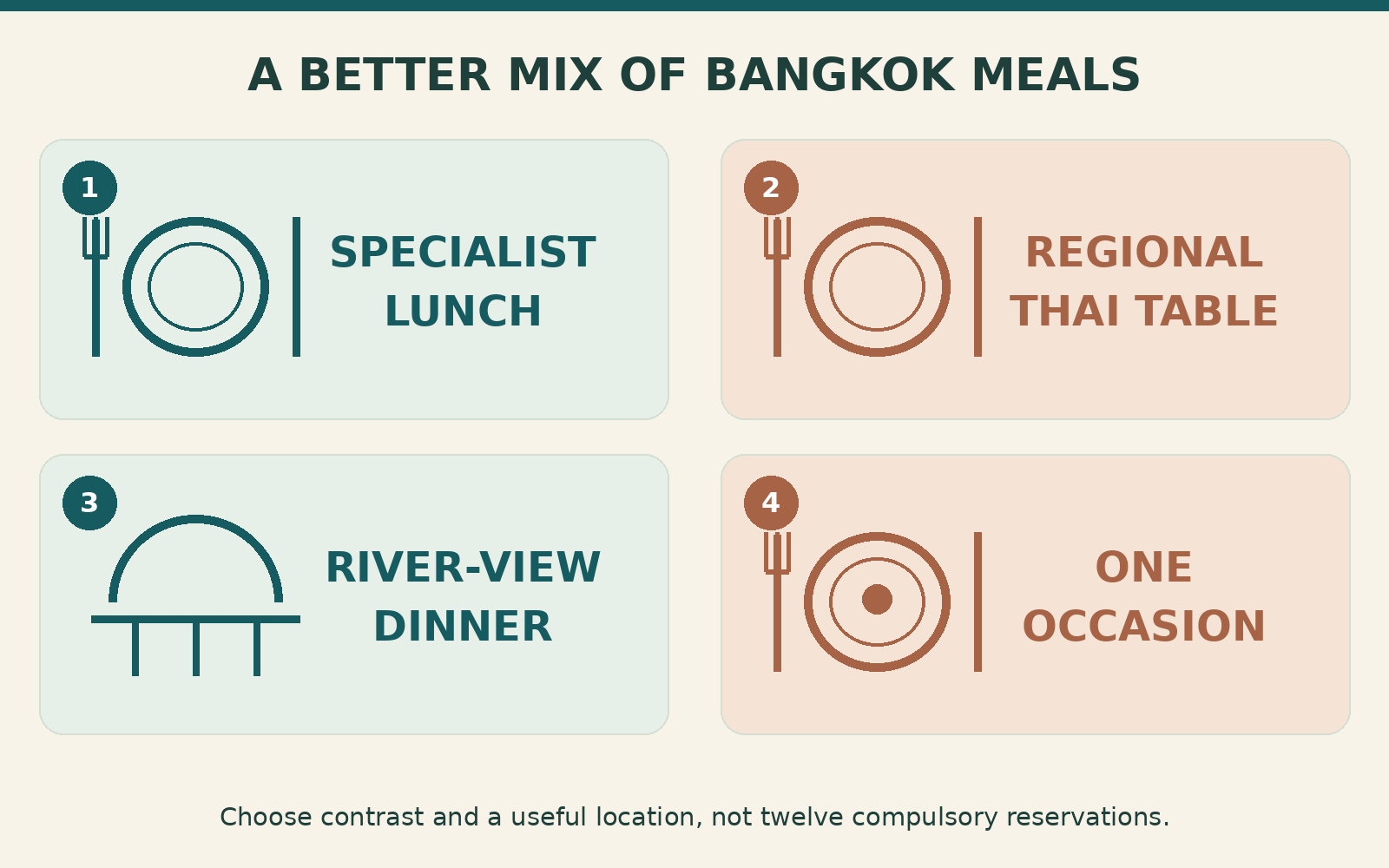
Choose three or four contrasting meals that fit the places you already want to explore. You will usually gain more from that approach than from crossing Bangkok simply to collect another famous name. Keep room for a spontaneous lunch, too: a good food itinerary needs appetite and flexibility as well as addresses.
Supanniga Tha Tien
Regional Thai cooking with an easy old-city connection.
Prachak
A roast-duck or noodle lunch near the river gateway.
Na Aroon
Vegetarian choices, but the kitchen also serves seafood.
Le Du
Reserve deliberately and count the full tasting-menu bill.
How to choose the best restaurants in Bangkok
A useful list needs contrast
The shortlist includes twelve establishments, but most first-time visitors should not try to eat at all of them. The purpose is to offer a suitable choice for different days, locations and appetites. Two pad Thai specialists appear because they provide different settings and route connections; you do not need both unless comparing them is an interest in itself.
Restaurant websites and current guide listings establish the locations and main food styles. Where a source is older, it is used only for a stable detail such as the restaurant’s identity or signature dish, not as proof of today’s opening hours. A national reputation does not cancel the need to check the correct branch.
| Restaurant | Best use on a first visit | Area or branch used here | Main decision |
|---|---|---|---|
| Thipsamai | A focused pad Thai stop | Pratu Phi, Maha Chai Road | Original setting or a more convenient branch? |
| Baan Phadthai | A comfortable specialist lunch | Charoen Krung 44 | A useful Bang Rak meal rather than a citywide detour |
| Somtum Der | Isan dishes and shared plates | Sala Daeng | Choose spice and ingredients deliberately |
| Krua Apsorn | Home-style Thai cooking | Dusit, Sam Sen Road | Confirm this branch’s current hours |
| Rongros | An occasion with a Wat Arun view | Tha Tien | Reserve the actual table setting |
| Supanniga Eating Room | A broad, comfortable Thai dinner | Tha Tien | Menu variety without losing the neighbourhood plan |
| Prachak | Roast duck, rice or noodles | Bang Rak | A concise lunch rather than a long dining event |
| Nai Mong Hoi Thod | An oyster-omelette specialist | Chinatown area | Check location and opening before travelling |
| Jay Fai | A famous seafood-focused experience | Maha Chai Road | Decide how much time and money it deserves |
| Baan Ice | Southern Thai flavours | Thong Lo | Add regional contrast, not another generic curry |
| Na Aroon | Vegetarian-friendly sit-down dining | AriyasomVilla, Sukhumvit Soi 1 | Seafood is also served; specify dietary needs |
| Le Du | A seasonal tasting-menu evening | Silom | Book the whole experience, including its conditions |
On a narrow screen, swipe within the table to see every column.
Make the meal serve the day
Thipsamai: choose it for pad Thai, not a compulsory queue
What makes the choice specific
Thipsamai’s original Pratu Phi restaurant is on Maha Chai Road. Its own information describes the well-known pad Thai preparations, including shrimp-oil and egg-wrapped versions. That makes it a focused choice when you want to understand why one familiar Thai dish can have a strong individual restaurant identity. [1]
Use the menu to choose the preparation rather than ordering the first picture you recognise. Ask about seafood and egg when those ingredients matter to your party. A pad Thai meal can look simple while still containing several ingredients that somebody may need to avoid.
Fit it into an Old Town outing
The original setting is part of the attraction, but there is no obligation to wait indefinitely. Give yourself a personal queue limit and keep another nearby meal in mind. A restaurant visit should not erase the rest of a short afternoon or make you miss a timed evening booking.
If a branch elsewhere fits your route more naturally, be clear that you are choosing convenience rather than reproducing the original location experience. Conversely, travelling to Pratu Phi makes sense when that setting is the reason you selected the restaurant. Either approach is better than discovering the branch difference after the taxi arrives.
Baan Phadthai: a useful Bang Rak lunch
Specialist food in a sit-down setting
Baan Phadthai is on Soi Charoen Krung 44, near the Saphan Taksin area. The restaurant describes a house sauce with eighteen ingredients and uses Sen Chan rice noodles. Its appeal for a first visit is therefore not simply that it serves pad Thai, but that it builds a whole dining identity around the dish. [2]
This is a useful option when you want a seated meal before or after exploring Bang Rak. Compare the menu’s protein choices and order according to appetite, particularly when dessert or another tasting stop is planned. Two people do not need to recreate a promotional table covered with every available dish.
Avoid repeating the same food day
Choose Baan Phadthai instead of, rather than automatically as well as, Thipsamai on a short visit. The saved meal can introduce Isan, southern Thai or Thai-Chinese cooking elsewhere. However, a deliberate comparison is entirely reasonable when pad Thai itself is one of your food interests.
Leave time to walk around the neighbourhood after lunch instead of immediately returning to the car. The restaurant’s location gives the meal a natural place in a wider day. That is its practical advantage over choosing a famous name without considering what comes before and afterwards.
Somtum Der: a clear introduction to Isan flavours
Choose the Sala Daeng branch deliberately
Somtum Der’s Sala Daeng branch is at 5/5 Sala Daeng Road. Its official location page lists daily opening from 11:00 to 23:00, with last orders at 22:15, checked on 7 October 2026. Confirm holiday changes, but this is a useful example of why kitchen time matters more than simply reading the closing hour. [3]
The menu includes several papaya salads, fried chicken, grilled pork dishes and sticky rice. It also contains preparations with fermented fish, shellfish or other ingredients that may be unfamiliar to a first-time visitor. Read the description rather than treating every salad as the same mild side dish. [4]
Order a balanced set of contrasts
For a small shared meal, consider one salad, one cooked main dish and rice before adding further plates. That creates a contrast in texture and temperature without committing the table to several equally intense dishes. Ask the staff which items can genuinely be adjusted when someone prefers less chilli.
A request for less heat is not the same as an allergy request, and vegetarian needs should be stated separately. If your party is uncertain about unfamiliar preparations, a fully cooked option can be a more comfortable starting point than ordering adventurously only because a photograph looked appealing.
Krua Apsorn: keep the branch straight
This recommendation is for Dusit
Krua Apsorn has more than one location. The branch used here is the Dusit restaurant at 503-505 Sam Sen Road, as listed by the MICHELIN Guide. Its description emphasises a family-run Thai kitchen, including stir-fried pork with bird’s-eye chilli and a sour, spicy yellow curry with prawns and lotus root. [5]
Those dishes make the restaurant useful when you want a shared Thai meal rather than another specialist noodle stop. Balance richer or sharper choices with rice and a vegetable dish, taking advice from the current menu instead of assuming that every online photograph remains available.
Check the day directly
Dusit also deserves its own location decision. Do not use directions to the Dinso branch and assume the difference is negligible. Save the branch name and address together, and make sure a driver or map search is using both. This is a good example of a restaurant where a little checking matters more than another enthusiastic review.
Rongros: reserve the setting as well as the meal
The river view is part of the choice
Rongros sits on the Chao Phraya at Tha Tien, with a view towards Wat Arun. The MICHELIN description identifies traditional Thai cooking and mentions dishes such as beef green curry with roti and a glass-noodle salad. It also advises booking ahead for the terrace setting. [7]
For a couple or a small group, this can be a sensible occasion dinner without making the entire evening a formal tasting menu. Choose a few dishes that complement one another and allow the view to be part of the experience. There is no need to order quickly simply because sunset is approaching.
Confirm what the reservation actually secures
Ask whether your booking is for an indoor or outdoor table and whether the desired view is guaranteed or merely requested. Rain, private events and table allocation can change the evening. A general confirmation for the restaurant is not automatically confirmation of the exact seat shown in a photograph.
Use the restaurant group’s direct booking route, which offers a specific Rongros enquiry channel. A marketplace link to a river cruise, walking tour or another restaurant cannot secure this table. Meanwhile, leave enough travel time that the start of dinner is not spent explaining why traffic made you late. [6]
Supanniga Tha Tien: a comfortable first Thai dinner
A broad menu with a clear location
Supanniga Eating Room lists separate branches and menus, including Tha Tien. The brand’s food draws on family recipes, and the riverside branch offers a natural connection to an Old Town day. Use that branch’s own menu and reservation route rather than borrowing details from Thong Lo or Sathorn. [8][17]
This is a strong starting point for a group with different appetites because a broader sit-down Thai menu makes it easier to build a shared meal. Ask for help balancing a curry, vegetables and a lighter dish instead of choosing several rich mains simply because each sounds good in isolation.
Compare it with Rongros rather than duplicating the evening
Both can answer the question of where to have a Thai meal near the river. Your decision should reflect the current menu, table availability and atmosphere you prefer. On a short trip, dining at one may be enough; the other can remain a practical alternative if the first is full.
Allow a little time before the booking to find the entrance and settle after sightseeing. Equally, avoid scheduling a second major attraction immediately afterwards. A relaxed dinner works best when you are free to order another dish or dessert without watching the clock throughout the meal.
Prachak: a concise roast-duck lunch
A specialist stop near the river gateway
Prachak is the Thai-Chinese roast-duck restaurant on Charoen Krung Road in Bang Rak. Current location information also lists rice and noodle dishes. It is a useful contrast to curry-led meals because you can build a satisfying lunch around one recognisable speciality rather than a long shared menu. [9]
Choose the portion and accompaniment according to the rest of the day. A duck-and-rice or noodle order may be enough before a riverside walk. If several people want to taste other dishes, start modestly and add only after you see the portion sizes rather than treating a specialist restaurant as an unlimited tasting challenge.
Keep the expectations appropriate
The reason to come is the food tradition and location, not an elaborate dining-room occasion. Someone who needs a long, quiet celebratory lunch may prefer a different restaurant from this list. Conversely, a solo traveller can appreciate a meal that does not require assembling a table-sized spread.
The restaurant’s own website did not load during this review, so the source notes identify the secondary location reference. Check the day’s hours directly rather than relying on a copied timetable. A short confirmation is especially worthwhile when you plan a late visit instead of a straightforward lunchtime stop.
Nai Mong Hoi Thod: an oyster-omelette specialist
Come for the specific dish
Nai Mong Hoi Thod is an oyster-omelette specialist at 539 Phlap Phla Chai Road in the Chinatown area. Culinary Backstreets’ May 2026 report describes both a creamier preparation and a longer-fried, crisp-edged version. Choose the texture that appeals, then confirm the current operating day before making a special journey. The report is not treated as a live menu quotation or an award announcement. [10]
This is a restaurant to choose because the dish appeals, not because every first-time visitor must tick it off. Shellfish, egg and texture are central to the decision. Someone who dislikes those elements is not missing an essential part of Bangkok by choosing a different specialist lunch.
Leave appetite for the neighbourhood
Treat an order as the main meal or as one substantial shared tasting, depending on the portion and your group. Then leave room for a drink, fruit or dessert rather than immediately planning another heavy fried dish. Variety is more rewarding than testing how many famous stops you can fit into one afternoon.
Chinatown itself can supply plenty of atmosphere without a complicated restaurant sequence. Walk a manageable area, keep pavements clear when stopping and remember that other people are working around you. If the restaurant is closed or crowded beyond your patience, change the meal rather than sacrificing the whole neighbourhood visit.
Jay Fai: an optional food pilgrimage, not a first-trip duty
Decide what the experience is worth to you
Jay Fai’s Maha Chai Road restaurant is famous for seafood dishes, particularly the crab omelette. The MICHELIN Guide describes a queue-based visit and advises bringing cash. That combination makes it a more deliberate commitment than a casual place to stop because you happen to be hungry. [11]
A keen food traveller may happily devote time and a larger meal budget to that experience. A family with restless children or a couple with only one free afternoon may prefer to use the time differently. Neither decision says anything about how adventurous or serious a traveller you are.
Establish the order and price before cooking begins
Ask to see the current menu, confirm the dish and size, and make sure the final price is understood. Do not use an old social-media menu as your spending limit. Premium seafood can make a street-side setting much more expensive than the phrase street food initially suggests.
Avoid pairing the visit with an unmissable booking immediately afterwards. Instead, build the surrounding day around flexible nearby stops. Most importantly, keep a backup meal and a personal waiting limit. A memorable restaurant should contribute to the holiday, not turn the rest of the day into a test of endurance.
Baan Ice: add southern Thai cooking to the mix
A useful regional contrast
Baan Ice’s own account traces its food to family cooking from Nakhon Si Thammarat and describes a southern Thai focus. Its official branch list includes Thong Lo as well as several shopping-centre locations. This guide uses Thong Lo as the reference, while recognising that another verified branch may fit your route better. [12]
Use the current menu to explore the regional character rather than ordering only the most familiar international Thai dishes. Ask which choices are particularly intense and which offer a gentler contrast. A bowl of rice and a vegetable dish can make a shared meal feel more balanced than a table of rich seafood plates alone.
Choose convenience without confusing branches
A Thong Lo visit works naturally with a Sukhumvit day, provided you allow for the final journey beyond the station. Meanwhile, a shopping-centre branch can be useful in wet weather or when some of the group wants a simpler afternoon. Confirm the address and menu for the branch you actually select.
Do not assume that a polished setting means every preparation will be mild. Specify your preference, then let staff explain what can be changed. Regional cooking is more enjoyable when the group understands what it has ordered rather than discovering the strongest dish after everyone has filled a plate.
Na Aroon: vegetarian-friendly, not a seafood-free kitchen
Read the restaurant description carefully
Na Aroon is the restaurant at AriyasomVilla on Sukhumvit Soi 1. Its own description identifies vegetarian food alongside fish and seafood. This makes it useful for a mixed party, but it must not be described as an entirely vegan restaurant or a kitchen where seafood is absent. [13]
For a vegetarian traveller, the practical benefit is a menu designed with plant-led choices rather than a request to remove meat from an unrelated dish. Nevertheless, ask about egg, dairy, sauces and preparation according to your needs. A label on one dish does not automatically explain every accompaniment.
Use the meal as a quieter pause
Choose Na Aroon when you want a seated meal that can break up a busier Sukhumvit day. A relaxed lunch may suit as well as dinner, particularly when your evenings already include a river outing or a show. Confirm the current service period before deciding the exact order of the day.
For strict dietary or allergy requirements, contact the restaurant before arrival and request a clear answer about what it can accommodate. A calm conversation is more useful than assuming that the words vegetarian-friendly answer every question. If the kitchen cannot meet a requirement, choose another venue rather than improvising at the table.
Le Du: a tasting-menu evening with clear conditions
Spend on a different experience
Le Du presents modern Thai-inspired cooking built around seasonal local ingredients. This is the shortlist’s tasting-menu option, intended as a contrast to everyday lunches and shared regional meals. Choose it because a structured dining evening appeals, not because a first Bangkok trip needs a prestigious reservation to feel complete. [15]
The published booking information offers different menu lengths and requires a group to choose the same number of courses. Larger parties have additional requirements. Read the current offer carefully so that everyone understands the duration, style and spending commitment before one person books for the table. [14]
Make the afternoon easy
Give the meal its own evening and arrive with appetite rather than after an ambitious food crawl. A light lunch and a quieter afternoon can improve the value of an expensive dinner more than adding another sightseeing stop. Likewise, there is little point paying for a long menu if the group is already exhausted.
Le Du publishes advance-notice requirements for dietary restrictions and changes, together with cancellation and child policies. Check those directly when booking; do not assume that an informal message on the day will remove a charge or make a complex menu adaptable. Its current published prices are explained in the budget section below. [14]
Three realistic food days, with room to change your mind
Bang Rak and Silom
Start with Prachak or Baan Phadthai, not necessarily both. Explore the surrounding area at an unhurried pace, then choose Somtum Der for a contrasting evening meal if the journey fits. This creates a specialist lunch and an Isan dinner without forcing several heavy meals into one afternoon.
Keep a late-afternoon gap. Hunger, heat and walking can change what appeals, and the most useful itinerary is one that allows you to eat less when you are already satisfied. A café stop or a lighter dinner is not a failure to use the restaurant list properly.
The Old Town and Tha Tien
Combine daytime sightseeing with a focused lunch, then reserve either Rongros or Supanniga Tha Tien for the evening. The exact order depends on your entrance tickets, the restaurant’s service hours and how much time you want away from the heat. Avoid adding Jay Fai as an apparently quick extra between fixed appointments.
Sukhumvit with one deliberate treat
Na Aroon and a suitable Baan Ice branch provide different food styles within a broader Sukhumvit stay. Alternatively, replace one dinner with Le Du and give that evening more space. Do not add the tasting menu on top of an already complete sequence of meals simply because a reservation becomes available.
| Day style | Main lunch choice | Dinner choice | What to leave flexible |
|---|---|---|---|
| River gateway and Silom | Prachak or Baan Phadthai | Somtum Der | Snacks and the afternoon walking distance |
| Old Town | Thipsamai or another convenient meal | Rongros or Supanniga | Time between sights and sunset dining |
| Sukhumvit | Na Aroon | Baan Ice | The exact branch and final transport |
| Occasion evening | A lighter lunch near your hotel | Le Du | Keep the afternoon quiet rather than adding another tour |
On a narrow screen, swipe within the table to see every column.
What to budget, and what the menu price leaves out
Use ranges as planning tools
The following are editorial budgeting allowances compiled on 7 October 2026, not quotes from the twelve restaurants. They are intended to help you decide whether a meal is a quick lunch, a shared dinner or a special occasion. Seafood quantities, drinks, service charges and the final order can move the bill substantially.
| Meal style | Planning allowance per person | What the allowance assumes |
|---|---|---|
| A simple specialist meal | 150-350 baht | One main order and a modest drink; not premium seafood |
| A shared regional Thai meal | 400-900 baht | A small selection of dishes and rice; restrained drinks |
| A view-led sit-down dinner | 700-1,500 baht | A considered shared order rather than an unlimited occasion budget |
| Le Du published base menus | 4,500 or 5,500 baht before additions | Published restaurant prices checked 7 October 2026; service and VAT extra [14] |
On a narrow screen, swipe within the table to see every column.
Understand a price marked with two plus signs
Le Du states a ten per cent service charge and seven per cent VAT. Applying VAT after service makes the published 4,500-baht menu approximately 5,296.50 baht and the 5,500-baht menu approximately 6,473.50 baht before drinks or other additions; calculation and published terms checked 7 October 2026. Confirm the restaurant’s final payable total when booking. [14]
Elsewhere, read whether prices are net, per dish, per person or based on seafood weight. A shared plate can be good value for several diners while still being an expensive order for one. Ask before committing, particularly when a menu offers different grades, sizes or market-priced items.
Compare an evening, not only a plate
Transport is part of the dining cost. A modest meal far across the city can lose its price advantage once return travel is included. Conversely, one more expensive meal close to your hotel may be worthwhile when it avoids another tired journey. Keep the budget attached to the whole evening rather than judging every decision by the food subtotal alone.
Food tours and classes are separate experiences
Choose guidance when it solves a problem
A guided food walk can help a first-time visitor choose dishes, understand a neighbourhood and handle ordering with less uncertainty. However, the tour’s route is its own product. Unless a named restaurant is explicitly listed and confirmed, assume that the experience does not include that venue.
Ask how much food is provided and whether a full meal is expected before departure. Also check walking distance, meeting point and dietary flexibility. An experience with many promised tastings is not automatically better for someone who would prefer fewer stops and more explanation.
Give a cooking class enough space
A class is a different way to engage with the food and can replace, rather than accompany, an ambitious lunch plan. Read whether the activity includes a market visit, how many dishes you cook and whether the menu can be adapted. Leave the following meal flexible because you may already have eaten well.
Dietary needs, spice and ordering with confidence
Ask precise questions
Less chilli, vegetarian, vegan, gluten-free and a serious food allergy are different requests. State the requirement clearly and ask the kitchen what it can actually provide. A familiar dish name is not proof that the recipe or preparation matches the version you eat at home.
Where the consequence of a mistake is serious, contact the restaurant in advance rather than depending on a quick conversation during a busy service. Request an honest answer about ingredients and cross-contact. The right outcome may be choosing somewhere else; a restaurant’s popularity is not evidence that it can safely meet every requirement.
Build a meal that the group can share
Choose one or two dishes everybody can comfortably eat, then add more adventurous options for the people who want them. This is usually easier than ordering an entire table at the strongest heat level. Meanwhile, ask how large a whole fish or seafood platter is before deciding that each person needs a separate main course as well.
For children or uncertain eaters, start with a known suitable dish and keep the rest optional. A first visit should create enjoyable discoveries, not make every meal an examination. Adults can still explore the menu while giving someone else a simpler route through lunch.
Where to stay and how to reach the meal
Make repeated journeys shorter
Bang Rak is useful when several river-connected meals interest you. The Old Town suits a more sightseeing-led visit, while a rail-connected Sukhumvit or Silom base can offer a practical balance across different evenings. Check the hotel’s actual location rather than trusting a broad district label.
Do not book your first dinner too close to landing
Immigration, baggage, traffic and check-in can turn an apparently generous gap into a stressful rush. Keep the first meal simple and nearby unless you have a genuinely comfortable buffer. A flight arrival is a poor anchor for a cancellation-sensitive tasting-menu reservation.
Save the restaurant name, branch and hotel address offline. A mobile connection is convenient for a changed pickup or a message to the restaurant, but it should not be the only place where you keep essential details.
Ordering for one, two or a family table
A solo meal can be a complete experience
A specialist rice or noodle stop is particularly straightforward when eating alone because it does not require a table-sized selection. Choose the main dish you actually want, then decide whether anything else would improve the meal. There is no obligation to order several plates to make a restaurant visit look substantial.
At a broader Thai restaurant, ask whether a portion is suitable for one person and which side would balance it. That can be more satisfying than selecting a large signature dish only because it is the best-known item. Meanwhile, a tasting-menu restaurant should be asked about solo seating and the service arrangement directly.
For two people, start with contrast
A practical shared order might begin with one richer main, one lighter or sharper dish, a vegetable option and rice. That is an ordering framework, not a fixed portion prescription: ask the staff how large the plates are. Add another dish only when you can see that the first order leaves room for it.
If one person loves seafood and the other does not, avoid making the entire meal depend on a whole-fish or crab order. Agree one shared dish that both can enjoy, then use a separate choice for the stronger preference. This keeps the meal sociable without expecting both people to want exactly the same food.
Larger groups need an ordering decision
Choose whether one person will coordinate a shared order or whether everyone prefers an individual meal. Confusion between those approaches can produce duplicated dishes, too little rice or an unexpectedly large total. Ask how the restaurant recommends serving your party, particularly where some plates are substantially bigger than others.
Families can establish a reliable dish for a child first, then explore the rest of the menu without pressure. Also agree how the bill will be shared before ordering premium seafood or several drinks. A brief practical conversation at the beginning protects the relaxed atmosphere you came to enjoy.
Leave one choice for later
Dessert does not need to be decided before the main dishes arrive. You may want the restaurant’s own option, a short walk to something nearby or nothing further. Leaving that decision open creates space for the meal as it actually unfolds rather than forcing everybody to follow an appetite planned hours earlier.
Pros and cons of a mixed restaurant shortlist
Why this approach works
You can build contrast across the trip instead of repeatedly ordering the same meal. The mix also leaves choices for different budgets, locations and levels of formality. A specialist lunch can sit comfortably beside one occasion dinner without making the entire holiday expensive or reservation-heavy.
Where it has limits
No researched shortlist can guarantee a particular table, dish or service experience. Menus change, branches differ and a famous restaurant may not suit your appetite. Treat the recommendations as decisions to compare, not promises that each meal will be equally rewarding for every traveller.
Common mistakes on a first Bangkok food trip
Confusing a food experience with a table booking
A Chinatown tour, a dinner cruise and a restaurant reservation are three different purchases. Check the operator and named inclusions. A photograph of a well-known chef on a sales page should never replace a clear statement of what the booking actually secures.
Ordering too much too early
Start with a manageable selection and add another dish when the group still wants it. This leaves room for unfamiliar flavours without turning every meal into a large bill and unfinished food. The goal is a varied trip, not a table that resembles every photograph saved on your phone.
Crossing the city for every meal
Plot the restaurants on your actual sightseeing days. One purposeful detour can be enjoyable; repeated journeys simply because a list says best are less convincing. Save the least convenient choice for another visit and spend the recovered time enjoying the neighbourhood you are already in.
Frequently asked questions
Which restaurant would you choose for the first dinner?
For a comfortable Thai meal after an Old Town day, compare Supanniga Tha Tien and Rongros using the current menu and available tables. Near Silom, Somtum Der provides a different, Isan-focused introduction. After a tiring flight, choose something close to the hotel instead of travelling across Bangkok for a supposedly definitive first meal. Convenience can be the most useful quality on arrival night.
Do I need reservations for all twelve restaurants?
No. The useful distinction is between a specialist casual stop, a popular sit-down restaurant and a structured occasion meal. River-view tables and Le Du deserve advance planning, while some famous casual venues operate around queues. Check the establishment’s own system instead of assuming that every booking button on a third-party page represents a confirmed table at that restaurant.
Is Jay Fai essential on a first visit?
Only when that particular experience genuinely matters to you. It can require a meaningful commitment of time and money, whereas Bangkok offers many other ways to enjoy Thai food. Decide how long you are willing to wait and keep the rest of the day flexible. Skipping a famous restaurant to protect a relaxed afternoon is a perfectly sensible travel decision.
Which choice is best for a vegetarian traveller?
Na Aroon is the clearest starting point in this selection because vegetarian dining is part of its identity. However, it also serves seafood, and vegetarian does not automatically mean vegan or free from cross-contact. Confirm the exact needs with the kitchen before visiting. Elsewhere, ask about the complete recipe rather than assuming that a vegetable dish contains only plant-based ingredients. [13]
Can I eat well without spending on fine dining?
Yes: the purpose of this list is to include useful everyday and regional choices, not to make an expensive menu the standard for a good trip. Select a specialist lunch, a shared Thai dinner and an occasional snack rather than treating every meal as an event. Keep an eye on seafood size, drinks and transport, which can change the total more than the choice of a modest main dish.
Should I do a food tour before visiting restaurants independently?
It can help when ordering and neighbourhood navigation feel unfamiliar. Choose a tour whose food, walking distance and style suit you, and ask about dietary handling before payment. However, it is optional, not a qualification you need before eating independently. One clear restaurant menu and a helpful conversation can also be a comfortable starting point for a first visit.
How much time should I allow for a restaurant visit?
As an editorial planning guide, allow roughly an hour for a simple specialist meal and around two hours for an unhurried sit-down dinner, then add travel and any expected queue. A tasting menu can need longer, so ask the restaurant directly. These are scheduling allowances, not promised service times. Do not place an unmissable appointment immediately after a meal with uncertain waiting.
Are the linked hotel and tour searches restaurant bookings?
No. They are optional ways to arrange accommodation, transport or a separate food experience. A table at Rongros, Supanniga, Le Du or another named restaurant must be booked through that restaurant’s stated channel. Read the final supplier, inclusions and cancellation conditions before paying for anything, and keep the confirmation that identifies exactly what you purchased.
Final recommendation
Plan for contrast rather than completion. Choose one specialist lunch, one regional Thai meal and, when it suits the budget, one riverfront or tasting-menu evening. Then keep the branch, travel time and ordering questions clear. Bangkok’s food is easier to enjoy when the itinerary leaves you hungry, curious and free to change your mind, rather than committed to finishing a list.
Sources and fact-checking notes
This is an editorial selection for a varied first visit, not a taste-test league table. Restaurant identity, food style and published booking information were reviewed on 7 October 2026. No first-hand meal is claimed. Historical reporting is used only for restaurant background, not present-day hours or awards. Direct restaurant contact is the final authority for menus, allergies and tables.
- 01Thipsamai: original Pratu Phi restaurantPublished information reviewed on 7 October 2026; reconfirm changeable details before travelling.
- 02Baan Phadthai: concept and Bangkok locationPublished information reviewed on 7 October 2026; reconfirm changeable details before travelling.
- 03Somtum Der: Sala Daeng locationPublished information reviewed on 7 October 2026; reconfirm changeable details before travelling.
- 04Somtum Der: menuPublished information reviewed on 7 October 2026; reconfirm changeable details before travelling.
- 05MICHELIN Guide: Krua Apsorn, DusitDifferent language editions display different hours; confirm the Dusit branch directly rather than relying on an old timetable.
- 06Rongros Dining Group: reservationsPublished information reviewed on 7 October 2026; reconfirm changeable details before travelling.
- 07MICHELIN Guide: RongrosPublished information reviewed on 7 October 2026; reconfirm changeable details before travelling.
- 08Supanniga Eating Room: Tha TienPublished information reviewed on 7 October 2026; reconfirm changeable details before travelling.
- 09Prachak: location and operating listingSecondary location reference; the restaurant website did not load during review. Confirm hours directly.
- 10Culinary Backstreets: Nai Mong Hoy TodPublished 26 May 2026; corroborates the specialist dishes and Phlap Phla Chai location. Reconfirm the current operating day before a special journey.
- 11MICHELIN Guide: Jay FaiPublished information reviewed on 7 October 2026; reconfirm changeable details before travelling.
- 12Baan Ice: official branches and restaurant informationPublished information reviewed on 7 October 2026; reconfirm changeable details before travelling.
- 13AriyasomVilla: Na Aroon restaurantPublished information reviewed on 7 October 2026; reconfirm changeable details before travelling.
- 14Le Du: menus, booking and conditionsMenu prices and stated conditions checked 7 October 2026. The restaurant takes the booking; no dining reservation is made by a tour link.
- 15Le Du: seasonal Thai conceptPublished information reviewed on 7 October 2026; reconfirm changeable details before travelling.
- 16Tourism Authority of Thailand: Bangkok ChinatownPublished information reviewed on 7 October 2026; reconfirm changeable details before travelling.
- 17The Nation: Supanniga family-recipe backgroundHistorical interview published 1 March 2013; cited only for the family-recipe background, not its old prices, branch hours or menu.
Illustrations in this article were created for Taylor’s Trailblazing Travels. Third-party photographs, where used, are credited beside the image or in the source list.