Thailand Sleeper Train Guide
Choose the bed, boarding routine and arrival time that suit you before choosing the famous train.
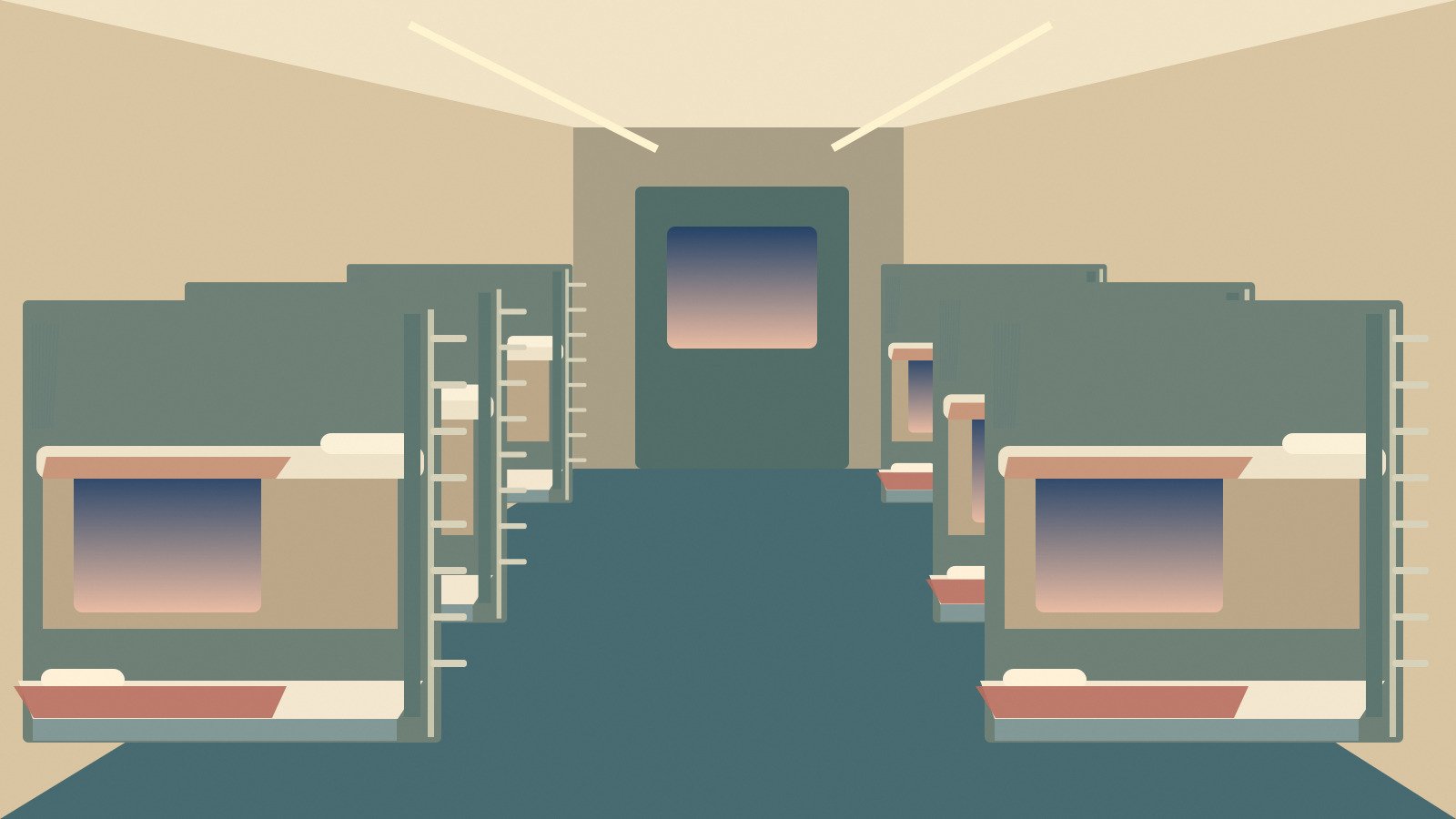
Conceptual sleeper interior; berth proportions and fittings are illustrative, not a technical drawing of a particular carriage.
This Thailand sleeper train guide is about choosing a night you can manage comfortably, not simply choosing the newest carriage. A lower berth, a workable boarding time and a sensible arrival plan can make a greater difference than a train’s reputation. Conversely, a beautiful compartment is less useful when you cannot sleep in it or arrive long before there is anywhere comfortable to go.
Thai sleepers offer several accommodation arrangements, including individual berths in an open-plan carriage and first-class compartments. The exact train, class and booking determine what you receive. A ticket for an overnight journey is not automatically a bed, and one first-class berth is not automatically exclusive use of a compartment. [1]
The advice below combines current railway information with practical, research-led planning judgement. It does not claim personal inspection of every service or guarantee sleep, security or a particular set of onboard facilities. Use the guide to identify the questions that matter, then confirm the answers for the actual train and travel date.
Lower berth
Usually easier to reach; especially helpful when ladders are a problem.
First-class compartment
Check whole-cabin occupancy, not just one berth in the room.
Arrival hour
A newer carriage is less useful when it delivers you at an awkward time.
A small overnight pouch
Keep ticket, layers and toiletries accessible without opening the main case.
Thailand sleeper train guide: decide whether the night suits you
A berth is useful only when you can rest in it
A sleeper can turn a long journey into part of the holiday and replace a hotel night. However, the bed moves, stops interrupt the rhythm and other people share the surrounding space. Travellers who sleep lightly should treat a good night’s rest as possible rather than guaranteed.
Ask how you normally cope with unfamiliar beds, background noise and restricted personal space. If the answer is poorly, compare the sleeper with a daytime journey and a normal hotel night. There is no need to choose an overnight train simply because it is a well-known Thailand experience.
Choose the morning before choosing the bed
Write down what happens after arrival: local transport, breakfast, luggage storage, room access and the first activity. A morning that can absorb tiredness makes the sleeper much more forgiving. By contrast, a pre-booked strenuous excursion or tight flight connection adds pressure to a night whose quality you cannot predict.
For a first attempt, a straightforward end-to-end route can be easier than an unfamiliar stop in the middle of the night. You have fewer worries about waking at the right moment and more time to gather luggage. Once you know how you sleep on trains, you can make more ambitious overnight plans with a clearer sense of the trade-offs.
What the different sleeping arrangements actually mean
Read seat, berth and compartment separately
SRT lists first-class air-conditioned sleeping accommodation with two berths per compartment, as well as second-class sleeping carriages with upper and lower berths. The precise carriage varies by service. Confirm the accommodation shown on the issued ticket rather than relying on a general photograph of the route. [1]
| Booking description | What you should understand | Main advantage | What to check |
|---|---|---|---|
| Second-class lower berth | Your own sleeping place in a shared carriage | Easier access and a more convenient night-time routine | Berth confirmation, storage and carriage type |
| Second-class upper berth | A sleeping place reached by a ladder | Often a lower price or better availability | Climbing, headroom and personal comfort |
| First-class berth | A berth within the booked compartment arrangement | More separation from an open carriage | Who occupies the other berth and how exclusivity is booked |
| Overnight seat | A seat on a train travelling at night | May cost less or remain available | It is not a substitute for a flat berth |
Match the promise to the price
An attractive first-class photograph should not persuade you to accept an unclear booking description. Ask exactly what the price covers and how many people may occupy the space. Similarly, a seat reservation on the right train number does not establish that a sleeper berth has been purchased.
When travelling with another adult, compare the total cost for both passengers in the arrangement you want. A per-person headline can conceal a much larger whole-compartment cost. The right comparison is between complete sleeping arrangements, not between the lowest visible numbers on different booking pages.
Lower berths: when the extra convenience is worth paying for
Access is often the decisive benefit
A lower berth avoids repeated ladder use during the night. That can matter for anyone who needs the toilet frequently, has difficulty climbing or wants a simpler routine with personal belongings. The benefit is practical even when you are not especially concerned about the berth’s size or view.
Independent rail guidance describes lower berths as generally roomier and associated with the window, while upper berths sit above that level. Exact dimensions and carriage layouts vary, so treat this as a general distinction rather than a guaranteed measurement. [5]
Reserve the need, not only the preference
If a lower berth is essential, do not accept an upper berth while assuming staff can swap it later. Other passengers may have chosen lower accommodation for the same reason. Make the requirement clear during booking and check that the issued ticket confirms it.
For two travellers, two lower berths may be more useful than an upper-and-lower pair when both dislike climbing. However, they may not provide the same proximity you imagined from consecutive seat numbers. Inspect the seat map or ask the seller how the berths relate physically. A comfortable arrangement is more valuable than a neat-looking pair of numbers that does not match your needs.
Upper berths: a valid option, not a hidden equivalent
Try the decision honestly
An upper berth can suit a mobile traveller who is comfortable climbing and accepts a more compact sleeping space. It may offer a worthwhile saving or be available when lower berths are not. The compromise is not inherently a bad one, but it should be chosen knowingly.
Think through the entire night rather than only lying down. Can you climb safely while tired? Where will your glasses, phone and water go? How will you get down in the dark without juggling items? A small pouch and a simple routine help, but cannot remove a genuine access difficulty.
Do not use the luggage to solve a space problem
Keep heavy or awkward bags in the appropriate storage area rather than trying to lift everything into the berth. Items must not obstruct the aisle or create a fall hazard. Use staff guidance when you are unsure where a case belongs, and keep only the essentials within reach.
An upper berth is not a sensible default for someone who cannot use the ladder comfortably. Equally, it should not be dismissed automatically by every traveller. Compare the actual price difference, your physical requirements and the duration of the night. The important distinction is between an acceptable compromise and a problem you hope will disappear after boarding.
First class: privacy, occupancy and realistic expectations
A door changes the space, not every part of the journey
A first-class compartment offers more separation from the open carriage. That can be valuable for a couple, a solo traveller who books the appropriate occupancy or anyone wanting a quieter place to organise belongings. However, privacy does not remove train movement, station stops or the need to use shared facilities where applicable.
Confirm the exact compartment and occupancy rules with SRT or the seller. Do not assume a single berth purchase grants the whole room. Where exclusive use is essential, obtain a clear confirmation of how it is booked and what happens if the requested arrangement cannot be issued. [1]
Know what the upgrade does not guarantee
A compartment is not a hotel suite. SRT’s CNR facilities page for Train 23/24 lists a washbasin inside the first-class compartment and separate toilet and shower facilities. It does not describe a private en-suite bathroom for each compartment. Confirm the carriage actually booked rather than assuming every first-class service has identical facilities. [11]
For a couple, first class may justify its total price through privacy and an easier shared routine. For a solo traveller content with a curtain, a lower second-class berth may leave more of the holiday budget for the destination. Neither is universally better: pay for the features you value rather than the status implied by the class name.
Newer and older sleepers: choose the timetable as well as the carriage
Train numbers are useful clues, not lifetime guarantees
SRT’s carriage information identifies newer CNR sleeping accommodation on services including 9/10 to Chiang Mai, 23/24 to Ubon Ratchathani, 25/26 to Nong Khai and 31/32 to Hat Yai. Other sleeper services use different stock. Confirm the class and carriage for the actual departure, since an expected train type is not a guarantee against operational substitution. [1]
A newer carriage can offer facilities some travellers prefer, but that does not automatically make it the best journey. The useful comparison includes departure hour, arrival time, available berth and the final local transfer. A less fashionable service may fit those needs better.
Photographs should answer a question
Look for images showing the aisle, berth access, toilets and luggage storage rather than only a styled bed. Ask whether they represent the actual carriage category being sold. A promotional photograph can be accurate for one service while unhelpful for another.
Do not spend so long chasing a particular train that you lose the berth arrangement you need. If a suitable lower berth on a workable service is available, that practical certainty may be more valuable than waiting for a newer carriage with no confirmed place. The decision should support the night’s comfort, not a checklist of rolling-stock features.
Chiang Mai sleepers: a manageable first overnight journey
Why the route is a common starting point
Bangkok-Chiang Mai is a useful route to compare for a first sleeper experience because it connects two established visitor bases. The destination is a rail-served city rather than a ferry pier reached through several subsequent transfers. Even so, plan the station-to-hotel journey and do not assume the room is ready on arrival.
SRT’s June 2026 passenger guide lists Train 9 leaving Krung Thep Aphiwat at 18:40. Treat that as a dated published example checked on 4 October 2026, then confirm the actual timetable and ticket for your journey. The other services on the corridor can have different timings and accommodation. [2]
Protect the first northern morning
Choose breakfast, luggage storage and an easy local outing rather than an early fixed excursion. You may sleep well and have more energy than expected, but a flexible plan also works when you do not. Confirm early check-in separately if immediate room access is essential.
For the return to Bangkok, apply the same discipline rather than assuming familiarity removes the need for a buffer. Check the arrival station, airport connection if relevant and the date on the overnight ticket. A smooth first journey is useful experience, not proof that every later service will operate in exactly the same way.
Southern and north-eastern sleepers: arrival time can outweigh novelty
An intermediate stop changes the night
A sleeper towards a southern terminus may call at your chosen gateway long before dawn. That can be workable with a planned transfer and waiting arrangements, but it is a different experience from waking at the end of the route. Inspect the time at your station, not the final destination shown in a promotional description. [8]
For Surat Thani or another onward gateway, plan the road and ferry stages separately. You may need to wait for a morning service, change vehicles or store luggage. A modern carriage does not compensate for a connection that leaves you tired and uncertain outside the station.
Choose the stop that fits the itinerary
Nong Khai and Ubon Ratchathani are distinct north-eastern routes, while Hat Yai serves a different southern travel plan. Select the destination for what you intend to do there, not simply because a particular sleeper is available. Border or regional travel advice also needs checking for any onward journey.
If the only remaining train creates an awkward arrival, compare a different day, a daytime service or a coach. The goal is a workable night and morning, not securing any berth at all. An extra hotel night can sometimes be the more economical choice once the cost and inconvenience of an unsuitable arrival are included.
Booking the actual berth, not an expectation
Distinguish a confirmed ticket from a request
Use SRT D-Ticket or a clearly identified seller and check whether the berth is issued immediately. An agent may accept an advance request and attempt to fulfil it later. That can be a legitimate service, but it is not the same as possessing a confirmed lower berth today. [3]
Current SRT reservations are distance-dependent and can open up to 90 days ahead; shorter segments may open later. Do not follow old blanket 180-day advice. Check the actual train and journey in the official booking process. [4]
Make a backup preference in the right order
Decide what you would accept if the first choice is unavailable: another lower berth, another departure, a first-class arrangement, or a different mode. Avoid leaving the seller to substitute something you would find physically unsuitable. State which requirements are essential and which are only preferences.
Before payment, review the complete class description, date, boarding station and arrival date. After payment, save the ticket and inspect the berth number. If the document differs from what you expected, raise the issue before travel. Hoping the discrepancy will be resolved onboard is not a reliable booking strategy.
Women-only carriages and solo-traveller choices
Ask about the specific accommodation available
Selected services offer women-and-children carriage arrangements, described in booking-provider guidance. Availability and eligibility need confirmation through SRT or the issuing seller for the actual departure. Do not assume that every sleeper includes the option or that a general women-only label explains all accompanying-child rules. [6]
A dedicated carriage can match a traveller’s preference, but it should not be described as an absolute safety guarantee. Similarly, ordinary second-class accommodation should not be treated as inherently unsuitable for all solo travellers. Choose the setting you are comfortable with and apply normal personal-safety precautions.
Give independence a practical foundation
Keep the ticket, phone, identification and essential valuables within your own control. Know where staff are located and raise a concern early rather than tolerating behaviour that makes you uncomfortable. Do not disclose more about onward plans or accommodation than you wish to share.
For a solo first-class booking, clarify the occupancy arrangement particularly carefully. Privacy should be confirmed in the purchase, not inferred from the phrase first class. A well-understood second-class berth may be preferable to an expensive booking whose compartment-sharing rules remain unclear.

Boarding: prepare for the night before opening the suitcase
Arrive ready rather than rushed
Check the station and service status before leaving the hotel. Have the ticket available offline and keep the identification used for the booking accessible. SRT’s Train 9 guide accepts specified original, PDF or app ticket formats and distinguishes them from a photograph of a paper ticket for its stated gate checks. Follow the actual departure instructions. [2]
At the terminal, match the train number as well as the destination. Find the correct carriage and berth before placing luggage. If something appears wrong, ask staff while there is time to resolve it rather than settling into an unconfirmed space.
Prepare the overnight items first
Before the bed is arranged or you settle for the evening, separate the things you will need until morning. This prevents repeated suitcase opening in a narrow aisle. Check the location of toilets and staff, and agree a meeting point with companions if you are in different parts of the train.
Do not immediately disappear into headphones without understanding the destination stop and expected night routine. A few minutes of preparation make it easier to relax later. Ask when you are uncertain about your berth or storage; a small question is preferable to discovering the problem when others are trying to sleep.
A ten-minute preparation routine before departure day
Rehearse the small movements, not the whole journey
Pack the overnight pouch and imagine needing the ticket, a warm layer and a toilet visit without opening the main case. Put each item back after checking it. This simple rehearsal identifies loose objects and awkward packaging while you still have a hotel bed or table on which to reorganise.
Try the eye mask or earplugs before the travel night. Check that an alarm is audible or otherwise suitable for you, particularly when leaving at an intermediate station. Download the booking and test opening it with mobile data switched off. A saved link that still needs a login is not the same as an offline document.
Agree the morning plan with companions
Decide who keeps the hotel contact, who checks the bags and where you will meet if separated while leaving the train. Set a realistic alarm before the destination and keep clothing ready so that arrival does not require a rushed search through the luggage. For a family, distribute essential items so that one misplaced pouch does not contain every adult’s ticket and identification.
Finally, prepare a modest backup for the first morning: an alternative breakfast stop, a luggage-storage enquiry or a flexible local activity. You are not predicting a bad night. You are making the journey usable whether you sleep soundly or only lightly, which is more helpful than trying to guarantee an experience nobody can promise.
The overnight pouch: what needs to be within reach
Pack for twelve hours, not the whole holiday
Your small overnight bag should contain the ticket, identification, phone, essential medication, glasses, a light layer, basic toiletries and a modest amount of water. Add a charging cable and any sleep aids you normally use, such as an eye mask. Keep the pouch compact enough to manage without obstructing your sleeping space.
Put valuables in a secure place you can control rather than leaving them in a large case far from the berth. A bag’s hidden pocket can be useful, but no accessory replaces attention to where it is placed. Do not hang heavy items where they could fall onto another passenger or obstruct the aisle.
Avoid buying equipment that does not solve a problem
A small organiser can be helpful when it keeps overnight essentials together, but an ordinary zipped bag may do the job. Similarly, a travel pillow is optional on a sleeper, not an automatic requirement simply because you are on transport. Check what bedding is provided and pack only the extra item that improves your comfort.
The best packing system lets you reach the toilet, retrieve the ticket and prepare for arrival without searching through a full suitcase. Test that sequence before travel. If it takes several bags and loose objects to manage, simplify the arrangement while you still have space to repack.
Light, noise and temperature: plan for your own sleep habits
Small adjustments can improve an unfamiliar night
An eye mask can help when carriage lighting remains noticeable around a curtain, while suitable earplugs may reduce background noise. Choose items you have tried before rather than discovering an uncomfortable fit on the train. They should make the space easier to use, not prevent you from hearing an alarm or important instruction.
A light layer is useful when air conditioning feels cooler than expected. Dress in comfortable clothing that works for the berth and a walk through the shared carriage. Avoid relying on a blanket alone when you know that changes in temperature often disturb your sleep.
Do not aim for a perfect hotel-night routine
Keep expectations realistic. The train may stop, move abruptly or become noisier near a station. Instead of watching the clock after every disturbance, allow a flexible morning that does not require peak energy. The value of the sleeper lies partly in accepting the journey as a different kind of night.
Avoid experimenting with unfamiliar sedating medicines or mixing alcohol with sleep medication to force rest. Discuss any medical sleep or motion-sickness needs with a qualified professional who knows your circumstances. A travel guide cannot determine whether a particular medicine is appropriate, especially when you need to wake safely for an intermediate stop.
Food, toilets and shared-space etiquette
Eat before the night becomes complicated
Check whether the actual service provides food and whether it is included, sold separately or unavailable. A dining-car photograph from another train should not determine your meal plan. Have a suitable backup, particularly when dietary restrictions or children’s preferences make an improvised meal difficult.
Use the toilet before settling when practical and bring the small toiletries you normally need. Bathroom design and shower availability vary by carriage, so confirm any essential requirement in advance. Do not assume first class means an en-suite bathroom or that every sleeper includes the same facilities.
Let other passengers have a night as well
Keep phone calls short, use headphones and lower screen brightness. Avoid spreading bags across neighbouring space while organising the berth. If travelling as a group, finish the louder social part of the evening before others are trying to rest.
Follow the train’s alcohol rules. Changes to general retail hours in Thailand do not remove restrictions in public-transport settings, and an overnight journey should not be treated as a mobile party. Keep food waste contained and leave shared facilities in a usable condition. Considerate habits make more difference to everyone’s comfort than an elaborate collection of travel accessories. [9]
Safety and valuables without turning the night into anxiety
Use practical precautions
Keep essential documents and valuables close, make sure bags are closed and know where staff are located. Avoid leaving a phone unattended while charging or displaying a large amount of cash. Normal care is appropriate without assuming that every fellow passenger is a threat.
Use the permitted storage areas and keep exits and aisles clear. Do not secure luggage to a rail or fixture if it interferes with staff access or emergency movement. A theft precaution that creates an obstruction is not a sensible improvement. [7]
Ask for help when something is wrong
If a passenger behaves inappropriately, a berth allocation seems incorrect or a fitting appears unsafe, tell staff rather than trying to solve everything alone. For an immediate emergency, follow onboard instructions and contact local emergency assistance when necessary. FCDO advice provides broader Thailand safety guidance, but it cannot certify an individual departure. [10]
When arriving at an unfamiliar station, move to the agreed pickup or a recognised transport point rather than accepting the first unsolicited offer. Keep the hotel contact available and verify the vehicle or driver against the booking. The night’s final stage deserves the same attention as boarding.
Families and passengers who need easier access
Confirm the sleeping arrangement rather than improvising
Book using the correct passenger ages and ask how the railway permits children to occupy or share accommodation. Do not assume a child can sleep in any berth with an adult simply because the bed appears large enough. The safe and permitted arrangement depends on the service and booking rules.
Choose berth access with the whole night in mind. A lower berth may simplify repeated toilet visits or assisting a child, while a private compartment may help a family organise belongings. However, neither choice removes the need to understand occupancy, boarding steps and available facilities.
Describe mobility needs precisely
Ask about the path from the station entrance to the berth, including lifts, boarding steps, aisle space and toilets. Explain the equipment used and whether assistance is needed. A general statement that a train is accessible does not answer every practical question about the journey.
If an upper berth is physically unsuitable, treat that as a firm booking condition. Do not depend on another passenger changing places. An alternative service, a daytime train or another mode is preferable to starting an overnight journey with an access problem that could have been identified before payment.
Arrival morning: plan somewhere comfortable to go
A station arrival is not hotel check-in
Confirm the hotel’s normal check-in time and luggage-storage arrangement. If immediate room access is essential, ask about a guaranteed early check-in or the appropriate prior-night booking. Do not assume that arriving on a sleeper entitles you to a room several hours before it is ready.
Choose breakfast and a gentle first activity near the hotel rather than crossing the city repeatedly while tired. A shower, a short rest and a local walk can make the arrival day useful without requiring the energy of a normal sightseeing morning.
Have a plan for a very early stop
For an intermediate arrival before dawn, arrange the pickup and waiting location explicitly. Save the driver’s or hotel’s contact offline and know what happens if the train is late. Do not assume an open café, a staffed hotel desk or a public bus will be available at the exact hour.
A well-planned morning can justify the overnight journey even after imperfect sleep. An unclear one can erase the apparent hotel saving. Compare the whole experience before booking: a slightly different train, another arrival day or a normal hotel night may be the more comfortable and economical answer.
Changes, delays and the real cost of a saved night
Price the arrangement you actually intend to use
Compare the complete fare for the desired berth or compartment, any agent charge, station transfers and the arrival-day room arrangements. A first-class per-berth price is not the same as exclusive occupancy, and an ordinary seat fare does not represent the sleeper experience.
When comparing with flying or a coach, add baggage and local transfers on the same basis. A sleeper may save a hotel night, but that saving should be reduced by any early room access or extra transport you expect to purchase. Use actual quotes for the dates rather than an undated average.
Leave room around the valuable connection
Do not depend on a sleeper arriving exactly on time for a separate expensive flight. The railway’s timetable, the transfer to the airport and the airline’s deadline are distinct. A final Bangkok night can be a useful buffer rather than an unnecessary hotel expense.
If plans change, contact the issuing seller before the applicable deadline and distinguish voluntary cancellation from a railway disruption. Agent processing charges and railway rules can differ. Keep records, but do not assume a refund or a protected onward connection simply because several tickets were purchased together.
Pros, cons and common sleeper mistakes
Reasons to choose a sleeper
A suitable berth provides a flat sleeping space while completing a long journey. It can offer a memorable change of pace and avoid spending a whole daylight day in transit. The strongest version combines comfortable access, confirmed accommodation and an arrival morning that has somewhere practical to begin.
Reasons to choose something else
Sleep may be interrupted, facilities vary and the arrival hour can be awkward. A traveller who cannot use the available berth comfortably should not feel obliged to accept it. First class costs more without eliminating every disturbance, while an overnight seat is a materially different compromise from a bed.
The mistakes worth avoiding
Do not confuse one first-class berth with the whole compartment, accept an upper berth despite a climbing problem, or treat a pending request as confirmed. Avoid packing every overnight item at the bottom of the main case. Most importantly, do not plan a demanding arrival morning around a perfect night’s sleep that no train can promise.
Frequently asked questions
Is a lower berth worth the extra price?
Often, when easier access, less climbing and a simpler night routine matter to you. It may be particularly useful for frequent toilet visits or managing personal items. However, a mobile traveller happy with an upper berth may prefer the saving. Compare the actual fare difference and physical requirements rather than assuming one answer fits everyone.
Can two adults share a first-class compartment?
First-class sleeping accommodation commonly uses a two-berth compartment, but confirm the precise occupancy arrangement for the service and booking. Buy the arrangement that explicitly covers both travellers and the privacy you want. Do not assume a single ticket or an attractive room photograph grants exclusive use of the whole compartment. [1]
Are women-only sleepers available on every route?
No. They are associated with selected services and carriage arrangements, and availability can vary. Confirm the actual departure, booking category and accompanying-child eligibility with SRT or the issuing seller. A provider’s general description should not replace a confirmed ticket, and the option should not be presented as an absolute safety guarantee. [6]
Do sleeper trains have showers?
Some carriage arrangements offer facilities that others do not. Verify the actual train and class when a shower is essential, and do not assume it is private or attached to the compartment. For most journeys, a simple overnight wash routine and a planned shower after arrival are more dependable than relying on an unspecified onboard facility.
How much luggage can I bring into the berth?
Keep only the items needed overnight in the sleeping space and use the appropriate luggage storage for the larger bag. The operator’s allowance and the available physical space are different considerations. Avoid obstructing aisles or lifting heavy cases where they could fall. Ask staff for guidance when an oversized item needs a different arrangement. [7]
Will I sleep well on a Thai sleeper train?
That cannot be guaranteed. Some passengers find the movement relaxing; others struggle with noise, lighting or an unfamiliar bed. Try familiar earplugs or an eye mask, pack a light layer and leave the next morning flexible. The first journey is a useful test of your own preferences rather than proof that everyone should choose a sleeper.
Should I reserve the newest train even if the arrival is awkward?
Not automatically. A usable berth and a sensible arrival can matter more than carriage age. Compare the morning transfer, hotel access and how much sleep the timing permits. A newer service that wakes you for a difficult intermediate stop may be less suitable than another confirmed train with a better schedule.
Can I go straight from the sleeper to an island ferry?
Sometimes, with a properly planned connection, but the train normally reaches a mainland station rather than the ferry pier. Check the road transfer, first useful sailing, waiting arrangements and response to delay. A combined purchase does not automatically protect every independent stage. Keep enough margin that a late train does not derail the entire island day.
Do I need mobile data during the night?
It can help with messages and the arrival transfer, but essential documents should also work offline. Keep the issued ticket, station information and hotel contact stored on the device, with enough battery for morning. Coverage may vary along the route, so the journey should remain manageable without a continuous connection.
The recommendation: buy a usable bed and an easy morning
For a first sleeper journey, start with a confirmed lower second-class berth on a direct route whose arrival hour suits the hotel plan. Upgrade to a first-class arrangement when its privacy is worth the full cost and the occupancy is clear. Choose an upper berth only when its access and space are a comfortable compromise for you.
Prepare the overnight pouch before boarding, protect the essentials and leave the following morning gentle. Those decisions are less glamorous than selecting a famous train, but they make the experience much easier. A sleeper is at its best when the night and the next day form one sensible plan, rather than a bed reservation followed by an unresolved arrival.
Sources and fact-checking notes
Editorial review: 4 October 2026. Linked facts are distinguished from planning estimates and recommendations. Timetables, conditions and availability can change; check the relevant operator before payment.
- SRT: passenger carriage types
Official class descriptions and route/carriage lists. Rolling stock and accessibility arrangements must still be checked for the actual departure.
- SRT: Special Express 9/10 passenger guide
Official June 2026 guide: Train 9 leaves Krung Thep Aphiwat at 18:40; boarding guidance distinguishes an original/PDF/app ticket from a photograph of a paper ticket.
- State Railway of Thailand: D-Ticket
Official reservation portal. Exact service, class, boarding station and issued ticket are the operational authority.
- SRT: tickets, booking windows and waiting lists
Current Thai-language page specifies 90/30/1-day distance-dependent reservations from 30 April 2026, and ticket/change/refund rules. Older 180-day descriptions are not followed.
- The Man in Seat 61: Thailand rail guide
Independent first-hand rail reference used for berth and overnight-practicality context. Current SRT rules take precedence.
- Richard Barrow's Thai Train Guide: Train 9
Independent first-hand description of the women-and-children carriage on Train 9. Its older 180-day booking statement is superseded by current SRT rules; no quoted fare is used.
- SRT: passenger luggage and parcels
Official luggage/storage guidance. Expired parcel promotions are not passenger baggage allowances and are not used.
- SRT: 2026 timetable and station search
Primary source for station names and train-specific stops. Search the actual origin and destination; a route label is not a booking.
- TAT: updated alcohol rules, May 2026
General retail-hour changes do not remove restrictions in public-transport areas. Readers should follow onboard and station rules.
- FCDO: Thailand safety and security
Official road, public-transport and water-safety guidance. No route can be guaranteed safe.
- SRT: Train 23/24 and CNR carriage facilities
Official June 2026 description of CNR first- and second-class facilities, including separate first-class shower facilities and accessible second-class equipment. Confirm the actual departure.
- Airalo: Thailand plans and compatibility
Primary product information. Data plans do not guarantee reception throughout rural journeys or inside every hotel room.
Transport and accommodation suggestions reflect research-led planning, not first-hand inspection of every room, vehicle or service. Original illustrations are conceptual scenes rather than photographs, current conditions, route maps or property endorsements.
Illustrations in this article were created for Taylor’s Trailblazing Travels. Third-party photographs, where used, are credited beside the image or in the source list.